How to Choose Where to Stay in Japan: A Decision Guide
Not sure where to stay in Japan? Pick your base by where your day trips cluster. Tokyo from ¥8,000, Osaka from ¥7,000 — full city and district breakdown.


If you're trying to figure out how to choose where to stay in Japan, start with one question: where do your day trips cluster? East-heavy itinerary (Kamakura, Nikko, Mount Fuji)? Base in Tokyo from ¥8,000/night. Kansai-heavy (Kyoto, Nara, Kobe, USJ)? Osaka is cheaper and more central, from ¥7,000/night. The one condition that flips everything: a multi-region loop (say, Tokyo + Kyoto + Hiroshima) — in that case, skip a single base and split two or three nights per city instead.
Start with your trip shape, not the map
Before you open a booking site, sketch out your itinerary as one of three shapes:
- Single-base: You pick one city and do day trips. Works best for trips under 10 days focused on one region.
- Two-city split: Tokyo for 3–4 nights, then Osaka or Kyoto for 3–4 nights. The most common pattern for first-timers on a 10–14 day itinerary.
- Region loop: Moving city to city (Hiroshima → Kyoto → Tokyo, for example). No single base; book each city separately and travel with Japan Rail Pass or point-to-point shinkansen tickets.
Once you know your shape, picking a base city becomes a transit and price exercise, not a personal preference debate.
City and area decision matrix
| City / Area | Best for | Transit reach | Price band (per night) | Base if… |
|---|---|---|---|---|
| Tokyo (Shinjuku / Shibuya) | East Japan day trips, pop culture, airports | Shinkansen to Kyoto 2h15; Kamakura 1h; Nikko 2h | from ¥8,000 | Your itinerary is east-heavy |
| Osaka (Namba / Umeda) | Kansai day trips, food, value beds | Kyoto 15 min; Nara 35 min; Kobe 20 min; USJ 15 min | from ¥7,000 | Kansai dominates your list |
| Kyoto (Station area / Gion) | Temples, slow travel, ryokan stays | Osaka 15 min; Nara 45 min; Hiroshima 1h45 shinkansen | from ¥7,500 | Temples and Kansai culture are your main draw |
| Hiroshima (Station area) | Western Honshu loop, Miyajima day trip | Miyajima 40 min; Kyoto 1h45 shinkansen | from ¥5,500 | You're doing a Hiroshima–Kyoto leg and want a night here |
| Sapporo (Station / Susukino) | Hokkaido base, skiing, seafood | Otaru 35 min; New Chitose Airport 38 min | from ¥7,000 | Hokkaido is its own trip |
City-vs-city calls at a glance
Tokyo and Osaka sit on opposite ends of the Tokaido shinkansen and serve different clusters of destinations — choosing between them is the most common first-time Japan decision.
- Tokyo vs Osaka: East-heavy itinerary (Fuji, Nikko, Kamakura)? Tokyo. Kansai-heavy (Kyoto, Nara, Kobe, USJ)? Osaka, which also runs 20–30% cheaper for equivalent rooms. See our full Tokyo vs Osaka guide.
- Kyoto vs Osaka: Osaka beats Kyoto on price and transit variety; Kyoto wins if temple-hopping on foot is your primary activity. Read Kyoto vs Osaka for the full breakdown.
- Hakodate vs Sapporo: Hakodate is a two-night stopover for its morning market and night views; Sapporo is the Hokkaido base for longer stays. See Hakodate vs Sapporo.
- Nagoya Station vs Sakae: Nagoya Station wins on shinkansen access and airport links; Sakae is livelier but adds a subway hop. Details at Nagoya Station vs Sakae.
Within a city, pick the right district
Once you've chosen a city, the district decision matters almost as much as the city itself — especially for transit convenience and late-night arrivals.
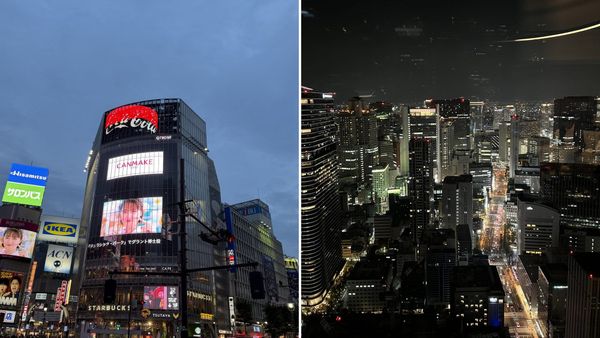
- Tokyo: Shinjuku and Shibuya are the two main foreigner-friendly hubs. Shinjuku has more budget options and direct Narita/Haneda bus links; Shibuya skews trendier and slightly pricier. Full comparison: Shinjuku vs Shibuya. Also see Where to Stay in Shinjuku, Ikebukuro vs Shinjuku, and Akihabara vs Shinjuku.
- Osaka: Namba puts you in the middle of Dotonbori; Umeda is the transit hub for JR and Hankyu lines to Kyoto and Kobe. See Namba vs Umeda and the full Osaka area guide.
- Kobe: Sannomiya for day trips to Osaka/Arima Onsen; Harborland for bay views and a quieter stay. Detailed guide: Sannomiya vs Harborland.
- Yokohama: Minato Mirai for waterfront atmosphere; Yokohama Station for cheaper beds and faster trains to Tokyo (25 min) and Haneda. Compare at Minato Mirai vs Yokohama Station.
- Sapporo: Sapporo Station for Hokkaido day trips; Susukino for ramen, bars and the Snow Festival action. Full guide: Sapporo Station vs Susukino.
Of the five major city pairings above, all five have dedicated district-vs-district guides on this site — a useful starting point before you drill into individual hotels (checked July 2026).
Then pick a hotel type
Japan offers four main accommodation types; the right one depends on what you're optimising for — experience, privacy, price, or flexibility.
- Business hotel: Private room, en-suite bath, desk, small but efficient. The reliable default for most travellers. Rates from ¥7,000/night at chains like Toyoko Inn and APA Hotel. Best for: multi-night city bases, luggage-heavy trips, couples.
- Capsule hotel: A sleeping pod with shared bathrooms and lockers. Rates from ¥3,500/night in Tokyo, ¥2,800/night in Osaka. Best for: solo travellers, one-night stopovers, minimalist packers. Most are gender-separated by floor. See Capsule vs Business Hotel for the full comparison.
- Ryokan: Traditional inn with tatami floors, shared or private onsen, and a fixed kaiseki dinner + breakfast included. Rates from ¥15,000/person/night for entry-level; mid-range ¥25,000–¥40,000. Best for: one or two cultural nights, couples, the Kyoto/Hakone/Nikko leg of a trip. See Ryokan vs Hotel for what's included and when it's worth it.
- Resort / onsen hotel: Western-format hotel with onsen facilities, often in nature. Sits between a business hotel and a ryokan on price and formality. Best for: families, ski trips (Sapporo area), beach stays (Okinawa).
Airports and first/last nights
Where you land shapes the first night, and where you depart shapes the last.
Tokyo is served by two airports: Haneda (HND), 20–30 min by train from central Tokyo, and Narita (NRT), 60–80 min. If you land after 9 pm and have an early departure, staying airport-side saves two train connections. Haneda is the better choice for airport-side stays: it's closer to the city and most international terminals have 24-hour services. Narita airport hotels make sense only when your flight actually uses Narita. See Narita vs Haneda Airport Hotels for a full comparison and named property picks.
Osaka's Kansai International Airport (KIX) has the Aeroplaza hotels connected by walkway — useful for pre-dawn departures. Itami Airport (ITM) is faster to Umeda (25 min by monorail + subway) and better for domestic connections.
Hotel shortlist by type and city
| Name | Area | Price range | Best for |
|---|---|---|---|
| Hotel Gracery Shinjuku | Shinjuku, Tokyo | from ¥12,000/night | Mid-range Tokyo base, Kabukicho access, Godzilla head |
| APA Hotel Shinjuku Kabukicho Tower | Shinjuku, Tokyo | from ¥8,000/night | Budget business hotel, 6-min walk from Shinjuku Station East Exit |
| Dormy Inn Premium Namba | Namba, Osaka | from ¥9,000/night | Business hotel with onsen, central Namba location |
| APA Hotel Kyoto Station | Kyoto Station, Kyoto | from ¥8,000/night | Budget-friendly, 3-min walk from Kyoto Station central exit |
| Ryokan Yoshida-Sanso | Higashiyama, Kyoto | from ¥25,000/person/night | Traditional ryokan stay with kaiseki, Kyoto hills setting |
| First Cabin Akihabara | Akihabara, Tokyo | from ¥4,500/night | Premium capsule, solo travellers, one-night Tokyo stopover |
Trip Essentials for Japan
Things worth booking before you land, all in English:
- eSIM — Airalo's Japan eSIM: install it at home and data works as soon as you switch off airplane mode at Haneda, Narita, Kansai, or wherever you land.
- Tickets and day trips — Klook covers the Japan Rail Pass, teamLab tickets, and shinkansen-linked day trips; booking ahead skips the ticket-window line.
Related: Compare the best hotel chains in Japan before narrowing the search to an individual property.
FAQ: choosing where to stay in Japan
Should first-timers base in Tokyo or Osaka?
For a first trip to Japan, Tokyo works better as your primary base if your must-sees include Shibuya, Asakusa, Kamakura, or Mount Fuji day trips. Osaka works better if Kyoto, Nara, and Kobe top your list — it's 20–30% cheaper for equivalent rooms and puts you 15 minutes from Kyoto by train. Many first-timers split: 3–4 nights in Tokyo, then 3–4 nights in Osaka or Kyoto.
Is one base enough for a 10-day Japan trip?
One base covers a 10-day trip only if your itinerary concentrates in one region. A Tokyo-only base handles Nikko, Kamakura, Hakone and Fuji Five Lakes easily on day trips. An Osaka base handles Kyoto, Nara, Kobe and USJ. Mixing both regions — Tokyo plus Kansai — means you'll spend too long on the shinkansen each day; a two-city split (Tokyo then Osaka or Kyoto) makes better use of your time.
Ryokan or hotel for a first Japan trip?
A business hotel for most nights, one or two ryokan nights for the cultural experience is the standard first-trip formula. Ryokans start from ¥15,000/person/night with dinner and breakfast included, and they come with fixed meal times and check-in windows (typically 3–6 pm) that require more planning than a hotel. Book your ryokan night for a quieter location — Kyoto's hills, Hakone, or Nikko — rather than a busy city centre.
Where should I stay on the first night after landing in Japan?
It depends on which airport you use. Landing at Haneda (HND): a hotel in Shinjuku or Shibuya puts you 20–30 min away and keeps your first day flexible. Landing at Narita (NRT): if you arrive after 9 pm, the last Narita Express to central Tokyo leaves around 9:44 pm — an airport-side hotel at Narita saves the stress. Landing at Kansai International (KIX): Namba is 38 min by Nankai line; a first night there gives you easy Osaka access the next day.