Akihabara vs Shinjuku Where to Stay in Tokyo
Choosing between Akihabara vs Shinjuku where to stay in Tokyo? Compare vibe, transport, and prices to find the right base for your trip.

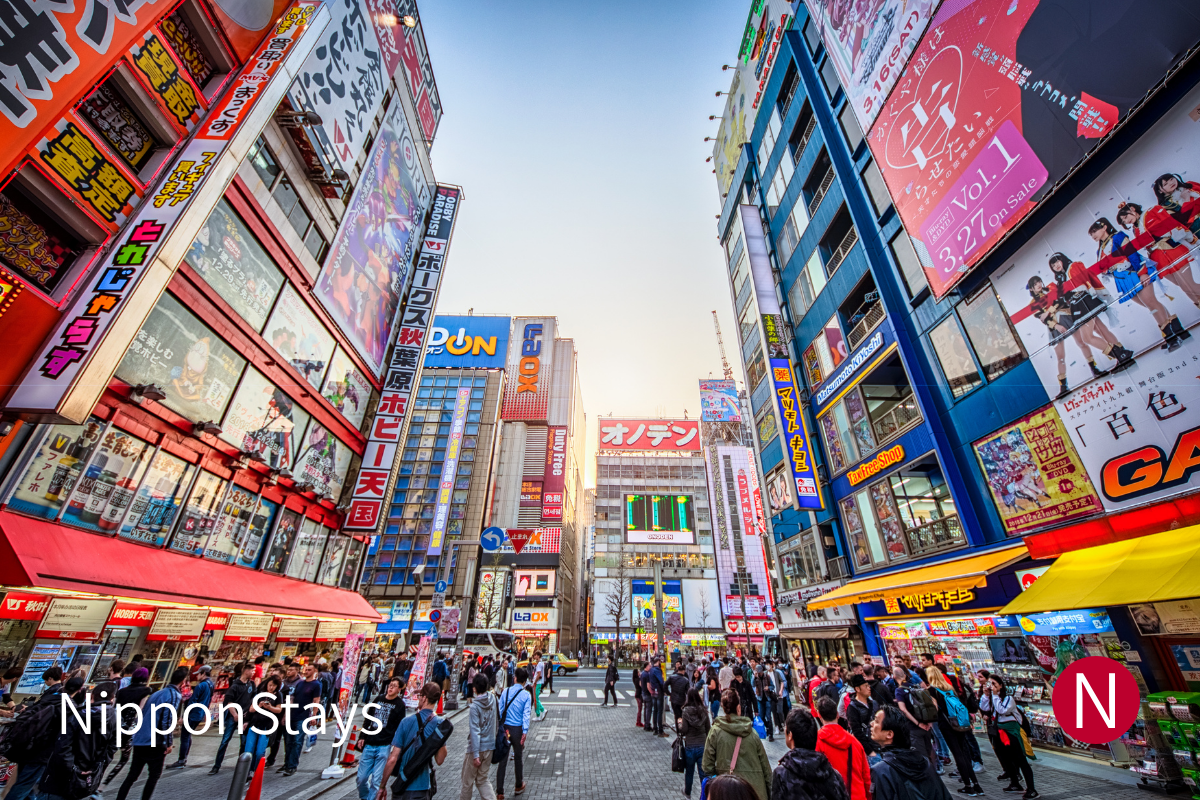
On Akihabara vs Shinjuku where to stay, remm Akihabara anchors the Akihabara side, where rooms start from ¥11,400 for two — Via Inn Akihabara starts lower, from ¥6,500 — and evenings stay quiet once the shops close; NOHGA HOTEL AKIHABARA TOKYO is the design-hotel alternative in the same area. Shinjuku Prince Hotel anchors Shinjuku, where rooms start from ¥8,000 amid Kabukicho nightlife and department-store shopping, and Hotel Gracery Shinjuku is the central alternative there. The condition that changes the pick: Narita arrivals and first-time visitors who want the JR Yamanote hub and a wider dinner selection do better in Shinjuku, while anime and otaku travelers on a tighter budget do better in Akihabara.
Some links in this guide are affiliate links. If you book through them, we may earn a commission at no extra cost to you.
Of the 7 hotels listed in this guide, 4 are in Akihabara (from ¥6,500 per night) and 3 are in Shinjuku (from ¥8,000 per night), all confirmed operating based on 2024–2025 data (checked July 2026).
Quick verdict — who each area suits
Stay in Akihabara if your trip is anchored around electronics, anime, retro gaming, manga, or the specialty shops along Chuo-dori. The area is compact and easy to navigate. Evenings are quieter than Shinjuku, which suits travelers who want early starts and don't need late-night bars on their doorstep. Midrange hotels here tend to hold a small price advantage over Shinjuku equivalents, especially midweek.
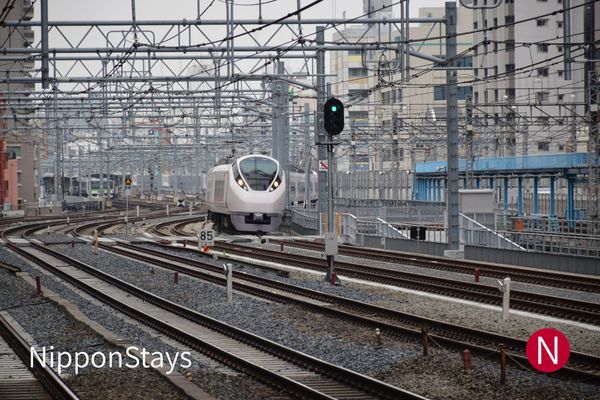
Stay in Shinjuku if this is your first visit and you want the best possible transport connections. Narita Express trains run direct to Shinjuku Station with no transfer, which matters after a long flight. The area has a wider range of restaurants at every price point, and nightlife options that keep going past midnight.
- Choose Akihabara: anime/electronics focus, midrange or budget, prefer quiet evenings, not flying in from Narita
- Choose Shinjuku: first Tokyo visit, arriving from Narita, want nightlife and department stores, need maximum line connections
- Split your stay: trip of 7 or more nights, want to cover both sides of the city without daily commutes
| Area | Vibe | Price range (midrange, per night) | Best for |
|---|---|---|---|
| Akihabara | Electronics, anime, gaming; quiet evenings | from ¥6,500; rates vary by season | Anime and otaku travelers, budget-conscious shoppers, early starters |
| Shinjuku | Nightlife, department stores, mega transport hub | from ¥8,000; rates vary by season | First-time Tokyo visitors, Narita arrivals, nightlife seekers, day-trippers west |
Vibe and what's on your doorstep
Akihabara
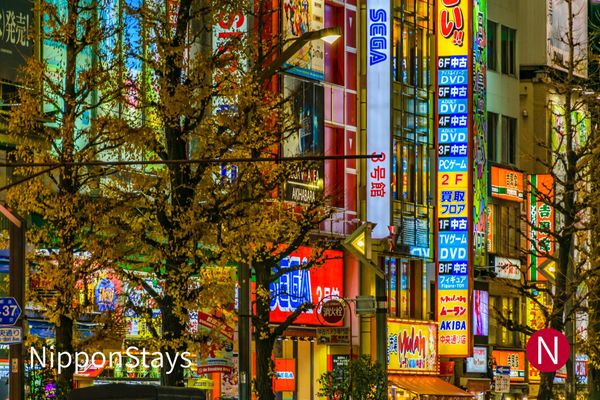
Akihabara's main commercial strip, Chuo-dori, runs north from JR Akihabara Station's Electric Town Exit. Within a 10-min walk of most hotels in the area you'll find Yodobashi Camera Multimedia Akiba, anime and manga specialist shops including Animate and Mandarake, and game arcades including Taito Station, GiGO, and Silk Hat Akihabara. Convenience stores are on nearly every block.
Most shops close between 20:00 and 21:00, and the streets become noticeably quieter after that. Ramen, curry, and karaage spots fill the side streets. Maid cafes operate in the blocks east of Chuo-dori — they're a genuine part of the local scene, but worth knowing about before booking if you're traveling with young children.
The area is also one stop by JR from Kanda and two stops from Tokyo Station, which makes it a convenient base for the eastern half of the city: Ueno, Asakusa, and Ochanomizu are all within 15 minutes by train.
Shinjuku
Shinjuku Station is the world's busiest railway terminal by passenger count. The East Exit opens onto Kabukicho and its entertainment district; the South Exit leads toward Shinjuku Gyoen and the newer commercial south end; the West Exit faces the skyscraper district and the Tokyo Metropolitan Government Building, which has free public observation floors.
Department stores — Isetan, Takashimaya Times Square, Odakyu, Keio — are within a 5-min walk of the East Exit. Golden Gai, a grid of small bars in narrow alleys, is about a 7-min walk from the same exit. Many Kabukicho bars and clubs run past 03:00, so if late nights are part of your plan, Shinjuku makes logistical sense.
Access and transfers
From Narita Airport
To Shinjuku: The Narita Express (N'EX) runs direct to Shinjuku Station in approximately 90 minutes. No transfer needed. One-way fare from ¥3,250; rates vary by date and discount pass usage.
To Akihabara: Take N'EX to Tokyo Station (approximately 53 min on the fastest service), then transfer to the JR Chuo-Sobu Local Line or JR Yamanote Line toward Ueno and ride to Akihabara Station (about 5–8 min). Total journey time is approximately 60 minutes from the terminal. If this is your first arrival in Tokyo, the Shinjuku route is simpler — one train, no transfer, and you avoid navigating Tokyo Station's multiple platforms with luggage.
From Haneda Airport
To Akihabara: Take the Keikyu Airport Line to Shinagawa (approximately 15 min), then the JR Yamanote Line toward Ueno to Akihabara (approximately 18 min). Total: roughly 35 min, from ¥700.
To Shinjuku: Keikyu Airport Line to Shinagawa (approximately 15 min), then JR Yamanote Line to Shinjuku (approximately 25 min). Total: roughly 40 min, from ¥700. From Haneda, both areas take a similar amount of time and money to reach, so airport choice doesn't strongly favor either.
Day trips and getting between the two
From Shinjuku, westward day trips are straightforward: Odakyu Line for Hakone (Romancecar if you want a reserved seat), Keio Line for Mount Takao. From Akihabara, the JR Sobu Line runs east toward Chiba; the Tsukuba Express (TX) departs from the TX platform at Akihabara Station — a separate building, a 3-min walk from the JR exits — for day trips to Tsukuba Science City. For Nikko and Kamakura, the access difference between the two areas is minor.
Getting directly between the two: the JR Chuo-Sobu Local Line connects Akihabara Station to Shinjuku Station in about 25 minutes. The IC card one-way fare is ¥220.
Price and room-type comparison
Akihabara has a structural price advantage at the midrange. There are fewer luxury-tier properties, fewer leisure travelers during cherry blossom and autumn foliage peaks, and more business hotels catering to weekday visitors. Shinjuku's much larger supply means availability rarely runs out, but peak-season and weekend rates spike noticeably.
What each budget roughly gets you:
- Akihabara capsule / budget private room: from ¥4,000–¥6,500 per person; rates vary by season
- Akihabara midrange business hotel (private ensuite): from ¥6,500; rates vary by season
- Akihabara 3–4 star lifestyle hotel: from ¥15,000; rates vary by season
- Shinjuku hostel / budget room: from ¥3,500 per person; rates vary by season
- Shinjuku midrange business hotel: from ¥8,000; rates vary by season
- Shinjuku 4–5 star: from ¥20,000; rates vary by season
For a standard midrange private room, the price difference between the two areas is small. The main distinction is that Shinjuku offers more options at the top end, while Akihabara provides more reliable midrange value during weekday and off-peak stays.
How to split: nights in each
For a 7-night Tokyo trip, a workable approach is 3 nights in Akihabara followed by 4 in Shinjuku, or vice versa. This lets you cover the eastern clusters — Ueno, Asakusa, Ochanomizu, Kanda — from the Akihabara base without daily commutes, then shift west for Shinjuku, Shibuya, Harajuku, and day-trip departures.
For trips of 10 or more nights, a third base in a different area — Asakusa, Shibuya, or Ginza — typically adds more variety than extending either base past 5 nights.
For visits under 5 nights: pick one area and rely on trains. Tokyo's rail network is frequent and punctual; neither Akihabara nor Shinjuku puts any major attraction more than 30 minutes away.
If anime, electronics, and specialty retail are the main reason for your trip, staying in Akihabara for the whole visit makes practical sense. The daily commute from Shinjuku is not prohibitive, but it adds friction on days when you want early access to limited-release items or plan to carry purchases back between shops.
See our full Akihabara area guide and our Shinjuku area guide for hotel lists broken down by sub-area and price band. For the best-reviewed Akihabara stays, the top Akihabara hotels page covers 3–4 star picks in detail.
Book by area
The hotels below are confirmed as operating based on 2024–2025 data. All prices are starting rates; actual nightly rates vary by season and should be verified at time of booking.
| Name | Area | Price range | Best for |
|---|---|---|---|
| remm Akihabara | Akihabara — directly connected to JR Akihabara Station | from ¥11,400 for two; rates vary by season | Late arrivals and early departures; zero-walk to platform |
| Via Inn Akihabara | Akihabara — 4-min walk from JR Akihabara Station (Electric Town Exit) | from ¥6,500; rates vary by season | Budget midrange close to the main shopping strip |
| Dormy Inn Akihabara Hot Spring | Akihabara — 5-min walk from JR Akihabara Station | from ¥10,000; rates vary by season | Hot-spring bath and sauna after a day of shopping |
| NOHGA HOTEL AKIHABARA TOKYO | Akihabara — 6-min walk from JR Akihabara Station | from ¥20,000; rates vary by season | 4-star comfort with a restaurant and bar; design-focused rooms |
| Via Inn Shinjuku | Shinjuku — 3-min walk from Shinjuku-Sanchome Station (Tokyo Metro) | from ¥8,000; rates vary by season | Midrange on the east side, near Kabukicho and Golden Gai |
| Hotel Gracery Shinjuku | Shinjuku (Kabukicho) — 5-min walk from Seibu-Shinjuku Station | from ¥13,000; rates vary by season | Central Shinjuku location; pop-culture atmosphere |
| Shinjuku Prince Hotel | Shinjuku (Kabukicho) — directly above Seibu-Shinjuku Station | from ¥15,000 for two; rates vary by season | 561 rooms, convenient platform access, central Kabukicho |
Trip Essentials for Akihabara
Things worth booking before you land, all in English:
- eSIM — Airalo's Japan eSIM: install it at home and data works as soon as you switch off airplane mode at Haneda or Narita.
- Airport transfer — Welcome Pickups runs fixed-price door-to-door pickups from Haneda or Narita; Klook sells the airport bus and train tickets if you'd rather ride.
- Luggage storage — arriving before check-in? Radical Storage takes bags at shops near Akihabara Station for a flat daily rate.
- Tickets and day trips — Klook covers teamLab tickets, Tokyo Skytree, and maid-cafe reservations; booking ahead skips the ticket-window line.
FAQ: Akihabara vs Shinjuku
Is Akihabara or Shinjuku better for a first-time visitor to Tokyo?
Shinjuku is the stronger first-visit base. The Narita Express runs direct to Shinjuku Station in about 90 minutes with no transfer, which matters after a long flight. Shinjuku also has broader restaurant variety and more nightlife if that is part of your plan. Akihabara suits first-timers whose trip is specifically built around electronics, anime, or retro gaming — in that case, the quieter evenings and slightly lower midrange hotel prices (from ¥6,500 vs Shinjuku's from ¥8,000) are genuine advantages.
How long does it take to travel between Akihabara and Shinjuku?
The JR Chuo-Sobu Local Line connects Akihabara Station to Shinjuku Station in about 25 minutes. The IC card one-way fare is ¥220. Trains run frequently during the day and evening. This means a split stay — a few nights at each base — is genuinely practical for a Tokyo trip of seven nights or more.
Are hotels in Akihabara cheaper than Shinjuku?
Midrange private rooms in Akihabara start from around ¥6,500 per night, compared to ¥8,000 or more for equivalent rooms in Shinjuku; all rates vary by season. Akihabara tends to hold price better during cherry blossom season and autumn foliage peaks because it draws fewer leisure tourists during those windows. At the budget end, capsule and shared options in both areas start from ¥3,500–¥4,000 per person, with less difference between them.
Can you easily do day trips from Akihabara?
Yes — Akihabara is well-placed for the eastern half of Tokyo and beyond. Ueno, Asakusa, and Ochanomizu are within 15 minutes by train. The Tsukuba Express (TX) departs from its own underground platform at Akihabara — a 3-min walk from the JR exits — for direct runs to Tsukuba Science City. For Hakone or Mount Takao, Shinjuku is the better base because those lines originate there; from Akihabara, you'd need an extra transfer via Shinjuku or Shibuya.
Information audit: Last fact-checked July 2026 · Prices checked July 2026 (all rates are “from” floors that vary by season) · How this guide was researched: hotel facilities, prices and access details are verified against official and primary sources; we have not personally stayed at every property listed. The author has lived in Tokyo for 30 years · How this site verifies information: About NipponStays.