Where to Stay in Akihabara: Best Areas & Hotels (2026)
Complete guide to where to stay in Akihabara: best sub-areas, station exits, and hotels from ¥3,500 capsules to 3-4 star stays.

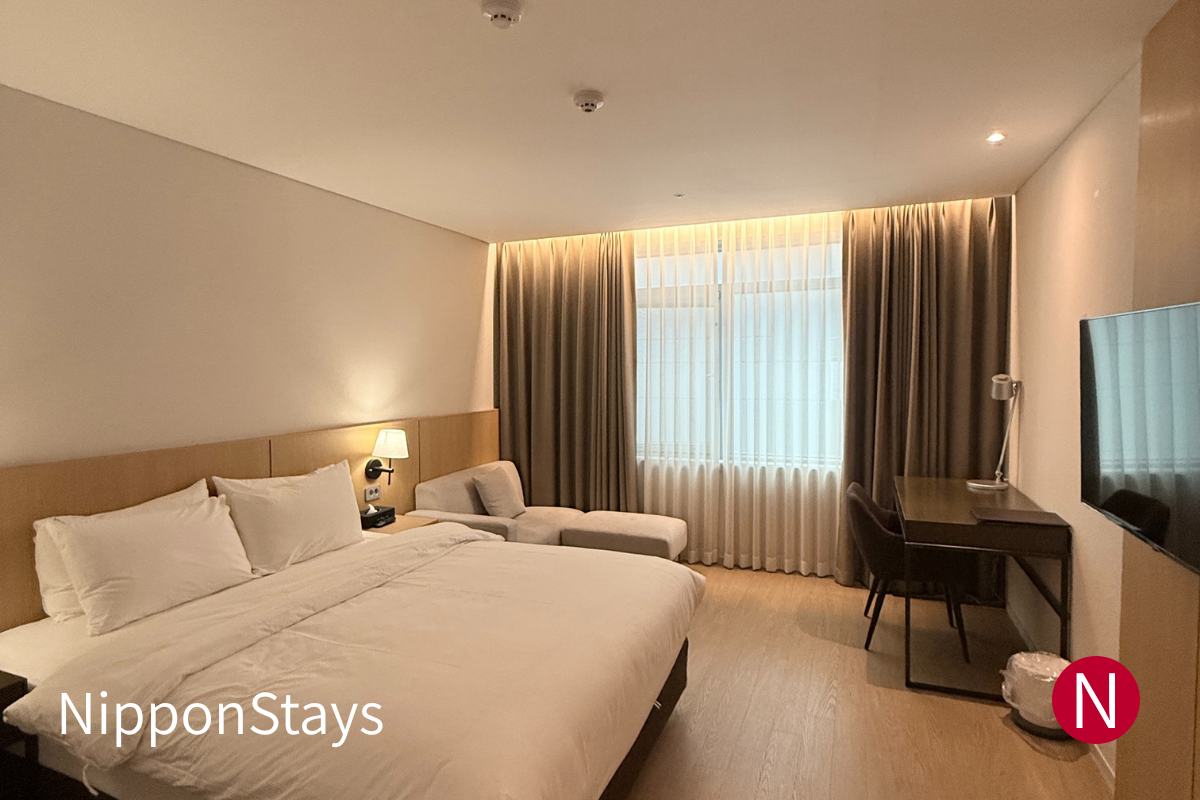
Deciding where to stay in Akihabara is straightforward if you know your priority: remm Akihabara, adjacent to JR Akihabara Station, starts from ¥11,400 for two per night and puts Chuo-dori under 2 minutes from your door — the right pick if anime shops, electronics stores, or game arcades are a primary goal. Budget capsule pods start from ¥3,500 and private business-hotel rooms from ¥11,400. If upscale comfort or a wider range of 3-4 star hotels matters more than zero minutes to the shops, Ueno (two stops north) or Ochanomizu (one stop south) frequently offer comparable or better rooms at lower prices than Akihabara's premium tier. NOHGA HOTEL AKIHABARA TOKYO is the top of the 3-4 star band (from ¥20,000) if you want a restaurant on site — the band itself starts from ¥12,000. For the cheapest option, Anshin Oyado Tokyo Man Akihabara has men-only capsule pods a 2-min walk from the Electric Town Exit, with Akihabara Bay Hotel a 3-min walk away as the women-only equivalent.
Akihabara in 60 Seconds: Who Should Stay Here
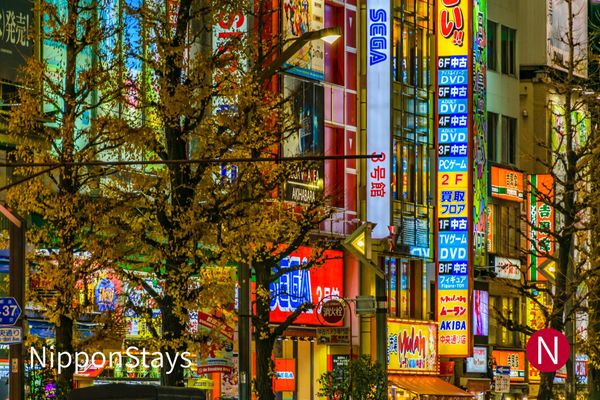
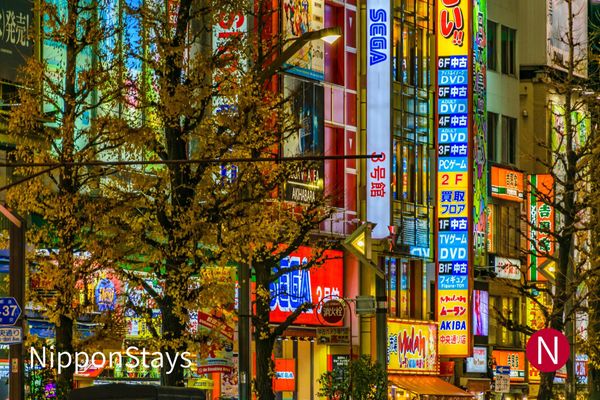
Planning where to stay in Akihabara comes down to knowing what the neighbourhood actually looks like on the ground. Akihabara occupies a compact strip of central Tokyo where multi-floor electronics retailers share blocks with anime figure shops, game arcades, and themed cafes. If your Tokyo trip puts any of those things at the centre, staying here means stepping out of your hotel and into what you came for — no commute required.
Some links in this guide are affiliate links. If you book through them, we may earn a commission at no extra cost to you.
Even with no interest in anime or electronics, the location holds up. JR Akihabara Station sits on the Yamanote Line and the Keihin-Tohoku Line, two of the city's busiest routes. Shinjuku is about 25 minutes from here; Ueno less than 10; Tokyo Station under 5. The trade-off: rooms lean compact, the handful of 3-4 star hotels comes at a noticeable premium, and commercial streets stay active until late into the night.
Akihabara suits solo travellers on a tight budget, anyone making anime or electronics shopping a priority, first-time Tokyo visitors who want a connected central base, and short-stay travellers who value location over room size. Families needing larger rooms or travellers wanting upscale comfort should look at the Ochanomizu and Ueno options covered later in this guide.
The Three Stations and Lines
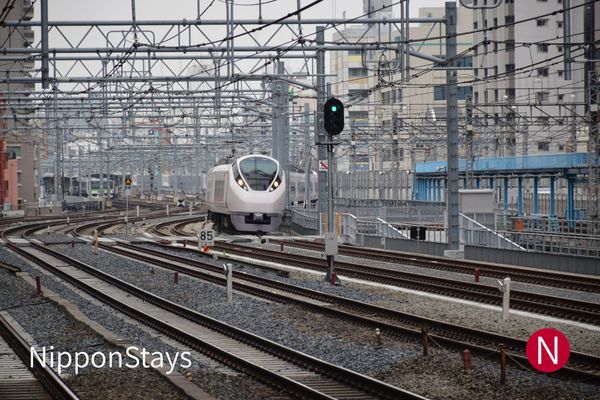
Three separate rail systems serve Akihabara. Knowing which station and exit is nearest to your hotel saves considerable confusion on arrival — booking platforms sometimes list all three as "Akihabara Station" without distinguishing them.
JR Akihabara Station
The primary hub, served by the Yamanote Line (the circular city loop), the Keihin-Tohoku Line (north-south express through central Tokyo), and the Sobu Local Line (east-west). Three exits matter for hotel-seekers:
- Electric Town Exit — faces west toward Chuo-dori, the main electronics and anime shopping street. The busiest exit and the reference point most hotels use in their directions.
- Showa-dori Exit — faces east into a quieter district of office towers and residential blocks. Hotels on this side sometimes cost a few hundred yen less per night for the same walk time to the platform.
- Central Gate — between the other two, passes through the Tolim Akiba retail building and connects to the Tsukuba Express terminal below.
Tokyo Metro Hibiya Line: Akihabara Station
A separate underground station with exits A1–A5 and B1–B3. Connects to Ginza (about 9 minutes) and Naka-meguro. The Hibiya Line entrance is roughly a 3-min walk from the JR ticket gates — not a quick transfer if you're carrying luggage.
Tsukuba Express (TX): Akihabara Station
Also underground, accessed from the south end of the Central Gate building. Runs express to Tsukuba in under 50 minutes. For most tourists this line is less relevant day-to-day, but TX Exit A2 is one of the closer exit points to the Electric Town shopping area.
| Name | Area | Price range | Best for |
|---|---|---|---|
| Anshin Oyado Tokyo Man Akihabara | Electric Town side, 2-min walk from Electric Town Exit | from ¥3,500; rates vary by season | Male solo travellers, capsule experience |
| Akihabara Bay Hotel | Near JR station, 3-min walk | from ¥3,500; rates vary by season | Women travelling alone, budget stay |
| remm Akihabara | Adjacent to JR station, Electric Town side | from ¥11,400 for two; rates vary by season | Budget private room, solo or couple |
| Dormy Inn Akihabara Hot Spring | 3-min walk from JR station | from ¥10,000; rates vary by season | Public bath experience, mid-range comfort |
| NOHGA HOTEL AKIHABARA TOKYO | 6-min walk from JR, Electric Town side | from ¥20,000; rates vary by season | Mid-high comfort, lifestyle hotel with restaurant |
Best Sub-Areas to Base Yourself
Electric Town side (west of JR station)
The main tourist-facing area. Chuo-dori runs north from the Electric Town Exit with the core concentration of electronics retailers, anime figure stores, arcades, and themed cafes. On Sundays, Chuo-dori operates as a pedestrian zone for part of the day — check locally before your visit, as the schedule and coverage can change. Hotels here put you within a 2–7-min walk of the shops, but street activity and noise run through the evening.
Showa-dori / east side
The quieter side of the same station. The Showa-dori Exit drops you into a district of office towers and residential buildings. Hotel prices here are often a few hundred yen lower per night for the same walk time to the platform. A practical choice if you plan to spend your days in other parts of Tokyo and just need a well-connected place to sleep.
One stop out: Ochanomizu and Ueno
Ochanomizu is one stop south on the JR Sobu Line. Ueno is two stops north on the Yamanote or Keihin-Tohoku Line. Both areas carry a wider range of 3-4 star hotels at prices that frequently undercut comparable rooms inside Akihabara. The return trip to the Electric Town Exit from Ueno takes about 5 minutes by JR. If room quality matters more than zero minutes to the shops, our Ochanomizu and Ueno alternatives guide covers specific picks with exact train times back.
Pick by Budget: Capsule to 3-4 Star
Capsule hotels (from ¥3,500/night)
Anshin Oyado Tokyo Man Akihabara is a men-only property a 2-min walk from the Electric Town Exit. It offers artificial hot springs, sauna, and a drink bar alongside the capsule pods. Akihabara Bay Hotel operates as a women-only stay, a 3-min walk from the JR station. Both run 24-hour front desks. For a full side-by-side on capsule hotels in Akihabara — including male-only and women-floor policies across all current properties — see the dedicated guide.
Budget private rooms (from ¥7,500/night)
Via Inn Akihabara (JR West Group) is a business hotel in a distinctive cylindrical tower about a 5-min walk from JR station, primarily serving solo travellers and business guests. remm Akihabara sits directly adjacent to the station with compact but well-designed rooms that consistently earn strong reviews for location and value. Akihabara Washington Hotel is about a 1-min walk from the JR gates — one of the closest full-service properties to the station. The full budget hotels under ¥10,000 guide covers room dimensions and luggage-storage arrangements for each.
Mid-range (from ¥10,500/night)
Dormy Inn Akihabara Hot Spring adds a ninth-floor rooftop public bath — indoor and outdoor pools plus sauna — and complimentary late-night ramen to a standard business-hotel setup. Under Railway Hotel Akihabara is a boutique 29-room property built into the JR Yamanote Line arches, with soundproofed rooms and contemporary interiors. Both properties sit a short walk from the station, and both carry strong recent reviews on major booking platforms. Hotels closest to Akihabara Station lists confirmed walk times for each.
3-4 star (from ¥12,000/night)
JR East Hotel Mets Premier Akihabara is 1 min from the station, with well-reviewed rooms, a separate bathroom layout, and reliable availability on major booking sites. NOHGA HOTEL AKIHABARA TOKYO is a lifestyle hotel a 6-min walk from the Electric Town Exit, featuring high-quality audio speakers in every room and a full-service restaurant and bar. The top 3-4 star Akihabara hotels guide compares both side by side with check-in times and amenity details.
At-a-Glance Comparison Table
Nine representative stays across all price bands, all confirmed operating with 2025 reviews on major booking platforms. Starting rates are approximate; actual prices vary significantly by season and availability.
| Name | Area | Price range | Best for |
|---|---|---|---|
| Anshin Oyado Tokyo Man Akihabara — check rates | Electric Town side, 2-min walk | from ¥3,500; rates vary | Male solo, tight budget |
| Akihabara Bay Hotel — check rates | Near JR station, 3-min walk | from ¥3,500; rates vary | Women travelling solo |
| Via Inn Akihabara — check rates | 5-min walk from JR, Showa-dori side | from ¥6,500; rates vary | Solo or couple, budget private room |
| Akihabara Washington Hotel — check rates | 1-min walk from JR station | from ¥9,000; rates vary | Closest to station on a moderate budget |
| remm Akihabara — check rates | Adjacent to JR station, Electric Town side | from ¥11,400 for two; rates vary | Compact private room, strong location |
| Dormy Inn Akihabara Hot Spring — check rates | 3-min walk from JR station | from ¥10,000; rates vary | Public bath, sauna, free late-night ramen |
| Under Railway Hotel Akihabara — check rates | Under Yamanote Line arches, central | from ¥9,000; rates vary | Boutique, design-focused stay |
| JR East Hotel Mets Premier Akihabara — check rates | 1-min walk from JR station | from ¥12,000; rates vary | Mid-to-upper comfort, top station access |
| NOHGA HOTEL AKIHABARA TOKYO — check rates | Electric Town side, 6-min walk | from ¥20,000; rates vary | Lifestyle comfort, restaurant and bar on site |
Getting to Akihabara from Narita and Haneda
From Narita Airport (NRT)
The Narita Express (N'EX) runs to Tokyo Station in roughly 60 minutes. From Tokyo Station, the JR Keihin-Tohoku Line reaches JR Akihabara Station in about 5 minutes (additional ¥250). Total door-to-station time: roughly 70–80 minutes; total cost around ¥3,200–¥3,500. Alternatively, the Keisei Skyliner reaches Nippori in about 40 minutes (¥2,580 as of our July 2026 check), then the JR Keihin-Tohoku Line runs 10 minutes south to Akihabara — a similar total cost and broadly the same journey time.
From Haneda Airport (HND)
Haneda is considerably closer to central Tokyo. The Tokyo Monorail from the Haneda terminal to Hamamatsucho takes about 18 minutes; from Hamamatsucho, the JR Keihin-Tohoku Line north to Akihabara adds about 10 minutes. Total: around 40 minutes, cost approximately ¥520 (IC card). The Keikyu Line via Shinagawa is an alternative with a similar journey time. Either option from Haneda cuts the arrival transfer significantly compared to Narita.
Is Akihabara Right for Your Trip?
A quick decision guide before you book:
- Stay here if anime shops, electronics stores, or game arcades are a primary goal; you want Yamanote Line and Keihin-Tohoku connections; your budget is under ¥15,000 per night; or you're travelling solo and comfortable with compact rooms and a lively evening street environment.
- Consider alternatives if you need a room that fits 3-4 people (see family rooms in Akihabara and nearby options); you want more 3-4 star variety at a lower price point (Ochanomizu and Ueno, one or two stops away, are worth checking); or you're choosing between Akihabara and the west side of the city (the Akihabara vs Shinjuku comparison breaks down that decision by traveller type).
- Either works if you're using Tokyo as a day-trip base and mainly need a well-connected JR station with fast access to multiple parts of the city.
Once you've settled on Akihabara, narrow by type. For options sorted by walk time from each station exit, see hotels closest to Akihabara Station. The capsule hotels in Akihabara guide covers male-only and women-floor properties with full amenity details. For upper-tier stays, the top 3-4 star Akihabara hotels guide covers JR East Hotel Mets Premier and NOHGA with room sizes, check-in times, and luggage-storage information.
Where to Eat in Akihabara: Two Firsthand Picks
Marugo — our pick for the best tonkatsu in Tokyo
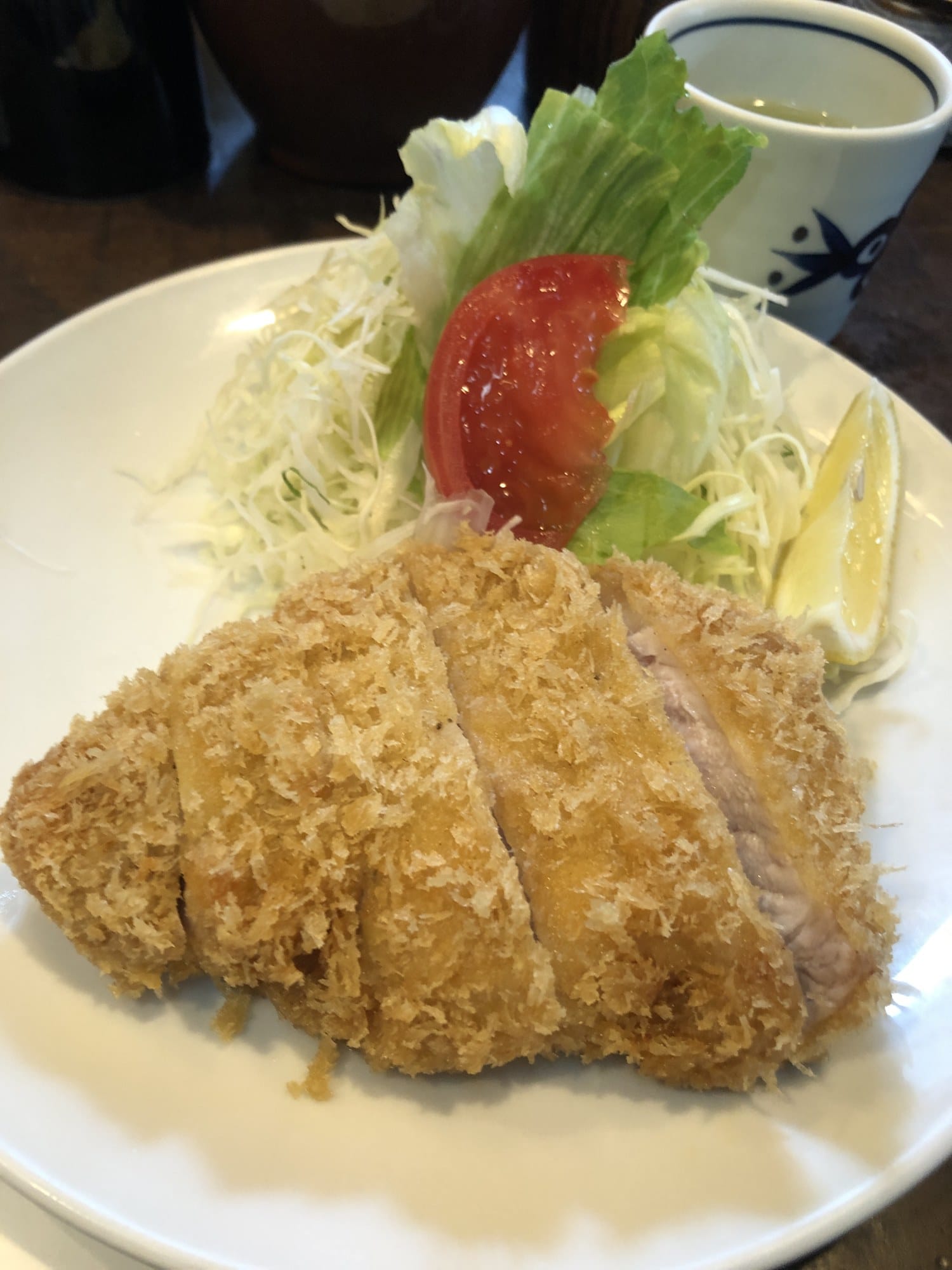
Marugo's tonkatsu — our photo.
Marugo (丸五) has fried tonkatsu a 3-min walk from the Electric Town exit since 1975, and it's our pick for the best tonkatsu in Tokyo — a Tabelog Top 100 pick for 2026, too. Lunch runs 11:30–14:00, dinner 17:00–20:00, closed Mondays and Tuesdays. A queue forms before opening — arrive 15 minutes early.
Kanda Kikukawa — unagi without the intimidation factor
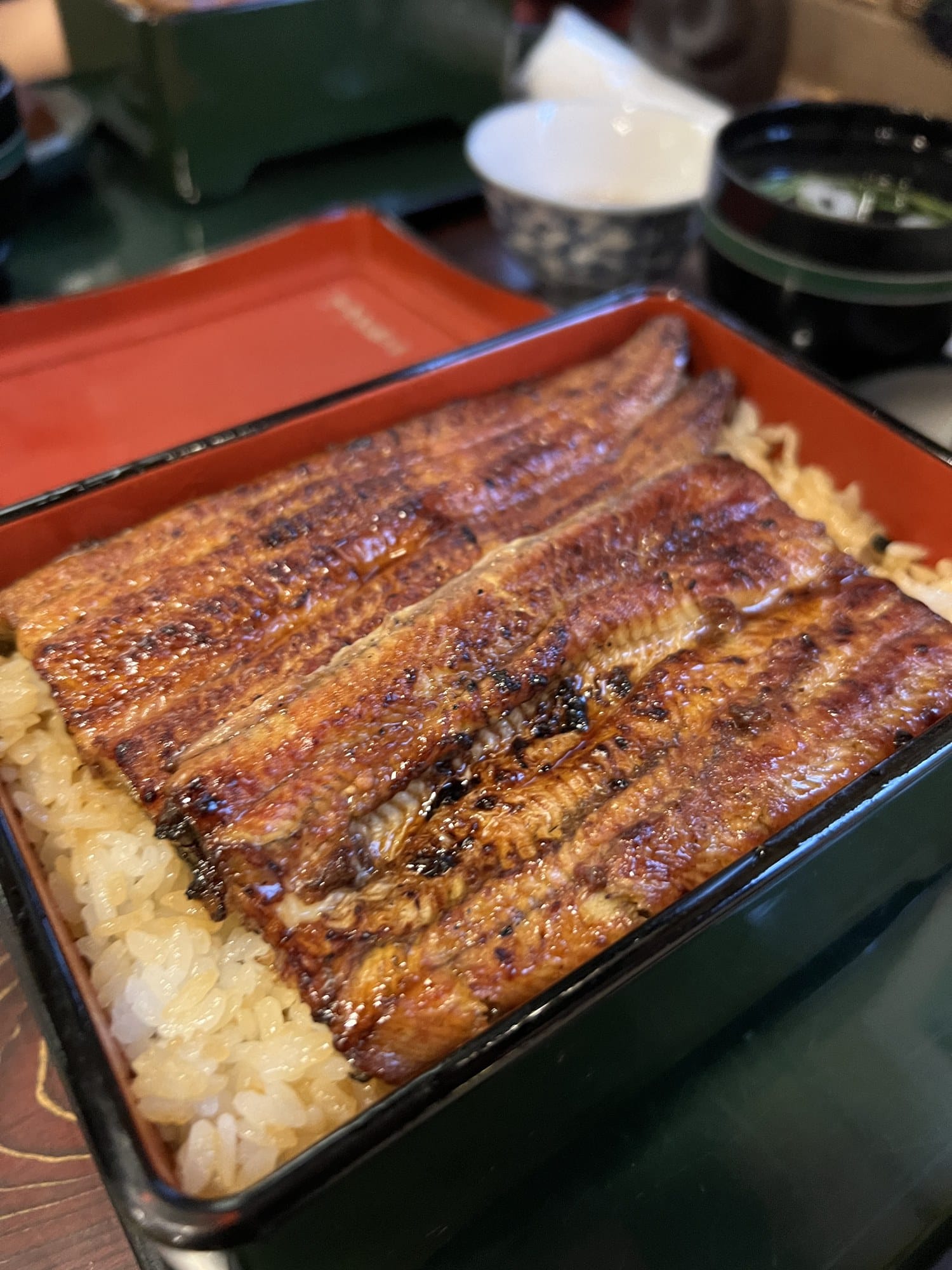
Kikukawa's unaju — our photo.
For unagi, walk 10 minutes south of the Electric Town exit to Kanda Kikukawa (神田きくかわ), grilling eel since 1947. Kanda-gawa nearby is the more famous old eel house, but Kikukawa is where we send first-timers: a proper dining room, simple ordering, staff relaxed about overseas guests, and no mid-afternoon break (11:30–21:00 weekdays, to 20:00 weekends). Closed New Year and summer holidays.
Trip Essentials for Akihabara
Things worth booking before you land, all in English:
- eSIM — Airalo's Japan eSIM: install it at home and data works as soon as you switch off airplane mode at Haneda or Narita.
- Airport transfer — Welcome Pickups runs fixed-price door-to-door pickups from Haneda or Narita; Klook sells the airport bus and train tickets if you'd rather ride.
- Luggage storage — arriving before check-in? Radical Storage takes bags at shops near Akihabara Station for a flat daily rate.
- Tickets and day trips — Klook covers teamLab tickets, Tokyo Skytree, and maid-cafe reservations; booking ahead skips the ticket-window line.
FAQ: Where to Stay in Akihabara
What is the cheapest way to stay near Akihabara Station?
The lowest verified overnight rates in Akihabara are at capsule hotels, with Anshin Oyado Tokyo Man Akihabara (men only, 2-min walk from the Electric Town Exit) and Akihabara Bay Hotel (women only, 3-min walk) both starting from ¥3,500 per night. GLANSIT Akihabara, which accepts both genders on separated floors, also starts from ¥3,500 and is a 3-min walk from the Electric Town Exit. For a private room with an en-suite bathroom, remm Akihabara starts from ¥11,400 and sits directly adjacent to JR Akihabara Station.
Is Akihabara a good base if I want to visit other parts of Tokyo?
Akihabara is well-connected for cross-city day trips. JR Akihabara Station sits on the Yamanote Line (the circular city loop) and the Keihin-Tohoku Line. From here, Tokyo Station is under 5 minutes; Ueno less than 10; Shinjuku about 25 minutes. The Tokyo Metro Hibiya Line — accessed from a separate underground entrance roughly a 3-min walk from the JR gates — connects to Ginza in about 9 minutes. The Tsukuba Express runs from the south end of the Central Gate building for express service toward Tsukuba.
Which exit of JR Akihabara Station should I use to reach the anime shops?
The Electric Town Exit on the west side opens directly onto Chuo-dori — the main strip of anime figure stores, electronics retailers, and game arcades. Most hotels on the shopping side of the district quote their walk times from this exit. The Central Gate (between Electric Town and the east side) passes through the Tolim Akiba retail building and gives access to the Tsukuba Express terminal below. The Showa-dori Exit on the east side leads into a quieter district where hotel prices are sometimes a few hundred yen lower per night for the same walk time to the platform.
Should I stay in Akihabara or Ueno for better hotel value?
Ueno, two stops north on the JR Yamanote or Keihin-Tohoku Line (approximately 5 minutes back to Akihabara), carries a wider range of 3-4 star hotels at prices that frequently undercut comparable rooms in central Akihabara. Akihabara's mid-range properties start from around ¥10,500 and its 3-4 star tier from ¥12,000; if room quality and quiet matter more than zero minutes to the Electric Town shops, the Ueno and Ochanomizu alternatives guide covers specific picks with exact train times back to Akihabara.
Information audit: Last fact-checked July 2026 · Prices checked July 2026 (all rates are “from” floors that vary by season) · How this guide was researched: hotel facilities, prices and access details are verified against official and primary sources; we have not personally stayed at every property listed. The author has lived in Tokyo for 30 years · How this site verifies information: About NipponStays.