Where to Stay in Shinjuku First Time: Area Guide (2026)
First visit to Shinjuku? This guide maps the west, east, and Sanchome areas, explains the key station exits, and picks the right hotel for your budget.
Choosing where to stay in Shinjuku first time is mostly a question of which side of the station fits your trip. Shinjuku has the world's busiest train station at its center, four very different neighborhoods within walking distance, and hotel options from ¥8,000-a-night capsule pods to ¥80,000 luxury towers. This guide maps each pocket, explains the exits, and gives you the decision framework to pick the right one — without guessing. For the picks: Shinjuku Washington Hotel (from ¥9,000) is the budget and solo choice, Hotel Gracery Shinjuku (from ¥14,000) is the east-side option with pop-culture theme rooms, Keio Plaza Hotel Tokyo (from ¥32,000) is the reliable mid-upscale property, and Park Hyatt Tokyo (from ¥120,000) is the skyline splurge.
Some links in this guide are affiliate links. If you book through them, we may earn a commission at no extra cost to you.
All 5 hotels listed in this guide offer luggage storage before check-in (checked July 2026).
Is Shinjuku Right for Your First Tokyo Trip?
For most first-time visitors, yes. Shinjuku Station connects JR Yamanote, Chuo/Sobu rapid, Odakyu, and Keio lines with Tokyo Metro Marunouchi and Fukutoshin lines — all under one roof. Day trips to Hakone (Odakyu Romance Car), Nikko (JR + transfers), and Kamakura (Shonan-Shinjuku Line) all start here. Central Tokyo neighborhoods like Shibuya and Harajuku are 5–10 min away on the Yamanote Line.
Shinjuku fits less well if you want a quiet residential atmosphere or need to be within walking distance of Asakusa or Ueno. For a direct comparison of your options, read our Shinjuku vs Shibuya guide before you book.
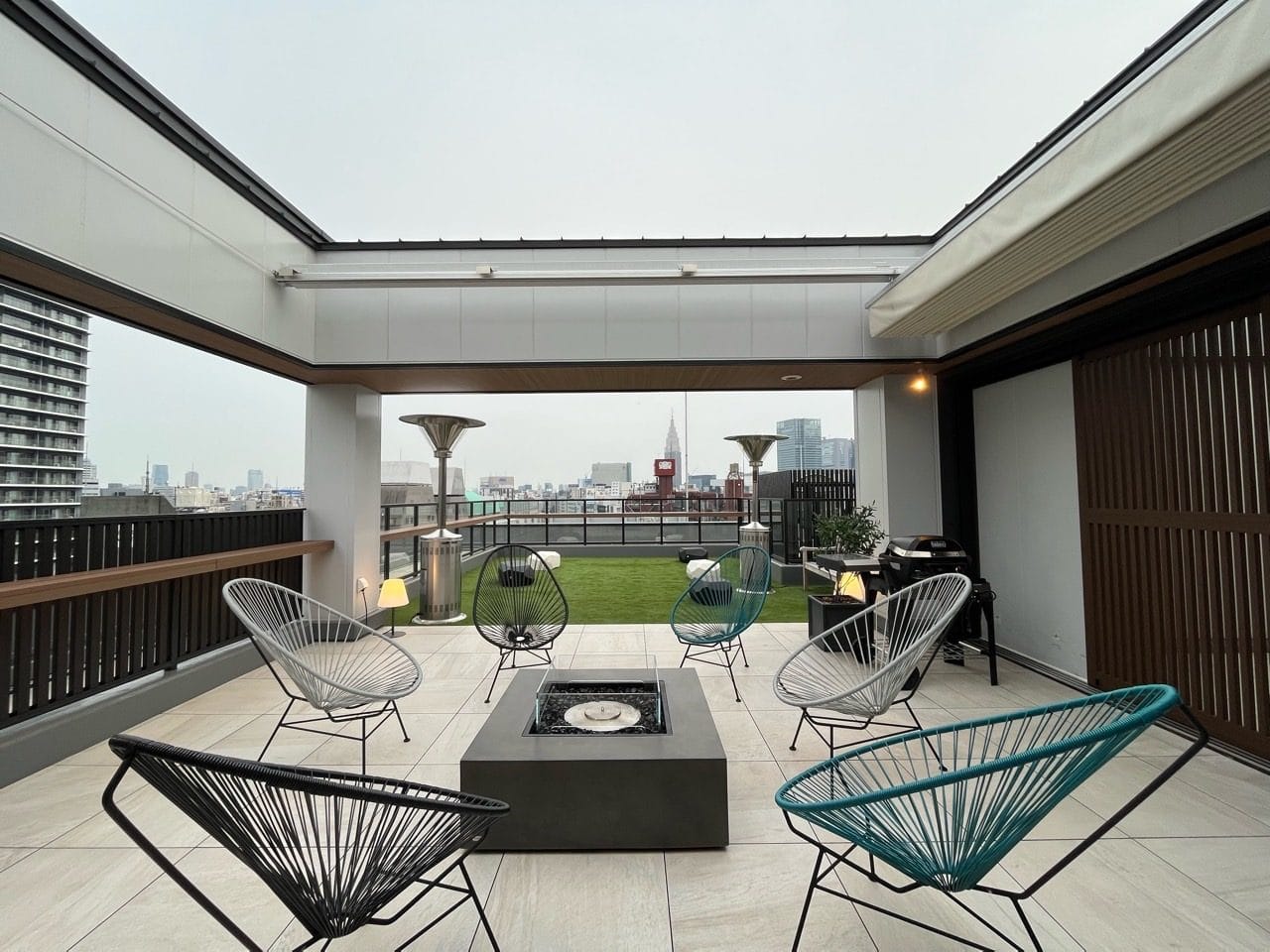
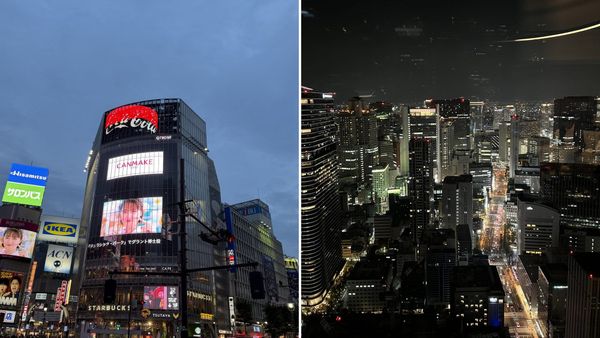
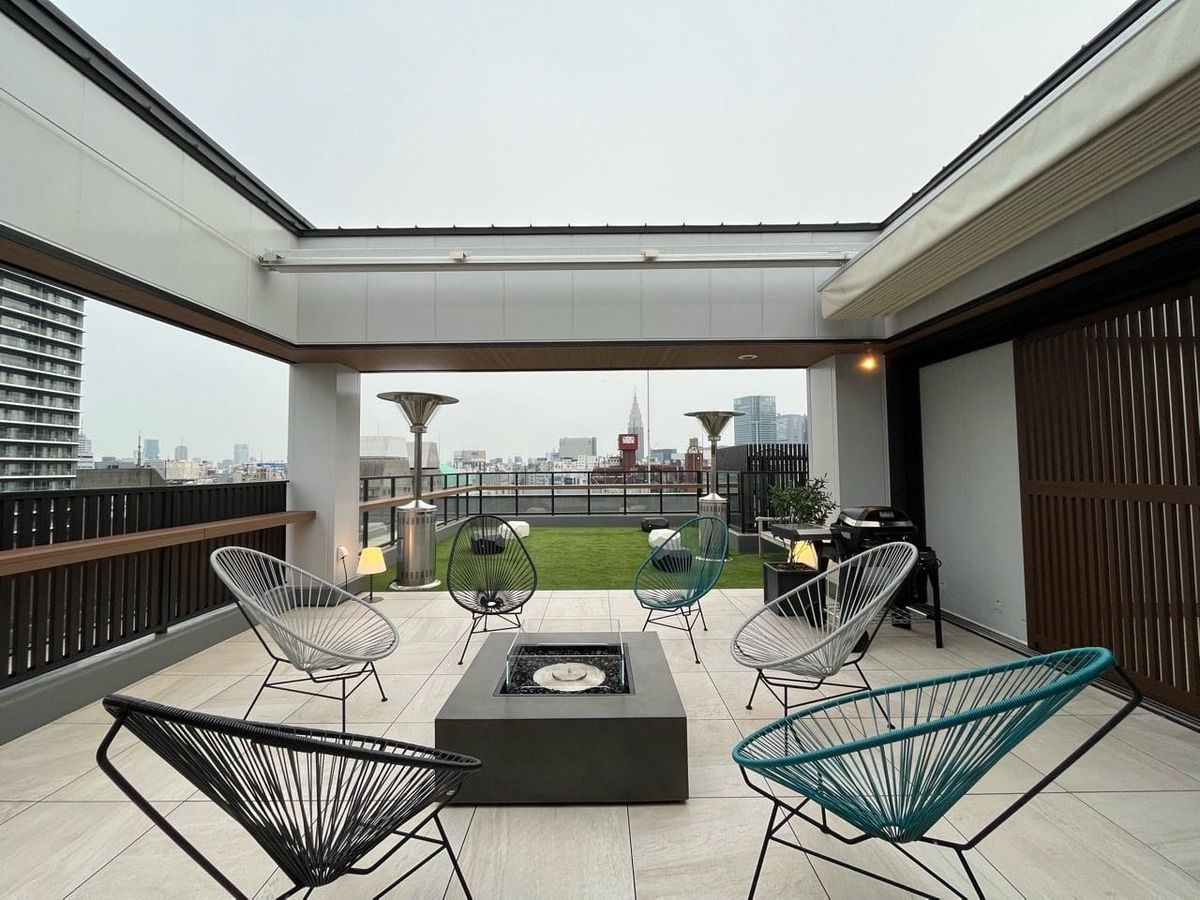
Rooftop terrace with Shinjuku skyline views
Shinjuku at a Glance: Sides, Exits, and What Each Is Good For
The station has over 50 numbered exits plus named exits. Four directions matter for hotels:
- West Exit (Nishi-guchi) — leads into the skyscraper district (Nishi-Shinjuku). Wide streets, large hotels, the Tokyo Metropolitan Government Building free observation decks.
- East Exit (Higashi-guchi) — opens directly onto Kabukicho and the shopping streets toward Shinjuku-sanchome. More foot traffic and street noise, especially at night.
- South Exit / New South Exit (Minami-guchi) — closest to the Odakyu and Keio platforms, Busta Shinjuku bus terminal (limousine buses to Narita and Haneda), and Takashimaya Times Square.
- Shinjuku-sanchome Station — two stops east on Tokyo Metro Marunouchi Line; calmer pocket near Shinjuku Gyoen National Garden.
Here is a hotel pick for each main area. All prices are starting rates and vary by season and demand.
| Name | Area | Price range | Best for |
|---|---|---|---|
| Park Hyatt Tokyo — check rates | West Shinjuku (floors 39–52) | from ¥120,000 for two | Luxury, skyline views, special occasions |
| Hyatt Regency Tokyo — check rates | West Shinjuku, 9-min walk West Exit | from ¥49,000 for two | Upscale comfort, renovated 2025 rooms |
| Keio Plaza Hotel Tokyo — check rates | West Shinjuku, Tochomae Station Exit B1 | from ¥32,000 for two | Mid-upscale, large property, reliable |
| Hotel Gracery Shinjuku — check rates | East Shinjuku / Kabukicho | from ¥14,000 | East-side location, pop-culture theme rooms |
| Shinjuku Washington Hotel — check rates | West Shinjuku, near West Exit | from ¥9,000 | Budget-conscious travelers and solo stays |
West Shinjuku (Nishi-Shinjuku): Skyscrapers, Quieter Nights
Take the West Exit from Shinjuku Station and the street opens into wide corporate boulevards lined with towers. The west side is considerably quieter after midnight than the east. This is where Shinjuku's luxury and upper mid-range hotels concentrate, with most within a 10–15-min walk from the exit or a short free bus ride through the skyscraper district.
Park Hyatt Tokyo occupies floors 39–52 of Shinjuku Park Tower. It reopened in December 2025 after a 19-month renovation — the most significant transformation in its 30-year history — with 171 redesigned rooms and a new Girandole by Alain Ducasse restaurant. Walk time from the West Exit is approximately 15 min; a free local shuttle bus also serves the skyscraper area. Check current rates.
Hyatt Regency Tokyo completed a comprehensive renovation in 2025 and now offers 712 rooms across 22 styles. It is a 9-min walk from the West Exit. For the same walk at a lower price, Keio Plaza Hotel Tokyo gives you a reliable large-property experience with direct basement access from Tochomae Station (Exit B1) — practical for late arrivals who want to skip the main station crowds. Check current rates.
The best-value option on this side is Shinjuku Washington Hotel. Rooms are compact, but the location near the West Exit is practical for early starts. For a deeper list, see our West Shinjuku hotel guide.
East Shinjuku and Kabukicho: Lively Nightlife Area, Closest to the Action
Exit through the East Exit and you are immediately in Kabukicho — Tokyo's largest lively nightlife area. Ramen shops, karaoke towers, and the compressed alley network of Golden Gai are all within a 5-min walk. Streets stay loud and bright past 2 a.m.
Hotel Gracery Shinjuku is an 870-room tower sitting above Toho Cinemas, roughly 3-min walk from the East Exit. Its famous Godzilla head on the 8th-floor terrace is a Shinjuku landmark. The hotel suits travelers who plan to spend most evenings in Kabukicho or at Golden Gai and want zero-friction access home. Rooms start from around ¥14,000 and rates vary significantly by season. Check current rates.
The trade-off: street noise carries. If you are a light sleeper, request a room facing away from Kabukicho, or consider a west-side hotel instead. For alternatives one block back, see our Kabukicho area hotel guide.
Shinjuku-Sanchome and Shinjuku Gyoen: Greener, Calmer, Still Central
Shinjuku Gyoen National Garden occupies a large green block southeast of the station. The surrounding pocket — generally called the Sanchome or Gyoen area — runs quieter than both the west skyscraper strip and the Kabukicho side. Smaller restaurants, independent coffee shops, and izakaya line the streets without the neon intensity of the entertainment district.
Getting here is simple: Shinjuku-sanchome Station on the Tokyo Metro Marunouchi Line is two stops east of the main station, or a 12-min walk from the East Exit. The Shinjuku Gyoen main entrance is a 5-min walk from Shinjuku-sanchome Station (Exit A1). The garden opens daily except Monday (and the day after public holidays).
For full hotel listings in this pocket, see our Shinjuku Gyoen hotel guide. Families should also check family hotels in Shinjuku, as several apartment-style properties with extra space sit in this calmer zone. Staying a week or longer? Our guide to serviced apartments in Shinjuku compares kitchens, laundry and monthly discounts.
How to Choose by Budget: From Capsules to Luxury
Shinjuku covers every price point, but what you get at each level differs from what the same yen buys in other Tokyo districts:
- Under ¥10,000: Compact business-hotel rooms (typically 13–16 m²) or capsule formats. Functional, no frills. See budget hotels in Shinjuku for curated picks across this band.
- ¥10,000–¥25,000: Standard doubles or twins with en-suite bathroom. Most include luggage storage, 24-hour front desk, and a convenience store within a 2-min walk.
- ¥25,000–¥50,000: Upper mid-range. Larger rooms, city views from higher floors, likely a pool or fitness center. Check our station-area hotel guide for options in this tier sorted by exit.
- ¥50,000+: Luxury towers with full-service dining, club floors, and rooms that frame the skyline. See luxury hotels in Shinjuku.
All prices shift sharply during cherry blossom peak (late March–early April), Golden Week (late April–early May), and the autumn color season. Booking 6–8 weeks ahead is advisable for any stay during those windows.
Getting to and from the Airport
Shinjuku is well-positioned for both Tokyo airports.
From Narita Airport (NRT)
- Narita Express (N'EX): Direct to JR Shinjuku Station. About 90 min, around ¥3,330 one way. Covered by the Japan Rail Pass. Trains run every 30–60 min.
- Airport Limousine Bus: Departs Narita roughly every 15–20 min. About 105 min, around ¥3,600 one way. Several routes stop directly at Nishi-Shinjuku hotels — confirm your hotel at booking if this matters to you.
From Haneda Airport (HND)
- Tokyo Monorail to Hamamatsucho, then JR Yamanote Line to Shinjuku: approximately 45–55 min total.
- Keikyu Line to Shinagawa, then Shonan-Shinjuku Line or Yamanote to Shinjuku: similar time.
- Direct limousine bus to Busta Shinjuku: approximately 35–60 min depending on expressway traffic.
If you are staying in a Nishi-Shinjuku hotel, confirm at booking whether the limousine bus stops at your property — it can save a 10-min taxi fare from the station on arrival day when you have bags.
Pick-Your-Area Cheat Sheet
Match your travel style to an area using the table below, then follow the internal links for full hotel lists by neighborhood. All rates are starting prices; actual prices vary by season and demand.
| Name | Area | Price range | Best for |
|---|---|---|---|
| Park Hyatt Tokyo — check rates | West Shinjuku | from ¥120,000 for two | Luxury, post-renovation, iconic views |
| Hyatt Regency Tokyo — check rates | West Shinjuku | from ¥49,000 for two | Upscale comfort, families, longer stays |
| Keio Plaza Hotel Tokyo — check rates | West Shinjuku | from ¥32,000 for two | Mid-upscale, large property, quiet floors |
| Hotel Gracery Shinjuku — check rates | East Shinjuku / Kabukicho | from ¥14,000 | East-side access, pop culture, nightlife |
| Shinjuku Washington Hotel — check rates | West Shinjuku | from ¥9,000 | Budget-friendly, solo travelers, early starts |
More guides in this cluster: hotels near Shinjuku Station by exit • budget hotels in Shinjuku • luxury hotels in Shinjuku • family hotels in Shinjuku
Trip Essentials for Shinjuku
Things worth booking before you land, all in English:
- eSIM — Airalo's Japan eSIM: install it at home and data works as soon as you switch off airplane mode at Haneda or Narita. Comparing providers? See our Japan eSIM guide.
- Airport transfer — Welcome Pickups runs fixed-price door-to-door pickups from Haneda or Narita; Klook sells the airport bus and train tickets if you'd rather ride.
- Luggage storage — arriving before check-in? Radical Storage takes bags at shops near Shinjuku Station for a flat daily rate.
- Tickets and day trips — Klook covers teamLab tickets, Tokyo Skytree, and Hakone day trips; booking ahead skips the ticket-window line.
Related: Compare Japanese-style ryokan in Shinjuku and Shinjuku hotels for solo travelers.
FAQ: First-Timer Questions About Staying in Shinjuku
Which side of Shinjuku is better for a first visit — east or west?
For rest and easy navigation, the west side has a slight edge. Streets are quieter after dark, hotels are larger, and the West Exit puts you one direct walk from the airport bus terminal at Busta Shinjuku. The east side is better if you specifically want Kabukicho and Golden Gai on your doorstep — accept that it comes with late-night noise.
Is Shinjuku a good base for day trips around Japan?
Yes. The Odakyu Romance Car to Hakone departs from Odakyu Shinjuku Station (same building as JR Shinjuku). The N'EX to Narita Airport leaves from JR Shinjuku. The JR Chuo Line gives direct access to Takao and, with a transfer, on to Matsumoto. Central Tokyo — Shibuya, Harajuku, Akihabara — is one or two stops on the Yamanote Line.
How noisy is it staying in Shinjuku?
It depends entirely on which sub-area you choose. The east side and Kabukicho stay active until early morning. Upper floors of west-side towers are much quieter. If noise is a concern, book a high-floor room on the west side, or request a room facing away from the main street at any east-side property.
Can I store luggage on arrival before check-in?
All five hotels in this guide — Shinjuku Washington Hotel, Hotel Gracery Shinjuku, Hyatt Regency Tokyo, Keio Plaza Hotel Tokyo and Park Hyatt Tokyo — offer luggage storage before check-in (checked July 2026). Coin lockers are available throughout Shinjuku Station in several sizes. Third-party luggage storage services operate in the station area if you arrive early and need all-day storage before check-in.
Information audit: Last fact-checked July 2026 · Prices checked July 2026 (all rates are “from” floors that vary by season) · How this guide was researched: hotel facilities, prices and access details are verified against official and primary sources; we have not personally stayed at every property listed. The author has lived in Tokyo for 30 years · How this site verifies information: About NipponStays.