Ryokan vs Hotel Which to Book in Japan
Ryokan vs hotel in Japan: sampled ryokan from ¥50,000/person (meals included), hotels from ¥5,500/room. Find out which to book for your trip.

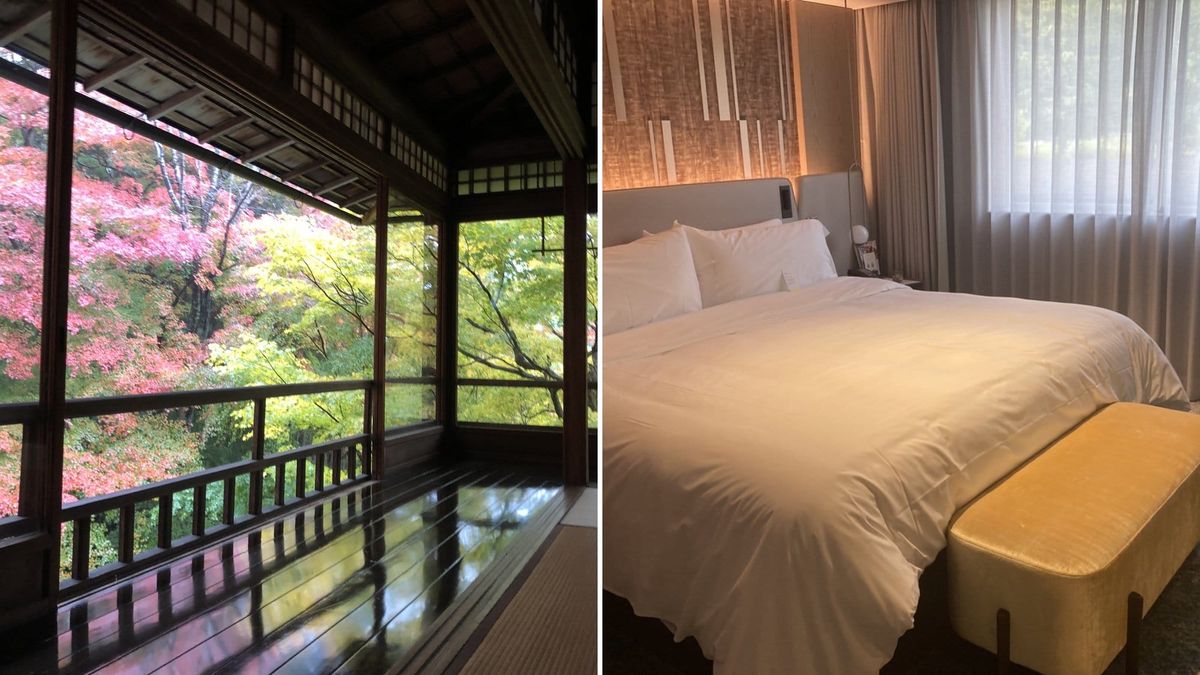
Deciding ryokan vs hotel which to book in Japan comes down to one question: how do you want to spend your evenings? Want kaiseki dinners, tatami floors, and an onsen? Book a ryokan — even one night transforms your trip. Want a flexible city base with late check-in and no meal obligations? Book a hotel. Ryokan from ¥50,000/person with meals for the sampled inns in this article (simpler onsen-town ryokan can cost less), hotels from ¥5,500 per room. If you have two or more nights in a cultural area like Kyoto or Hakone, I'd split the stay: one ryokan night, the rest in a hotel.
Sample Stays at a Glance
The table below shows a curated mix of verified ryokan and hotel options across Japan's most popular destinations — a quick reference before the deeper breakdown below.
| Name | Area | Price range | Best for |
|---|---|---|---|
| Hiiragiya | Kyoto (Nakagyo) | from ¥50,000/person (2 meals) | Classic Kyoto ryokan experience, couples |
| Hoshinoya Kyoto | Kyoto (Arashiyama) | from ¥70,000 for two, room only | Boat-access retreat, anniversary stays |
| Gora Kadan | Hakone (Gora) | from ¥76,000/person (2 meals) | Private onsen, Mt Fuji day-trip base |
| Dormy Inn Premium Kyoto Ekimae | Kyoto (Station area) | from ¥7,300/room | Budget-flexible city base, hot spring bath |
| APA Hotel Kyoto Ekimae Chuoguchi | Kyoto (Station area) | from ¥5,500/room | Lowest-price Kyoto Station option |
| Toyoko Inn Shinjuku Kabukicho | Tokyo (Shinjuku) | from ¥6,000/room | Budget Tokyo base, free breakfast |
Rates vary by season and are per person for ryokan (dinner + breakfast included) or per room for hotels. Checked July 2026.
What a Ryokan Actually Includes
A ryokan stay is a fixed-format experience: you arrive at a set check-in window (usually 15:00–18:00), change into a yukata robe provided in your room, and the inn's schedule takes over from there.
- Kaiseki dinner: 8–12 course meal served in your room or a private dining room. It typically starts between 18:00 and 19:00 and lasts 60–90 min.
- Breakfast: Japanese-style (rice, miso soup, grilled fish, pickles) served the next morning, usually 07:30–09:00.
- Onsen or communal bath: Most traditional ryokan have gender-separated natural hot spring baths open morning and evening. Some higher-tier rooms include a private rotenburo (open-air bath).
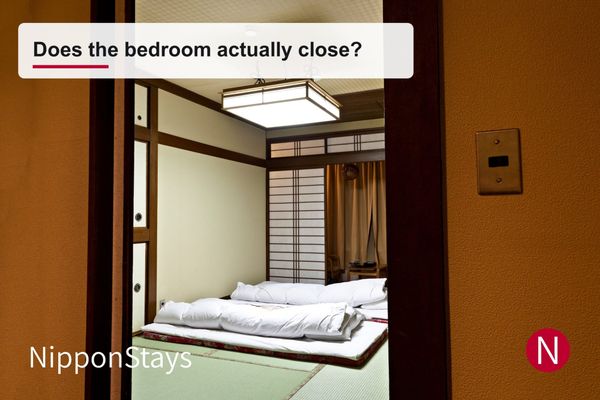
- Tatami room: You sleep on a futon laid on the tatami floor. Staff clear it while you're at dinner and lay it out while you're bathing.
- Checkout: Usually 10:00–11:00 — earlier than most hotels.
Of the 4 ryokan covered in this article, all include kaiseki dinner and Japanese breakfast in the rate (checked July 2026). This matters for budgeting: the ¥50,000–76,000 per person per night figure for these sampled inns sounds steep until you subtract two restaurant meals.
The fixed format is also the biggest limitation. If your train is delayed and you arrive at 21:00, dinner is gone. If you want to eat ramen in Gion at midnight, you'll feel the pull of a ¥50,000 dinner sitting uneaten back at the inn. Ryokan work best when you're willing to let the inn's rhythm be your evening.
When a Hotel Is the Better Call
A hotel gives you the one thing a ryokan doesn't: flexibility. Late arrivals, early departures, eating wherever you want, staying three nights without a repeat kaiseki — these all point to a hotel.
- Late arrivals: Business hotels accept guests around the clock. Most ryokan want you by 18:00, and many require notification if you'll arrive after 20:00.
- Long stays: Three or four nights in a ryokan feels repetitive (same dinner format, same room). Two nights at a business hotel costs a fraction of one ryokan night and leaves budget for restaurant variety.
- Couples or groups with different diets: Kaiseki involves multiple seafood courses. Allergies and dietary restrictions can be accommodated at good ryokan, but require advance notice and sometimes a premium surcharge.
- Luggage-heavy travelers: Ryokan rooms are typically 25–40 m² with limited closet space. Business hotel rooms are smaller (12–20 m²) but handle suitcases more practically.
- Urban exploration: In Tokyo, Osaka, or Sapporo, a centrally located business hotel puts you 3 minutes from the station and 15 minutes from anywhere. Most traditional ryokan sit in quieter residential or onsen-town settings — ideal for unwinding, not for a packed sightseeing day.
For a 7-night Japan trip, a common pattern is: 1 ryokan night in Kyoto or Hakone, 6 nights in hotels across Tokyo and Osaka. That balances the cultural experience against budget and logistics.
How to Combine Both in One Trip
Most travelers find one or two ryokan nights is the right dose — enough to have the full experience, not so many that the fixed schedule feels constraining. The contrast table below maps the key decision points side by side.
| Decision axis | Ryokan | Hotel |
|---|---|---|
| Meals | Kaiseki dinner + Japanese breakfast included | Not included (breakfast add-on or eat out) |
| Price band | from ¥50,000/person (sampled inns, meals included) to ¥76,000+/person — simpler onsen-town ryokan can cost less | from ¥5,500/room (budget) to ¥30,000+/room — room only |
| Check-in flexibility | 15:00–18:00 (late arrival needs notice) | 24-hour front desk, flexible arrival |
| Best for (nights) | 1–2 nights as a cultural experience night | Whole trip, or 3+ nights in any city |
| Onsen/bath | On-site communal or private onsen usually included | Some (Dormy Inn chain) have natural hot spring baths; most have standard bathrooms only |
| Room size | 25–50 m² tatami room, futon on floor | 12–25 m² Western bed room |
| Couples | Strong choice for romantic or anniversary stays | Practical for itinerary-heavy trips |
The most common recommendation I make: if you're in Kyoto for 3+ nights, make night 2 your ryokan night — you've already done the main sightseeing rush and you can slow down. For Hakone, a ryokan night slots naturally into a Tokyo–Kyoto itinerary as an overnight detour. Internal links: best ryokan in Kyoto for kaiseki, traditional ryokan in Nara, ryokan in Osaka, and our full Japan stay decision guide.
Kyoto has a third answer that removes the trade-off. Kasui-en at The Westin Miyako Kyoto is a twelve-room sukiya-style ryokan, built in 1959 to a Togo Murano design and reopened in 2020, standing inside a hotel that keeps a lounge, a pool and a concierge: tatami and a ryokan evening on one side of the garden, a Western room and a late check-in on the other, on the same booking.
Trip Essentials for Japan
Things worth booking before you land, all in English:
- eSIM — Airalo's Japan eSIM: install it at home and data works as soon as you switch off airplane mode at Haneda, Narita, Kansai, or wherever you land.
- Tickets and day trips — Klook covers the Japan Rail Pass, teamLab tickets, and shinkansen-linked day trips; booking ahead skips the ticket-window line.
FAQ: Ryokan vs Hotel in Japan
Is a ryokan worth it for just one night?
Yes — one night is actually the most common booking. You arrive in the afternoon, enjoy the kaiseki dinner, use the onsen morning and evening, and check out after breakfast. The full experience fits neatly into a single overnight. Staying longer can feel repetitive unless the ryokan has distinct dinner menus by night.
Are ryokan always more expensive than hotels?
Compared per room, yes — the sampled ryokan in this article start from ¥50,000 per person including two meals, while a mid-range business hotel runs ¥8,000–15,000 per room. But when you subtract the cost of a kaiseki dinner (typically ¥10,000–20,000 per person at a standalone restaurant) and breakfast, the gap narrows. Simpler ryokan in rural onsen towns run at lower price points, though the exact floor depends on the property and season.
Can I stay in a ryokan without having the kaiseki dinner?
Some ryokan offer a room-only or room-with-breakfast-only rate, but traditional properties often require the full-board plan. Always check at booking. If the kaiseki is non-negotiable and you have serious dietary restrictions — shellfish allergy, vegetarian, halal — contact the ryokan directly before booking. Higher-end properties can usually adapt; budget inns may not.
Where should I try my first ryokan?
Kyoto and Hakone are the most popular first-ryokan destinations. Kyoto offers properties like Hiiragiya and Hoshinoya Kyoto within easy reach of daytime sightseeing. Hakone (such as Gora Kadan) combines a ryokan night with Mt Fuji views and a natural hot spring town — ideal as a one-night detour between Tokyo and Kyoto. If budget is a concern, smaller onsen towns like Kinosaki or Arima have more modest ryokan at lower price points than the Kyoto and Hakone properties sampled here.