Autumn Leaves in Japan: 2 Months, North to South
Japan's autumn is not a month. It is a nine-week wave from Hokkaido in September to Kyushu in December — and where each region lands.

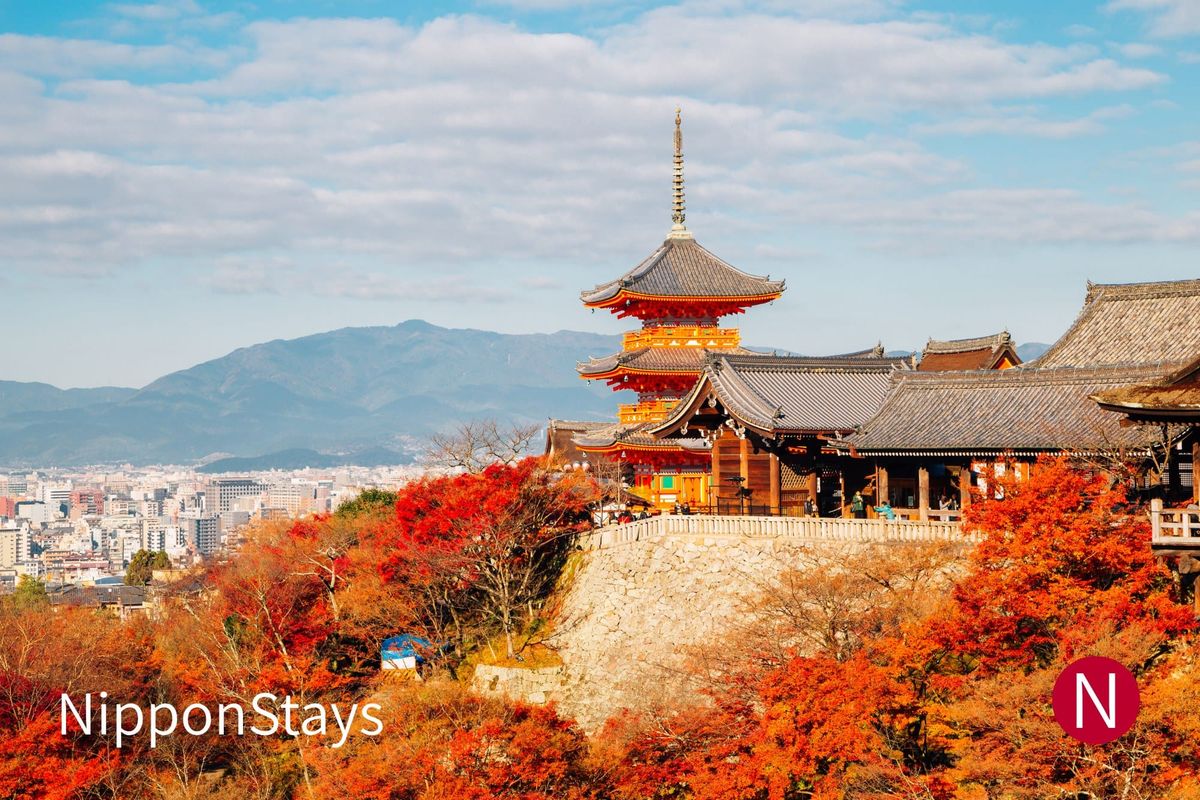
Japan's autumn leaves are not a month, and autumn leaves in Japan are not a single destination either. They are a wave that starts in the mountains of Hokkaido in late September and finishes in Kyushu in early December — roughly nine weeks from one end of the country to the other. Almost every English-language guide says "November", which is right for Kyoto and wrong for everywhere north of it. If you are travelling in October, you are not too early; you are looking at the wrong half of the map. This guide sets out when each region turns, what altitude does to that timing, and which places you can actually reach from Tokyo or Osaka.
The wave, not the month
Two things move the colour: latitude and height. It travels from north to south, and at the same time from high ground down to low. That is why Hokkaido's alpine areas turn while Honshu is still fully green, and why a mountain in Nagano can be finished before the city at its foot has started.
The practical consequence is that "too early" and "too late" are usually solvable by moving rather than by changing dates. Arrived in mid-October and worried you are ahead of it? Go north, or go up. Arrived in early December and think you have missed it? Go south, or go down.
When each region turns
| Region | Typical window | Altitude note | Nearest big city |
|---|---|---|---|
| Hokkaido — alpine (Daisetsuzan) | Mid to late September | The country's first colour, above 1,500 m | Asahikawa |
| Hokkaido — lowland (Sapporo, Otaru) | Mid to late October | A month behind its own mountains | Sapporo |
| Northern Tohoku (Oirase, Towada) | Mid to late October | Gorge floors lag the ridges above | Aomori, Hachinohe |
| Southern Tohoku (Zao, Naruko) | Late September to early November | Zao's summit turns 50 days before its base | Sendai |
| Nikko, Kamikochi, Karuizawa, Kusatsu | Mid October to early November | Highland areas run 2–3 weeks ahead of the plain | Tokyo |
| Kanto lowland (Takao, Tokyo) | Mid to late November | City parks are last, sometimes into December | Tokyo |
| Kansai (Kyoto, Nara) | Mid November to early December | Hillside temples before valley floors | Kyoto, Osaka |
| Kyushu | Late November to early December | The last of it | Fukuoka, Kumamoto |
We have not been to every place in this table. What follows is built from published timing data, altitude and access — not from a visit to each one — and the windows above are typical ranges rather than promises. Colour moves by a week or more between years, and a warm autumn pushes everything later.
Altitude moves it by a week or two
Within a single region, height is the variable you can use. Higher ground turns earlier, and the gap between a summit and the town below it is commonly one to two weeks — sometimes more where a ropeway climbs a thousand metres in ten minutes.
This is why mountain destinations give you a longer window than city ones. At Zao the ropeway climbs from 855 m to 1,661 m and the colour takes about fifty days to come down that slope, so "when should I go" has a far broader right answer than it does at a temple garden on flat ground, where it is a matter of days.
It also gives you a rescue: if you arrive somewhere and find the trees bare at the top, the answer is usually to go lower rather than to go home.
What you can reach from Tokyo and Osaka
| Base | Day-trip range | Worth an overnight | Best window |
|---|---|---|---|
| Tokyo | Takao, Okutama, Kamakura | Nikko, Hakone, Kawaguchiko, Karuizawa | Highlands mid-Oct; city mid-Nov |
| Sendai | Zao, Naruko, Matsushima | Both, if you want early mornings | Late Oct to early Nov |
| Aomori / Hachinohe | Oirase, Lake Towada | Yes — buses are limited | Mid to late Oct |
| Kyoto / Osaka | Most of Kansai | Kyoto itself, for the mornings | Mid Nov to early Dec |
If you want one name per overnight rather than a search, these are the rooms our regional guides settle on: Chuzenji Kanaya Hotel at Lake Chuzenji above Nikko, Ubuya on Lake Kawaguchi for the Fuji view, Hotel Indigo Karuizawa in the Karuizawa woods, Takamiya Ryokan Miyamaso at the foot of the Zao ropeway, and Hoshino Resorts Oirase Keiryu Hotel on the Oirase stream itself. Each one puts you inside the landscape before the day buses arrive, which is the single thing a city base cannot buy you.
The pattern in that table is worth stating plainly: from Tokyo the good autumn is in October and it is in the mountains, while the city itself does not turn until the second half of November. Travellers who plan a Tokyo trip for late October and expect autumn colour in the city are early by about three weeks — but they are exactly on time for Nikko.
Where you sleep matters most at the two ends of that pattern. In Tohoku and Hokkaido in October the constraint is that buses are sparse and towns are small, so an overnight near the site beats a long day trip. In Kansai in late November the constraint is the crowd, and the answer is a base you can walk from — a room at somewhere like Hoshinoya Kyoto sits well above the from ¥12,000 you would pay for a station-area business hotel, and the gap is the price of the morning rather than the room. Each of the comparisons below works through that trade for its own pair.
If you only have one week
Pick by your dates rather than by the name of the place.
Late September to mid-October: Hokkaido's mountains, or northern Tohoku towards the end of it. This is the part of the season almost nobody plans for, and it is the quietest.
Mid-October to early November: the highlands within reach of Tokyo — Nikko, Karuizawa, Kusatsu — and southern Tohoku. Our comparisons of Nikko and Kinugawa, Karuizawa and Kusatsu and Zao and Naruko each cover which of the pair to sleep in.
Mid-November onwards: Kanto lowland and Kansai. Hakone and Kawaguchiko add Mt Fuji to the picture, and Takao and Okutama work as day trips without moving hotel at all.
October, in the far north: Oirase and Lake Towada are the strongest single reason to be in Tohoku in the middle of October.
Kyoto is the exception that proves the rule
Kyoto turns late — mid-November into early December — and it is the most crowded autumn destination in the country. Both facts follow from the same thing: it is a low-lying city in the west, so it is at the end of the wave, and everyone's trip converges on the same fortnight.
That makes it a different planning problem from everywhere else in this guide. The question stops being "when" and becomes "what time of day", which is really a question about where you sleep. Our Kyoto autumn guide works through the three bases and the timings behind them.
How wide the season really is
Reading the table above end to end: the first window opens in mid-September and the last one closes in early December — about eleven weeks, with the eight regions listed spread right across it (checked August 2026). Only two of those eight fall inside November, which is the month the guidebooks name.
That is the single most useful fact in this guide. Autumn in Japan is not a fortnight you either catch or miss. It is a season long enough that the real question is which part of it your dates land in.
Two follow-on questions decide whether a trip actually lands on colour. The first is which region is at its peak during the one week a traveller can take, rather than when peak is in the abstract — the region-by-region timing table is built for that. The second is lead time, and it turns on room count rather than review scores: a ryokan with fewer than 40 rooms is typically full for a November Saturday two to four months out, as when autumn-leaves hotels sell out sets out. If the route itself is the point, four scenic rail lines are worth booking around rather than treating as transport.
Trip Essentials for Japan
Things worth booking before you land, all in English:
- eSIM — Airalo's Japan eSIM: install it at home and data works as soon as you switch off airplane mode at Haneda, Narita, Kansai, or wherever you land.
- Tickets and day trips — Klook covers the Japan Rail Pass, teamLab tickets, and shinkansen-linked day trips; booking ahead skips the ticket-window line.
FAQ: autumn leaves in Japan
How far ahead should I book?
For Kyoto in the last two weeks of November, months rather than weeks — the cheapest rooms go first and popular properties sell out entirely. For October in Tohoku and Hokkaido the pressure is much lower, which is one of the arguments for travelling then.
Does the timing move from year to year?
Yes, by a week or more in either direction, and a warm autumn pushes everything later. Treat every window in this guide as a range rather than a date, and check a local forecast in the fortnight before you travel rather than relying on last year's reports.
Can I see autumn colour across the whole country in one trip?
Not the whole wave, but more than most people assume. A two-week trip in late October can take in northern Tohoku at its peak and the Tokyo highlands as they turn — that is two distinct autumns rather than the same one twice.
What if I am too early or too late?
Move rather than mourn. Too early means going north or going up; too late means going south or going down. The one situation with no fix is arriving in Kyoto in early November expecting peak colour — there, being early is simply being early.
Where is the least crowded?
The early end of the season. Hokkaido's mountains in late September and northern Tohoku in mid-October see a fraction of the visitors that Kyoto does in late November, for colour that is arguably better placed — gorges and lakes rather than gardens with an admission gate.