Takao vs Okutama: One Autumn Day from Tokyo
Both are day trips — you do not need to move hotel. Takao is under an hour away and busy; one person we asked queued an hour for the cable car.

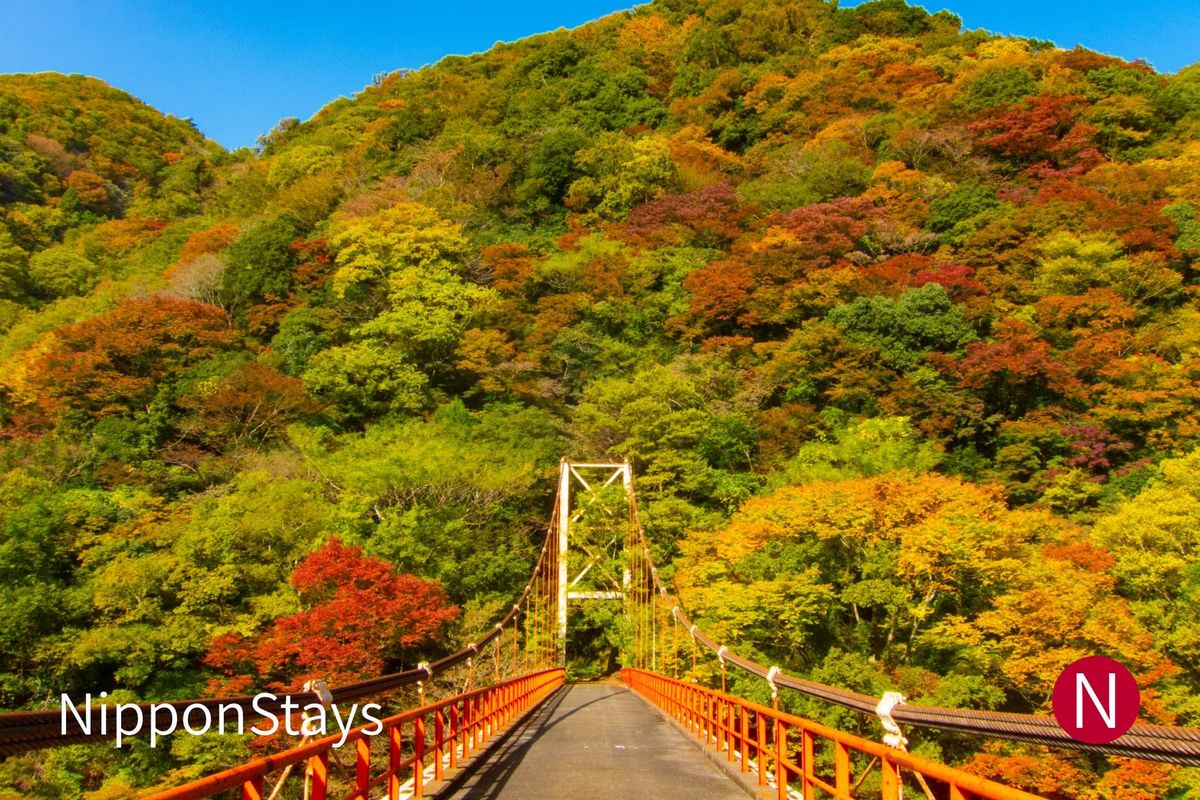
Takao vs Okutama is the one comparison in this series where the answer to "where should I stay" is: you already are. Both are day trips from central Tokyo, both turn in the second half of November, and neither justifies moving hotel. The difference is what you trade. Takao is close and busy — one person we asked queued an hour for the cable car in the autumn season. Okutama costs you an extra hour each way and gives most of that crowd back. Our pick is Hotel Gracery Shinjuku, from ¥16,000 for two — Shinjuku is the practical base for either.
The one-day question
Tokyo itself does not turn until mid to late November, and when it does, the city parks are pleasant rather than remarkable. The mountains at the western edge of the metropolis are the real thing, and both are inside the range of a single day from a Tokyo hotel.
That makes this a different problem from the rest of this series. You are not choosing a base — you are choosing how much of your day to spend on trains, and how much crowd you are willing to absorb in exchange.
| Destination | Rough time from Shinjuku | Crowd in peak autumn | What the walk is like |
|---|---|---|---|
| Mount Takao | Under an hour by Keio line | Heavy — queues for the cable car | Paved trails, temple halfway, cable car or chairlift option |
| Okutama | Roughly 1.5–2 hours via Chuo/Ome lines | Moderate | Gorge and riverside walks, fewer facilities |
We have not been to either in autumn ourselves. The timings above should be checked against current schedules for your dates, and the crowd descriptions come from published reports plus what people we asked have described.
Takao is close, and everyone knows it
Mount Takao is routinely described as one of the most-climbed mountains in the world, and its position — under an hour from Shinjuku on a direct line — explains why. In peak autumn that accessibility is the problem rather than the feature.
One person we asked waited an hour for the cable car during the autumn season. That is a single account rather than a rule, but it is the right order of magnitude to plan around, and it points at the fix: the cable car is optional. The walking trails up are well made and busy but moving, and the hour you would have spent in a queue gets you most of the way to the top.
The other fix is the day of the week. A weekday in the third week of November is a different mountain from the Saturday after it.
Okutama trades crowds for time
Okutama sits at the far western end of the Ome line, in a river gorge rather than on a single peak. It takes longer to reach — plan on an hour and a half to two hours each way from Shinjuku, with a change — and there is less infrastructure when you arrive: fewer trains back, fewer places to eat, no cable car.
What you get for that is space. The walks follow the river rather than climbing one hill, so people spread out along a valley instead of converging on a summit and a queue.
Check the last train before you go. This is the single most important practical detail on the Okutama side, and it is earlier than the Tokyo instinct expects.
What each one is actually like underfoot
The two walks are different in kind, not just in scale, and that matters more than the crowd numbers if you are choosing for someone in the group who is unsure about it.
Takao is engineered. The main route up is paved for much of its length, there is a temple complex partway with places to sit and eat, and if the legs give out there is mechanical assistance in both directions. It is a mountain you can attempt in ordinary shoes with a small child, which is exactly why so many people do.
Okutama is a valley. The walking follows a river through a gorge rather than climbing to a viewpoint, so the effort is flatter but the surfaces are rougher and the facilities are thinner. There is no mid-way temple with a noodle stand, and no cable car if you change your mind.
That difference decides more trips than the travel time does. A group that wants a walk with a definite top and a reward at the summit should take Takao and accept the queue. A group that wants to be somewhere quiet with water running through it should take the extra hour.
Where to stay: you do not need to move
Both are day trips, so the question is which part of Tokyo makes the morning easy. Takao runs from Shinjuku on the Keio line; Okutama runs from Shinjuku or Tokyo on the Chuo line towards Ome. Shinjuku serves both, which makes it the obvious base if autumn day trips are part of a wider city stay.
| Name | Area | From price (2 guests) | Best for |
|---|---|---|---|
| Hotel Gracery Shinjuku | Shinjuku | from ¥16,000 for two | Both lines from one station; easiest early start |
| APA Hotel Shinjuku Kabukicho Tower | Shinjuku | from ¥12,000 for two | Keeping the day-trip budget down |
| Chuo line — Nakano to Kichijoji | West Tokyo | Varies | Shaving 10–15 minutes off the Okutama run |
These are normal-season from-rates at two guests and Tokyo in late November is not a normal season — the same rooms sit higher and fill earlier. Treat the numbers as a way of ranking the options rather than as prices, and put your own dates in. For which regions turn when across the country, see our guide to autumn timing in Japan; if your trip continues west, the Kyoto autumn guide covers the same question for a city where you do have to choose a base.
The trade, in one line
Comparing the two on the numbers in the first table: Okutama costs roughly an extra hour each way, and Takao costs up to an hour standing still at the cable car (checked August 2026). The time is similar. What differs is whether you spend it moving through a valley or waiting at a station.
Trip Essentials for Japan
Things worth booking before you land, all in English:
- eSIM — Airalo's Japan eSIM: install it at home and data works as soon as you switch off airplane mode at Haneda, Narita, Kansai, or wherever you land.
- Tickets and day trips — Klook covers the Japan Rail Pass, teamLab tickets, and shinkansen-linked day trips; booking ahead skips the ticket-window line.
FAQ: autumn day trips from Tokyo
Do the two turn at different times?
Only slightly. Both are in the second half of November, with Okutama's higher ground running a little ahead of Takao's lower slopes. This is not a pair where altitude buys you a second window — unlike Nikko, where the gap is weeks.
Can I really do either as a day trip?
Yes, and that is the point of this comparison. Takao is under an hour from Shinjuku and Okutama is an hour and a half to two. Neither needs a hotel change, which in the most expensive fortnight of the Tokyo year is worth something on its own.
Which is better for an early start?
Takao, simply because it is closer — you can be at the base before the first cable car and walk up while the queue forms. On the Okutama side an early start matters less for crowds and more for the return, since services thin out in the evening.
How bad are the crowds at Takao?
In peak autumn, bad enough that one person we asked queued an hour for the cable car. Walking up avoids that entirely, and a weekday is materially quieter than a weekend. If you want a mountain to yourself, this is not the one.