Do Trains Run All Night on New Year's Eve in Japan?
Tokyo Metro runs zero overnight trains on Dec 31. Which JR, Keio, Keisei, Keihan and Kintetsu lines actually run all night, and where to sleep near them.

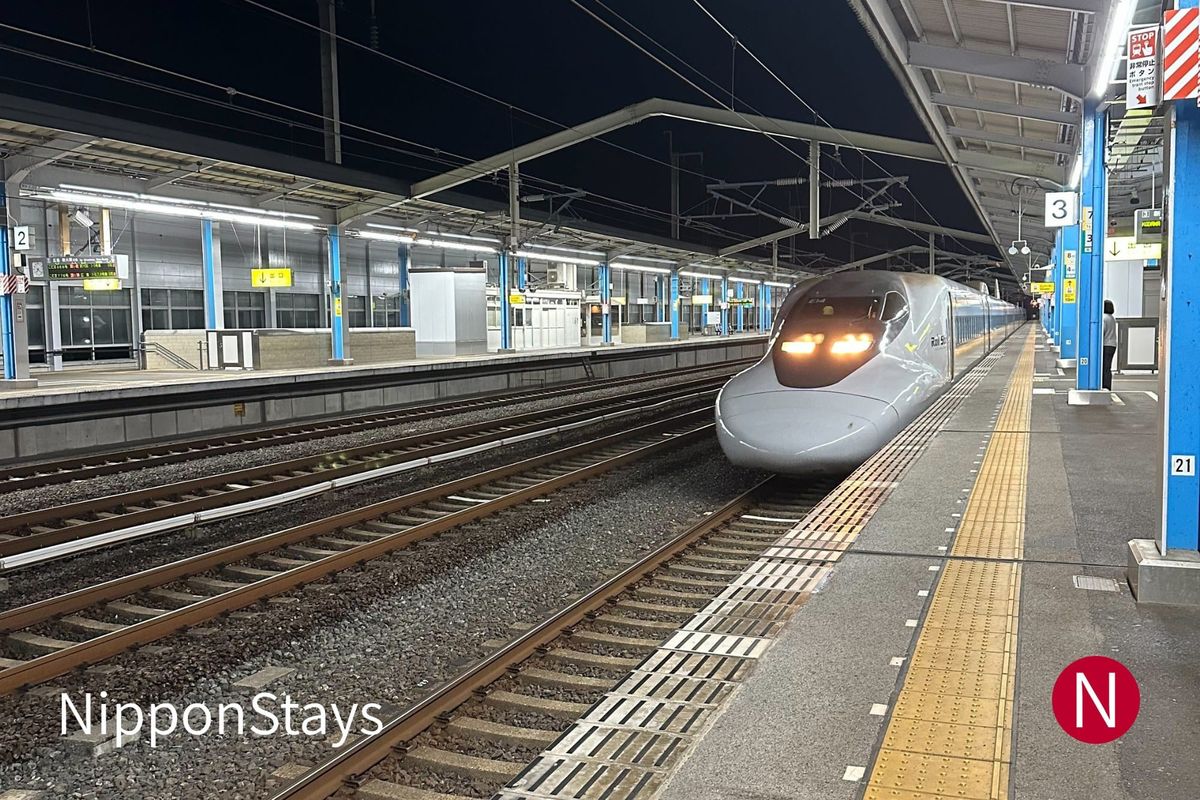
Quick answer: Do trains run all night on New Year's Eve in Japan? Not the way most first-timers assume. Tokyo Metro and the Toei subway add zero overnight service on December 31 — no last-train extension, no early first train, no extra runs. What does run is a shorter list: six JR East lines, including the full Yamanote loop, plus the private Keio and Keisei lines, operating from roughly 1:00am to 5:00am into January 1, 2026. In Kyoto, the Keihan Main Line runs all night and goes straight to Fushimi Inari Station; in Osaka, neither Hankyu nor Osaka Metro run overnight at all, so Kintetsu and a narrower JR West schedule carry the load. Which subway line is nearest your hotel matters less on this one night than which JR or private-line station is nearest it.
The lines that run, and the ones that do not
Tokyo Metro and the Toei subway do not add a single overnight train on New Year's Eve — and it is the assumption most likely to strand you on the one night the trains matter. Both networks close on their normal last-train schedule and reopen on their normal first-train schedule the next morning, same as any other night of the year.
What actually ran overnight for the December 31, 2025 turn of the year, confirmed in JR East's own year-end service announcement, was six lines: the Yamanote Line (both loops, roughly 1:00am–5:00am, every 10–25 minutes), the Keihin-Tohoku/Negishi Line between Sakuragicho and Omiya (roughly 1:00am–4:00am, every 15–70 minutes), the Chuo-Sobu Local between Mitaka and Chiba (roughly 12:20am–4:40am), the Chuo Rapid between Mitaka and Takao (roughly 12:50am–4:30am), the Yokosuka Line between Yokohama and Zushi (roughly 1:00am–5:00am, every 80 minutes), and the Sobu Main/Narita Line between Chiba and Narita. Alongside them, two private lines ran all night: Keio, between Shinjuku and Takao/Takaosanguchi, and Keisei, between Keisei-Ueno and Narita and between Oshiage and Keisei-Kanamachi. Odakyu, the other major west-Tokyo private line, ran no overnight service for the Dec 31, 2025 turn, unlike Keio and Keisei. Of these eight lines that ran overnight, six were JR East and two were private railways, and no Tokyo Metro or Toei subway line ran at all (checked September 2026).
None of this is announced for December 31, 2026 yet. JR East and the private railways typically confirm each season's year-end schedule in October–December, so as of this writing the pattern above is last season's confirmed service, not a promise for this one. Treat it as the working assumption and check the operator's own release once it posts — we note where to look in the FAQ below.
| Line | All-night on Dec 31 (2025→26) | Where it takes you | Note |
|---|---|---|---|
| JR Yamanote Line | Yes, ~1:00am–5:00am | Loop through Tokyo, Shinjuku, Shibuya, Ueno, Ikebukuro | Widest coverage of the six JR East lines |
| JR Chuo Rapid | Yes, ~12:50am–4:30am | Shinjuku to Takao | Pairs with Keio for a Shinjuku base |
| Keio Line | Yes, all night | Shinjuku to Takao / Takaosanguchi | Only major west-Tokyo private line confirmed all-night |
| Keisei Line | Yes, all night | Keisei-Ueno to Narita; Oshiage to Kanamachi | Useful if you're flying out of Narita on Jan 1 |
| Odakyu Line | No | — | Ran no overnight service for the Dec 31, 2025 turn, unlike Keio and Keisei |
| Tokyo Metro (all lines) | No | — | No last-train extension, no early first train, no extras |
| Toei Subway (all lines) | No | — | Same as Tokyo Metro — closes and reopens on the usual schedule |
Tokyo — which station to sleep at
Shinjuku is the one station where two of the confirmed all-night services actually cross: the JR Chuo Rapid and the Keio Line both run through the small hours from there, so a hotel within walking distance means you are never fully stranded between 1:00am and 5:00am even if the Yamanote Line's 10–25 minute gaps do not line up with your plans. It is also the base our Tokyo New Year's Eve guide already recommends for the countdown itself, so the transit logic and the event logic point at the same neighborhood.
If your priority is an early departure from Narita on January 1 rather than a countdown, Ueno is the better call — it sits on the Yamanote loop and is the starting point for Keisei's all-night run to Narita, so you can stay out past midnight and still make a pre-dawn airport train without a taxi. For a first-timer weighing Tokyo against a trip to the old capital instead, our Tokyo-or-Kyoto comparison covers the rest of that decision; readers deciding between two Tokyo bases specifically should also see our Ginza-vs-Tokyo-Station guide, since Tokyo Station itself sits on the Yamanote loop too.
Kyoto — Keihan and Kintetsu
The Keihan Main Line is the one Kyoto operator that runs all night on December 31, and it happens to be the direct route to Fushimi Inari Taisha: Fushimi-Inari Station sits right on the line, roughly 23:00–5:00, with local and semi-express trains at 15–30 minute intervals and express trains a little less frequently into the small hours. Keihan's Katano, Uji, and Nakanoshima lines run overnight too, at wider 30–40 minute gaps, and the Otokoyama cable car up to Iwashimizu Hachimangu runs all night as well.
Kintetsu also runs all night across its Kyoto-Kashihara-Tenri, Nara, Osaka, and several Osaka-area lines, which matters if your New Year is centered on Nara rather than Fushimi Inari. What does not run overnight this season is the JR Nara Line — the other rail route to Inari Station — which had extended service in 2024–25 but was dropped from JR West's list for 2025–26. If Fushimi Inari is the plan, Keihan is the line to build your night around, not JR.
For a place to sleep, a station on the Keihan Main Line itself — Sanjo or Gion-Shijo — puts you a short, all-night ride from Fushimi Inari in one direction and the Gion/Kawaramachi area in the other, without depending on a taxi that, by multiple local accounts, becomes close to impossible to find in Kyoto after midnight on this one night.
Osaka — Hankyu and the Kansai picture
Hankyu does not run all night on New Year's Eve. Neither does Osaka Metro: both switch to a Saturday/holiday timetable for the December 27–January 4 stretch, and Osaka Metro's last trains on the night of the 31st leave around 12:14am–12:15am on the Midosuji, Chuo, and Yotsubashi lines — no different from a normal midnight. That surprises a lot of visitors who assume Osaka's dense subway network keeps running the way Tokyo's used to.
JR West's contribution is real but narrower than "all night": extra service on the Osaka Loop Line and the JR Yumesaki Line runs past the normal last train until roughly 3:00am at 10-minute intervals, and the Manyo-Mahoroba Line between Nara and Sakurai runs until about 3:00am at 40-minute intervals. That is later than usual, not overnight, and it is a shorter list than the year before — the 2024–25 season also had extended service on the Kobe Line, Kyoto Line, Nara Line, JR Tozai Line, Gakkentoshi (Katamachi) Line, and Yamatoji Line, none of which repeated for 2025–26.
The one true all-night option in the Osaka area is Kintetsu, whose Osaka Line and Minami Osaka Line both run overnight. A base near Tennoji works well for this: it sits on the JR Osaka Loop Line (extended until ~3:00am) and within walking distance of Osaka Abenobashi, the Kintetsu Minami Osaka Line terminal that runs all night.
| City | All-night anchor line | Station to base yourself near | Where to stay |
|---|---|---|---|
| Tokyo | JR Chuo Rapid + Keio Line | Shinjuku | Hotel Gracery Shinjuku |
| Kyoto | Keihan Main Line | Sanjo | Mitsui Garden Hotel Kyoto Sanjo Premier |
| Osaka | Kintetsu Minami Osaka Line + JR Osaka Loop (extended) | Tennoji | See our Osaka hotel guide for Tennoji-area options |
Both hotels named above sit in the mid-range for their cities in normal season, and both move to a multiple of that on December 31, with the cheapest room categories gone months ahead of the date — check your own dates before you book rather than treating either as a fixed rate.
Trip Essentials for Tokyo
Things worth booking before you land, all in English:
- eSIM — Airalo's Japan eSIM: install it at home and data works as soon as you switch off airplane mode at Haneda or Narita.
- Airport transfer — Welcome Pickups runs fixed-price door-to-door pickups from Haneda or Narita; Klook sells the airport bus and train tickets if you'd rather ride.
- Luggage storage — arriving before check-in? Radical Storage takes bags at shops near Tokyo's major stations for a flat daily rate.
- Tickets and day trips — Klook covers teamLab tickets, Tokyo Skytree, and Hakone day trips; booking ahead skips the ticket-window line.
FAQ: All-night trains on New Year's Eve
What time do the JR East overnight trains start and stop?
For December 31, 2025 into January 1, 2026, the Yamanote Line ran roughly 1:00am–5:00am at 10–25 minute intervals — the widest window and the most frequent service of the six lines. The Chuo-Sobu Local started earliest, around 12:20am, and the Yokosuka Line ran the sparsest, at roughly 80-minute gaps. None of the six matches daytime frequency; plan for a wait, not a normal service pattern.
Is it true the Tokyo subway doesn't run all night at all?
Yes, for the 2025–26 season: Tokyo Metro and the Toei Subway confirmed no last-train extension, no early first train, and no extra service on any of their lines. If your plan depends on a subway line rather than a JR or Keio/Keisei line, you need a different route or a taxi for the gap between last train and first train.
How do I get to Fushimi Inari after midnight?
Take the Keihan Main Line to Fushimi-Inari Station, which runs all night on December 31 at roughly 15–30 minute intervals through the small hours. The JR Nara Line, the other route to the shrine's Inari Station, was not on JR West's extended-service list for 2025–26, so Keihan is the dependable option this season rather than a fallback.
Will the same lines run all night on December 31, 2026?
Not confirmed yet. JR East, Keio, Keisei, Keihan, and Kintetsu each announce their year-end schedules separately, typically in October through early December, so nothing for the 2026–27 season was public as of this writing. The pattern above is the most recent confirmed one and a reasonable planning baseline, but check each operator's own press release once it appears — that is when exact start times, end times, and any changes to the line list get locked in.