Ginza vs Tokyo Station: Count Your Shinkansen Mornings
A 10-minute walk apart, so this decides evenings not access. Ginza from Y24,538; Marunouchi from Y58,880. The rule is how many Shinkansen mornings you have.

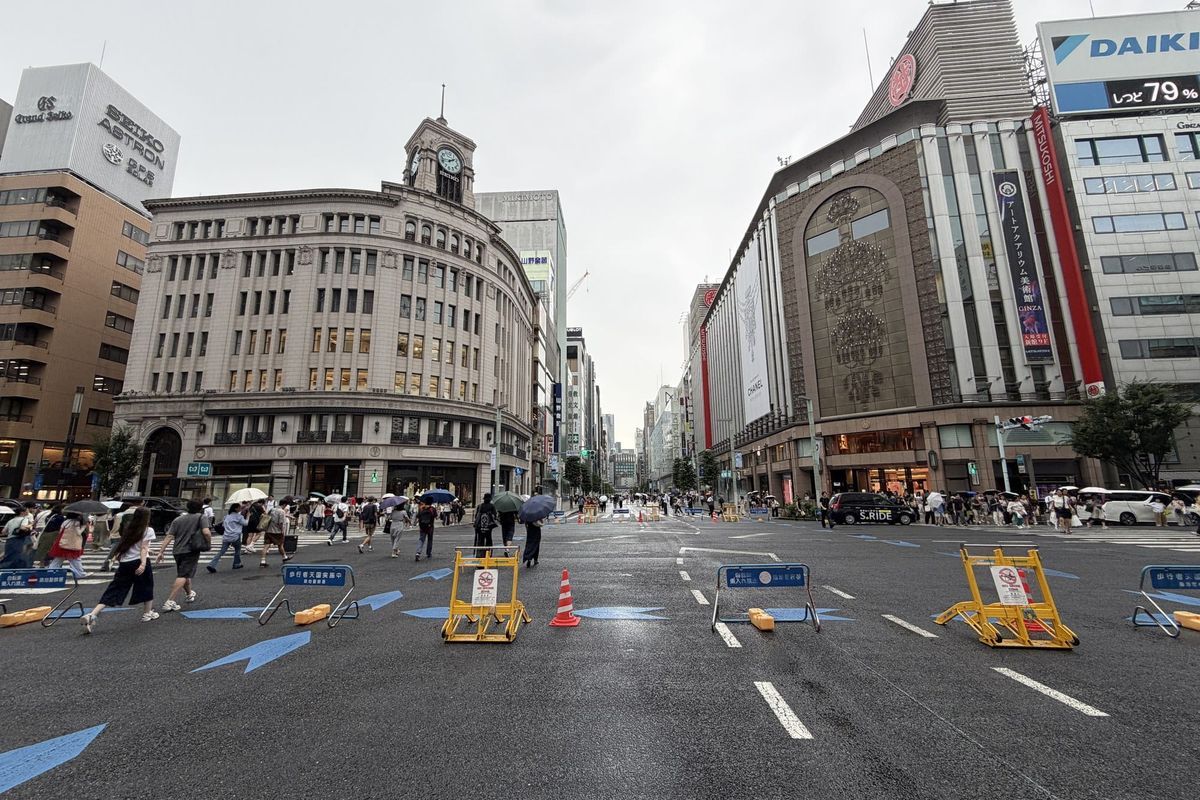
Ginza vs Tokyo Station is a shorter distance than most people realise — one subway stop, or a 15-min walk from Ginza Station at best — so this decides your evenings rather than your access. Stay by Tokyo Station if you are taking Shinkansen day trips or moving on to Kyoto and Osaka; the station is the country's busiest interchange and rooms run from ¥58,880 for two at Ascott Marunouchi Tokyo. Stay in Ginza if you want dinner and shopping on your doorstep, from ¥24,538 for two at Mitsui Garden Hotel Ginza Premier. The deciding question is simple: how many mornings will you be catching a Shinkansen?
They are closer than the guides imply
Ginza and Marunouchi sit either side of the same few blocks. The Marunouchi subway line covers it in one stop. On foot it is a 15-min walk from Ginza Station, stretching to twenty depending on where in the district you start. The ten minutes you will see quoted is measured from Ginza-itchome, at the northern edge, rather than from Ginza Station itself.
That proximity means neither choice locks you out of anything. A Ginza hotel is a short walk from the Shinkansen (though every Tokaido train also stops at Shinagawa, which is the cheaper of the two Shinkansen bases); a Marunouchi hotel is a short walk from Ginza's restaurants. What changes is which of those you do with luggage, tired, in the rain, at 06:30.
So the honest framing is not "which area is better" but "which of these two walks do you want to do most often".
Tokyo Station is for people who leave Tokyo
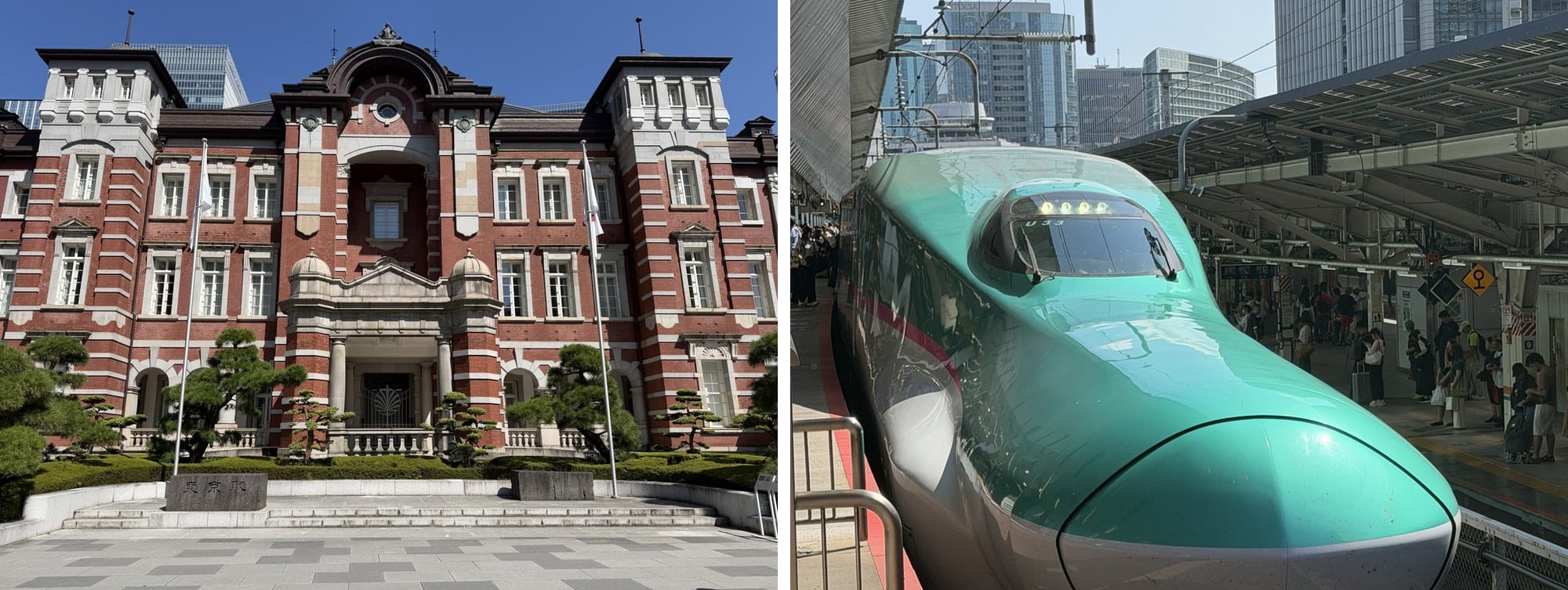
Tokyo Station is the hub for the Tokaido and Tohoku Shinkansen networks, plus the Narita Express and most JR lines. If your itinerary has Kyoto, Osaka, Kanazawa, Sendai or Nikko in it, this is where those days start.
The practical value is not the minutes saved. It is that an early departure becomes a walk rather than a subway journey with cases, and that a late return does not require another leg after the Shinkansen.
Marunouchi's own character is corporate — restored brick architecture, office towers, and a business district that empties at the weekend. Ascott Marunouchi Tokyo runs from ¥58,880 for two, in the serviced-apartment tier that suits longer stays.
Ginza is for people who stay in Tokyo
Ginza is department stores, restaurants at every level from basement ramen to a wall of Michelin stars, and a Saturday afternoon when the main street closes to traffic. It is also within walking distance of Tsukiji, Hibiya and the Imperial Palace grounds.
Mitsui Garden Hotel Ginza Premier runs from ¥24,538 for two, three minutes from Shimbashi Station, with a top-floor bath looking over the district. The Ginza hotel market has real depth in this mid-tier band, which Marunouchi does not — the station side skews towards business and luxury with less in between.
That price gap matters. On the two hotels above, Ginza's entry point is less than half Marunouchi's.
| Name | Area | Price range | Best for |
|---|---|---|---|
| Mitsui Garden Hotel Ginza Premier | Ginza, 3-min walk from Shimbashi | from ¥24,538 for two | Dinner and shopping on foot, top-floor bath |
| The Royal Park Hotel Ginza 6-chome | Ginza, central | from ¥27,200 for two | Being inside Ginza rather than at its edge |
| Ascott Marunouchi Tokyo | Marunouchi, by Tokyo Station | from ¥58,880 for two | Shinkansen mornings and longer serviced stays |
Rates are the lowest advertised for two with no dates specified, checked in August 2026.
The rule that settles it
Count the mornings you will start at Tokyo Station with luggage. Not day trips you might take — the ones already in the plan.
- Zero or one. Ginza. One Shinkansen morning does not justify a week of walking to dinner.
- Two or more. Tokyo Station. The repetition is what makes proximity worth paying for.
- Moving on to Kyoto or Osaka at the end. Tokyo Station for the last night only, if you can split the stay without wasting a morning.
- Weekend in Tokyo, no day trips. Ginza. Marunouchi is quiet at weekends and Ginza is at its best.
Both are expensive answers to a question that is partly about budget. If the Shinkansen count comes out at zero and the rate is what is binding, Ikebukuro is worth a serious look — one Yamanote ride from either, at a fraction of both.
What the extra money buys at the station
The gap between these two entry points is large enough to question. On the hotels above it is roughly ¥34,000 a night, and it is worth being clear that this is not a quality difference.
Ascott Marunouchi is a serviced apartment — larger rooms, kitchen, laundry, built for stays measured in weeks rather than nights. Comparing it against a mid-tier Ginza business hotel compares two different products that happen to be in adjacent districts.
The honest version: Marunouchi's own mid-tier is thinner, so a like-for-like comparison is harder to make here than it looks. If your budget sits in the ¥25,000 band, Ginza simply has more to choose from, and that availability is a better reason to book there than any argument about the districts themselves.
The weekend difference
This catches people out. Marunouchi is a business district, so its restaurants are built around weekday office lunches and after-work drinking. On a Sunday evening the area is noticeably subdued, and some places close entirely.
Ginza runs the opposite way. The weekend is when the main avenue becomes a pedestrian street in the afternoon and the district is busiest.
If your Tokyo nights fall on a weekend, that alone is a reasonable argument for Ginza — and if they fall midweek, Marunouchi's restaurant scene is better than its reputation suggests.
| If this is you | Area | Price range | Best for |
|---|---|---|---|
| Two or more Shinkansen day trips | Tokyo Station | from ¥58,880 | Marunouchi — the walk with luggage repeats |
| Staying put, eating well | Ginza | from ¥24,538 | Ginza — dinner is downstairs |
| Weekend trip | Ginza | from ¥24,538 | Ginza — Marunouchi is quiet at weekends |
| Budget matters | Ginza | from ¥24,538 | Ginza — more depth in the mid-tier band |
For how this compares with Tokyo's other base decisions, see our Ikebukuro vs Shinjuku comparison, and if you are arriving late or leaving early by air rather than rail, Narita vs Haneda airport hotels covers that end of the trip. If the serviced-apartment tier is what caught your eye at Marunouchi, Tokyo serviced apartments covers that category across the city, and Tokyo vs Osaka covers the decision one level up if you are still choosing a base city.
FAQ: Ginza vs Tokyo Station
How far is Ginza from Tokyo Station?
One stop on the Marunouchi subway line, or a 15-min walk from Ginza Station — twenty from the southern end of the district. The ten minutes often quoted is measured from Ginza-itchome at the northern edge, not from Ginza Station. That short distance is why this decision is about which walk you repeat rather than about access — either area reaches the other easily.
Which is better for Shinkansen day trips?
Tokyo Station. The value is not the minutes saved but that an early departure becomes a walk instead of a subway journey with luggage. If two or more Shinkansen mornings are already in your plan, the repetition justifies staying on that side.
Which is cheaper, Ginza or Marunouchi?
Ginza, at the entry level. Mitsui Garden Hotel Ginza Premier starts from ¥24,538 for two against ¥58,880 at Ascott Marunouchi Tokyo at our check in August 2026. Ginza has more depth in the mid-tier band, while the station side skews towards business and luxury with less in between.
Is Marunouchi dead at weekends?
Quieter, yes. It is a business district whose restaurants are built around weekday office trade, so Sunday evenings are subdued and some places close. Ginza runs the other way — the weekend is when its main avenue becomes a pedestrian street and the district is at its busiest.