Where to Stay in Tokyo for New Years Eve: 3 Midnights
Zojoji, Senso-ji, or Shibuya: Tokyo's New Year's Eve splits into three separate midnights. Pick the countdown first, then the hotel within walking distance.
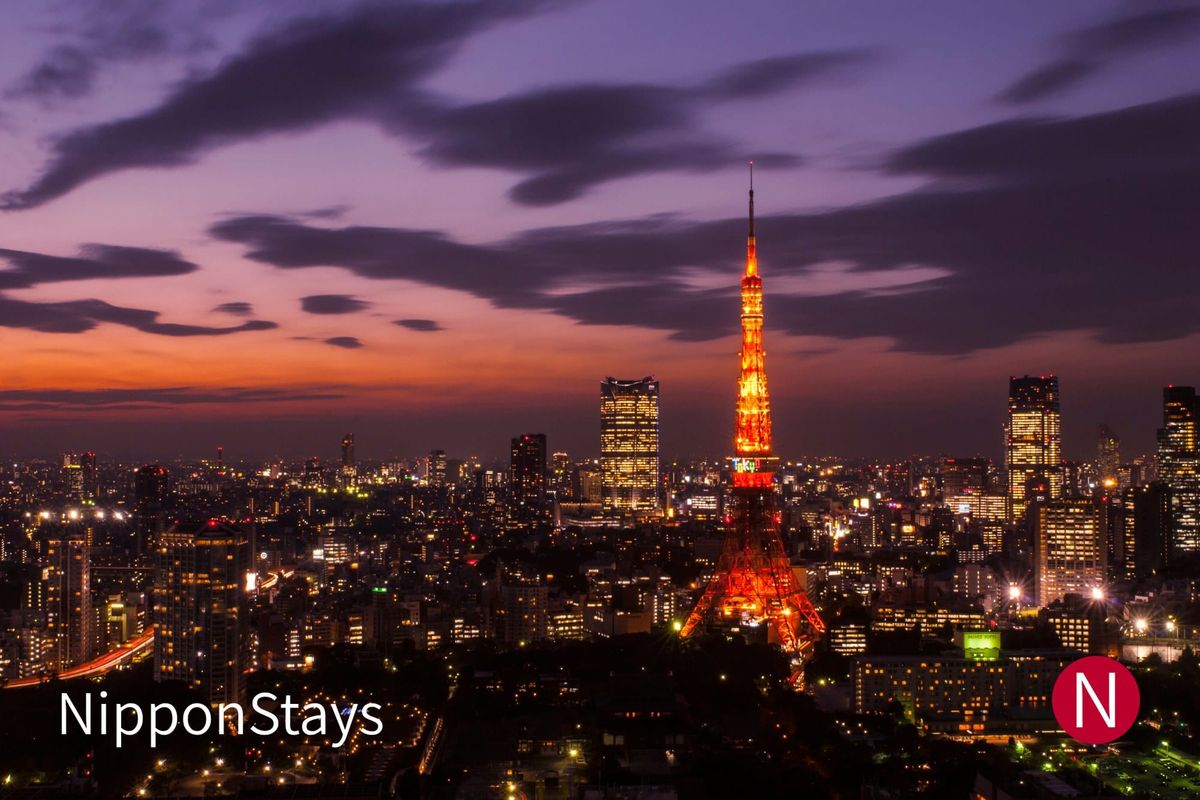
Quick Answer: Where to stay in Tokyo for New Years Eve comes down to which countdown you want — Tokyo's New Year's Eve splits into three separate nights depending on that choice. For temple bells with Tokyo Tower behind them, sleep in Minato ward near Zojoji — Conrad Tokyo in Shiodome is a full-service hotel a 12-minute walk from the gate. For the older, quieter bell-ringing at Senso-ji, sleep in Asakusa — mimaru Tokyo Asakusa Station is an apartment-style property a 1-minute walk from the temple. Shibuya's official countdown event has been cancelled for several years running, and the ward now fences off the crossing and bans alcohol from 6pm to 5am — sleep there only if you want to watch the crowd-control operation, not join a party. Whichever midnight you pick, book the hotel first: New Year's Eve rates run well above what you'd pay for the same room in a normal week, and the walkable rooms sell out months ahead.
Three midnights, three neighbourhoods
Tokyo does not have one New Year's Eve — it has three, and they happen in different wards with different atmospheres. Zojoji, in Minato ward, pairs a 108-strike temple bell with Tokyo Tower lit up directly behind the main gate. Senso-ji, in Taito ward, is the older and quieter version: locals with ties to Asakusa ring the bell while visitors queue along Nakamise-dori. Shibuya, in Shibuya ward, no longer has an organised countdown at all — what's left is a police-managed pedestrian zone and an alcohol ban. Picking your midnight first, then booking the hotel that puts you inside walking distance of it, is the entire decision this article covers. (For what's actually shut across the city over these few days rather than what's happening at midnight, see our closures guide.)
| Midnight | Ward | What it's actually like | Nearest stay |
|---|---|---|---|
| Zojoji / Tokyo Tower | Minato | 108 bell strikes, Tokyo Tower behind the gate, heaviest crowds 23:00–02:00 | Conrad Tokyo, Shiodome (12-min walk) |
| Senso-ji | Taito | Bell rung by local volunteers just after midnight; free, no reservation, 40-min ceremony | mimaru Tokyo Asakusa Station (1-min walk) |
| Shibuya crossing | Shibuya | No official countdown event; alcohol ban 18:00–05:00, Hachiko statue fenced off Dec 31 06:00 to about Jan 1 01:00 | Shibuya Excel Hotel Tokyu (on the crossing) |
Midnight 1 — Zojoji and Tokyo Tower
Zojoji's main hall stays open through the night on December 31, and at midnight the temple performs the Shusho-e ceremony while the bell rings — with Tokyo Tower visible directly behind the Sanmon gate, the composition that shows up in every Tokyo New Year photo. The balloon release that older English-language guides still describe is no longer held, and the temple no longer runs a countdown event of its own — what happens now is the Shusho-e ceremony and the bell, so go expecting a solemn crowd rather than a party (Zojoji's own New Year visiting guide). Crowds build heavily from about 23:00 and stay dense past 02:00 (weather-service and travel-guide crowd estimates rather than a temple figure), so arriving by 22:30 buys some breathing room at the gate.
For the 2025-26 turn the temple closed the Sanmon gate to foot traffic from 19:00 on December 31 until 17:00 on January 4 for restoration work, with a signed detour route to the main hall and no visitor parking — so the classic Tokyo Tower-behind-the-gate view was not on the approach that night. The work has not been announced as finished, so check the temple's New Year notice before you plan the shot.
Hotel options within easy walking distance of Zojoji are thinner than you'd expect for a district this central — Minato ward's Trip.com-listed inventory clusters around Shiodome and Toranomon rather than directly at Shiba Park. Conrad Tokyo, a 12-minute walk from the Sanmon gate, is the closest full-service option; Andaz Tokyo Toranomon Hills is a comparable walk from the other direction if Conrad is sold out for the date. If neither midnight suits you and you'd rather base yourself somewhere more central for the rest of the trip, our Ginza vs. Tokyo Station comparison covers the two bases most travellers weigh instead.
Midnight 2 — Senso-ji and the temple bell
Senso-ji does its bell-ringing after midnight rather than counting down to it — the Hyakuhachi-kai, a group of locals with long-standing ties to Asakusa, rings the temple bell 108 times over roughly 40 minutes once January 1 has already begun. Admission is free and there's no reservation; you queue along Nakamise-dori, which stays lit and stocked with New Year decorations and stalls, and you watch rather than take part directly. It's the quieter of the two temple options — less spectacle, more neighbourhood ritual — and it flows straight into hatsumode at the same temple once the sun is up.
Staying inside Asakusa itself removes the only friction this midnight has: getting back to a hotel afterward. mimaru Tokyo Asakusa Station is a one-minute walk from the temple grounds and books apartment-style rooms that sleep more than the two-guest rate implies, which also makes it a reasonable pick if you're doing this with family rather than as a couple — if you need a room built for five rather than two, our guide to Tokyo hotels for a family of five covers the larger-capacity options across the city.
Midnight 3 — Shibuya, and why you may not want it
Shibuya's ward-run countdown event has been cancelled for several years running, most recently for December 31, 2025, with the executive committee citing crowd-safety management. Shibuya City has banned night-time street drinking around the station year-round since October 2025, and tightens it over New Year to a flat ban from 18:00 on December 31 to 05:00 on January 1, with alcohol retailers asked to stop selling. For the 2025-26 turn the ward also fenced off the Hachiko statue from 06:00 on December 31 until about 01:00 on January 1 and switched off the big screens around the crossing at 23:00 (Shibuya City, on the year-round street-drinking ordinance). None of this is confirmed yet for December 31, 2026 — the same pattern has held for at least the past several years, so expect similar restrictions rather than a revived countdown.
If you still want to be there — to see the crowd-control operation itself, or because you're catching an early flight and Shibuya is simply convenient — Shibuya Excel Hotel Tokyu sits directly on the crossing. Book it for the location, not for a party that isn't happening.
The morning after — where hatsumode actually happens
If your priority is the first shrine visit of the year rather than the countdown itself, the calculation changes. Meiji Jingu, Tokyo's largest hatsumode draw, kept its gates open continuously across midnight for the 2025–2026 season — 06:40 on December 31 through to 18:30 on January 1 with no overnight closure — and drew the heaviest crowds inside that window (2026–27 hours are not yet published; expect a similar pattern, confirm closer to the date). That makes Shibuya or Shinjuku, both a short ride from Meiji Jingu's Harajuku-side entrance, a more useful base than Minato or Taito if hatsumode at Japan's busiest shrine is the actual goal rather than a countdown bell.
This is also where the three-midnight framing breaks down a little: you can watch a temple bell at Zojoji or Senso-ji at midnight and still make it to Meiji Jingu on January 1 morning, since none of these sites are more than a 30-minute train ride apart once trains restart. What you can't do easily is both a Shibuya midnight and an early Meiji Jingu visit — the crossing crowd doesn't clear until well past 02:00, and Meiji Jingu's own peak crowding starts building again from first light.
Where to stay for New Year's Eve in Tokyo
| Name | Area | Property type | Best for |
|---|---|---|---|
| Conrad Tokyo | Shiodome (Minato) | Full-service luxury hotel | Zojoji midnight, 12-min walk |
| Andaz Tokyo Toranomon Hills | Toranomon (Minato) | Full-service luxury hotel | Zojoji midnight, backup if Conrad is full |
| mimaru Tokyo Asakusa Station | Asakusa (Taito) | Apartment-style, sleeps more than 2 | Senso-ji midnight, families, apartment-style rooms |
| Shibuya Excel Hotel Tokyu | Shibuya | Full-service city hotel | Location on the crossing itself, early flights out |
We have not verified a New Year's Eve rate for any of these four against a booking engine, so no price is quoted above — rank them instead by walk time to your chosen midnight and by property type. What is certain is the direction: New Year's Eve in Tokyo runs at a multiple of whatever these rooms cost in a normal week, and the rooms closest to Zojoji and Senso-ji are the first to sell out; if you have your dates fixed, book now rather than waiting to compare prices. Of the four hotels above, three are chosen for being within a 15-minute walk of the midnight they're paired with — only the Shibuya pick is chosen for the view of the crossing rather than proximity to an event (checked September 2026).
Trip Essentials for Tokyo
Things worth booking before you land, all in English:
- eSIM — Airalo's Japan eSIM: install it at home and data works as soon as you switch off airplane mode at Haneda or Narita.
- Airport transfer — Welcome Pickups runs fixed-price door-to-door pickups from Haneda or Narita; Klook sells the airport bus and train tickets if you'd rather ride.
- Luggage storage — arriving before check-in? Radical Storage takes bags at shops near Tokyo's major stations for a flat daily rate.
- Tickets and day trips — Klook covers teamLab tickets, Tokyo Skytree, and Hakone day trips; booking ahead skips the ticket-window line.
FAQ: New Year's Eve in Tokyo
Do Tokyo trains run all night on New Year's Eve?
Not on Tokyo Metro — for the 2025–2026 season Tokyo Metro ran a normal Saturday/holiday schedule with no overnight extension. JR East did run overnight service on six lines including the Yamanote loop, so getting between Shibuya, Shiodome, and Asakusa by train after midnight was possible on JR but not on the subway. Full line-by-line detail is in our train guide for this window.
Is the Shibuya countdown happening in 2026?
Not officially confirmed either way yet, but the pattern has held for several years: the ward-run countdown event was cancelled for December 31, 2025, and for at least two years before that. Expect the same alcohol ban and pedestrian-zone closure rather than an organised event, and check Shibuya ward's own announcements closer to the date rather than assuming a revival.
What time should I be at Zojoji or Senso-ji for midnight?
For Zojoji, crowds build heavily from about 23:00 and stay dense past 02:00 (weather-service and travel-guide crowd estimates, not a temple-issued forecast), so arriving by 22:30 gets you inside before it fills — and note that the Sanmon gate itself was closed for restoration work over the 2025-26 turn, so check the temple's current New Year notice first. Senso-ji's bell-ringing runs for about 40 minutes starting just after midnight rather than building to a countdown, so arriving by 23:30 to queue along Nakamise-dori is enough.
Can tourists actually ring the bell at Senso-ji or Zojoji?
At Senso-ji, no — the 108 rings are performed by the Hyakuhachi-kai, a group with established ties to the Asakusa neighbourhood, and visitors watch. At Zojoji, yes, but not on a walk-up basis: the temple distributes bell-ringing tickets from 09:00 on December 1 at its temple office for a 2,000 yen offering, and ticket holders ring the bell in groups of four from midnight. Those tickets go well before New Year's Eve, so a same-night visitor without one is watching, not ringing.