Is Japan Closed Over New Year? What Shuts Dec 29-Jan 3
Is Japan closed over New Year? Offices shut Dec 29-Jan 3, banks Dec 31-Jan 3 - but trains, hotels and stores keep running. What's open, day by day.

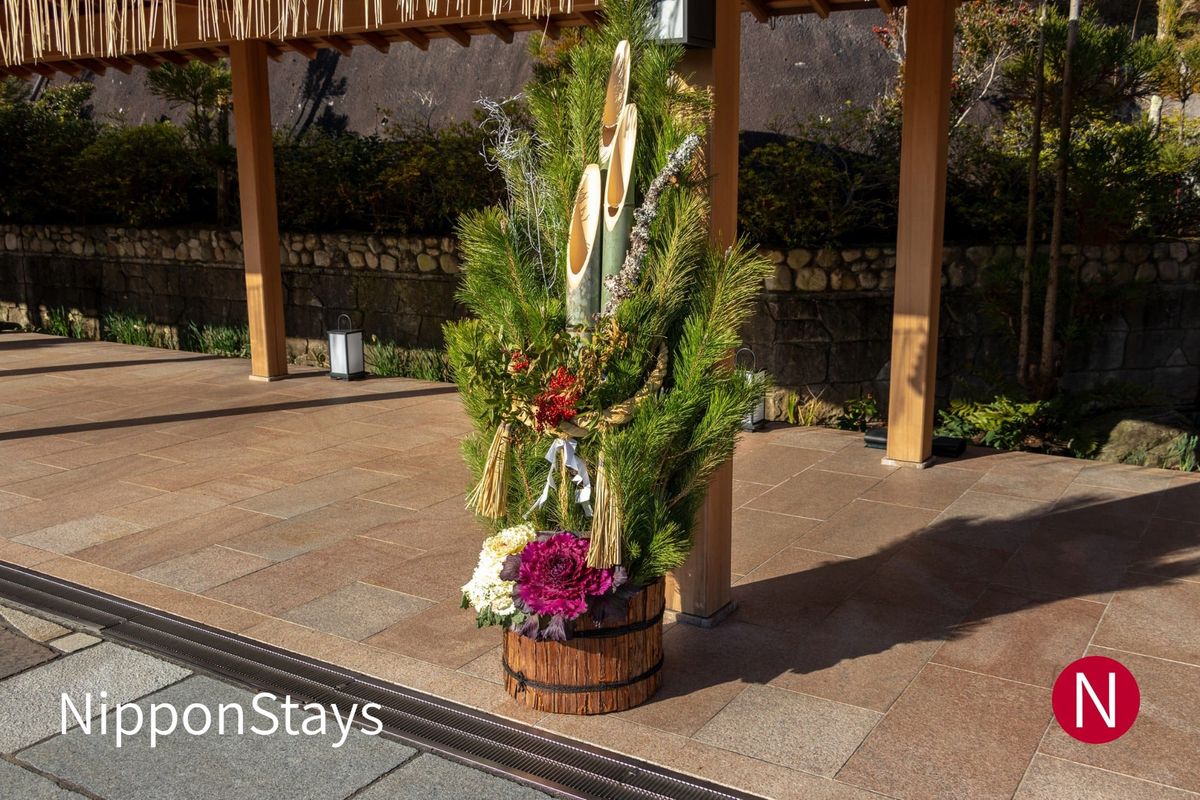
Is Japan closed over New Year? Mostly, no — most of the country stays open. What actually shuts is a narrow band — roughly the evening of December 31 through January 3 — and it hits specific categories hardest: independently owned restaurants, most department stores on January 1 itself (some now open that day for their first sale), museums and galleries, banks, the post office, and courier deliveries. Convenience stores, chain restaurants, hotels, and trains all keep running, just on reduced or holiday timetables. The one thing that changes the answer is which category you need: a bank transfer is genuinely impossible for four days, while a bowl of ramen is not.
The three days that actually matter — Dec 31 evening to Jan 3
The statutory window is Dec 29-Jan 3 - that is when government offices close - but for a visitor the days that actually change plans are narrower: the evening of Dec 31 through Jan 3. Japan's year-end shutdown is shorter than the phrase "New Year holiday" suggests. Government offices are closed by law from December 29 through January 3 (the Act on Holidays for Administrative Organs fixes this range every year), and banks are closed by the same kind of statute from December 31 through January 3. Those two dates bracket the period that matters for a visitor: shops and restaurants start trimming hours from around December 30, the deepest closures land on January 1, and the country is largely back to normal trading by January 4. Outside that window — say, arriving December 27 or departing January 5 — none of this applies.
What closes
This is the shortlist by category, not by individual business — check the specific place you need before relying on it.
| Category | Typical closure | What to do instead |
|---|---|---|
| Department stores | Most close Jan 1 and reopen Jan 2 for lucky-bag (fukubukuro) sales, but some run their first sale (hatsuuri) on Jan 1 — check the specific store | Use a convenience store or a station-building shop on Jan 1 |
| Museums & galleries | Many close for several days around Dec 28–Jan 1; a handful reopen Jan 1 for New Year events, others stay shut through Jan 3 | Check the specific museum's own site before you plan a Jan 1–3 visit |
| Independently owned restaurants & shops | Widely closed Jan 1–3, some through Jan 4–5 | Chain restaurants and hotel dining rooms keep normal or near-normal hours |
| Banks | Closed by law Dec 31–Jan 3; ATMs may still dispense cash but transfers post on Jan 4 | Withdraw cash by Dec 30 or use a 7-Eleven/convenience-store ATM, which stay live |
| Post office windows & standard mail | Counter hours vary by prefecture Dec 27–Jan 4; Japan Post's holiday delivery notice for 2026 (issued October 2025) shows ordinary mail delivery paused on Jan 1 and Jan 2 | Tracked parcels (yu-pack), registered mail, and express mail keep moving daily |
| Courier delivery (Yamato, Sagawa) | Collection and inter-depot transport largely pause Jan 1, delivery resumes Jan 2–3 depending on carrier | Order anything time-sensitive to arrive before Dec 30 or after Jan 4 |
Of the six categories tracked above, two are shut by nationwide statute for the full Dec 31–Jan 3 window (banks and, one level up, government offices) and the rest close only partly or reopen mid-window — department stores and most museums are back by January 2, and a minority of department stores open on January 1 itself (checked September 2026).
What stays open — convenience stores, chains, hotels, trains
Convenience stores are the constant: 7-Eleven, FamilyMart, and Lawson run 24 hours through the entire period, including Dec 31 night and Jan 1 morning, and they're where most visitors end up buying breakfast on January 1. Chain restaurants — gyudon counters, ramen chains, fast food — mostly stay open, sometimes on shortened hours on Jan 1 itself. Hotels operate as normal; front desks, room service, and hotel restaurants don't observe the holiday closures that hit independent businesses. Trains run too. JR, Tokyo Metro, and the private railways switch to a holiday timetable for Jan 1–3 (similar frequency to a Sunday, slightly reduced on some lines), not a shutdown — you can move around the city and reach shrines and hotels without difficulty. If your plan depends specifically on all-night service after midnight on Dec 31, that's a separate question from whether the trains run at all; see which lines actually run through the night for that detail.
The two things that are better on these days
Two traditions make the closures worth planning around rather than avoiding. The first is hatsumode, the first shrine or temple visit of the year — Meiji Jingu, Sensoji, and Fushimi Inari draw the largest crowds nationwide, concentrated in the first few hours after midnight and again through the daylight hours of Jan 1–3, and this is one part of the calendar where being out at 2am on Jan 1 is the point, not an inconvenience. The second is fukubukuro, the sealed lucky bags department stores sell when they reopen — most on January 2, though some stores start on January 1 — a fixed price for a mix of goods worth more than the bag costs, and a genuine shopping event rather than a routine post-holiday sale. Between the two, January 1 is mainly for shrines and January 2 is for shops — though if a particular store's hatsuuri matters to you, check whether it opens on the 1st.
So where should you sleep?
The closures themselves don't change where you should stay — being 10 minutes from a shrine matters more on Dec 31–Jan 1 than being near a department store that's shut anyway. If your priority is a specific countdown or a specific first shrine visit, pick the neighbourhood by which midnight you want. Travelling with children changes the calculation again, since a city running on holiday hours with closed playgrounds and museums is a different problem to solve — see what's open for families over New Year. And if you're weighing a ryokan stay specifically for the season, the pricing and minimum-stay rules over Dec 30–Jan 3 are different enough from the rest of the year that they get their own breakdown in what changes at a ryokan over New Year. If your trip is centred on Tokyo Disney Resort specifically, note that the resort runs its own operating calendar independent of the city-wide closures described here — see what actually closes inside the parks rather than assuming this list applies there.
Day-by-day
| Date | Shops | Museums | Trains | Restaurants |
|---|---|---|---|---|
| Dec 31 | Open, shorter hours from afternoon | Mostly closed | Normal, extended late-night service on select lines | Independent shops closing early; chains open |
| Jan 1 | Most closed (a few department stores open for hatsuuri); convenience stores 24h | Closed, with rare same-day reopenings for New Year events | Holiday timetable | Independents closed; chains and hotels open |
| Jan 2 | Department stores reopen for fukubukuro | Some reopen | Holiday timetable | More chains and some independents reopen |
| Jan 3 | Most retail reopens | Most reopen | Holiday timetable, tapering toward normal | Wider reopening, still patchy for smaller places |
| Jan 4 | Normal trading resumes nationwide | Normal hours | Normal weekday timetable | Normal service resumes for most |
Trip Essentials for Japan
Things worth booking before you land, all in English:
- eSIM — Airalo's Japan eSIM: install it at home and data works as soon as you switch off airplane mode at Haneda, Narita, Kansai, or wherever you land.
- Tickets and day trips — Klook covers the Japan Rail Pass, teamLab tickets, and shinkansen-linked day trips; booking ahead skips the ticket-window line.
FAQ: New Year closures in Japan
Are banks open at all between Dec 31 and Jan 3?
No — bank branch counters are closed nationwide from December 31 through January 3 under the same statutory rule that fixes the Japanese banking holiday every year, and wire transfers made during that window post to the recipient's account on January 4. Convenience-store and bank ATMs generally keep dispensing cash, so carry enough yen or a travel card that works at 7-Eleven ATMs rather than relying on a branch visit.
Will I be able to eat somewhere on January 1?
Yes, but expect chains rather than independent restaurants — gyudon counters, ramen chains, and hotel restaurants mostly keep running on January 1, while family-run izakaya and small restaurants are widely closed through January 3. Convenience stores stay open 24 hours and are where a lot of visitors end up on the morning of the 1st.
Do the trains stop running over New Year?
No — JR, Tokyo Metro, and the private railways switch to a holiday timetable for January 1–3, comparable to a Sunday schedule, rather than suspending service. Some lines add late-night departures around midnight on December 31 for hatsumode traffic; whether a specific line runs all night is a separate question from whether it runs at all.
Is it worth being in Japan during these closures, or should I avoid the dates?
Worth it, if you plan around the closures rather than against them: hatsumode on January 1 and fukubukuro shopping on January 1–2 are experiences that only exist because of this calendar. The closures mainly cost you access to museums, banking, and independent dining for a few days — none of which are the reason most visitors come to Japan for New Year in the first place.