Oirase vs Lake Towada: Where to Base Yourself
This is an October trip, not a November one — northern Tohoku turns a month before Kyoto. The gorge is a walk, the lake is a view, and buses decide both.

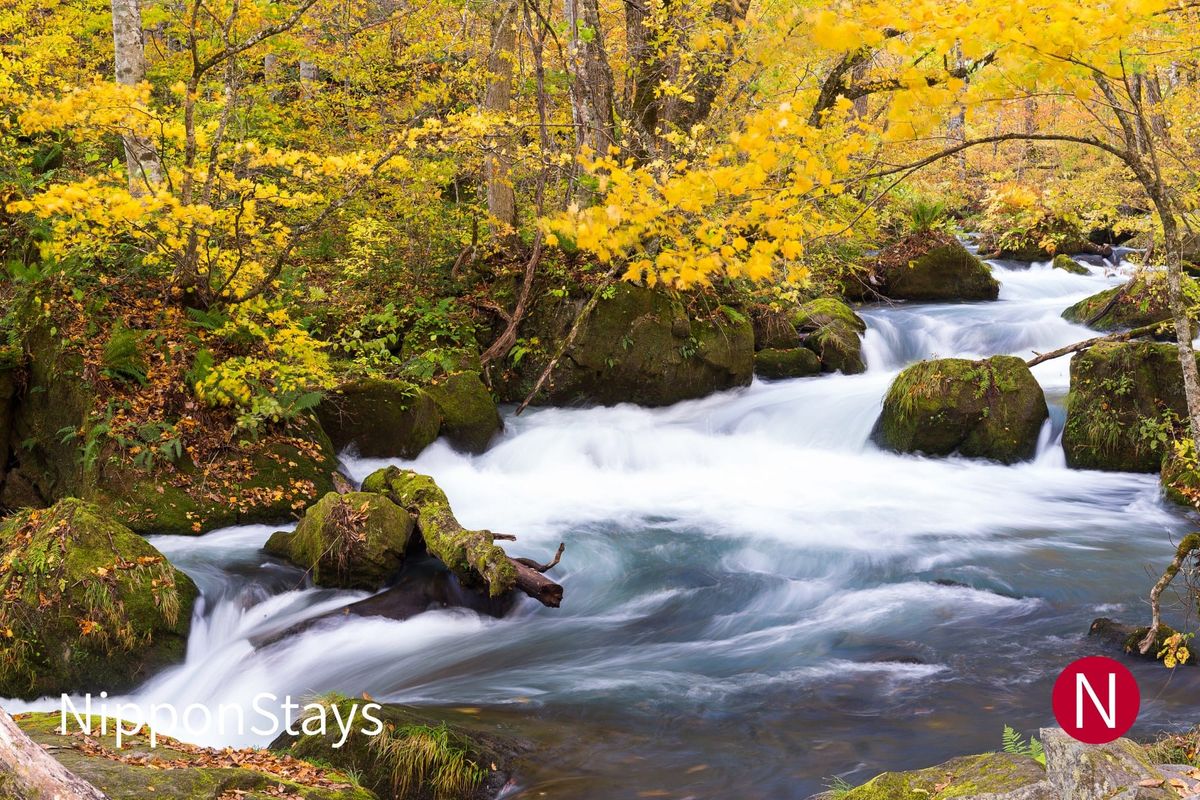
Oirase vs Lake Towada is an October question, not a November one. Northern Tohoku turns roughly a month before Kyoto does, and travellers who arrive in mid-November expecting colour here are late rather than early. The choice between the two is really a choice between walking and looking: the Oirase Gorge is a stream you follow on foot for hours, while Lake Towada is a view you sit in front of. Transport is the binding constraint on both, and it winds down earlier than you would guess — the lake crossing that makes the classic day work has its last useful autumn sailing at 13:30. Our picks: Hoshino Resorts Oirase Keiryu Hotel if walking the gorge at first light is the point, Hotel Towadaso at Yasumiya for the lake, or from ¥13,000 for two in Aomori city if you want a rail base and commute in.
This is an October trip
The single most useful thing to know about this pair is the date. Northern Tohoku's colour typically runs from around the middle of October into the last week of it — the ridges first, the gorge floor a little later. By the time Kyoto is at its peak in the third week of November, this is over.
That timing is an advantage rather than an inconvenience. Mid-October in Aomori is not a crowded travel period by Japanese standards, so you get one of the country's better autumn landscapes without the fortnight-long crush that Kansai experiences a month later.
| Base | What is on your doorstep | Access | Best for |
|---|---|---|---|
| Oirase Gorge (Yakeyama / Ishigedo area) | The stream path itself, from the door | Bus along the gorge road | Walking the gorge early, before the coaches |
| Lake Towada (Yasumiya) | Lake views, boat pier, more places to eat | Bus terminus; boats in season | A base with services and a view |
| Hachinohe (shinkansen) or Aomori city | Neither — you commute in | Rail hub, then seasonal bus | Hachinohe if coming from Tokyo; Aomori if heading north |
We have not been to the gorge in autumn ourselves. What follows is built from published timing, access and our existing coverage of the area rather than from an autumn visit, and the bus arrangements below need checking against the 2026 schedule.
The gorge is a walk, the lake is a view
The Oirase Gorge runs about fourteen kilometres from the lake at Nenokuchi down to Yakeyama, four to five hours on foot end to end, and the path follows the stream the whole way — waterfalls, moss, rapids, and the road alongside. You do not have to walk all of it; the usual approach is to take a bus to one point and walk a section back. But the experience is fundamentally pedestrian, and if the group cannot walk for two or three hours it does not deliver.
Lake Towada is the opposite. It is a caldera lake with a shoreline settlement at Yasumiya, and the autumn experience is looking across water at colour on the far slopes, or taking a boat out onto it. This is the side that works with limited mobility, bad weather, or a group that will not walk.
The two join up, and the boat is how. The one-way service runs between Yasumiya and Nenokuchi — the top of the gorge — in about 50 minutes for ¥1,760, which makes the classic day possible: bus in, walk the gorge upstream, sail back across the lake. But in autumn that plan runs into a timetable that most guides do not mention.
The boat retreats before the buses do
The 2026 schedule has six one-way sailings, and they do not all run for the same length of season. Five of them run to 5 November. The last one — Nenokuchi 16:00, arriving Yasumiya 16:50 — stops on 9 October, which is before the colour has properly started.
| Departure from Nenokuchi | Runs until | Usable in peak autumn? |
|---|---|---|
| 11:00 | 5 November | Yes — but early for a gorge walk |
| 13:30 | 5 November | Yes — this is your last boat |
| 16:00 | 9 October | No — gone before the season |
So if you arrive in the second half of October, when the gorge is at its best, the last sailing back across the lake is 13:30, not 16:00. Working backwards: the popular Ishigedo-to-Nenokuchi section is about nine kilometres and takes roughly two and a half hours, so you need to be walking by about eleven. That is a genuinely tight morning if you are commuting in from Aomori or Hachinohe, and it is the single most common way this trip goes wrong.
Note the ordering too. The boat's one-way service finishes on 5 November; the buses run to mid-November (11 November from Aomori, 17 November from Hachinohe in 2026). The water closes before the road does, which is the opposite of what most people assume, and it means an early-November visit may leave you walking the gorge in one direction and taking a bus back rather than the crossing you pictured.
Most trips want both the gorge and the lake, which is why the accommodation question is really about which one you want at first light.
Buses are the constraint, and they stop for the winter
Hachinohe is the other way in, and for many trips the better one. It is a shinkansen stop on the Tohoku line, so you can come straight from Tokyo without changing to the Aomori branch. The Oirase-go runs from Hachinohe Station West Exit to Lake Towada in about 135 minutes for ¥3,050 one way — but boarding there requires a booking, at ¥300 per seat, which is the detail that catches people out. From Aomori Station the Mizuumi-go takes roughly two and a half hours for ¥3,480 and needs no reservation.
Aomori city suits you if you are already in the north or continuing to Hokkaido; Hachinohe suits you if this is a trip out from Tokyo. Both are rail hubs with a proper choice of hotels, and neither is close enough to give you the gorge at first light. If you hold a JAPAN RAIL PASS or a JR EAST PASS for the Tohoku area, the Aomori-side bus is covered — which changes the maths considerably (checked August 2026).
Neither destination itself has rail access. Everything runs on seasonal bus services from Aomori and Hachinohe, and those services run only from spring to mid-November. The 2026 schedule started the Mizuumi-go on 1 April and the Hachinohe-side Oirase-go on 11 April, but they do not stop on the same day. The Mizuumi-go from Aomori makes its last run to Lake Towada on 11 November; from 12 November the Aomori route becomes the Hakkoda-go, which goes only as far as Sukayu Onsen and does not reach the gorge or the lake. The Oirase-go from Hachinohe runs until 17 November, so in the season's last week Hachinohe is the only way in by bus (JR Bus Tohoku, checked September 2026).
That is uncomfortably close to the end of the colour. The autumn window closes in late October, and the buses stop a couple of weeks later — so a trip planned for mid-November risks arriving after both. Check the 2026 timetable before you book anything, and note that the last bus out is early by city standards: from the Oirase Keiryukan stop the last bus towards Aomori leaves at 15:42 (the 16:42 goes to Hachinohe instead), and from Lake Towada the last one leaves at 15:00 (JR Bus Tohoku timetable, checked September 2026). Our guide to Oirase and Towada without a car covers the mechanics of doing this on public transport in detail; this article is about which end of it to sleep at.
Which one to sleep in
Sleep in the gorge if walking it is the reason you came. The path is at its best before the day buses arrive, and staying inside the gorge is the only way to be on it at that hour. The trade is that there is very little else there — a handful of properties, limited food, no town.
Sleep at Lake Towada (Yasumiya) if you want a base with services, a lake view from the accommodation, and the option of a boat. You lose the earliest hour in the gorge but gain somewhere that functions as a place to stay rather than a stop on a path.
Sleep in Aomori or Hachinohe if this is one day inside a wider Tohoku trip, or if you are travelling at the edges of the bus season. You commute in, you lose the early morning, and you keep rail access and a proper choice of restaurants.
| Where you sleep | Area | From price (2 guests) | Best for |
|---|---|---|---|
| Hoshino Resorts Oirase Keiryu Hotel | Oirase, on the stream | Top end | Walking the gorge before the first bus arrives |
| Oirase Keiryu Onsen Light and Maple | Oirase, on the stream | Mid | The same early start without the resort rate |
| Hotel Towadaso | Yasumiya, Lake Towada | Upper-mid | The lake plus somewhere to eat in the evening |
| Towadakohan Sakura | Yasumiya, Lake Towada | Mid | A lakeside base close to the boat pier |
| Hotel MyStays Aomori Station | Aomori city | from ¥13,000 | Rail base at the northern end of the bus route |
These are normal-season from-rates at two guests. Properties inside the gorge and at the lake are few and they fill for the October window well ahead — this is a case where booking early matters more than price comparison, because the constraint is availability rather than rate. The middle column is a band rather than a rate. The gorge has only a handful of beds in total, so if walking it at first light is the reason for the trip, those two rows are effectively the whole market — book them before you book anything else. For where northern Tohoku sits in the national picture, see our guide to autumn timing across Japan; the Towada Art Center is the other reason to be in this part of Aomori.
A month ahead of Kyoto
Placing this pair against the rest of the country: northern Tohoku's window in the second half of October runs roughly four weeks ahead of Kyoto's, and the two do not overlap at all (checked August 2026). A three-week trip in autumn can therefore take in both at their peak — starting here and finishing in Kansai — which is not possible with any two destinations closer together on the map.
Trip Essentials for Japan
Things worth booking before you land, all in English:
- eSIM — Airalo's Japan eSIM: install it at home and data works as soon as you switch off airplane mode at Haneda, Narita, Kansai, or wherever you land.
- Tickets and day trips — Klook covers the Japan Rail Pass, teamLab tickets, and shinkansen-linked day trips; booking ahead skips the ticket-window line.
FAQ: Oirase and Lake Towada in autumn
Do the gorge and the lake turn at different times?
Slightly. The ridges around the lake colour before the gorge floor below them, so a visit in the middle of the window can catch both at different stages. The gap is days rather than the weeks you get between Nikko's lake and the valley town beneath it.
Can I do this as a day trip?
From Aomori or Hachinohe, yes — but it is a long day and the bus timetable rather than your energy decides how much of the gorge you see. Staying one night inside the area is the difference between walking a section and walking the part you actually came for.
Which is better for an early start?
The gorge, and only if you sleep in it. The path before the first buses is the single best hour of this trip, and no commute from a town arrives in time for it.
What happens if I come in November?
You are late. The colour is generally finished, and the transport starts closing behind you: the one-way boat across the lake finishes on 5 November, the buses from Aomori on 11 November and the Oirase-go from Hachinohe on 17 November. If your dates are in November, this pair is the wrong destination and Kansai is the right one.