Autumn Leaves by Train Japan Scenic Lines Worth the Detour
Four Japan rail lines where the ride is the show in autumn: Kurobe Gorge, Hakone Tozan, Watarase Keikoku, and Enoden. Bases, reservations, and prices compared.
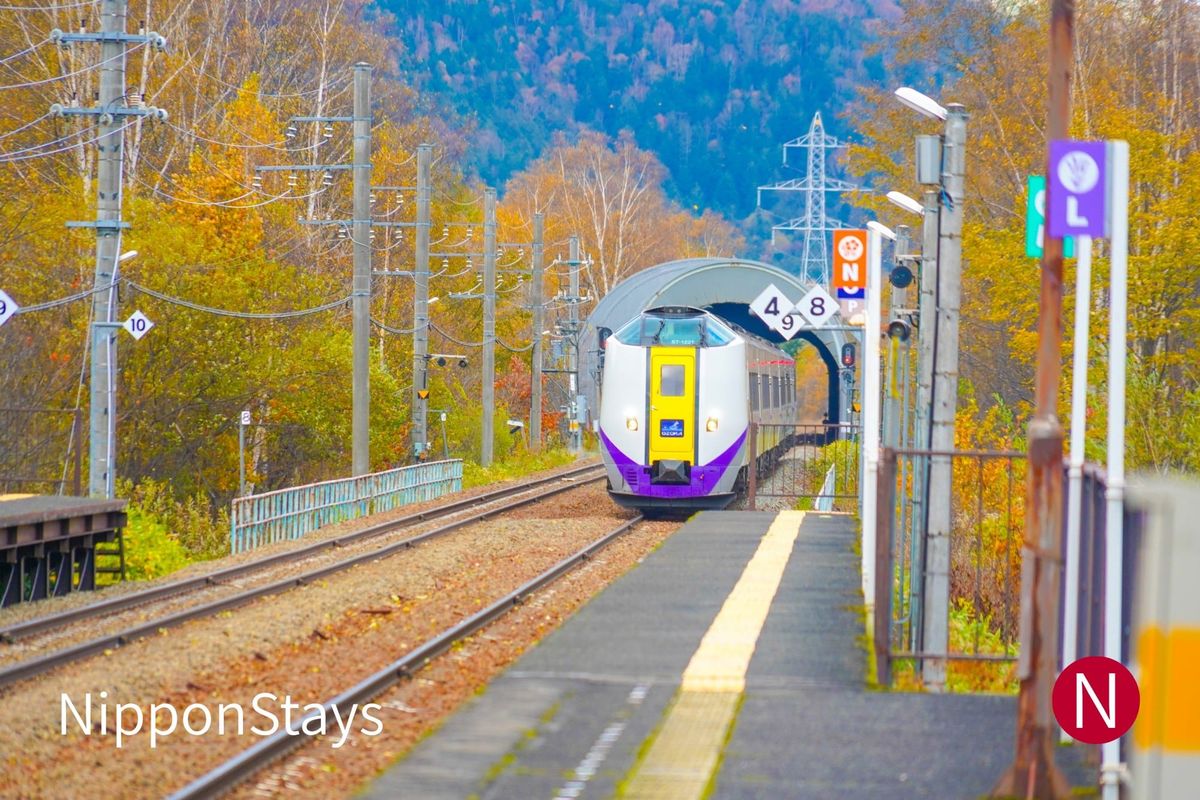
Four routes answer the search for autumn leaves by train Japan scenic lines that are worth booking around, not just a way to reach a viewpoint: the Kurobe Gorge Railway out of Toyama, the Hakone Tozan Railway's switchbacks out of Hakone-Yumoto, the open-air Torokko cars on the Watarase Keikoku Railway between Kiryu and Mato, and the Enoden between Kamakura and Enoshima. Three of the four work without a rental car by sleeping at the line's own town end rather than partway along the tracks — Toyama for Kurobe at the DoubleTree by Hilton Toyama, Gora for Hakone Tozan at HAKONE YUTOWA, and Yokohama for the Enoden. The Watarase Keikoku is the exception: Kiryu and Mato, its own end-of-line towns, have no hotel stock worth booking, so the practical base is Kinugawa Onsen instead — a roughly two-hour, three-leg trip from the line itself (Tobu train to Shimo-Imaichi, on to Tobu Nikko, then a bus to Ashio), not a same-line stay. Rooms run from ¥15,000 for two (two guests) at the Toyama end to ¥32,000 in Yokohama, with Hakone and Kinugawa priced in between; the one condition that changes the answer is the Kurobe Gorge Railway's part-year closure — until September 30, 2026 it only shuttles Unazuki to Nekomata, so a trip built around riding all the way to Keyakidaira needs to fall after October 1.
Why the first train of the day matters more than which line it is
Two of these four lines sell every seat as a reservation and two sell none at all, and that split — not the scenery — decides how a traveler should plan the morning. On the Watarase Keikoku Railway's open-sided Torokko cars, a seat is a ¥520 add-on ticket bought in advance; during the color season, seats for the popular late-morning departures from Kiryu and Mato sell out days ahead. On the Hakone Tozan Railway and the Enoden, there is no reservation system at all — every train is an ordinary commuter service, and a ticket buys a place in whatever car is running, standing room included on a crowded November Saturday. The Kurobe Gorge Railway sits in between: its open cars are capacity-limited but unreserved, while its ¥600 upgrade to a forward-facing "Relax" car can be reserved from three months out. In practice, that means the two reserved lines reward planning ahead and the two unreserved lines reward showing up for the first departure of the day, before the platform fills.
| Line | Section worth riding | Reserved seats? | Base town | From price (2 guests) |
|---|---|---|---|---|
| Kurobe Gorge Railway | Unazuki to Kanetsuri (full line to Keyakidaira resumes Oct 1, 2026) | No (optional ¥600 upgrade car) | Toyama | from ¥15,000 |
| Hakone Tozan Railway | Hakone-Yumoto to Gora (the three switchbacks) | No | Hakone (Gora) | from ¥20,000 |
| Watarase Keikoku Railway | Kiryu/Mato toward Ashio, where color starts first | Yes (¥520 supplement) | Kinugawa Onsen | from ¥24,000 |
| Enoden | Kamakura to Enoshima, via the Gokurakuji cutting | No | Yokohama (Minato Mirai) | from ¥32,000 |
Prices above are from-rates at two guests for a standard room in the shoulder season, not a November guarantee — the same room type runs several thousand yen higher once the color peaks, the cheapest rooms at each property tend to be gone months before the trip, and the figures here are meant as a ranking of these five bases against each other rather than a live quote. Anyone booking should re-check the actual travel dates directly with the hotel or a booking site.
Kurobe Gorge Railway: an 88-year-old freight line turned sightseeing trolley
The Kurobe Gorge Railway was built to service a hydroelectric dam and still runs on that original narrow-gauge track, which is why the standard cars have no windows and four-across bench seating that leans into the gorge on curves. The 2026 season runs April 20 through November 30, but the schedule has a mid-year change worth planning around: through September 30 the trains only shuttle between Unazuki and the temporary Nekomata stop, skipping the scenic upper section, and full-line service to Keyakidaira does not resume until October 1, 2026 (checked August 2026, Kurobe Gorge Railway official timetable). That makes early-to-mid October the window where the fuller route and the earliest color overlap before crowds build toward the November peak. Seats are unreserved but capacity-limited per departure — sitting on the right side facing Keyakidaira gives the better gorge views most of the way — and the ¥600 Relax-car upgrade, with forward-facing seats that turn at the terminus, can be booked online from three months ahead up to 3pm the day before. DoubleTree by Hilton Toyama sits a 3-minute walk from Toyama Station, the transfer point for the roughly hour-long run out to Unazuki, and the nearby ANA Crowne Plaza Toyama (15-minute walk, or a 6-minute tram ride) is a lower-cost alternative on the same side of the station.
Hakone Tozan Railway: three switchbacks between Hakone-Yumoto and Gora
The Hakone Tozan Railway climbs roughly 445 meters over 15 kilometers, and rather than looping around the mountain it reverses direction three times — at the Deyama, Ohiradai, and Kami-Ohiradai signal stations — so the same maple-lined valley appears from a different angle each time the train switches ends. Trains run every 15 to 20 minutes between Hakone-Yumoto and Gora, roughly three to four an hour, with the first departure typically around 6:12am and the last around 10:43pm (weekday/weekend timetables shift these by a few minutes, so confirm the exact time for an early start); the 35-minute ride needs no reservation, so an early train is mostly a way to get a window seat rather than to guarantee a spot on board. Color at the upper end near Gora typically peaks in early-to-mid November, later than the valley floor at Hakone-Yumoto. HAKONE YUTOWA, an all-inclusive property (meals and drinks bundled into the room rate) a 5-minute walk from Gora Station, lets a traveler ride the switchbacks downhill in the softer light of early morning before the day-trip crowds from Odawara and Shinjuku arrive on the mid-morning trains.
Watarase Keikoku and the Enoden: two lines that work from opposite bases
The Watarase Keikoku Railway runs 44 kilometers between Kiryu in Gunma and Mato in Tochigi along the Watarase River — a separate valley from Kinugawa Onsen, not a spur off it — and its open-sided Torokko Wasshi and Torokko Watarase Keikoku cars run mainly on weekends and holidays year-round, with extra weekday departures added through October and November for the color season. Foliage starts near Ashio Station in late October and works down the valley over roughly a month, so a trip timed to the earlier end of that window sees color the Kinugawa area itself has not reached yet. The Torokko cars need a ¥520 one-way reservation ticket on top of the base fare, and Tobu Railway sells those seat tickets, along with a Nikko-Ashio route bus pass, at its tourist centres inside Tobu Nikko and Kinugawa-Onsen stations; reservations for the popular late-October and November weekend runs are worth making as soon as dates are fixed (checked August 2026, Japan Tourism Agency, Watarase Keikoku Railway). Getting from Kinugawa Onsen to the line itself takes real time — roughly two hours over three legs (Tobu train to Shimo-Imaichi, on to Tobu Nikko, then a bus to Ashio) — so this pairing works as an onsen-town base for a day trip to the Torokko, not the same-line stay the other three routes offer. Kinugawa Onsen Asaya, a 130-year-old onsen hotel whose main restaurant was renovated and reopened in April 2024 (checked August 2026, hotel's official access page), runs a paid dial bus (about 10 minutes, ¥300 per adult) from Kinugawa-Onsen Station on a fixed departure schedule rather than a free on-demand shuttle.
The Enoden is a different kind of ride: a 10-kilometer, 15-stop commuter line between Fujisawa and Kamakura best known for its coastal curve near Kamakura-Kokomae, but the wooded Gokurakuji cutting and the hillside stretch toward Kotsubo pick up real color by mid-to-late November, and the line's stops put a rider within walking distance of Kamakura's maple-heavy temple grounds — Hase-dera near Hase Station chief among them. There is no reservation system and no seasonal timetable change; an Enoshima-Kamakura Freepass covers a full day of hopping on and off. The Westin Yokohama, a 6-minute walk from Exit 1 of Minatomirai Station, works as a base because Kamakura is a roughly 30-minute JR Yokosuka Line ride from Yokohama Station, making the Enoden a day trip rather than an overnight commitment.
What the reservation split actually means for planning
Of the four lines above, two — the Watarase Keikoku's Torokko cars and the Kurobe Gorge Railway's optional Relax car — sell a seat as a distinct, bookable product, while the other two, the Hakone Tozan Railway and the Enoden, run as ordinary unreserved commuter trains even at the peak of the November color (checked August 2026). That single fact should drive the order in which a trip gets booked: reserve the Watarase Keikoku seat and, if wanted, the Kurobe Relax car first, since both sell out on fixed dates months ahead, then treat the Hakone and Enoden legs as flexible and simply plan to catch an early train once on the ground. None of the four lines is covered by the Japan Rail Pass — the Watarase Keikoku and Kurobe Gorge Railway are both third-sector regional operators outside the JR network, and the Hakone Tozan and Enoden are private railways with their own regional passes.
| Name | Area | From price (2 guests) | Best for | Walk to the leaves |
|---|---|---|---|---|
| DoubleTree by Hilton Toyama | Toyama | from ¥15,000 for two | Riding the full Kurobe Gorge line once it reopens Oct 1 | 3-min walk to Toyama Station |
| ANA Crowne Plaza Toyama | Toyama | from ¥14,000 | Lower-cost base for the same Kurobe Gorge trip | 15-min walk (6-min tram) to Toyama Station |
| HAKONE YUTOWA | Hakone (Gora) | from ¥20,000 | Catching the switchbacks before the day-trip crowds | 5-min walk to Gora Station |
| Kinugawa Onsen Asaya | Kinugawa Onsen | from ¥24,000 | Pairing a day-trip Torokko ride with an onsen night | 10-min paid dial bus to Kinugawa-Onsen Station |
| The Westin Yokohama | Yokohama (Minato Mirai) | from ¥32,000 for two | Day-tripping the Enoden without changing hotels | 6-min walk to Minatomirai Station |
FAQ: Scenic autumn train lines in Japan
Which lines take seat reservations?
The Watarase Keikoku Railway's open-air Torokko cars require a ¥520 one-way seat-reservation ticket on top of the regular fare, and the Kurobe Gorge Railway's upgraded "Relax" car adds ¥600 and can be booked from three months ahead up to 3pm the day before travel. The Hakone Tozan Railway and the Enoden are both ordinary unreserved commuter trains — any valid ticket boards any car, with no seat guarantee, even during the November peak.
When does the Kurobe Gorge Railway close for winter?
The 2026 season runs from April 20 to November 30, and the line then shuts completely from December through mid-April due to heavy mountain snowfall. Within the 2026 season there is also a partial-route period: only the Unazuki-to-Nekomata shuttle runs through September 30, and the full line to Keyakidaira resumes on October 1, 2026 (checked August 2026).
Which side of the train should you sit on for photos?
On the Kurobe Gorge Railway's open cars, the right-hand side facing toward Keyakidaira has the better gorge views for most of the run out from Unazuki. On the Hakone Tozan Railway's switchback stretch, the train reverses direction three times between Hakone-Yumoto and Gora, so no single side stays on the view side the whole way — a window seat on either side ends up facing the valley at some point.
Are Japan rail passes valid on these lines?
No national Japan Rail Pass covers any of the four: the Watarase Keikoku Railway and the Kurobe Gorge Railway are third-sector regional operators outside the JR network, and the Hakone Tozan Railway and the Enoden are private railways with their own separate regional passes (the Odakyu Hakone Freepass and the Enoshima-Kamakura Freepass respectively). Each line's fare and any reservation surcharge has to be paid on top of, or instead of, a JR Pass.
For the wider Nikko-versus-Kinugawa question that this route touches, see Nikko vs. Kinugawa: Where to Stay for Autumn; for the Hakone side, Hakone vs. Kawaguchiko for Autumn Fuji Views covers the broader lodging choice beyond the rail line alone. Travelers weighing Toyama against a Kanazawa base for the wider Hokuriku region can start with Kanazawa vs. Toyama as a Hokuriku Base, and the national overview of timing sits at Japan's Autumn Leaves: When and Where.