How Small Is My Room? Hotel Room Sizes in Japan Explained
Hotel room sizes in Japan explained with real m2 and bed-width figures from five named properties, checked August 2026 - not adjectives.

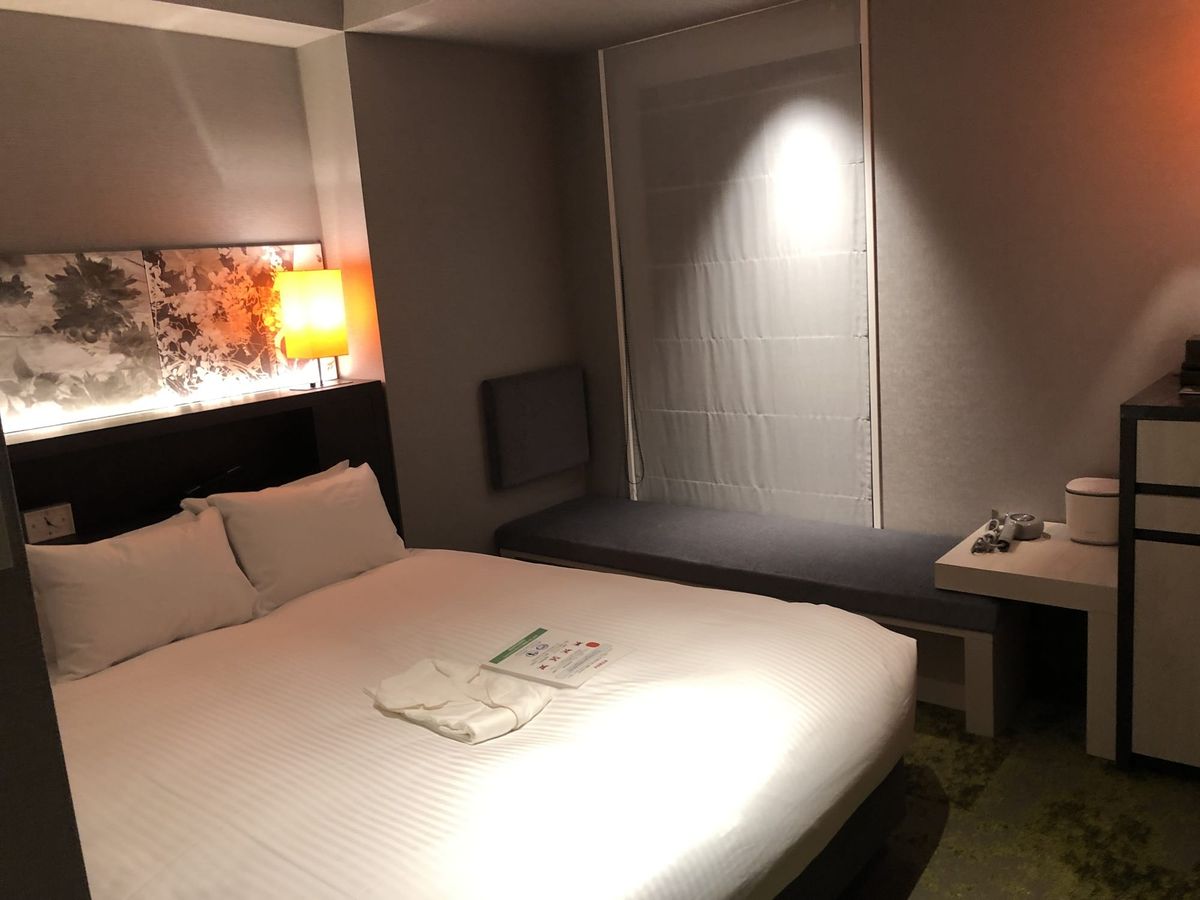
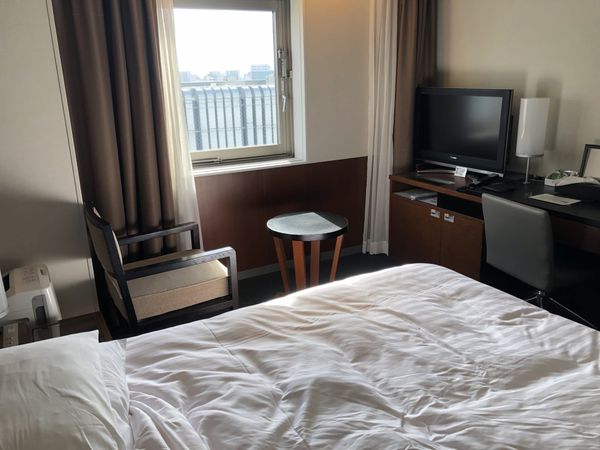
Hotel room sizes in Japan are usually printed on the booking page as two numbers worth reading before anything else: the floor area in square metres and the bed width in centimetres. A standard business-hotel single runs about 10-12 m² with a bed around 140 cm wide - labeled "single" but built to what most countries would call a semi-double - while a room that reads as normal-sized to a first-time visitor starts around 19-21 m², and one where two adults and a child stop bumping into each other is closer to 30-34 m². At the small end, APA Hotel Nagoya Ekimae's single room runs from ¥6,750 a night (checked August 2026; rates vary by season). The number that actually changes the answer is not the room's name but how much time you plan to spend inside it: a room booked only for sleeping can be smaller than one where you will unpack, work, or wait out a rainy afternoon.
The two numbers, and where the listing hides them
Every room in this table was measured against the property's own room page or a booking platform's official listing, not estimated from a photo. The floor area is what the property itself declares as 客室面積 or 広さ; the bed width is the mattress, not the frame.
| Room type | Measured at (checked Aug 2026) | Floor area | Bed width | Who it fits | What is missing at this size |
|---|---|---|---|---|---|
| Business single | APA Hotel Nagoya Ekimae, Single | 10 m² | 140 cm x 1 | One adult, a night or two | No floor space to fully open a suitcase |
| Semi-double | Tokyu Stay Nishi-Shinjuku, Moderate Double | 15 m² | 140 cm x 1 | One adult who wants to unpack | Only one suitcase can be open at a time |
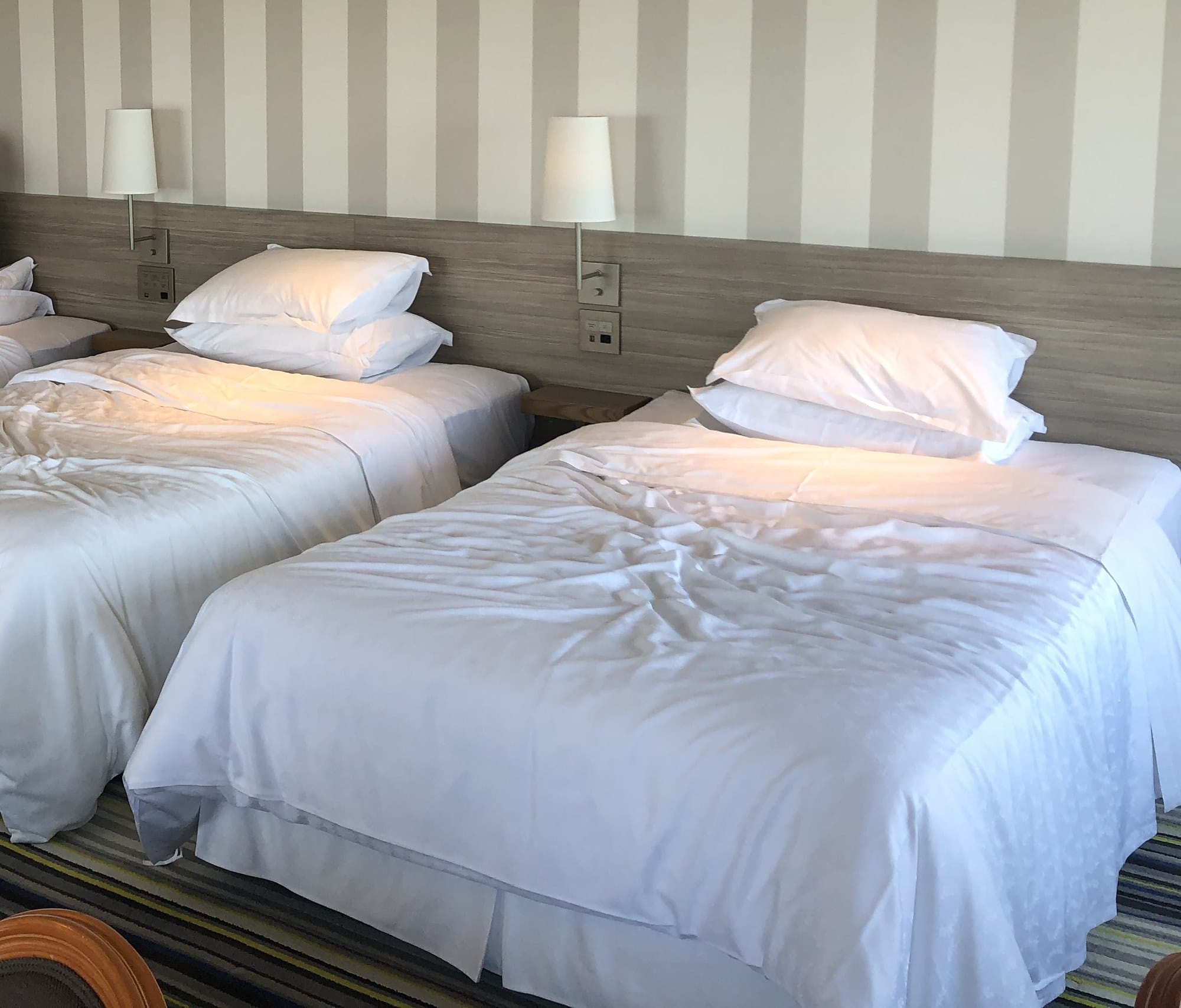
| Standard twin | Tokyu Stay Nishi-Shinjuku, Residential Twin | 21 m² | 110 cm x 2 | Two adults, a short-to-mid stay | Tight for a stroller or travel crib between the beds |
| Superior double | Keio Plaza Hotel Tokyo, Standard | 23.5 m² | 161 cm x 1 (or 110 cm x 2) | Two adults who want a real desk and chair | Still one bed - not built for a child sharing it |
| Family room | Tokyu Stay Nishi-Shinjuku, Residential Family | 34 m² | 110 cm x multiple beds | A family of three or four | A second child usually still needs an extra futon |
| Apartment-style | MIMARU Tokyo Shinjuku West, Family Standard | 40 m² and up | Mixed bedding, no single width | Four to six people who want to cook | Priced and booked like a small apartment, not a room |
Across these six room types, the narrowest bed measured is 110 cm and the widest is 161 cm, and every property's unit bath is counted inside its quoted floor area (checked August 2026). For a smaller footprint still, how a capsule compares to a business hotel room covers the option below all six of these.
Bed widths in centimetres
Japan uses its own standard bed-width bands, and they do not line up with the words a foreign visitor expects. Single runs about 97 cm, semi-double 120 cm, double 140 cm, queen 160 cm and king 180 cm, with almost every bed built to roughly the same 195 cm length (checked August 2026).
The surprising part is the double: at 140 cm, a Japanese "double" is narrower than a queen in the US or Australia, so the word alone tells you less than the number does. APA Hotel Nagoya Ekimae's single room above is a working example of the gap - its one bed is 140 cm wide, semi-double by the numbers, in a room the hotel itself calls "Single." Reading the centimetres instead of the room name is the method this guide argues for.
What the square metres actually buy
A room's quoted floor area includes its bathroom, and in most business hotels that bathroom is a prefabricated "unit bath" - bath, sink and toilet moulded into one sealed module, commonly built to a footprint of about 1.2 m x 1.6 m (checked August 2026). Subtract that module and the entrance strip, and a 15 m² room leaves roughly the floor space of a walk-in wardrobe for everything else - which is what decides whether two suitcases can sit open at once, or whether there is a gap to walk around the bed rather than climb over its corner.
That unit-bath arithmetic plays out predictably by size: at 21-23 m², both cases usually sit open on stands without touching; below about 15 m², one case typically stays on the floor, zipped, for the length of the stay.
Why rooms are this size
The unit bath has a specific, dated origin: Toto developed it in 1963 for Hotel New Otani, which was being built at speed for the 1964 Tokyo Olympics; 1,044 unit bathrooms went in over about three and a half months (Toto company history). A conventional tiled Japanese bathroom, built in place room by room, could not have been finished on that schedule; a sealed bath-toilet-sink module, built off-site and lifted into each room shell by crane, could. The approach became the standard method for business-hotel bathrooms nationwide and is still how most compact rooms are built today.
The floor area around that module is a function of urban land cost: a room in central Tokyo, Osaka or Nagoya sits on land priced by the square metre, and a chain's margin depends on fitting as many rentable rooms as possible onto a fixed footprint. The room is also designed around one assumption - that a guest sleeps there and spends the day out in the city - rather than a guest who works from the room or spreads a family's daytime gear across it. Apartment-style formats like MIMARU exist because that assumption does not fit every trip.
Our honest position, and its limits
Our own family has stayed in small rooms in Japan without it being a problem for us. That is one family's tolerance for a small room, not a recommendation, and it says nothing about how your own trip or your own child will find the same square metres. A friend of ours, for one, has described the opposite experience: a child who moves around in their sleep can make a shared bed in a small room considerably harder than the floor plan suggests, even at a size we found comfortable. Sharing the bed with a child covers the age limits, fees and bed widths chain by chain in more depth than this table does.
The Japanese hotel room's compensations
One thing works in favour of a small Japanese hotel room that a visitor from a shower-only market will not expect: the room usually has an actual bathtub, even at 10-12 m², where an equivalent Western budget hotel typically has only a shower stall. We have stayed in several Kyoto hotels built around a large communal bath instead - Onyado Nono Kyoto Shichijo and Mitsui Garden Hotel Kyoto Shijo among them. Our comparison of Dormy Inn against standard business hotels covers how much floor area a chain saves by moving the bath out of the room entirely, and Shinjuku hotels with a public bath lists the properties rather than repeating them here.
When the extra square metres are worth paying for
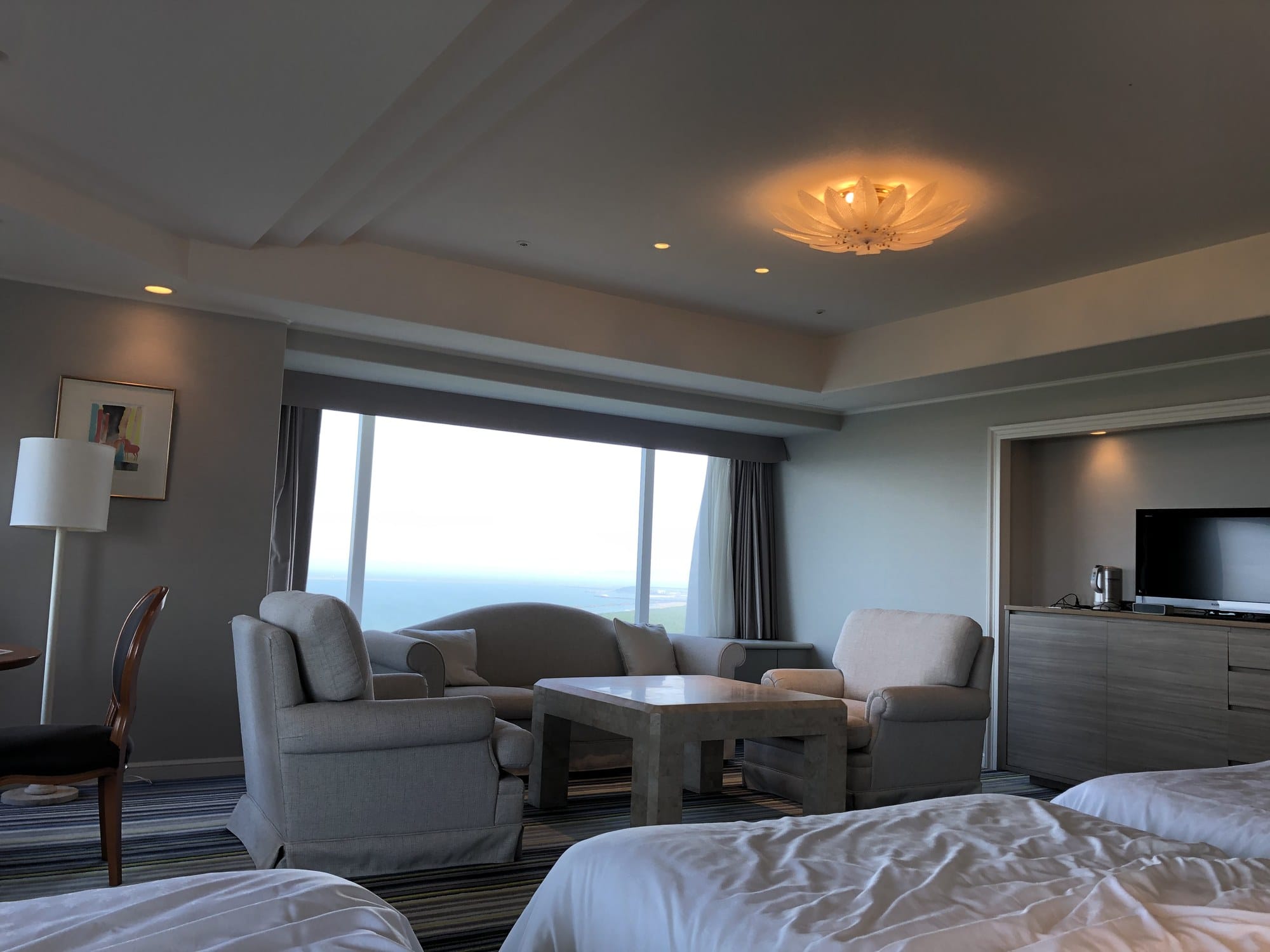
Three situations are worth paying up for: a stay of four nights or longer, where unpacking properly starts to matter; a child sharing the room, where Tokyo rooms that legally sleep five shows what a family-sized floor area looks like; and a trip with real daytime hours indoors - working, resting after a flight, waiting out weather - where a 12 m² single stops being just a place to sleep.
How to check a room's real size before you book
An English-language OTA listing frequently drops the room's own floor plan and bed width, even when the hotel's Japanese-language page publishes both. Search the property's own site for 客室案内 (room guide), and look for 広さ or 客室面積 for the area and ベッド幅 for the bed width; セミダブル and シングル are the two labels most often used loosely.
One more thing worth checking: whether the quoted m² is the room only, or the room plus its unit bath. Most Japanese hotels quote the combined figure, as every property in this article's table does, but it is not universal, and a room that feels a metre or two smaller than expected on arrival is usually that difference rather than an error.
Rooms at each size band
Five properties, checked August 2026, cover the ladder from the smallest room in this guide to the largest.
| Property | Room type | Floor area | Bed width | |
|---|---|---|---|---|
| APA Hotel Nagoya Ekimae | Single | 10 m² | 140 cm | Check rates |
| Toyoko Inn Tokyo Shinjuku Kabukicho | Double | 14-15 m² | 140-160 cm* | Check rates |
| Tokyu Stay Nishi-Shinjuku | Residential Twin | 21 m² | 110 cm x 2 | Check rates |
| Keio Plaza Hotel Tokyo | Standard | 23.5 m² | 161 cm | Check rates |
| MIMARU Tokyo Shinjuku West | Family Standard | 40 m² and up | Mixed bedding | Check rates |
*Toyoko Inn's Shinjuku Kabukicho property publishes room area by room type but not bed width by property; the figure shown is the chain's published spec for that room grade nationwide, not a measurement taken from this specific hotel's own page. For the wider chain picture behind these two budget brands, see the three big budget chains; for a kitchen-equipped alternative to MIMARU's apartment-style room, see serviced apartments in Tokyo. The other questions travellers ask before booking a room in Japan covers everything else that comes up once you have picked a room.
Floor area stops being the deciding number once a baby is in the room. A Welcome Baby Inn is a room that has passed at least 70 of 100 baby-focused checks from the MIKI HOUSE Child Care Research Institute — a different measurement of the same square metres.
FAQ: hotel room sizes in Japan
Is 15 m² too small for a hotel room in Japan?
Not for sleeping and showering - a 15 m² room with a 140 cm bed fits one adult comfortably, or two adults who are out most of the day. It gets tight if you plan to unpack fully, share the bed with a child, or spend daytime hours indoors; at that point 19-21 m² is a more comfortable floor.
What's the difference between a Japanese "double" and a "semi-double" bed?
A Japanese semi-double is 120 cm wide and a Japanese double is 140 cm wide, both roughly 195 cm long (checked August 2026). Both are narrower than a US or Australian queen (about 152-160 cm), so a room booked as "double" in Japan is not the bed width a Western visitor expects.
Does a Japanese hotel's room size include the bathroom?
Usually, yes - the quoted floor area almost always includes the unit bath, since it is a sealed module built into the room rather than a separate space. It is worth confirming on the property's own page rather than assuming, since this is not universal across every hotel.
How do I find a room's actual size before booking?
Check the hotel's own Japanese-language site rather than the English OTA listing, and look for 広さ or 客室面積 for floor area and ベッド幅 for bed width - English listings frequently drop both. If neither figure is published anywhere, treat that as a signal the room is on the smaller end of its category.