Dormy Inn vs Business Hotels Japan: APA, Toyoko Inn and the Public Bath Premium
Dormy Inn vs business hotels Japan travelers know (APA, Toyoko Inn, Super Hotel): what the bath premium buys, real prices, and when to skip it.

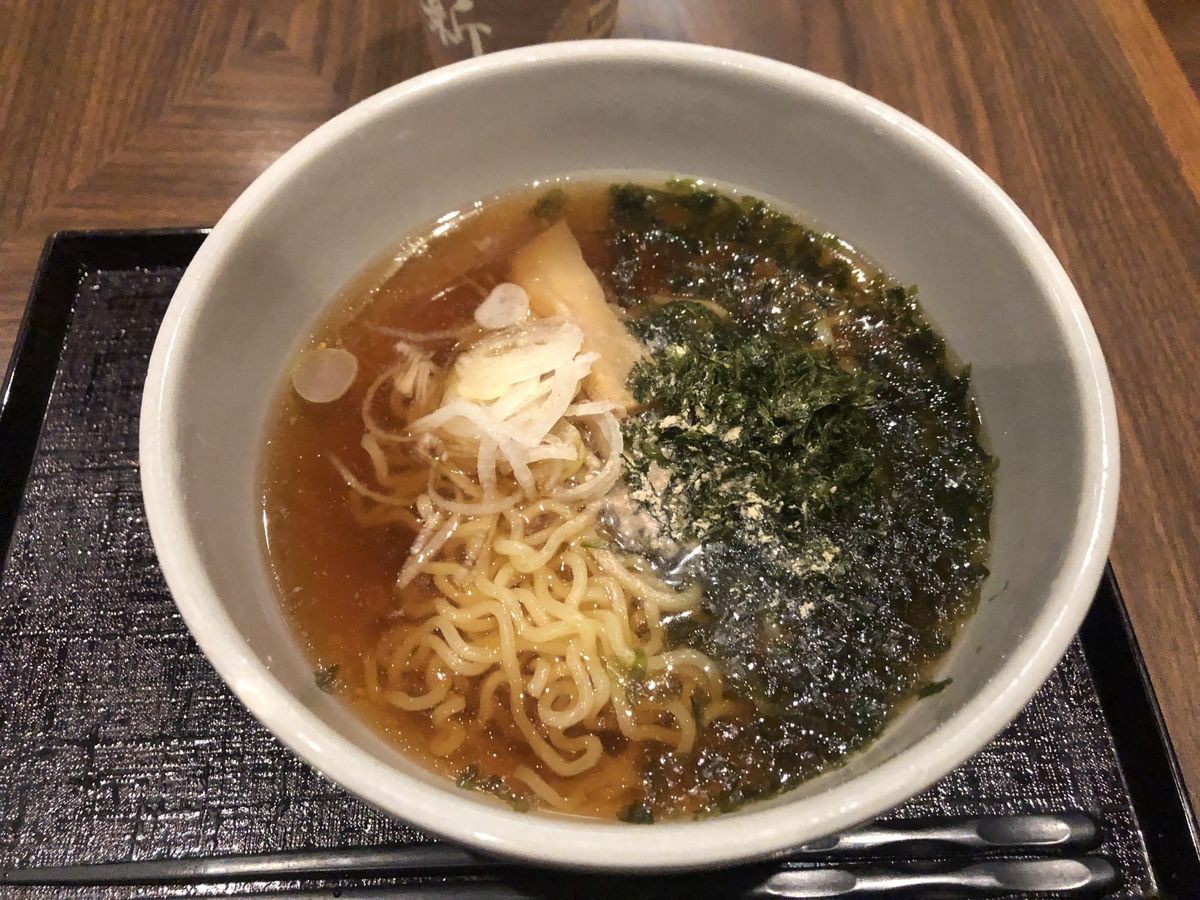
Comparing Dormy Inn vs business hotels Japan travelers already know by name — APA, Toyoko Inn, Super Hotel — comes down to one line item: the communal bath. Dormy Inn Akihabara starts from ¥12,000 a night for a standard twin room, about ¥2,300 more than APA Hotel Shinjuku Kabukicho Tower's room-only rate, and Toyoko Inn is a trickier comparison still: its ¥6,825 rate is per person, twin-share, so a solo traveler pays less than Dormy Inn but two people sharing pay roughly ¥13,650 for the room, more than Dormy Inn's ¥12,000. That premium buys a natural hot spring bath, a sauna, and free late-night ramen (yonaki soba) served every night from 9:30 to 11 p.m. Skip the upgrade if you are arriving after the last train, carrying a large uncovered tattoo, or traveling solo on the tightest budget, since a lone Toyoko Inn room still undercuts Dormy Inn on price (rates vary by season; checked August 2026).
What Dormy Inn Includes That APA and Toyoko Inn Do Not
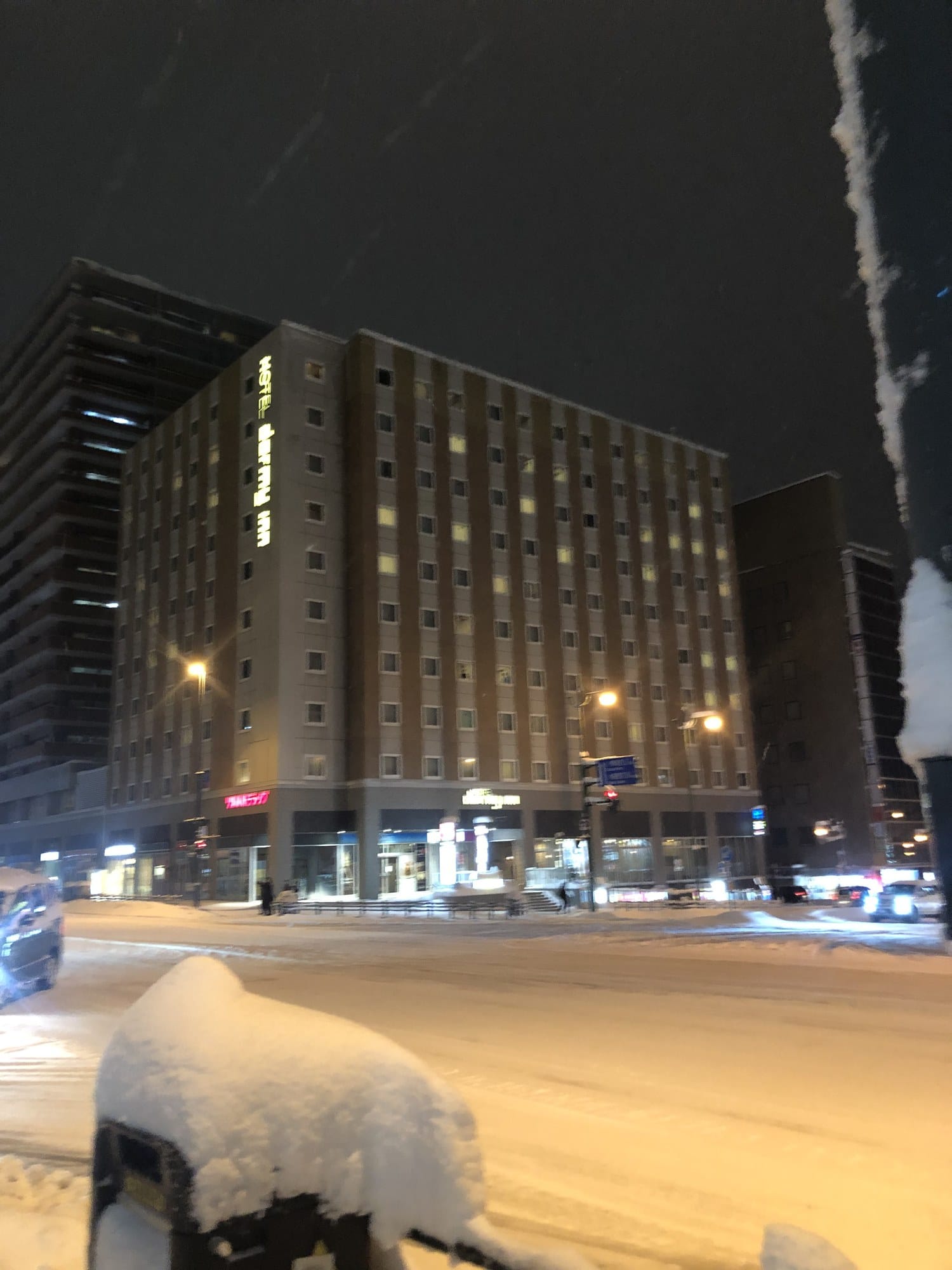
Dormy Inn is the only one of these four chains that bundles a communal bath, a sauna and a free midnight noodle service as a near-universal standard, not a property-by-property extra. Dormy Inn Akihabara, a 5-min walk from JR Akihabara Station's Electric Town Exit (or a 2-min walk from Tokyo Metro Ginza Line Suehirocho Station Exit 1), runs the pattern most Dormy Inn properties follow nationwide: bath and sauna open from 3:00 p.m. to 10:00 the next morning, with the sauna itself closed 1:00-5:00 a.m. for cleaning.
APA Hotel is not built around a bath the same way, but it is not bath-free either. APA Hotel Shinjuku Kabukicho Tower, a 2-min walk from Seibu-Shinjuku Station's main exit (or 6-min walk from JR Shinjuku Station East Exit), has a large 28th-floor communal bath and open-air bath using a quasi-natural onsen source, open 3:00 p.m. to 1:00 a.m. and again 6:00-10:00 a.m., free for staying guests — but that is a feature of this particular Tower-branded flagship, not a chain-wide APA standard. Standard APA rooms elsewhere rely on a private unit bath only. Toyoko Inn skips the communal bath entirely at essentially every property; every room has its own bathtub-shower-toilet unit instead.
Dormy Inn vs APA vs Toyoko Inn vs Super Hotel: The Comparison Table
Room size and price move roughly together across the four chains, but breakfast policy is where the real gaps show up.
| Chain | Price band | Room size | Public bath | Breakfast | Loyalty program | Location pattern |
|---|---|---|---|---|---|---|
| Dormy Inn | from ¥9,000 (regional) to ¥12,000 (central Tokyo) | ~14-15 m² (standard double) | Yes — natural hot spring + sauna, standard at nearly every property | Not included on room-only plans; buffet add-on runs ¥1,200 (Express) to ¥2,300 (Premium) | Dormy's Points (Domipo, launched January 2026) — 3% base per ¥100 pre-tax, +2% at Gold, +1% more with self check-in | Regional hub cities and secondary stations more than central Tokyo |
| APA Hotel | from ¥9,700 (Shinjuku Kabukicho Tower, room-only) | ~11 m² (standard single) | Only at select Tower/Resort flagships (confirmed at Shinjuku Kabukicho Tower) | Paid buffet add-on where offered, roughly ¥2,400-3,300 depending on property and day | APA Card / AP Club (revamped May 2026) — up to 12% at the top President tier; 15% only with the Japan-issued APA Card Visa, built for repeat guests | Dense station-front towers in Tokyo and Osaka; largest room count per building of the four |
| Toyoko Inn | from ¥6,825 per person, twin-share (Tokyo Shinjuku Kabukicho) | ~12 m² (uniform single nationwide) | No — private unit bath only | Free on every plan at every property (format — buffet or boxed set — varies by hotel) | Club Card — 5% off, but a one-time ¥1,500 joining fee (¥1,000 student, no annual fee); 12-month advance booking (3 months for non-members) | Widest national footprint of the four: 361 hotels across all 47 prefectures (achieved February 2026) |
| Super Hotel | from ¥9,000 (Premier Akihabara, single occupancy) | ~12.3 m² | Natural hot spring at many regional and suburban properties; inconsistent in central Tokyo and Osaka | Usually free on the standard plan; some Premier-branded properties (Akihabara among them) charge roughly ¥1,300 for a buffet instead | SSM tiers — 500 points/stay (Bronze) rising to 700 (Gold, 20+ nights/year) | Mix of city-center and roadside/suburban; onsen branding concentrated outside Tokyo and Osaka |
Of the four chains compared here, Dormy Inn is the only one that includes a communal bath, a sauna and free late-night ramen as a standard, chain-wide feature; APA's public bath appears only at select Tower-branded flagships like the Shinjuku Kabukicho property, and neither this Toyoko Inn nor this Super Hotel location includes one (checked August 2026).
Both loyalty numbers in that table need a caveat. APA's 15% back applies only with the Japan-issued APA Card Visa; without one, the President tier caps at 12%, and reaching it takes cumulative past stays, not a single trip. Toyoko Inn's 5% Club Card discount comes after a one-time ¥1,500 joining fee (¥1,000 for students), so the card pays for itself only after roughly ¥30,000 in cumulative stays — useful for repeat visitors, not a first trip.
Yonaki Soba: The Free Late-Night Ramen, and When It Is Served
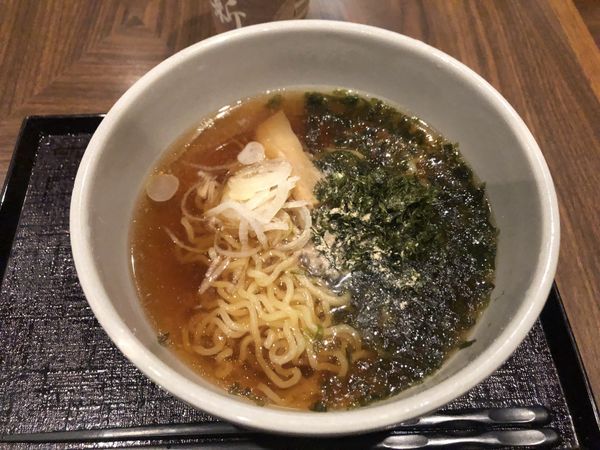
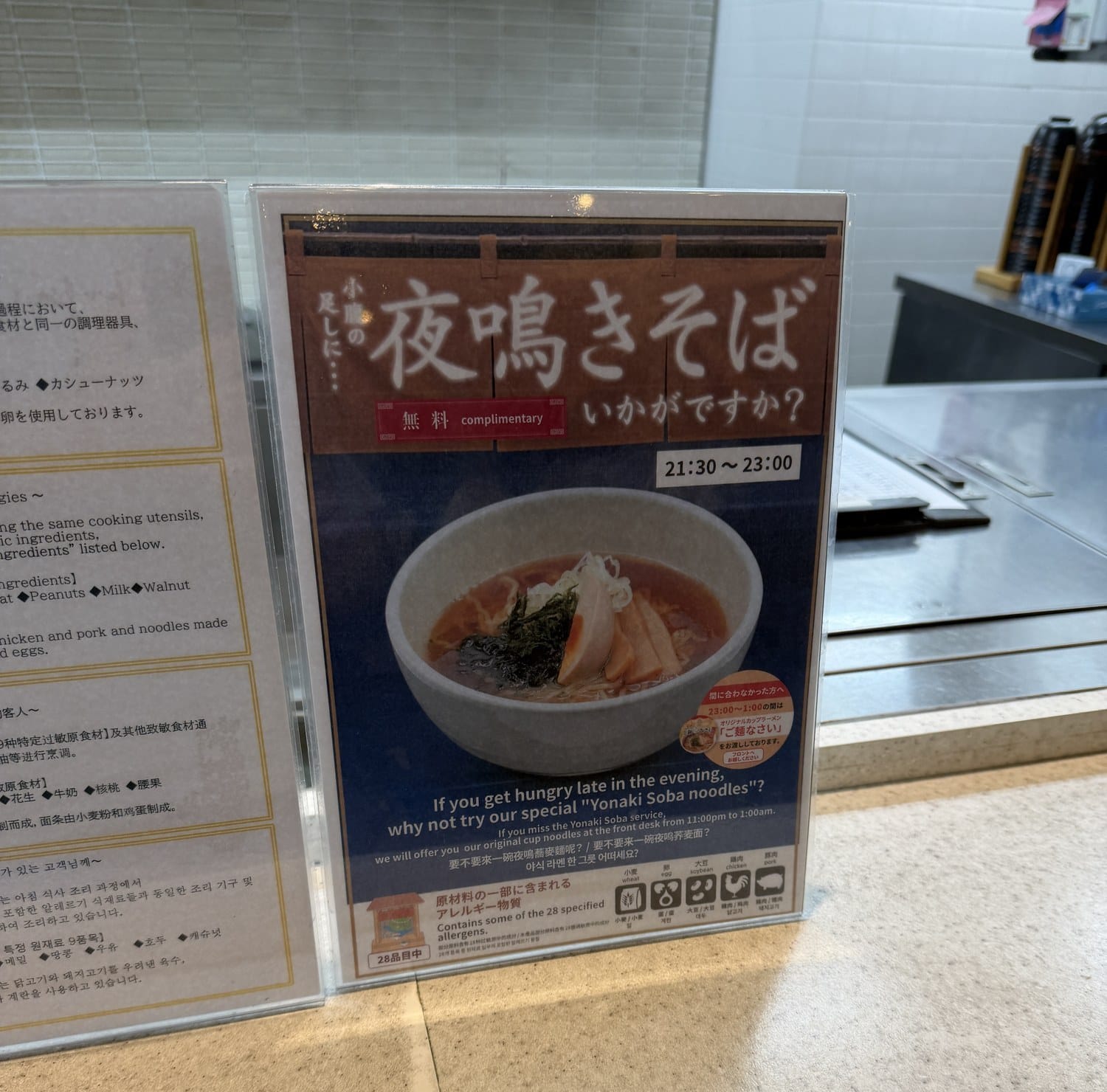
Yonaki soba is a half-portion, soy-based noodle bowl served free to any Dormy Inn guest, adults included, in the lobby restaurant between 9:30 and 11:00 p.m. every night of the stay. It originated as a Muroran, Hokkaido specialty and Dormy Inn adopted it chain-wide as a post-bath snack — the timing is built around finishing the noodles after a soak and before bed, not as a dinner replacement. None of APA, Toyoko Inn or Super Hotel offer an equivalent free late-night food service at their standard properties; a Dormy Inn guest who checks in after 11 p.m. misses the window entirely, which matters if your flight or train lands late.
When the Public Bath Is Not Worth the Premium
The Dormy Inn premium stops paying for itself in a handful of common situations. If you are catching an early Shinkansen or flight and checking out before the bath's 10 a.m. close is even a consideration, or if you land so late that both the bath's evening rush and the 9:30-11 p.m. yonaki soba window have passed, you are paying extra for amenities you will not use. Tattoos are the other real constraint: Dormy Inn generally allows a covered tattoo no larger than about 8 by 13 cm with a sticker the property provides, but larger or multiple tattoos are commonly turned away from the communal bath outright, and policy varies by location. A traveler in that position gets no bath value from the higher rate.
Breakfast economics cut the other way from what the bath premium suggests. Toyoko Inn's free breakfast is bundled into every plan at every property, while Dormy Inn's room-only rate does not include breakfast at all — so a Dormy Inn stay with the breakfast plan added can end up costing more than the headline "from" rate suggests, on top of the base premium over APA, and over Toyoko Inn too if you are two people sharing a room rather than traveling solo. If you only care about a clean bed and a shower before an early departure and you are traveling alone, a room at Toyoko Inn Tokyo Shinjuku Kabukicho is the cheaper choice outright and settles the bath question by skipping it. Readers deciding between categories rather than brands should start with our capsule hotel vs business hotel comparison instead of this one.
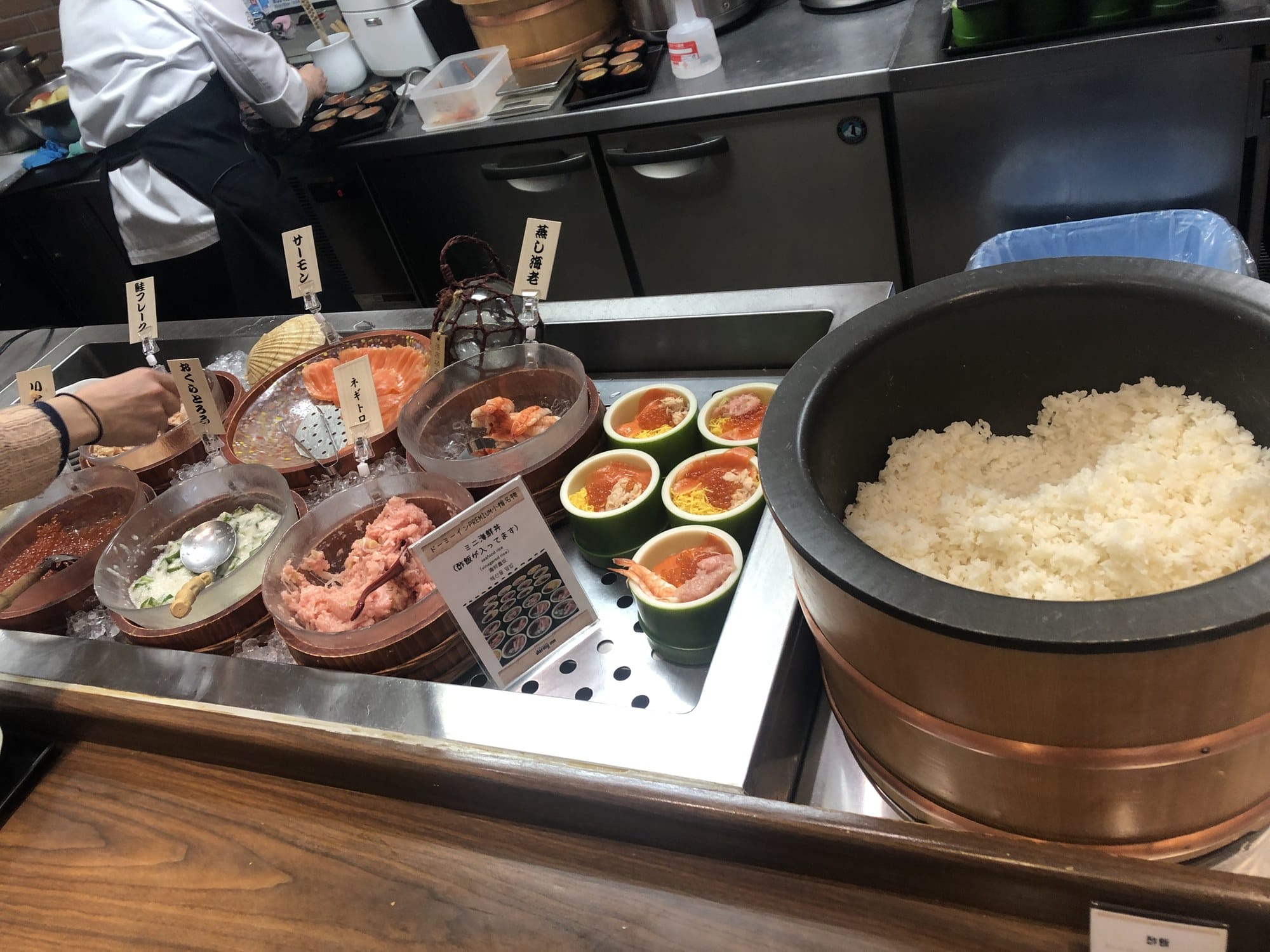
Breakfast quality can vary by property too. At Dormy Inn PREMIUM Otaru in Hokkaido, the paid buffet has featured a seafood bar: salmon, negitoro, ikura, salted salmon flakes, steamed shrimp and grated yam over rice. That is specific to the Otaru property, not chain-wide, and contents change — confirm the current spread with the hotel.
Four Real Properties to Book and Compare
Three of these four sit within a few Shinjuku and Akihabara stations of each other; the fourth is Dormy Inn's Osaka equivalent, for comparing the same bath-and-ramen model in a different city.
| Name | Area | Price range | Best for |
|---|---|---|---|
| Dormy Inn Premium Namba | Namba, Osaka | from ¥9,000 | The bath-plus-ramen model outside Tokyo, at a lower price band than the Akihabara flagship |
| APA Hotel Shinjuku Kabukicho Tower | Kabukicho, Shinjuku | from ¥9,700 for two | A free rooftop-style bath without committing to Dormy Inn's price tag |
| Toyoko Inn Tokyo Shinjuku Kabukicho | Kabukicho, Shinjuku | from ¥6,825 per person | Guaranteed free breakfast and the cheapest option for a solo traveler |
| Super Hotel Premier Akihabara | Akihabara, Tokyo | from ¥9,000 | A natural hot spring bath at a price between Toyoko Inn and Dormy Inn, with breakfast sold separately |
For a wider chain-by-chain rundown that also covers the foreign hotel groups operating in Japan, see our guide to the best hotel chains in Japan. If your trip is anchored to one city rather than one brand, our Sapporo hotels with onsen and Osaka hotels with onsen roundups include Dormy Inn alongside independent properties with baths.
Trip Essentials for Japan
Things worth booking before you land, all in English:
- eSIM — Airalo's Japan eSIM: install it at home and data works as soon as you switch off airplane mode at Haneda, Narita, Kansai, or wherever you land.
- Tickets and day trips — Klook covers the Japan Rail Pass, teamLab tickets, and shinkansen-linked day trips; booking ahead skips the ticket-window line.
FAQ: Dormy Inn vs Other Business Hotels in Japan
Is Dormy Inn better than APA Hotel for a one-night stay?
For a single night, Dormy Inn's bath and free ramen add real value only if you arrive before 11 p.m. and can use both. APA Hotel Shinjuku Kabukicho Tower has a free communal bath of its own and typically costs less, so for a short stopover the price gap often is not worth paying twice for a similar amenity.
Is Toyoko Inn cheaper than Dormy Inn?
It depends on how many people share the room. Toyoko Inn Tokyo Shinjuku Kabukicho prices from about ¥6,825 per person, twin-share, which is cheaper than Dormy Inn Akihabara's ¥12,000 room rate for one traveler using the room alone. For two people sharing, though, Toyoko Inn's per-person pricing adds up to roughly ¥13,650 for the room versus Dormy Inn's ¥12,000, so Dormy Inn can come out cheaper for a couple even though its headline number looks higher.
Does Super Hotel have a public bath like Dormy Inn?
Some Super Hotel properties do, branded with the name of the hot spring source, but it is not standard across the whole chain the way it is at Dormy Inn. Super Hotel Premier Akihabara has a natural hot spring bath, while many central Tokyo and Osaka Super Hotel locations rely on in-room bathrooms only.
Is Dormy Inn worth it if I have a tattoo?
It depends on the size. Dormy Inn generally permits a covered tattoo up to roughly 8 by 13 cm using a sticker provided at the property, but larger or multiple tattoos are commonly refused entry to the communal bath, and the exact rule varies by hotel. If you cannot use the bath, a plain unit-bath room at Toyoko Inn or APA removes the question entirely.