Shinjuku Hotels with Onsen & Hot-Spring Baths
Confirmed Shinjuku hotels with onsen: rooftop hot-spring baths, tattoo policies, bath hours, and price ranges for 4 verified picks.
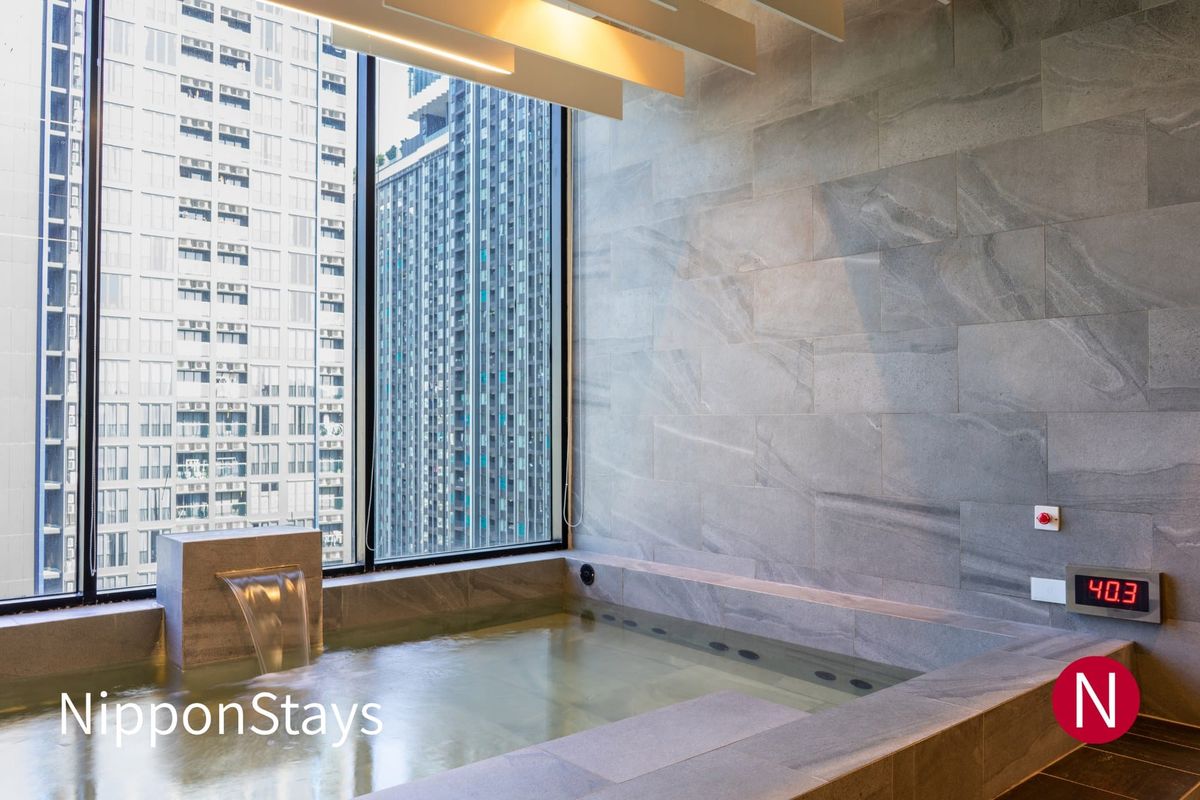
Of the four Shinjuku hotels with onsen or communal baths covered here, only Onsen Ryokan Yuen Shinjuku (from ¥24,000 per room, an 8-min walk from Shinjuku-sanchome Station) has genuine hot-spring water — an 18th-floor rotenburo of Hakone alkaline spring water. For a cheaper soak, APA Hotel Shinjuku Kabukicho Tower (from ¥8,000) has a 28th-floor open-air bath a 6-min walk from Shinjuku Station's East Exit, with plain heated water, closed 01:00–06:00. The condition that changes the answer: if you have visible tattoos, Onsen Ryokan Yuen Shinjuku is the only one that explicitly permits them — APA Hotel Shinjuku Kabukicho Tower does not, and the other two hotels' policies should be confirmed at booking.
Some links in this guide are affiliate links. If you book through them, we may earn a commission at no extra cost to you.
For a broader overview of the neighbourhood, start with our Shinjuku area guide.
Of the 4 Shinjuku hotels with onsen covered below, 1 explicitly permits guests with tattoos to use the communal bath and 1 offers a genuine natural alkaline spring transported from the Hakone area (checked July 2026).
Where to soak: Shinjuku onsen hotels at a glance
Four confirmed options, from most onsen-focused to most budget-friendly. All rates vary by season and booking lead time.
| Name | Area | Price range | Best for |
|---|---|---|---|
| Onsen Ryokan Yuen Shinjuku | Shinjuku-sanchome | from ¥24,000 | Transported natural spring, rooftop rotenburo, tattoo-friendly |
| APA Hotel Shinjuku Kabukicho Tower | Kabukicho | from ¥8,000 | 28th-floor open-air bath; open 15:00–01:00 then 06:00–10:00 next morning |
| APA Hotel Higashi Shinjuku Kabukicho Tower | Kabukicho | from ¥8,500 | Communal bath in East Shinjuku; newer tower |
| Super Hotel Shinjuku Kabukicho | Kabukicho | from ¥13,000 | Budget pick with artificial carbonated spring bath |
Rates listed are per room per night and shift significantly with day of week and season. Check current rates before committing to any property.
Natural hot spring vs artificial bath: what to expect in the city
Tokyo sits in a major urban area, which means true on-site geothermal hot springs are rare. When hotels use the word onsen, the details matter.
- Transported natural spring water: Some hotels bring in actual hot-spring water from a source outside the city — Hakone or Izu are common suppliers — and pipe it into an on-site bath. Onsen Ryokan Yuen Shinjuku uses alkaline spring water transported from the Hakone area. The mineral content is real; only the source location differs from a mountain ryokan.
- Artificial carbonated baths: Properties like Super Hotel Shinjuku Kabukicho use high-concentration carbonated spring technology. The water is heated and infused with dissolved CO2, giving it a slight effervescence. There are no natural minerals, but the dissolved carbon dioxide is associated with improved circulation and faster muscle recovery — useful after a full day of walking Tokyo.
- Standard heated communal baths: A large shared bathhouse with plain hot water. No mineral content, but useful for soaking out jet lag and often open through the night.
The four hotels below split across these categories. Read the individual entries to know exactly what each property's water is before you arrive.
Hotels with rooftop or top-floor baths
Onsen Ryokan Yuen Shinjuku
This is the most dedicated onsen property in the Shinjuku area. The bath floor sits on the 18th floor and includes one indoor bath and one outdoor rotenburo per gender, both facing the Shinjuku skyline. The water is an alkaline spring sourced from the Hakone area and transported to the property — genuine mineral content, not heated tap water.
Rooms follow a ryokan format: yukata are provided, and the property serves a traditional breakfast. The service style is quieter and more personal than the nearby business hotels. It is also one of the few communal-bath properties in central Tokyo that explicitly permits guests with tattoos to use the bath.
- Bath floor: 18th floor (indoor + outdoor rotenburo)
- Walk from station: 8-min walk from Shinjuku-sanchome Station (Tokyo Metro Marunouchi/Fukutoshin/Shinjuku lines), Exit 1
- Walk from Shinjuku Station: roughly 15-min walk from the East Exit
- Tattoo policy: permitted
- Best for: couples, solo travelers wanting a full ryokan-lite experience, anyone with tattoos who wants to use a communal bath
Check rates at Onsen Ryokan Yuen Shinjuku
APA Hotel Shinjuku Kabukicho Tower
The APA Hotel Shinjuku Kabukicho Tower puts its public bath on the 28th floor, high enough for a genuine city view. There is one indoor bath and one outdoor open-air bath per gender. The baths are open from 15:00 to 01:00, then reopen at 06:00 and close at 10:00 the following morning — the bath does not operate overnight, so if you are departing before 06:00, plan accordingly.
The hotel sits directly in the Kabukicho lively nightlife area and is a 6-min walk from Shinjuku Station's East Exit. Rooms are compact and efficient in the standard APA format. This is a good choice if you want a rooftop open-air bath in a central location at a mid-range price, and you do not have visible tattoos.
- Bath floor: 28th floor
- Bath hours: 15:00–01:00, then 06:00–10:00 next morning (closed overnight; no access between 01:00 and 06:00)
- Walk from Shinjuku Station: 6-min walk from the East Exit
- Tattoo policy: not permitted in communal bath areas
Check rates at APA Hotel Shinjuku Kabukicho Tower
Budget-friendly stays with a large communal bath
APA Hotel Higashi Shinjuku Kabukicho Tower
A newer tower in the Kabukicho area near the original APA property. The hotel offers communal bath access for guests and is listed as actively operating on major booking platforms through 2026. Room sizes match the standard APA compact format. If the original Kabukicho Tower is sold out on your dates, this is the natural fallback — same neighbourhood, similar bath setup. Exact bath details including floor and hours were not confirmed at the time of writing; check directly with the property at booking.
Check rates at APA Hotel Higashi Shinjuku Kabukicho Tower
Super Hotel Shinjuku Kabukicho
The standout amenity here is a high-concentration artificial carbonated spring bath. The dissolved CO2 makes the water lightly effervescent against the skin. The Super Hotel chain promotes the bath as recovery-focused — improved circulation, better sleep — and it is a genuine differentiator in the budget tier, where most properties offer only in-room showers.
The bath operates on a gender-rotation schedule: men and women use the bath during fixed separate time slots. Plan your evenings around the schedule before you arrive, since the windows are fixed and do not flex.
- Bath type: artificial high-concentration carbonated spring
- Walk from Shinjuku Station: 8-min walk from the East Exit
- Price: from ¥13,000 per room per night; rates vary by season and day of week
Check rates at Super Hotel Shinjuku Kabukicho
Bathhouse etiquette and tattoo policy notes
If you have not used a Japanese communal bath before, these rules apply across every property on this list.
- Wash before entering the tub. Every facility has individual shower stations along the wall. Sit on the small stool, use the handheld showerhead, and clean your body thoroughly before stepping into the communal bath. This is not a suggestion.
- No clothing or swimwear in the bath. Japanese communal baths are used without clothing. This applies whether the water is natural spring or artificial carbonated.
- Small towel handling. You may carry a small towel into the bath area but it must not enter the water. Most guests fold it on their head or leave it at the side of the tub.
- Tattoo policies differ by property. Onsen Ryokan Yuen Shinjuku explicitly permits tattoos. APA Hotel Shinjuku Kabukicho Tower does not. Super Hotel Shinjuku Kabukicho's current policy should be confirmed at booking — the policy was not verified in the search results used for this article. Add this to your checklist if it applies to you.
- Keep noise low. Phone use in the bath area is generally not permitted. Keep conversation quiet.
If your group includes people who prefer not to use a communal bath, the standalone public bath Thermae-Yu at 1-1-2 Kabukicho (a 9-min walk from Shinjuku Station) operates 24 hours a day and offers day-use access from ¥2,700. It uses natural hot-spring water transported from Izu, and entry is not restricted to hotel guests.
Compare the onsen hotels
Side-by-side for a final decision. Check live rates before booking — prices shift with day of week and season.
| Name | Area | Price range | Best for |
|---|---|---|---|
| Onsen Ryokan Yuen Shinjuku | Shinjuku-sanchome | from ¥24,000 | Natural alkaline spring, rooftop rotenburo, tattoo-friendly |
| APA Hotel Shinjuku Kabukicho Tower | Kabukicho | from ¥8,000 | 28th-floor open-air bath, 15:00–01:00 and 06:00–10:00, central Kabukicho |
| APA Hotel Higashi Shinjuku Kabukicho Tower | Kabukicho | from ¥8,500 | Communal bath, newer tower, East Shinjuku fallback option |
| Super Hotel Shinjuku Kabukicho | Kabukicho | from ¥13,000 | Budget price with carbonated bath, 8-min walk from East Exit |
For luxury options beyond this list, see our luxury hotels in Shinjuku guide. If station proximity matters more than bath access, see our hotels near Shinjuku Station roundup.
Practical tips: bath hours, gender rotation, day-use
Bath hours and cleaning windows
Most hotel communal baths close for a cleaning window, typically between 11:00 AM and 3:00 PM. This means you cannot arrive at noon and immediately use the bath — it will not be open. APA Hotel Shinjuku Kabukicho Tower opens its bath at 15:00, closes at 01:00, then reopens at 06:00 and closes at 10:00 AM. The bath is closed during the overnight window (01:00–06:00), so the evening soak after dinner is the more practical session; the morning window suits guests who are not checking out before 06:00.
Standard check-in at all four properties is around 3:00 PM. If you arrive early, luggage storage is available at most front desks. Confirm bath availability with reception when you check in rather than assuming it is open.
Gender rotation at budget hotels
Super Hotel Shinjuku Kabukicho runs the men's and women's bath access on separate fixed schedules throughout the day. The time slots do not overlap. If you are traveling solo as a woman, confirm the current women's access hours directly at check-in — schedules can shift seasonally. For couples, this means separate soak times, not a shared bath experience.
Day-use without a hotel booking
The hotel baths on this list restrict access to registered guests. If you want to experience a proper communal bath in Shinjuku without booking a room, Thermae-Yu in Kabukicho is the most practical option. It is a 9-min walk from Shinjuku Station's East Exit, operates around the clock, and uses natural spring water from Izu transported to the city. Entry runs from ¥2,700 on weekdays. It also has a lounge and overnight rest facility, making it a viable option for very tight travel budgets or transit layovers.
For full area context before you book, read our first-timer's guide to staying in Shinjuku.
Trip Essentials for Shinjuku
Things worth booking before you land, all in English:
- eSIM — Airalo's Japan eSIM: install it at home and data works as soon as you switch off airplane mode at Haneda or Narita.
- Airport transfer — Welcome Pickups runs fixed-price door-to-door pickups from Haneda or Narita; Klook sells the airport bus and train tickets if you'd rather ride.
- Luggage storage — arriving before check-in? Radical Storage takes bags at shops near Shinjuku Station for a flat daily rate.
- Tickets and day trips — Klook covers teamLab tickets, Tokyo Skytree, and Hakone day trips; booking ahead skips the ticket-window line.
FAQ: Shinjuku Hotels with Onsen
Which Shinjuku hotel with onsen is best for travelers with tattoos?
Onsen Ryokan Yuen Shinjuku explicitly permits guests with tattoos to use its communal bath — this is confirmed on its booking page and makes it the only property on this list that does so. APA Hotel Shinjuku Kabukicho Tower does not permit tattoos in the communal bath areas. Super Hotel Shinjuku Kabukicho's current tattoo policy was not confirmed at the time of writing, so check directly with the property when you book if this applies to you. Onsen Ryokan Yuen Shinjuku is the safe choice if you need tattoo access guaranteed.
What is the difference between a transported natural spring and an artificial carbonated bath?
A transported natural spring brings actual hot-spring water sourced from a geothermal location — in this guide, Onsen Ryokan Yuen Shinjuku uses alkaline spring water from the Hakone area, which carries genuine mineral content. An artificial carbonated spring, like the one at Super Hotel Shinjuku Kabukicho, uses heated water infused with dissolved CO2 that creates a light effervescence against the skin; there are no natural minerals, but the dissolved carbon dioxide is associated with improved circulation. APA Hotel's communal baths are large heated baths without natural mineral content, but are open-air at height — the 28th-floor view is the differentiator there.
Can I use the onsen bath at these hotels without booking a room?
All four hotels on this list restrict communal bath access to registered guests — day-use is not available at any of them. If you want a communal bath in Shinjuku without booking a hotel room, Thermae-Yu at 1-1-2 Kabukicho is the most practical alternative: it operates 24 hours, uses natural spring water transported from Izu, and offers day-use entry from ¥2,700 on weekdays. It is a 9-min walk from Shinjuku Station's East Exit.
Are the onsen bath hours at APA Hotel Shinjuku Kabukicho Tower 24 hours?
No. The communal bath at APA Hotel Shinjuku Kabukicho Tower is open from 15:00 to 01:00, then reopens at 06:00 and closes at 10:00 the following morning. The bath is closed during the overnight window from 01:00 to 06:00. If you are planning a very early departure before 06:00, you will not be able to use the morning bath session. The evening soak after dinner is the most practical window for most guests; the morning session suits those checking out mid-morning or later.
Information audit: Last fact-checked July 2026 · Prices checked July 2026 (all rates are “from” floors that vary by season) · How this guide was researched: hotel facilities, prices and access details are verified against official and primary sources; we have not personally stayed at every property listed. The author has lived in Tokyo for 30 years · How this site verifies information: About NipponStays.