Why Japanese Hotels Ask You to Share a Bed With Your Child
Why you can share a bed with your child free at a Japanese hotel, the age cutoff at 5 chains, and real ¥ figures once that stops (checked Aug 2026).
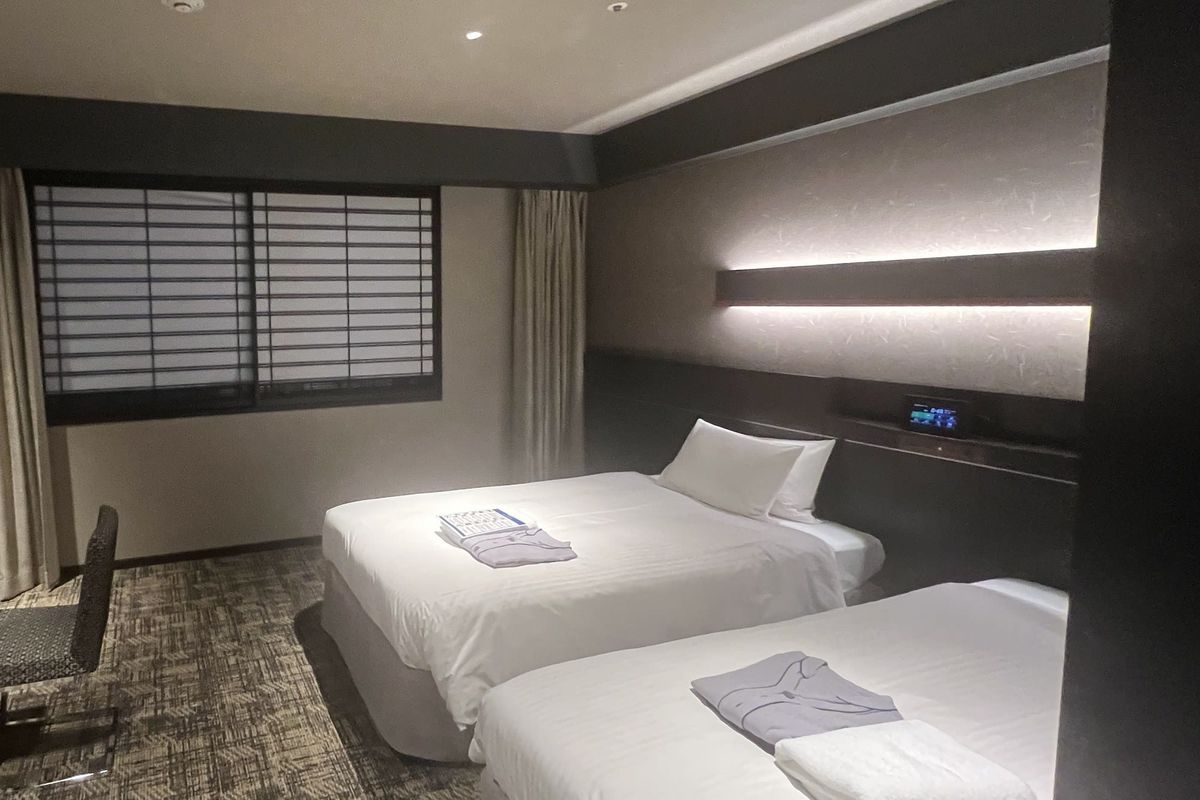
A Japanese hotel counts people, not beds, so when you share a bed with your child in a hotel room here, it is usually free up to an age each hotel sets for itself, and the child is never entered into the booking as a separate guest at all. The free cutoff is almost always tied to school entry — "preschool age" at most business-hotel chains, or a specific number such as 5 or 6 at larger hotels — and once your child ages past it, the room is not charged a small futon fee; it is simply repriced as if another adult had joined it. A ryokan works differently: everyone, including a small child, is billed per person for meals and bedding — Kyoto Garden Ryokan Yachiyo, for example, prices a room-only child's stay from ¥3,300 a night, rising to ¥13,200 with a full dinner course included (checked August 2026). The one condition that changes your answer is which kind of property you have booked — a business hotel or apartment hotel prices the room, a ryokan prices the person.
The rule underneath it
Every room in Japan, from a capsule to a suite, has a declared occupancy (定員, teiin) — the maximum number of people it may legally hold, set by floor area and by the number of beds or futons actually made up inside it. That number, not the bed count pictured on the booking page, is what the hotel is selling you. A twin room shown with two beds can still have a declared occupancy of three if a futon is stored in the closet for exactly this situation, which is why the booking form will not let you add a young child as a separate guest: below the free-sharing age, the child is a smaller version of one of the two adults you already booked, not a third occupant. Above that age, a third body genuinely needs its own sleeping space, and the occupancy has to go up by one.
Who sleeps free, and until when
The free age cutoff is set by each chain, not by the government, and it moves by a year or two between brands — worth checking before you book. Figures below were checked against each chain's own English-language site or FAQ page in August 2026.
| Chain | Child shares an existing bed free, up to | Once past that age | Checked |
|---|---|---|---|
| APA Hotel | Preschool age (未就学児), one child per adult | Billed at the full adult room rate; a few properties add a facility-use fee | Aug 2026 |
| Tokyu Stay | Preschool age, one child per adult | Billed at the adult rate; a rollaway bed exists at only some properties | Aug 2026 |
| Keio Plaza Hotel Tokyo | Preschool age, one child per adult | A school-age child is a full adult and may not share the bed; an extra bed can be added in Superior, Renovated Superior and Deluxe rooms for a fee, but not in Double rooms | Aug 2026 |
| MIMARU | Age 6, up to two children per room | Age 7 and up is counted as an adult | Aug 2026 |
| Dormy Inn | Ages 0–2, one child per bed (co-sleeping) | Ages 3 through elementary school co-sleep at ¥3,000 per child per night; junior high age and up is billed at the full adult rate. A child needing separate bedding, at any age, is billed as an adult | Aug 2026 |
Of the five chains checked here, four let a child share free until school age and bill an older child at the full adult rate; Dormy Inn is the exception, charging ¥3,000 a night for co-sleeping through elementary school before the adult rate applies at junior high age (dormy-hotels.com/dormyinn/faq/, checked August 2026).
Business hotel or ryokan: the same child, two pricing systems
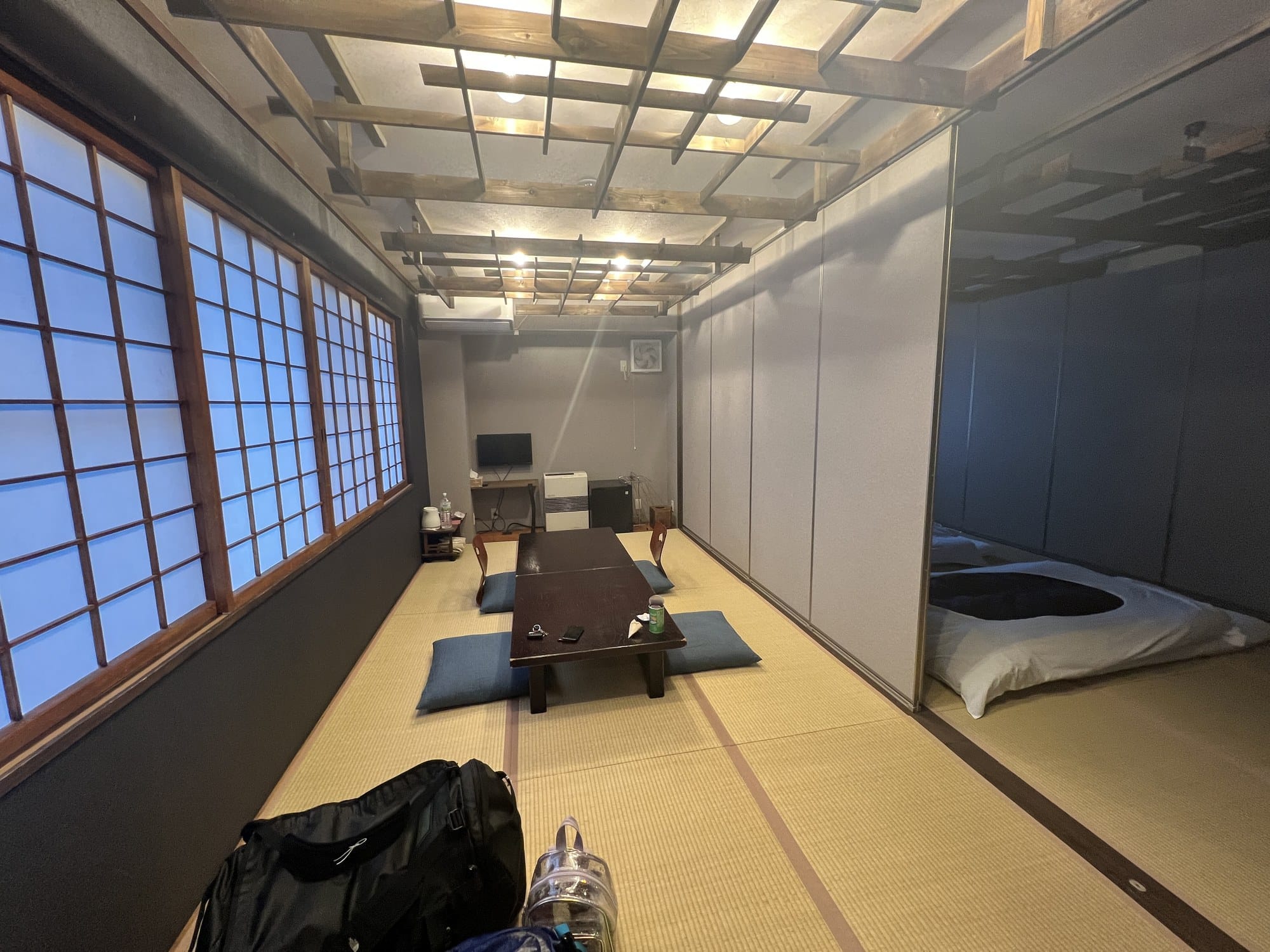
A business hotel or apartment hotel prices the room: however many people fit under the declared occupancy, the rate stays the same, which is why a child sleeping free in an existing bed does not change your total. A ryokan prices the person: dinner, breakfast and futon are itemized per guest, priced by what's included rather than by age alone. At Kyoto Garden Ryokan Yachiyo, for instance, a room-only rate starts from ¥3,300 a night for a child aged 6 or under and from ¥6,600 for an older child up to 16; add a kids' breakfast and the older-child rate rises to ¥8,800, and a full kids' dinner course brings it to ¥11,000–¥13,200 — figures taken from the ryokan's own rates page (checked August 2026). The same 4-year-old who costs nothing extra at a business hotel can add a real line item at a ryokan.
How wide is the bed you are about to share?
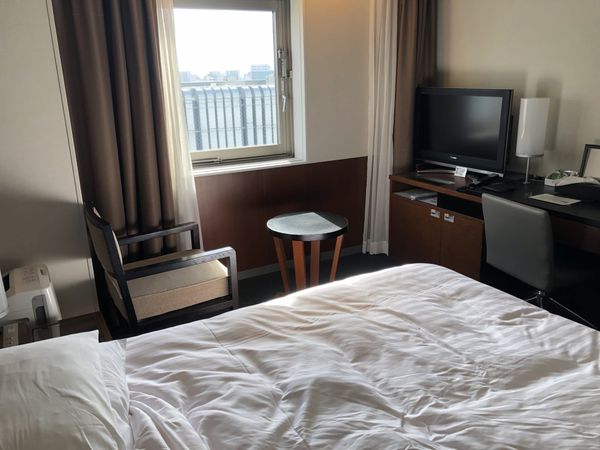
Bed width, not bed name, decides whether sharing is comfortable. Japanese hotel beds run in standard widths of about 97cm for a single, 120cm for the Japan-specific "semi-double," 140cm for a double, roughly 152 to 160cm for a queen, and 180cm for a king, with the length fixed at about 195cm across nearly all of them (checked August 2026). The one that catches travelers out is the double: at 140cm it is narrower than a standard US queen (about 152cm), so a "double" room is one size down from what an American guest expects — a parent and a small child sharing it are sharing roughly the width of two adults lying shoulder to shoulder with no spare room.
What we can tell you from our own trips
Our own family has stayed in rooms smaller than we were used to, and it worked out fine for us. A friend who travels with a child who moves around a lot in their sleep tells us the shared bed is harder than the floor plan suggests, and for a restless sleeper the extra futon or bed is worth paying for. Neither of those is a rule — the policy table above and the questions below are what a specific hotel will actually hold you to.
The four questions to send the hotel before you book
Email or message the property directly — policies like these live on the hotel's own FAQ page, not on Trip.com or Booking.com, and many hotels do not publish them at all. That is normal in Japan rather than a warning sign: a hotel that lists no co-sleeping rule will usually tell you plainly when you ask. Four questions cover it, with the Japanese term included so you can paste it straight in:
- What is the free age cutoff for a child sharing our bed? (添い寝は何歳まで無料ですか)
- Is a futon or extra bed available, and what does it cost? (エキストラベッドや布団の追加は可能ですか、料金はいくらですか)
- How wide is the bed in this specific room type? (このお部屋のベッドの幅は何センチですか)
- Is a bed guard or rail available for a toddler? (ベッドガードの貸し出しはありますか)
Ask before you pay a cancellation-restricted rate, not after — a room's declared occupancy is not something the front desk can change on arrival.
When to stop sharing and book the space instead
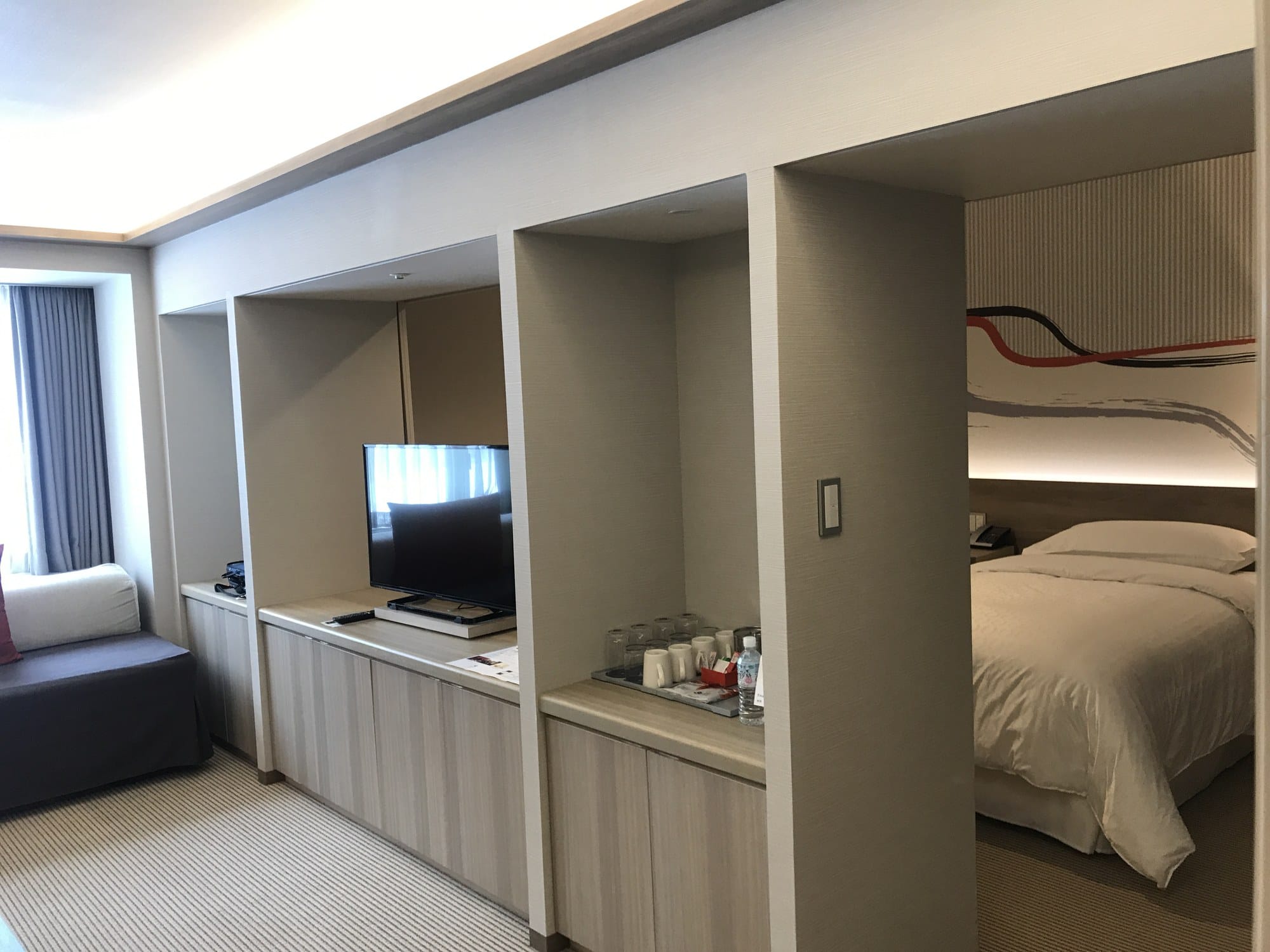
Three situations make paying for separate space worth it. First, once your child is old enough to be billed as an adult anyway, sharing saves you nothing, so book the space you actually want. Second, sleep habits: worth taking seriously if your child is a restless sleeper, whether or not it has been an issue for your child so far. Third, floor area — a room that reads as small in square meters can be genuinely tight for three people and their luggage; see how to read a room's floor area in m² for the real numbers. The upgrade paths are a bigger room in the same hotel, connecting rooms in Tokyo that put a door between you and an older child, or an apartment-style room — including apartment-style rooms in Osaka.
Rooms built for this
None of the four rooms below is a recommendation to book — each is here because its own listing states a declared occupancy or room type that fits a parent and child.
| Name | Area | Price range | Best for |
|---|---|---|---|
| MIMARU Tokyo Shinjuku West | Shinjuku, Tokyo | from ¥61,000 for a room sleeping four (checked August 2026) | Apartment-style room with a kitchen; several layouts sleep four or more — see Tokyo rooms that legally sleep five |
| Tokyu Stay Shibuya | Shibuya, Tokyo | from ¥23,594 | Twin/double room declared for two adults plus one small child sharing, with its own washer-dryer |
| Keio Plaza Hotel Tokyo | Nishi-Shinjuku, Tokyo | from ¥35,800 | Large full-service hotel; Superior, Renovated Superior and Deluxe rooms can add a paid extra bed — see connecting rooms in Tokyo |
| MIMARU Kyoto Station | Kyoto Station area | from ¥33,000 | Same apartment-style format as the Tokyo MIMARU properties, 2-min walk from Kyoto Station's Hachijo Exit — see family rooms in Kyoto |
All rates are the lowest publicly listed rate at time of writing (checked August 2026) and vary by date and season. For the rest of the questions worth settling before you book anywhere in Japan, see the rest of the questions people ask before booking.
Bed width is the number that decides whether sharing works, and the labels do not help: a Japanese double is a single bed about 140 cm wide, while a Hollywood twin is two beds pushed together for roughly 200 cm. Twin, Hollywood twin or double reads the widths rather than the names.
Trip Essentials for Japan
Things worth booking before you land, all in English:
- eSIM — Airalo's Japan eSIM: install it at home and data works as soon as you switch off airplane mode at Haneda, Narita, Kansai, or wherever you land.
- Tickets and day trips — Klook covers the Japan Rail Pass, teamLab tickets, and shinkansen-linked day trips; booking ahead skips the ticket-window line.
FAQ: children sharing a bed in Japanese hotels
Do I have to pay for my child to share our bed in Japan?
Usually not, up to an age each hotel sets for itself — commonly "preschool age" at business-hotel chains, or a specific number such as 5 or 6 at larger hotels. Most properties then bill an older child at the full adult rate; Dormy Inn is the exception — ages 0–2 co-sleep free, then ¥3,000 per child per night through elementary school before the adult rate applies at junior high age (checked August 2026).
How old can a child be and still sleep free in a Japanese hotel room?
It depends on the chain: APA Hotel, Tokyu Stay and Keio Plaza Hotel Tokyo set the cutoff at preschool age, and MIMARU at 6 (all checked directly against each chain's own site, August 2026; Keio Plaza re-checked October 2026). Dormy Inn is narrower — only ages 0–2 co-sleep free, and an older child up to elementary-school age is charged ¥3,000 per night instead (checked August 2026). A ryokan works differently again and charges a per-person rate by age band from the start, so "free" does not apply there.
What is the bed width in a Japanese hotel double room?
About 140cm, which is narrower than a standard US queen bed at roughly 152cm — a common source of surprise for American travelers expecting a queen-size double. A room's exact bed width is set by its specific room type, not by the category name, so it is worth confirming on the room's own page before you book.
Can I add an extra bed for my child instead of sharing?
At some hotels, yes — Keio Plaza Hotel Tokyo can add an extra bed in Superior, Renovated Superior and Deluxe rooms (not in Double rooms), and Tokyu Stay offers a rollaway at a limited list of properties. Where it is offered, expect to pay close to the same per-person rate as an adult rather than a small futon fee, so it is worth asking for the exact figure before you book.