Ski Lifts Closed Due to Wind in Japan? Which Base Survives
Japan's lifts stop for wind most storm days. Here's which Hokkaido base still has skiable terrain when the gondola holds, and when moving resorts pays off.
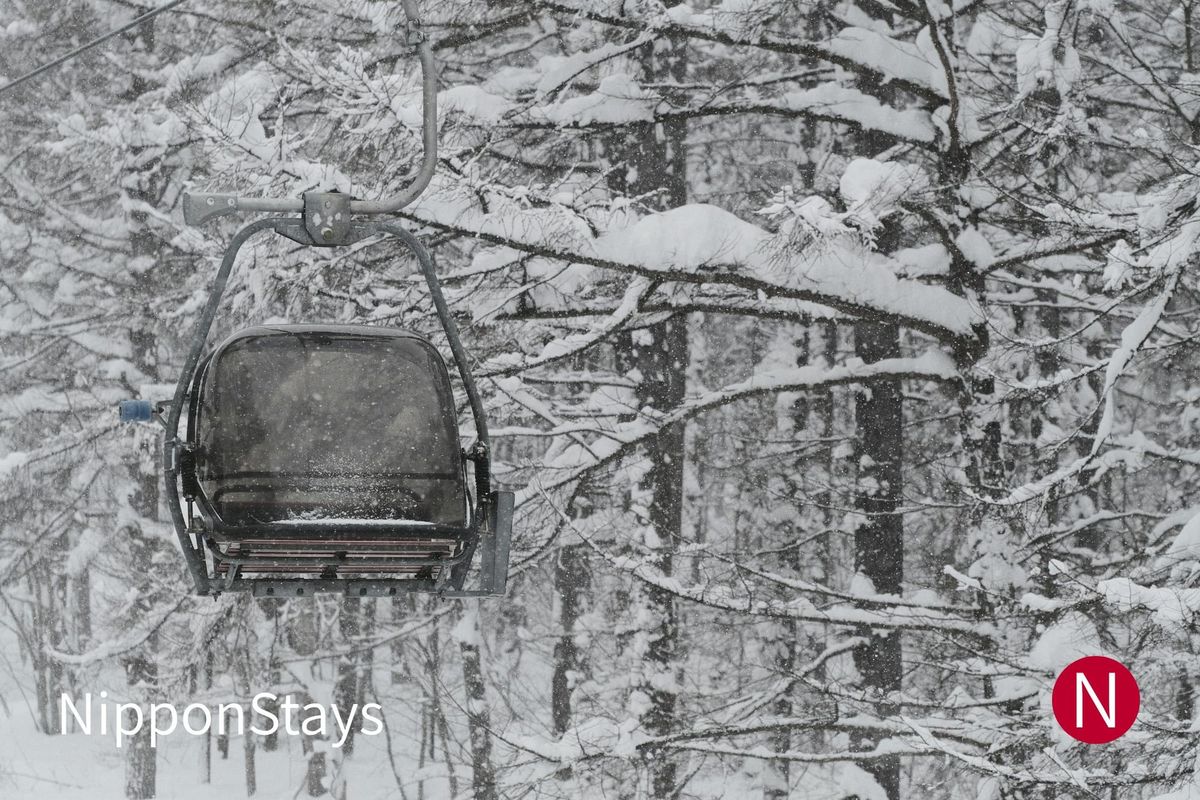
Quick Answer: Ski lifts closed due to wind in Japan are a regular part of Hokkaido storm days, and the base that survives is the one with skiable terrain sitting below the exposed ridge — not the one with the biggest gondola. At Kiroro, the sheltered Yoichi and Center-base lifts keep spinning under the closed Gondola and Nagamine No.2 Express, which is why staying ski-in/ski-out at Yu Kiroro costs you nothing on a hold day. Rusutsu works the same way: The Westin Rusutsu Resort sits below East Mountain's lower runs, which stay open when Isola's exposed ridge shuts down. The one thing that changes the answer is a full-mountain closure rather than a single lift hold — on those days, driving to another resort rarely pays off, and going back to town beats sitting in a car.
Check at 7:00, Not at the Lift
The habit that actually saves a Kiroro morning is checking the resort's own status board before you leave the room, not after you're standing at the base. I look at Kiroro's live lift-and-trail dashboard by 7:00 every winter morning, well before the first gondola loads, because it shows the real state — including lifts running at reduced speed for wind, not just an open/closed toggle. If you've booked a kids' ski school lesson (see our English ski school guide) through the resort, there's a second, more useful signal: when a morning session gets cancelled for weather, the school itself calls to tell you, rather than leaving you to find out at the meeting point. That call comes after the 7:00 decision, not before it, so checking first still saves the earlier part of the morning.
Resort by Resort: What Holds First
| Resort | Top lift exposed to wind | What still runs low on the mountain | Nearest alternative resort (drive time) |
|---|---|---|---|
| Kiroro | Kiroro Gondola, Nagamine No.2 Express | Yoichi lifts, Center base | Niseko, about 1 hr by road or direct bus |
| Rusutsu | Mt. Isola's ridge lifts | East Mountain's lower runs | Kiroro, about 1.5 hrs by road |
| Niseko (Niseko Village) | Niseko Village Gondola's upper section | Hirafu and Hanazono lifts on the same shared pass | Kiroro, about 1 hr by road or direct bus |
| Furano | Furano Zone's summit ropeway | Kitanomine Zone's lower, family-graded runs | Not part of this cluster; treat it as a switch of zone, not resort |
| Tomamu | Tomamu Mountain's upper pitches | Tower Mountain's hooded Tower Express area near the resort centre | Rusutsu, 3–4+ hrs — too far to swap for a single hold day |
Kiroro on a Hold Day
I only ski Kiroro with kids along, so a hold day for me has never meant an adult-only powder mission on the far side of the mountain — it means downshifting to whatever is still open near the base. In a season where I'm on the hill for roughly 30 days, the upper lifts hold for wind on about ten of them, and the whole mountain closes outright on two or three. On a hold day we ski the lower lifts around the Center base; on a full closure day, we head back into Otaru rather than wait it out or drive to another ski area — in seven seasons of doing this, we've never once moved from Kiroro to a different resort mid-trip. For the mountain's own queue patterns and which time of day tends to clear first, our guide to Kiroro's lift queues and wind holds covers that in more detail than fits here.
Rusutsu, Niseko, Furano and Tomamu
Rusutsu spreads across three peaks — West Mountain, East Mountain and Mt. Isola — linked by gondolas. The resort's own trail blog explains why Isola gets hit hardest: Hokkaido's storms mostly track in from the northwest, and Isola's ridge runs south to north, so the crest gets scoured bare by that exact wind direction (Rusutsu Resort's own trail blog, checked November 2026). Third-party trail guides point to East Mountain's lower runs as the fallback on those days, though the resort's own Lift & Trail Status board is what confirms it lift by lift.
Niseko United runs Hirafu, Hanazono, Niseko Village and Annupuri on one shared lift pass — the structural reason a hold there is less disruptive than at a single-mountain resort. When the exposed upper section of the Niseko Village Gondola holds, the same pass still covers Hirafu and Hanazono. The resort's own Weather and Lift Status page lists each area separately, so check the area you're skiing, not just the resort name. For lodging across the four areas, see our guide to where to stay in Niseko.
Furano splits into two zones joined at the summit: the Furano Zone, reached by a 2.3 km ropeway to the top, and the lower Kitanomine Zone, built around a wide, gentle Family Slope (Furano Ski Resort's official site, checked November 2026). That layout makes Kitanomine the obvious fallback if the summit ropeway holds, since it's a separate, lower zone rather than a single lift on the same exposed line. See our guide to where to stay in Furano for lodging there.
Tomamu's terrain sits across two mountains, Tomamu Mountain (1,239 m) and the lower Tower Mountain (970 m), with the Tower Express and the other hooded, wind-sheltered chairs serving the terrain closest to the resort centre and Club Med Tomamu. Hoshino Resorts publishes a live, lift-by-lift Today's Operation Information page that reports wind speed and direction alongside each lift's status — the most granular board in this guide.
Moving Resorts: When the Drive Pays Off
Whether it's worth driving to another resort comes down almost entirely to distance. Kiroro to Niseko is roughly 50 km and about an hour by road in clear conditions, or close to an hour on the direct Hokkaido Resort Liner bus — close enough that swapping is realistic if one resort's upper mountain is closed and the other's isn't (our Kiroro-to-Niseko transfer guide has the timetable). Kiroro to Rusutsu is about 70 km and roughly 1.5 hours by road on a clear, dry day, longer after fresh snow (Kiroro-to-Rusutsu transfer guide) — a bigger bite out of a ski day, but still plausible for a single bad morning. Rusutsu to Tomamu is a different calculation: 3 to 4-plus hours, weather-dependent, longer again near the Chitose interchange (Rusutsu-to-Tomamu transfer guide) — longer than most storms last, so it isn't a hold-day option at all. For how the terrain size of Kiroro, Rusutsu and Niseko compares when you do have that flexibility, see our comparison of how many days each resort holds your interest.
When the Road Is the Problem, Not the Lift
Sometimes what stops you isn't the lift at all. Route 393 over Kenashi Pass, the road most of us use between Kiroro and Otaru, closes for avalanche risk or accidents occasionally rather than routinely — I've seen it happen once, on the way back down from Kiroro, when police were stationed at the point where the road narrows and waved traffic around via Yoichi instead of letting anyone continue over the pass. The Kiroro ski bus was running that same day and took the identical Yoichi detour rather than cancelling the route. We've ridden that bus between Otaru and Kiroro more than 30 times, and in seven seasons we've never seen it cancelled outright — closures on this stretch reroute traffic, they don't strand it. Our Kiroro bus vs. rental car guide covers what to do if you're driving yourself when Route 393 closes.
Who Actually Publishes a Live Board
Of the five resorts covered here, four run their own live, lift-by-lift status page rather than a general snow report: Kiroro's dashboard, Rusutsu's Lift & Trail Status board, Niseko United's Weather and Lift Status page, and Tomamu's Today's Operation Information page all show real-time, per-lift state, and Tomamu's additionally reports live wind speed and direction. Furano is the one exception in this group — its official site links out to a separate snow-report tool rather than hosting a single live status board of its own (checked November 2026, each resort's own operations page).
Which Base Actually Survives
| Base | Survives a wind day because… | Named hotel |
|---|---|---|
| Kiroro | Yoichi and Center-base lifts sit lower and more sheltered than the Gondola line | Yu Kiroro — ski-in/ski-out at the base that keeps running |
| Rusutsu | East Mountain's lower runs stay open when Isola's exposed ridge shuts | The Westin Rusutsu Resort — see our full review |
| Niseko (Hirafu/Hanazono) | Shared lift pass covers other areas when Niseko Village's upper gondola holds | See our Niseko lodging guide |
| Furano (Kitanomine) | Lower zone, separate from the Furano Zone's summit ropeway | See our Furano lodging guide |
| Tomamu | Tower Mountain's hooded chairs stay sheltered near the resort centre | No named pick in this guide — see the resort's own status page above before booking |
Trip Essentials for Japan
Things worth booking before you land, all in English:
- eSIM — Airalo's Japan eSIM: install it at home and data works as soon as you switch off airplane mode at Haneda, Narita, Kansai, or wherever you land.
- Tickets and day trips — Klook covers the Japan Rail Pass, teamLab tickets, and shinkansen-linked day trips; booking ahead skips the ticket-window line.
FAQ: Wind Holds at Japanese Ski Resorts
What time should I check a resort's lift status on a windy morning?
Check before you leave your room, not at the lift. At Kiroro, the live dashboard is worth a look by 7:00, well ahead of the first gondola loading, because the difference between a full open and a reduced-speed run only shows up there, not at the base.
Which lifts hold first for wind in Hokkaido?
The highest, most exposed lifts hold first — Kiroro's Gondola and Nagamine No.2 Express, and Rusutsu's Isola ridge lifts, both sit on terrain that catches the northwest winds behind most Hokkaido storms directly. Lower-elevation lifts closer to the base, like Kiroro's Yoichi lifts or Rusutsu's East Mountain runs, are built into more sheltered ground and hold out longer.
Is it worth driving to another resort when the lifts hold?
Only if the drive is short. Kiroro to Niseko, at roughly an hour, is close enough to make a same-day swap realistic. Kiroro to Rusutsu, at about 1.5 hours, is a bigger commitment but still plausible for a single bad morning. Rusutsu to Tomamu, at 3 to 4-plus hours, is longer than almost any wind system lasts, so it isn't a real option.
Do wind holds ever close the road, not just the lift?
Occasionally, yes, but separately from lift holds. Route 393 over Kenashi Pass between Kiroro and Otaru can close for avalanche risk, in which case police redirect traffic via Yoichi rather than stopping travel outright — the Kiroro ski bus has kept running the detoured route on the one occasion this happened on a trip of ours, rather than cancelling the day's service.