Kiroro Bus vs Rental Car: Which to Choose for Skiers (2026–27 Season)
Bus or rental car to Kiroro ski resort? Compare Hokkaido Access Network fares, schedules, winter driving tips and costs to pick the right option for your group.
The Kiroro bus vs rental car call goes to the Otaru–Kiroro ski bus (¥2,200 one-way for adults in 2026–27) for solo travelers and couples heading there from Otaru — no winter driving stress, roughly 60 minutes, and it drops you at the resort base. For groups of 3 or more, or anyone planning to ski multiple mountains, a rental car (from ¥4,000/day before fuel) pays off by the second day. The one condition that changes the answer: if you're planning to ski Asarigawa Onsen Ski Area or Tenguyama on rest days, you need a car regardless of your group size.
The choice in one line: freedom vs. no winter driving
This guide compares 3 access options to Kiroro: Otaru bus (¥2,200 one-way, ~60 min), Sapporo bus (¥2,800 one-way, ~2 hr 10 min), and rental car (from ¥4,000/day before fuel, ~45 min in good conditions) — bus fares from Kiroro's published 2026–27 timetable (checked September 2026), rental figures checked July 2026.
The Kiroro bus vs rental car question comes up for every skier basing in Otaru or Sapporo: book a seat on the dedicated ski bus and ride stress-free up Route 393, or rent a car and gain the flexibility to chase powder across multiple mountains. Both options work. Which one works better depends on your group size, your confidence on packed-snow mountain roads, and how much of the Hokkaido ski map you want to cover.
Some links in this guide are affiliate links. If you book through them, we may earn a commission at no extra cost to you.
This guide lays out the practical numbers for the 2026–2027 season and the specific trade-offs you need to weigh before your trip.
| Option | One-way cost (from Otaru) | Travel time | Best for |
|---|---|---|---|
| Bus (Otaru–Kiroro) | ¥2,200 / adult (2026–27) | approx. 60 min | Solo travelers, couples, anyone who wants a stress-free ride |
| Rental car | from ¥4,000 / day (economy, before fuel) | approx. 45 min in good conditions | Groups of 3–5, families with a lot of gear, multi-resort planners |
| Bus (from Sapporo) | ¥2,800 / adult (2026–27) | approx. 2 hr 10 min | Travelers based in Sapporo rather than Otaru |
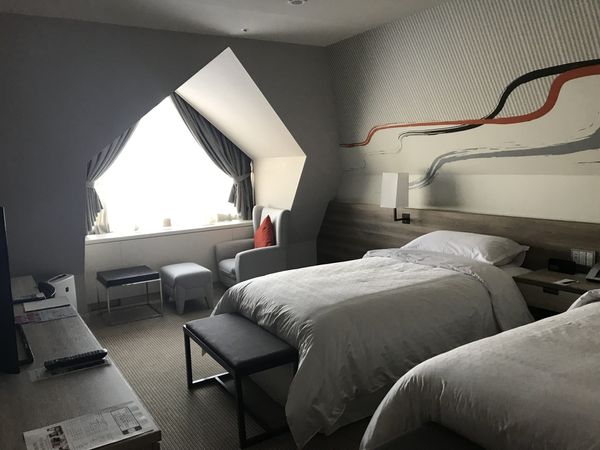
Check rates at Authent Hotel Otaru — a popular base for Kiroro regulars, within easy reach of the bus pickup point.
Taking the bus: operator, booking site and season
In 2025–26 the bus to Kiroro was run by Hokkaido Access Network Co., Ltd. (access-n.jp); Kiroro's published 2026–27 timetable does not name an operator. Either way it is the most straightforward service on the mountain: a dedicated ski bus that stops in central Otaru and delivers you to the Kiroro resort base.
If you are bringing your own skis from the US, work out the gear end before you book either option — flying with skis to Japan on United covers bag fees and what happens to a ski bag once you land.
- Route: Otaru ⇔ Kiroro Resort
- Season: For 2026–27 the service runs in three blocks — early season (1–18 December 2026), Top Season (19 December 2026 – 14 March 2027), and Spring Season (15 March – 25 April 2027), with a free shuttle on 28–30 November 2026 (Kiroro's published 2026–27 timetable, checked September 2026)
- Frequency: Daily in Top Season; check the timetable for the early and spring blocks (in 2025–26, Kiroro Snow Activity World was closed Sundays and boarding at that stop was unavailable those days)
- Price: ¥2,200 one-way for adults and ¥1,600 for children in 2026–27, up from ¥2,000 / ¥1,200 in 2025–26; the 28–30 November free shuttle needs no reservation
- Travel time: approximately 60 minutes from central Otaru
- Booking: In 2025–26, seats were reserved online at www.access-n.jp up until 18:00 the day before travel, or by telephone (9:00–18:00, open 365 days). Kiroro's 2026–27 timetable does not state booking terms, so confirm how to book before you travel.
From Sapporo there is also a direct ski bus to Kiroro. For 2026–27 it runs daily from 10 December 2026 to 11 April 2027, one round trip a day: it leaves Sapporo Excel Hotel Tokyu at 7:40, reaches Kiroro at 9:50, and leaves Kiroro at 16:05 for the return. One-way fares are ¥2,800 for adults and ¥1,800 for children (Kiroro's published 2026–27 timetable, checked September 2026).
There is also a Niseko ⇔ Kiroro route if you are mixing mountains on the same trip — in 2026–27 it runs Mondays, Wednesdays and Fridays from 20 December 2026 to 20 February 2027, at ¥3,200 one-way for adults and ¥2,500 for children.
Book early — Kiroro buses fill up faster than people expect
This is the detail most first-timers miss. In 2025–26 the Kiroro bus was not a hop-on service: seats sold out — especially in January and February — and the online booking system closed at 18:00 the evening before each departure. Kiroro's 2026–27 timetable does not yet state booking terms, so check them before you plan around a last-minute seat. That means if you decide on a Friday night that you want to ski Saturday, you may already be too late.
The practical approach: book your bus seats at the same time you book your hotel, particularly for the peak window of late December through mid-February. If your dates are flexible, booking the whole ski week in one go when you book accommodation is the safest move. Cancellation policies vary by service, so check the terms when you book before locking in.
Early December and late March are generally easier — Top Season slots are the ones that go first.
Renting a car: what it unlocks
A rental car changes the shape of your ski week. The obvious benefit is flexible departure timing — you leave when you are ready, not when the bus does. But the bigger reason regulars rent is the range of mountains within reach of an Otaru base.
From Otaru by car you can reach:
- Kiroro Resort — approx. 45 min in good conditions
- Asarigawa Onsen Ski Area — another option close to Otaru (verify current operating status before your trip)
- Otaru Tenguyama — a smaller hill right above the city (the resort lists a 2026–27 season of 19 December 2026 to 22 March 2027, checked October 2026; confirm dates before you plan around it)
- Consadole Niki Ski Park (Niki Town Ski Hill) — a small local hill, limited operating days (verify schedule before planning around it)
For a group of three or more people, splitting the car rental cost often makes the daily price per person comparable to or cheaper than bus tickets — and you get door-to-door flexibility with ski gear loaded in the boot.
See nearby resorts a car unlocks for a full breakdown of what each mountain offers.
Winter driving reality: packed snow, whiteouts and the mountain pass
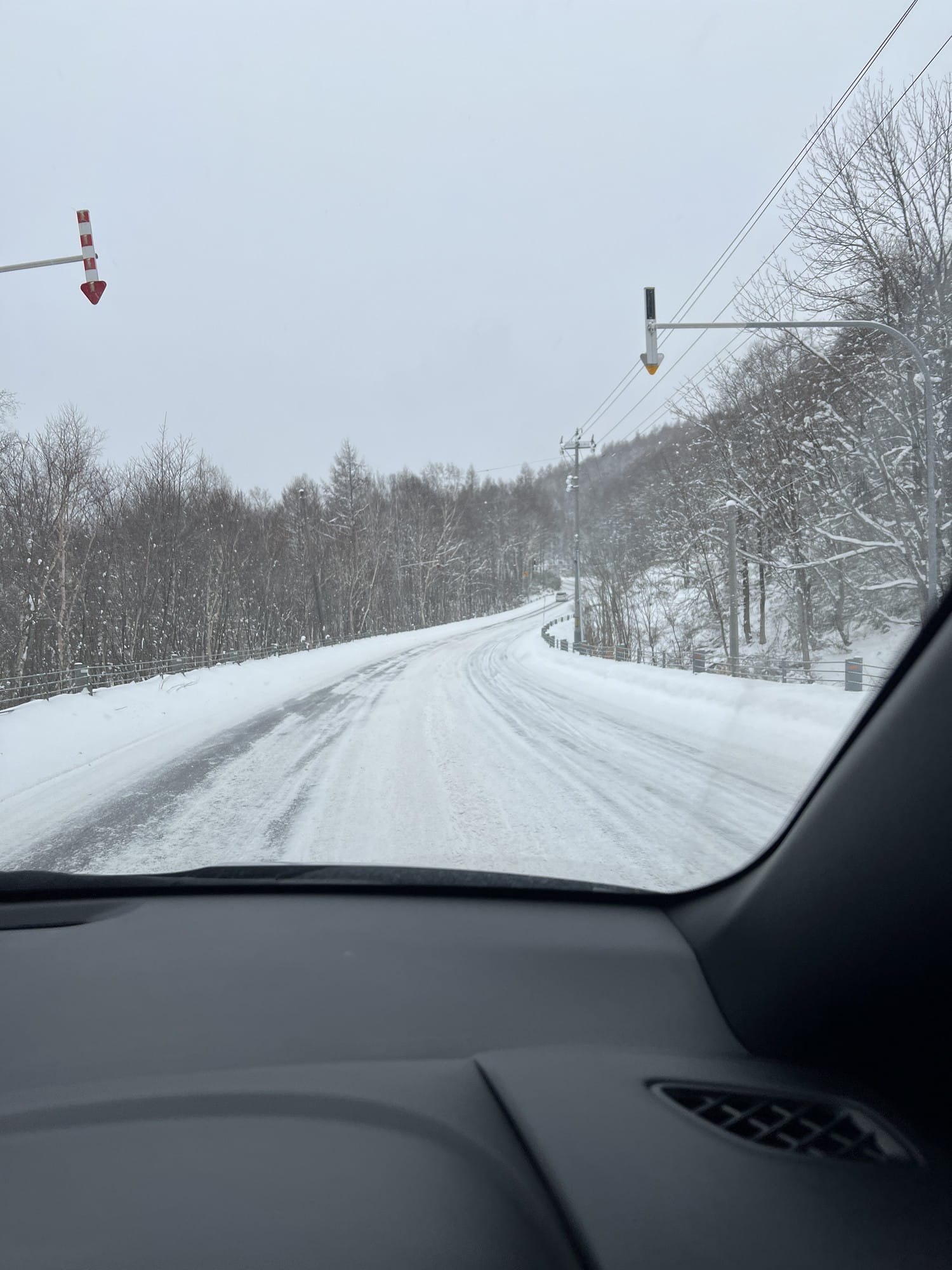
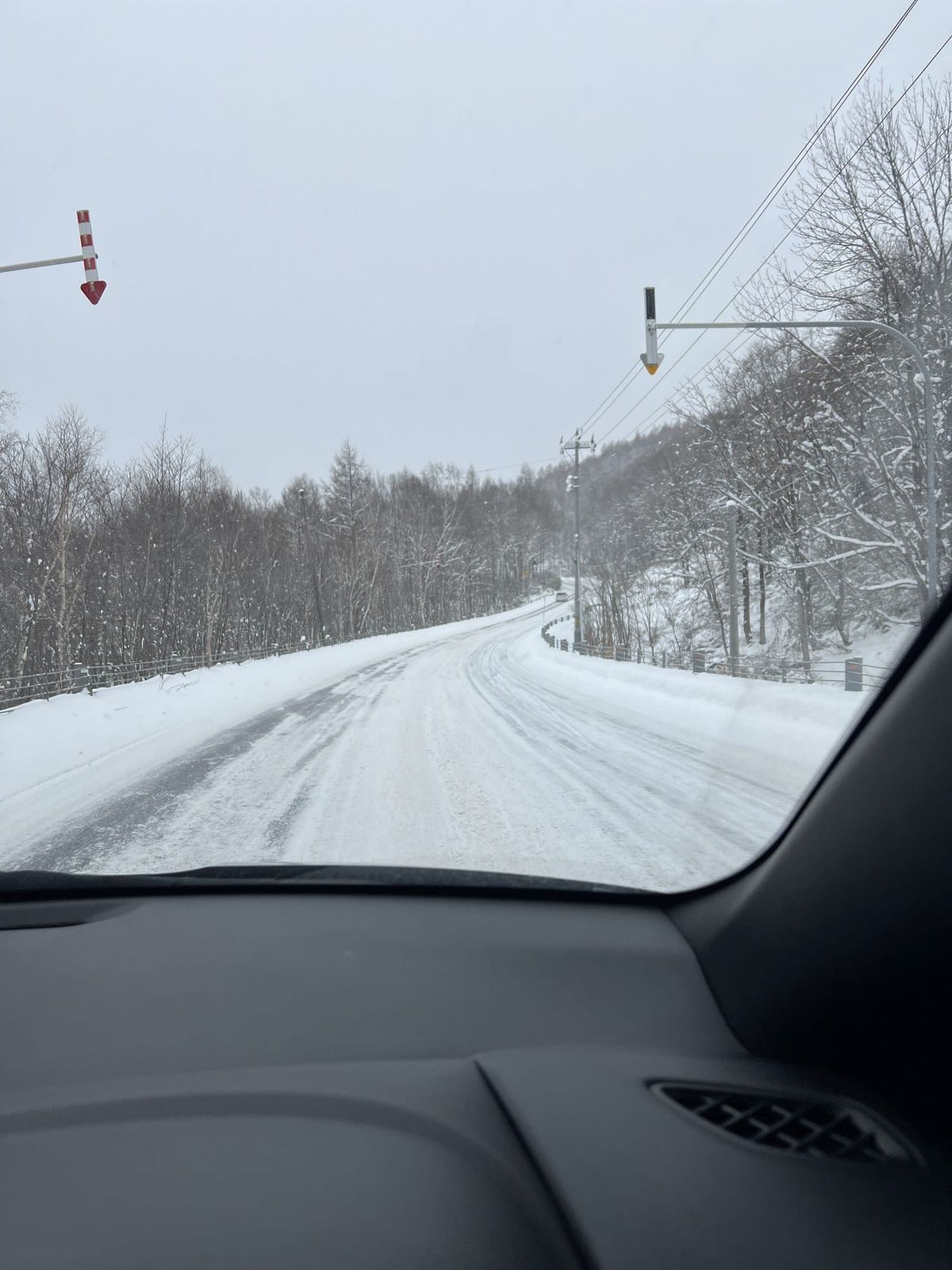
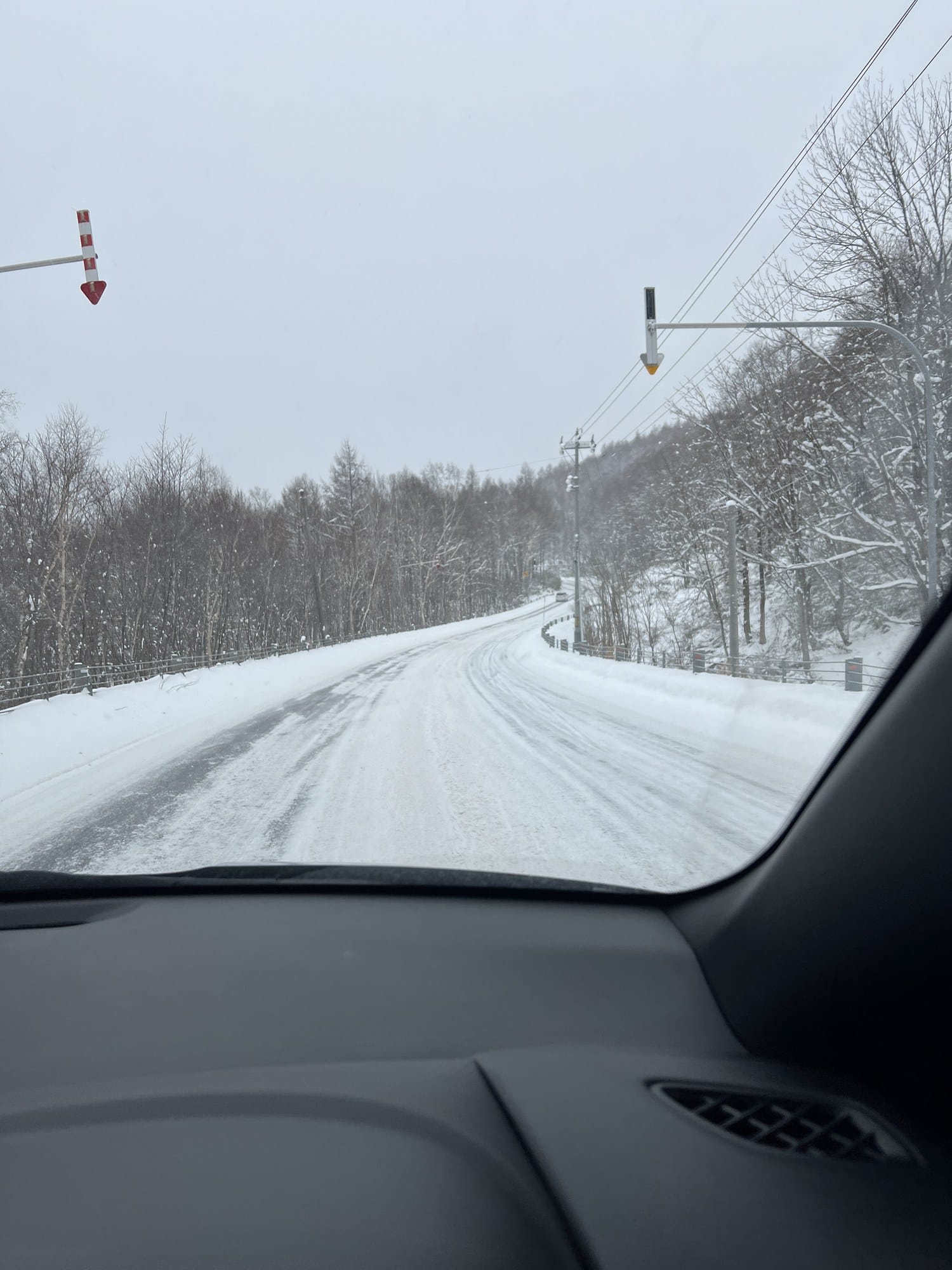
I have driven the Otaru–Kiroro road close to 200 times across many winters. This section is what I would tell a friend before they set off — not a warning to put you off renting.
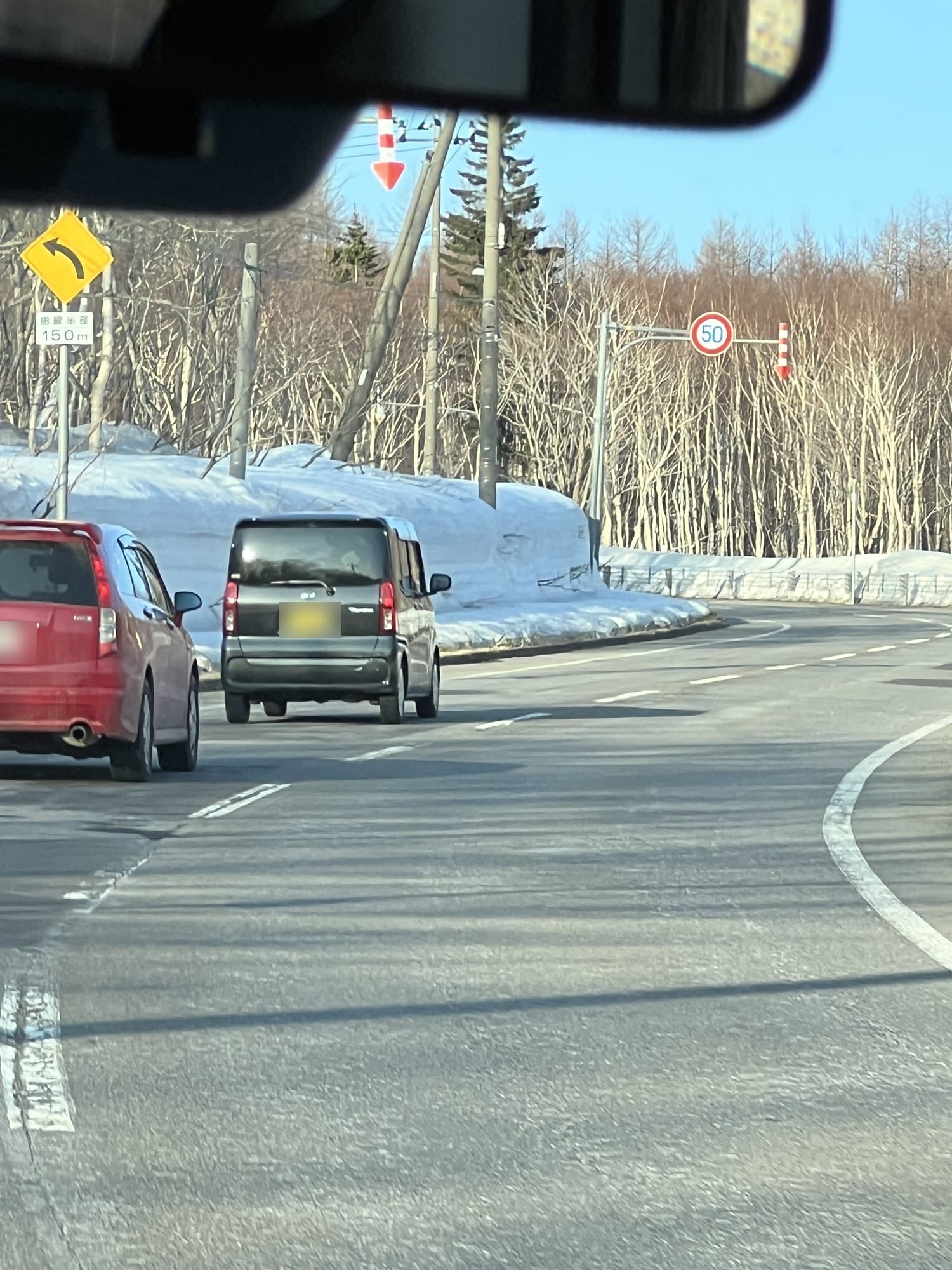
Plan on 50 minutes, not 45. A clear morning with a light car in front is 45 minutes. But leave at 9:00 and you will usually catch a queue behind someone doing about 30 km/h, and 50 minutes is the honest number. There are places you technically could overtake. I would not.
- The section that catches people is the last one. There are a few tricky spots on the climb, but the one that bites is the final turn off the highway onto the resort approach. Everyone brakes there, and the surface gets polished like a mirror. Do not relax because you can see the car park.
- In a whiteout, do not stop. Stopping on this road is more dangerous than moving — you become an invisible obstacle. Hazard lights on, fog lights on, and keep creeping forward at walking pace until it lifts.
- Snow clearing is genuinely good. The plows are through in the 7 o'clock hour. Honestly, the main road is better cleared than what I am used to in Nagano. What is not reliably cleared is the last few hundred metres to an Airbnb or a house set back from the main road — that is where you get stuck.
- Your rental will be 4WD on studless tyres. That is the default for a winter rental in Hokkaido, so this is not something you need to specify or worry about.
- Night driving is fine. It is dark, and that is all it is. The thing to fear is whiteout, not darkness.
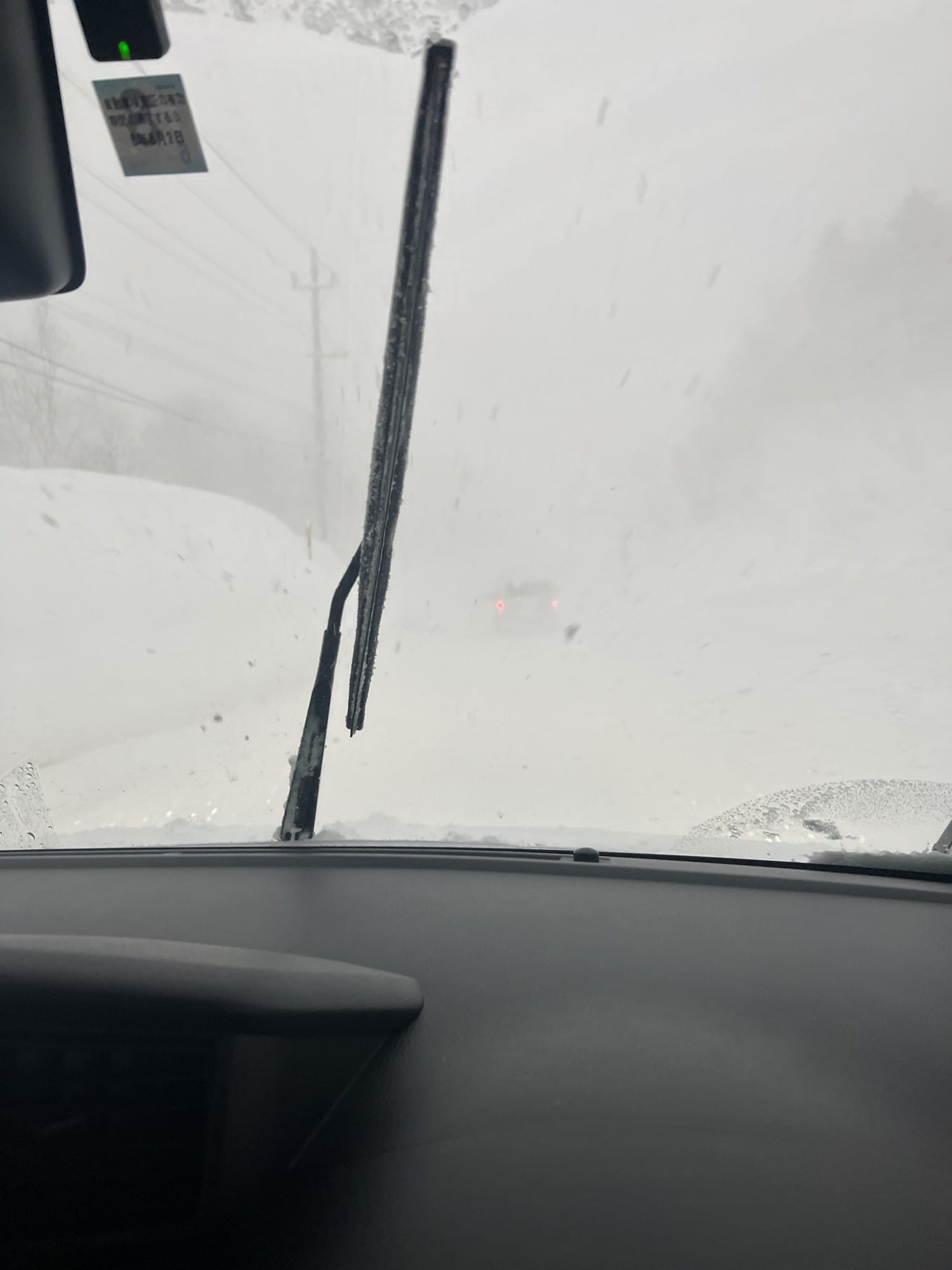
Aim to arrive by 8:30, even if you are not chasing powder. The car park has been filling earlier in recent seasons. I have only failed to park a handful of times, but on January and February weekends, arriving after 8:30 means being sent to a distant overflow area near the Club Med Grand side — from which you ride a gondola or shuttle bus back to the base you were trying to reach. Leave Otaru by 7:30 and this is a non-issue.
The mistake visitors make: holding their speed when a local starts to overtake. Ease off and let them go. They drive this road every day, and the whole exchange costs you about three minutes.
If Route 393 closes, which is rare — I have seen it for an avalanche and for accidents — go around via Yoichi and the Hiyamizu pass. It adds up to roughly 60 minutes, but it is not a mountain road, so it is the easier drive of the two.
Buy everything before you climb. There are no convenience stores up the mountain. Stop at a 7-Eleven or Lawson in Otaru. At the Lawson in Asari, come to a genuine full stop at the line — there is often a patrol car checking exactly that.
Before setting off, regulars glance at the Hokkaido road conditions site and a snow forecast tool such as Windy to read the morning picture.
Cost and time compared for a typical trip
The numbers below are a working example for a couple based in Otaru skiing four days at Kiroro. Prices are indicative and vary by season — always check current rates before booking.
Bus scenario (two people, four days):
- Bus fares: 2 people × ¥2,200 × 2 (return) × 4 days = ¥35,200 total (2026–27 adult fare)
- Zero parking cost
- Zero winter-driving stress
- Locked to bus departure times
Rental car scenario (two people, four days):
- Car rental: from approx. ¥4,000–¥8,000/day (economy, studless winter tyres included) = from ¥16,000–¥32,000 for four days
- Fuel: Otaru–Kiroro return is roughly 70 km; estimate from ¥1,500–¥2,000/day depending on vehicle
- Parking at Kiroro: confirm current charges at the resort
- Flexible departure, multi-resort option, gear in the boot
For a solo traveler the bus comes out cheaper (¥17,600 over four days). For a couple it lands in the same range as the car — ¥35,200 by bus against roughly ¥22,000–¥40,000 for the car plus fuel, before parking — so for two people the choice comes down to winter driving rather than money. For a family of four or five, the per-person cost of renting flips in the car's favor — and you only make one trip with all the ski bags.
At-a-glance: bus vs rental car
| Factor | Bus (Otaru–Kiroro) | Rental Car |
|---|---|---|
| One-way cost per person (from Otaru) | ¥2,200 (2026–27 adult fare) | From ¥2,000–¥4,000 (car total / pax) + fuel |
| Travel time from Otaru | approx. 60 min | approx. 45 min (good conditions) |
| Departure flexibility | Fixed schedule — check 2026–27 booking terms | Leave when you want |
| Gear handling | Boot storage on bus (check at booking) | Boot in your own boot/roof box |
| Winter driving required | No | Yes — mountain road, packed snow, steep bends |
| Access to nearby resorts | No (bus goes to Kiroro only) | Yes — Asarigawa, Tenguyama, Niki and others |
| Best for | Solos, couples, first-timers, blizzard days | Groups of 3–5, families, multi-resort planners, confident winter drivers |
| Booking lead time | Book as soon as accommodation is set; Top Season fills fast | Book rental as early as possible; winter stock is limited |
Which to pick by group, base and confidence — next steps
A few practical rules that hold across most groups:
- Solo or two people, Kiroro-only plan: Take the bus. The stress levels point that way, and for a solo traveler the math does too.
- Family with kids in ski school: If the kids are in all-day lessons and you are skiing freely, the bus works fine. If you want to pull them early or do a mid-week day at another resort, a car is worth it.
- Group of 4–5 with mixed-resort ambitions: Rent a car. Split four ways the daily cost is modest, and having the option to head to Asarigawa or Tenguyama on a light-snow morning is genuinely useful.
- Anyone new to Hokkaido winter driving: Ride the bus for your first day or two. Get a feel for the road as a passenger before you drive it.
- Heavy snowfall days: Even if you have a car, consider taking the bus. Fresh powder on a steep mountain road with a packed car park at the other end is not the ideal introduction to Hokkaido winter driving.
If you are still deciding between basing in Otaru versus staying at the resort, see the full Otaru commute plan for the daily logistics. For the complete picture on getting to Kiroro from New Chitose Airport or Sapporo by shuttle, bus, or transfer, see getting to Kiroro from the airport.
Check Kiroro's published 2026–27 bus timetable for how to book the bus. For Otaru hotels with easy access to the bus pickup — Authent Hotel Otaru and Grand Park Otaru are the two the Kiroro regulars tend to cluster around.
| Name | Area | Price range | Best for |
|---|---|---|---|
| Authent Hotel Otaru | Central Otaru | from ¥10,000 / night; rates vary by season | Bus users; close walk to Otaru Station area |
| Grand Park Otaru | Otaru waterfront | from ¥12,000 / night; rates vary by season | Families, groups wanting more space; early breakfast timing |
Whichever you pick, book your bus seats or rental car at the same time you lock in accommodation. Top Season slots — the weeks that matter most for powder — go first.
The bus timetable also decides when you reach the lifts, and at Kiroro that timing matters more than the queue at the ticket window. Kiroro lift lines and wind holds sets out which lift actually costs you time on a busy morning, the noon-to-13:00 window when the lines thin, and what a wind hold on the gondola does to a day.
The same question across the wider Sapporo area: ski resorts as a day trip from Sapporo checks which resorts the bus timetable actually works for — Teine, Bankei, Fu’s and Rusutsu all clear six hours on snow with a same-day return, while Kiroro is tighter.
FAQ: Kiroro bus vs rental car
Where does the bus to Kiroro depart from in Otaru?
The Otaru–Kiroro ski bus departs from central Otaru, with a stop convenient to Otaru Station. For 2026–27 it runs in three blocks: early season (1–18 December 2026), Top Season (19 December 2026 – 14 March 2027, daily), and Spring Season (15 March – 25 April 2027), at ¥2,200 one-way for adults and ¥1,600 for children (checked September 2026). In 2025–26, seats were booked online at www.access-n.jp up to 18:00 the day before travel or by telephone; the 2026–27 timetable does not yet state booking terms or name an operator.
Is winter driving to Kiroro safe for visitors who don't usually drive on snow?
Yes, with the right expectations. Route 393 is a compacted-snow mountain road all season, and your Hokkaido winter rental comes as 4WD on studless tyres by default — no chains, nothing to specify. Plan on 50 minutes from central Otaru rather than 45. The part that catches people is not the climb but the final turn onto the resort approach, where constant braking polishes the surface to a mirror. If a whiteout hits, do not pull over and wait: hazard lights and fog lights on, and keep creeping forward. And when a local moves to overtake, ease off and let them by — it costs you about three minutes. If you have never driven on snow at all, take the bus for the first day or two and watch how the road behaves.
Can you drive from Otaru to Kiroro in winter?
Yes — it is a normal winter commute for regulars, and I have done it close to 200 times. Allow 50 minutes, leave Otaru by 7:30 to be parked by 8:30, and buy food and drinks before you climb because there are no convenience stores on the mountain. Route 393 very rarely closes; when it does (avalanche or an accident), the detour via Yoichi and the Hiyamizu pass takes about 60 minutes but is an easier drive because it is not a mountain road.
What documents do I need to rent a car in Hokkaido?
You need an International Driving Permit (IDP) from your home country alongside your national driving licence. Japan accepts IDPs issued under the 1949 Geneva Convention — check which convention your country uses before you travel. Most major rental companies around Otaru Station (Toyota Rent a Car, Nippon Rent-A-Car, Times Car) accept international travellers and have some English-language staff.
Does the bus run from Sapporo to Kiroro directly?
Yes. For 2026–27, Kiroro's published timetable has a direct Sapporo–Kiroro ski bus running daily from 10 December 2026 to 11 April 2027, one round trip a day: 7:40 from Sapporo Excel Hotel Tokyu, arriving at Kiroro at 9:50, and 16:05 from Kiroro for the return. The one-way fare is ¥2,800 for adults and ¥1,800 for children (checked September 2026).
Trip Essentials for Kiroro
Things worth booking before you land, all in English:
- eSIM — Airalo's Japan eSIM: install it at home and data works as soon as you switch off airplane mode at New Chitose Airport.
- Airport transfer — Klook covers bus, train, and private transfers from New Chitose Airport.
- Tickets and day trips — Klook covers Hokkaido ski passes, lessons, and Sapporo day trips; booking ahead skips the ticket-window line.
Information audit: Last fact-checked July 2026 · Prices checked July 2026 (all rates are “from” floors that vary by season) · 2026–27 ski season: bus fares and timetables updated to Kiroro's published 2026–27 figures (checked September 2026); 2026–27 lift hours are not yet published. · How this guide was researched: hotel facilities, prices and access details are verified against official and primary sources; we have not personally stayed at every property listed. The author skis Kiroro roughly eight trips a season and commutes from Otaru · Personally stayed: Authent Hotel Otaru — eight-plus stays across multiple winters since 2020; Grand Park Otaru — multiple stays, 2022–2023 — all stays paid by us; no complimentary stays · How this site verifies information: About NipponStays.