Kiroro Lift Lines and Wind Holds: When to Ski
Kiroro lift lines peak at the Nagamine No.2 approach and clear out noon-13:00. When the gondola holds for wind, here's where to ski instead.
Kiroro lift lines are shortest between roughly noon and 13:00, when families break for lunch, so that is the window to bank runs rather than sit in a queue. The line that actually costs you time isn't at a ticket window — it's the beginner-heavy approach to Nagamine No.2 Express, and on a windy morning the Kiroro Gondola and that same lift are the first two pulled on hold. This is a regular's read of one mountain built from roughly 30 days a season on it, not a resort policy statement, and it changes the moment the wind does.
At-a-glance: hour by hour
| Time | What is busy | Where to ski | Note |
|---|---|---|---|
| 8:00-8:45 | First-lift queue forming | Wherever you're queuing | No holding a spot with your gear — get organized first |
| 9:00-11:00 | Approach to Nagamine No.2 Express | Yoichi or Center if you want to avoid it | The lift is fast; the run-in to it is the actual bottleneck |
| 11:00-12:00 | Steady, not yet thinning | Anywhere still moving well | Watch the wind: gondola and Nagamine No.2 are first to hold |
| 12:00-13:00 | Quietest hour of the day | Center laps or whatever line was slow | Families are at lunch — this is the window |
| 13:00-14:00 | Restaurants clear out | Eat now, not at noon | Skip the lunch-rush line by going late |
| 14:00-16:00 | Second wave, generally lighter than the morning | Whatever held your interest | Wind holds can lift or reappear — check the live status page |
This schedule shifts later in March. As the days lengthen, Kiroro pushes its lift closing time back, which stretches the afternoon wave out later than it runs in mid-winter — worth factoring in if you're planning a late-season day around this timing.
The morning queue, and the rule visitors get wrong
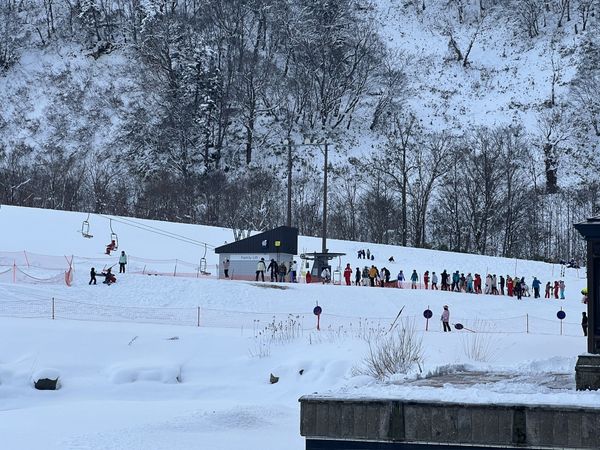
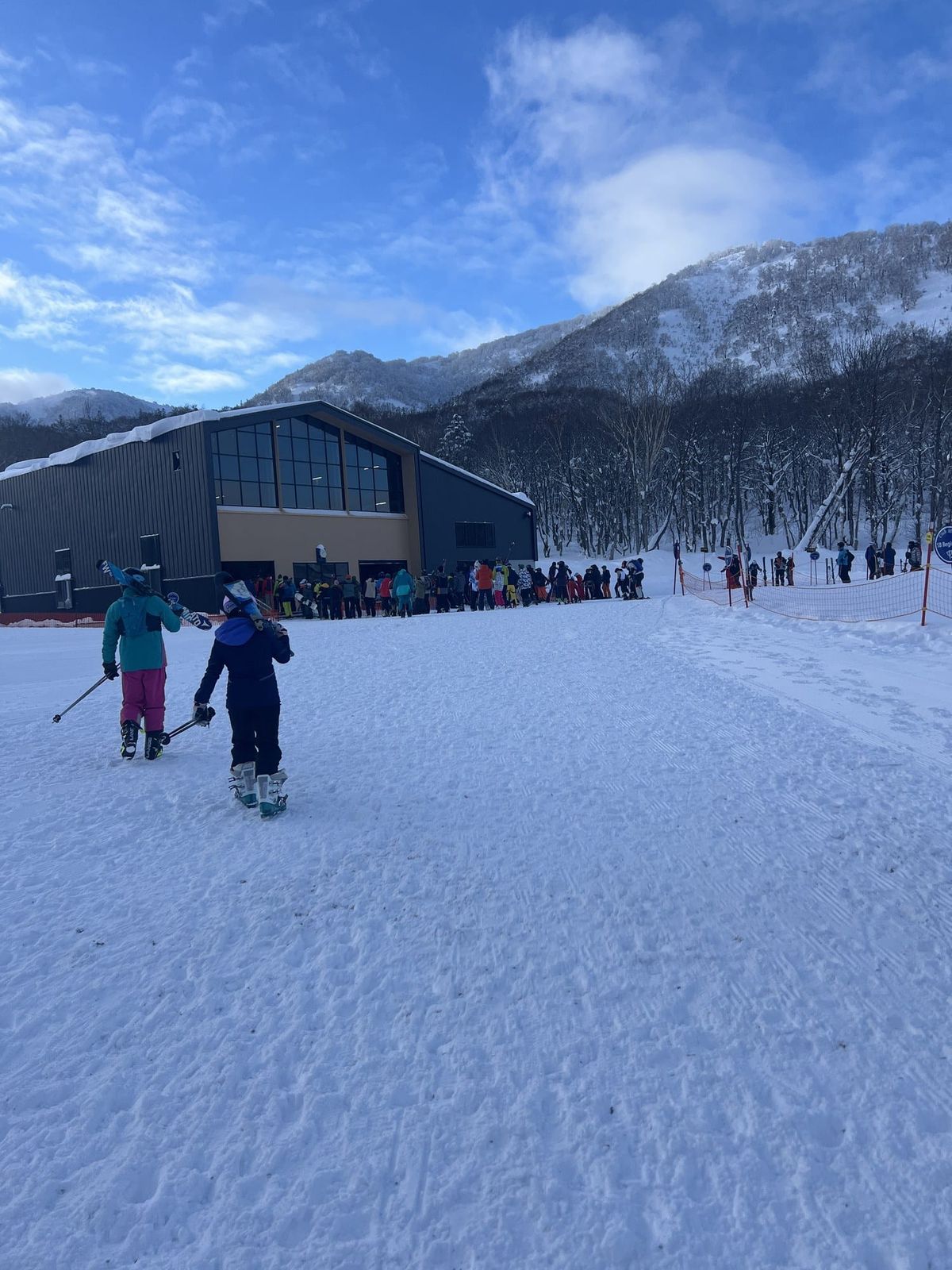
The first-lift queue at Kiroro forms the way it does at any resort: skiers and riders arrive early and stack up at the base. What catches visitors out is a rule this hill actually enforces — you cannot stand your skis or board in the line to hold a spot and then wander off. Every person in that line has to be in it. The regulars' move is to use the toilet and get organized before joining, then queue unhurried once everything is on. Trying to save a place with your gear just gets you and the person behind you both annoyed.
This queue clears fast once the lifts start turning. It is not the bottleneck of a Kiroro morning — the run-in to Nagamine No.2 Express is.
Where the lines actually are: the run-in to Nagamine No.2 Express
Nagamine No.2 Express is a fast lift, and once you're on it the ride itself is short. The slowdown happens before you get there: the approach run into the Nagamine No.2 base fills with beginners working out how to get down, and that traffic — not the lift's capacity — is what turns a fast chair into a slow morning. The lift line itself is a different story: it's busy, but beginners in that line rarely fall and stall it the way they do on the approach, so once you're actually queuing it keeps moving. In my experience over roughly 30 days a season here, it's the last 200 meters of skiing to reach the lift that eats the time, not the queue at the lift itself.
Note that in some recent seasons Nagamine No.2 has not opened until early January even after the resort's general opening date, which changes when this bottleneck even exists — see our season guide for the New Year timing.
Wind holds: the gondola and Nagamine No.2 stop first
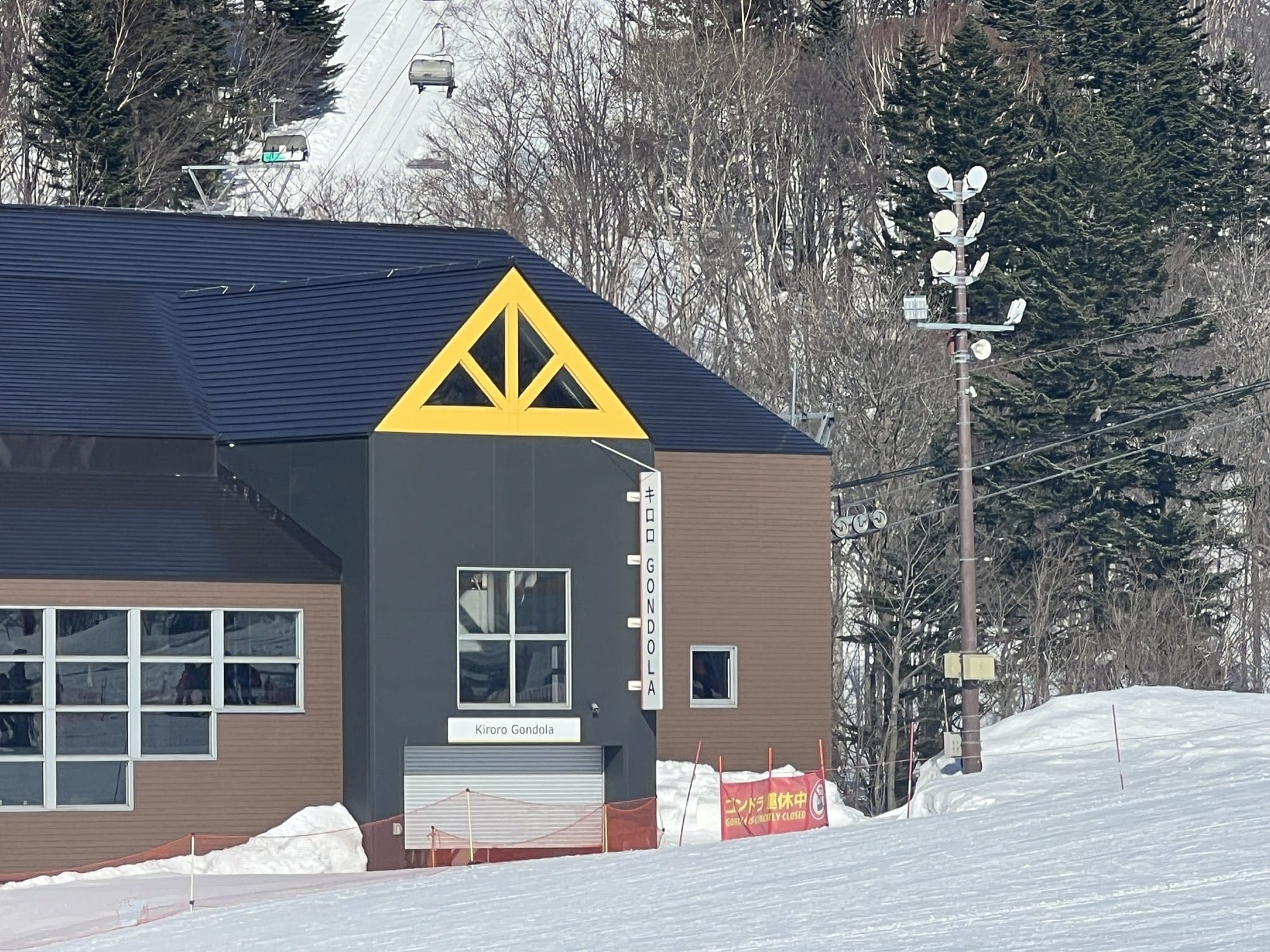
Kiroro's own trail map lists ten lifts across its four zones — nine of which actually run, as the Asari No.1 pair has not turned for three seasons, through 2025–26 — — Nagamine, Yoichi, Asari and the Center base, including the one gondola (checked against the resort's published lift list, August 2026). Of those ten, the Kiroro Gondola and Nagamine No.2 Express are the two most wind-sensitive: they sit highest on the mountain and most exposed to it, and both are the first put on wind hold on a gusty day, staying down for hours if the wind doesn't ease. Nagamine No.2 Express is also the lift behind the approach bottleneck described above, and in some recent seasons it hasn't opened until early January even after the resort's general opening date — see our season guide for that timing.
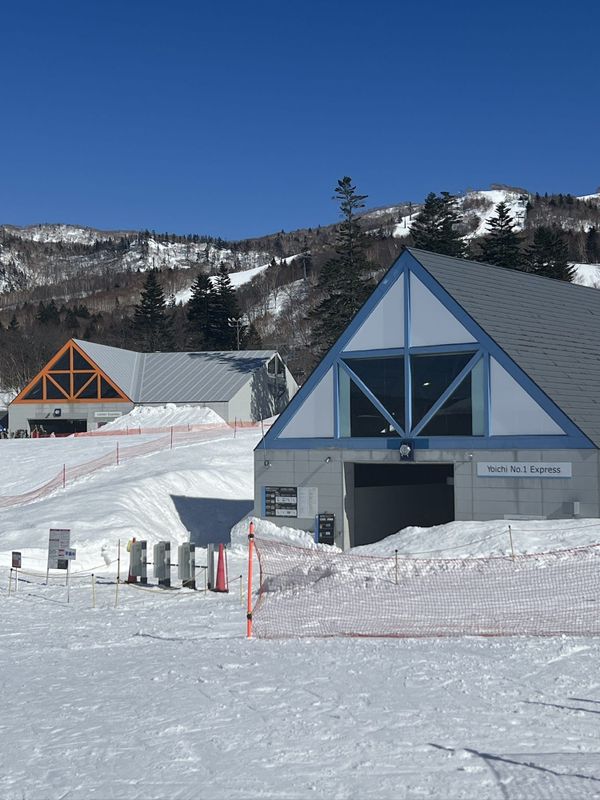
When that happens, the move — based on watching it play out repeatedly — is to shift to Yoichi and the Center base. Yoichi's lifts sit lower and are less exposed, and Center Express keeps running when the two high lifts don't. It is not a loophole; it's simply where the wind isn't reaching. Check the resort's own live lift status page before you commit to a side of the mountain on a blustery morning — that page is the actual source of truth for what's spinning right now, this article is not.
The noon window
This is the single most useful piece of timing information in this article. Families with young kids tend to break for lunch around noon, and the base area and the popular lifts noticeably thin out from roughly 12:00 to 13:00. If you want to bank runs without a line, this hour is it — not first chair, not last chair, the middle of the day that most visiting skiers write off as "lunch time."
The trade that makes this work is simple: eat later than everyone else. Skiing through the traditional noon lunch slot and eating once the crowd has cleared out, closer to 13:00, is the regulars' routine — more on that below.
Center laps: about 10 minutes a circuit
The Center base is the mountain's lap zone — a full circuit on Center Express, from base to top and back down, runs roughly 10 minutes in my experience, which makes it easy to count how many runs you're actually getting during a quiet hour like the noon window.
One safety note that applies every time you ski Center terrain: poles are sometimes set up here for training, and you must not ski through them. Center A is frequently reserved outright for lessons or squad training, and Center B can have poles flagged left and right for pole training even when it looks open. Neither is a course you're free to lap just because it's unmarked on the day — if you see gates or flagged poles, treat that lane as closed and pick another line down. Center A, B and C are the resort's own trail-map labels for the Center-zone courses, not a colloquial split.
Eat at 13:00, not at 12:00
Once you've used the noon window to ski, the natural next step is to eat once everyone else already has — around 13:00 rather than at noon. It sounds like a small shift, but it means walking into a restaurant that has already cleared its lunch rush instead of joining the line for it. Our guide to eating at Kiroro covers where those options are and what to expect from each, including the fact that hotel restaurants here no longer serve non-guests, which is part of why timing your own lunch matters more than it used to.
How your bed changes your morning
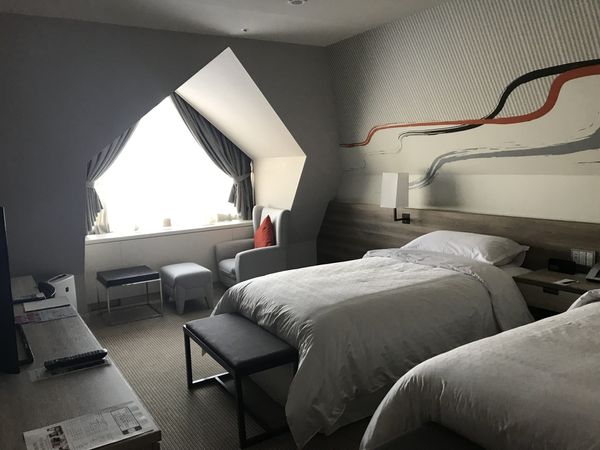
Where you sleep decides how much of the first-lift queue you actually deal with. Staying slope-side at Club Med Kiroro Grand, Club Med Kiroro Peak or Yu Kiroro puts you at the base a few minutes before the lifts start, which matters most on a morning with a wind hold — you're already there when the gondola reopens, instead of arriving by bus after the window has closed (see how to get to Kiroro from New Chitose Airport for that bus timing). Kiroro's day lift ticket for the current season runs from ¥5,800 in the early and spring windows to ¥9,200 in high season, and the 4-hour ticket runs from ¥5,500 to ¥7,800 across the same windows (checked August 2026) — worth knowing before you decide whether a slope-side room is worth the difference to you.
| Name | Area | Price range | Best for |
|---|---|---|---|
| Club Med Kiroro Grand | Kiroro base, slope-side | Package rate, varies by season | Fastest to first lift, all-inclusive dining |
| Club Med Kiroro Peak | Kiroro base, slope-side | Package rate, varies by season | Same base access, quieter tower |
| Yu Kiroro | Kiroro base, slope-side | Room rate, varies by season | Room-only flexibility with base access |
Check current rates and availability: Club Med Kiroro Grand, Club Med Kiroro Peak, Yu Kiroro. For the full range of on-mountain and Otaru-base options, see our where to stay at Kiroro guide, and for how to get here in the first place, our bus vs. rental car comparison.
FAQ: Kiroro lift lines and timing
What time of day has the shortest Kiroro lift lines?
Roughly noon to 13:00 is the quietest window at Kiroro, because families with young children tend to head to lunch around that time. Skiing through that hour and eating afterward, closer to 13:00, is the routine most regulars fall into rather than fighting the crowd at noon.
Which Kiroro lift is most likely to close for wind?
The Kiroro Gondola and Nagamine No.2 Express sit highest on the mountain and are the first two put on wind hold, based on their position on the resort's published lift list. When either is down, Yoichi and the Center base — both lower and more sheltered — are the reliable fallback.
Can I save a spot in the lift line by leaving my skis?
No. Kiroro does not allow skiers to stand their equipment in a queue and step away — everyone in the line needs to actually be in it. The practical workaround is to handle bathroom breaks and gear adjustments before you join the line rather than during it.
Is Nagamine No.2 Express actually slow, or is it the approach?
The lift itself moves fast. The delay comes from the run leading into its base, which fills with beginner traffic figuring out how to get down to it — that congestion, not the lift's speed or capacity, is what makes mid-morning feel slow there.