Does the Shinkansen Run in Snow? Sekigahara vs Joetsu
Does the Shinkansen run in snow? Tokaido slows near Sekigahara; Joetsu, Tohoku and Hokuriku rarely do. What actually stops instead.
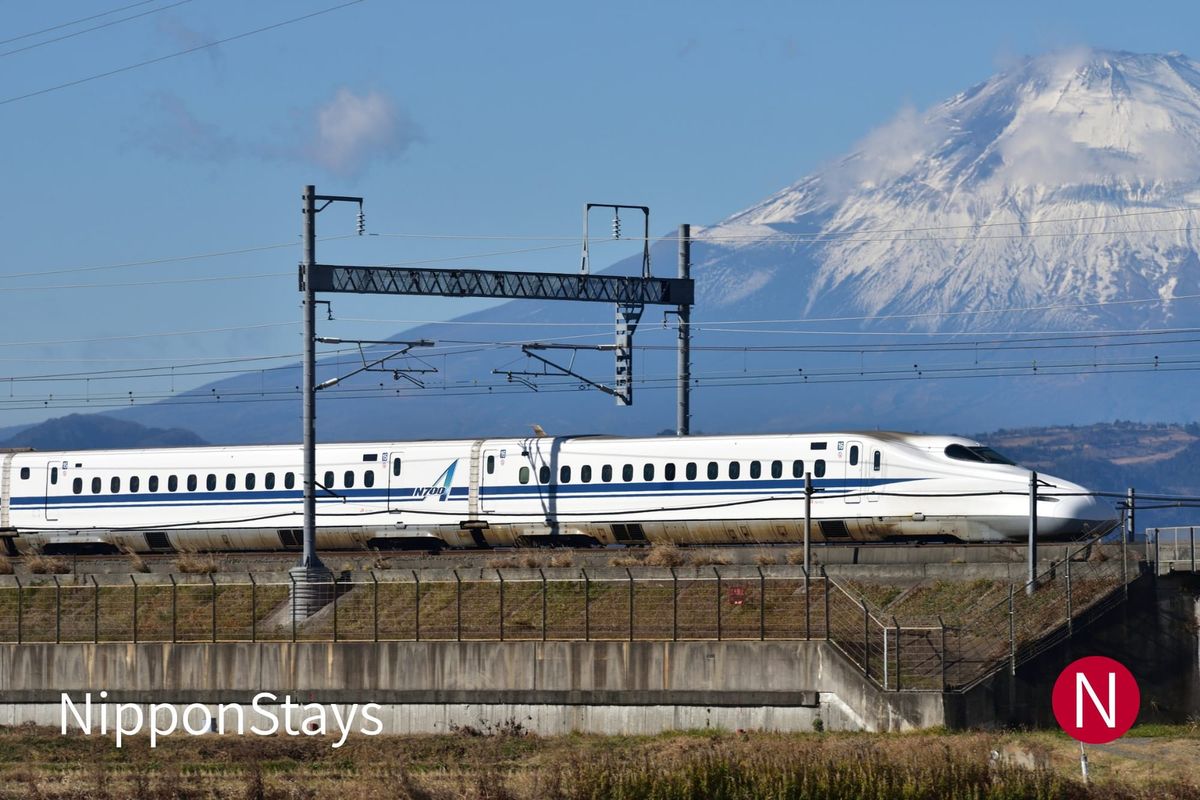
Does the Shinkansen run in snow? Yes — every line keeps running through snow, but what that means depends on which one you're on. The Tokaido Shinkansen (Tokyo–Shin-Osaka) slows down through the Sekigahara–Maibara pass in heavy snow and can run late by minutes to well over an hour, though full cancellations are rare. The Joetsu, Tohoku and Hokuriku Shinkansen further north were built for snow country — elevated concrete track, no ballast, trackside sprinklers — and delays of any kind are unusual, even in storms that shut down conventional lines running the same route. What actually stops in Japan's winter weather is limited-express trains and highway buses, not the Shinkansen, which is why the practical move is to swap a snow-country leg for a Shinkansen one wherever your itinerary allows it, and to leave extra time on your last day back to Tokyo in case the one line that does slow down happens to be yours.
Snow on each Shinkansen line, at a glance
The table below sets the four lines side by side — where the snow risk actually sits, what the railway does about it, and how that played out in the snow spells of January 2026.
| Line | Snow-risk section | What happens in snow | How it held up, winter 2025-26 |
|---|---|---|---|
| Tokaido (Tokyo–Shin-Osaka) | Sekigahara–Maibara, roughly Gifu-Hashima to Kyoto | Sprinklers wet the track; trains slow through the pass to stop snow being thrown up under the cars | Speed restrictions and delays announced on several days in January 2026; no full-day cancellation reported |
| Joetsu (Tokyo–Niigata) | Jomo-Kogen to Niigata | Elevated concrete-slab track (no ballast) plus roughly 30,000 trackside sprinklers melt snow before it can pile up | JR East states there has been no snow-related cancellation on this line since the sprinkler system was completed in 1982 |
| Tohoku & Hokkaido (Tokyo–Shin-Aomori–Shin-Hakodate-Hokuto) | Same elevated, concrete-slab design as Joetsu, extended north | Snow-melting sprinkler bases along the heaviest-snowfall stretches | No widely reported snow disruption; the connecting conventional lines were the ones affected |
| Hokuriku (Tokyo–Kanazawa–Tsuruga) | Nagano through Kanazawa to Tsuruga; the Tsuruga extension opened in March 2024 | Built to the same snow-country design brief as Joetsu and Tohoku | Ran on its normal schedule on 22 January 2026 while JR West suspended every conventional-line service through the same region for heavy snow |
Tokaido: the Sekigahara problem
The Tokaido Shinkansen is the one line in this comparison that wasn't built with snow in mind — it opened in 1964 as a summer-weather railway linking Tokyo and Osaka, and the pass between Gifu-Hashima and Kyoto, known collectively as the Sekigahara–Maibara area, sits in a wind corridor between the Ibuki and Suzuka mountains where Sea of Japan snow clouds squeeze through and dump snow that the rest of the route rarely sees. The problem isn't the snow on the ground so much as the snow a train travelling at speed throws up: it packs onto the undercarriage, freezes, and falls off further down the line as chunks of ice heavy enough to fling track ballast. JR Central's fix, in place since the 1960s, is to spray water onto the track through the snow-risk section so the snow stays wet and heavy instead of powdery and easily thrown up — and to run trains slower through the same stretch so there's less force behind whatever does get thrown. In a 2020–21 trial on a 200-metre section near Maibara, JR Central tested a new sprinkler design that broke the water into droplets about 11% smaller, so it could wet snow even in sub-zero temperatures while using roughly 100 fewer litres of water an hour for every 20 metres of track (JR Central, trial reported December 2020). I've ridden the Tokaido Shinkansen on a snowy day myself, and the deceleration through the Sekigahara stretch was noticeable — a slow-down, not a stop.
Joetsu, Tohoku and Hokuriku: built for snow
The three lines north and west of Tokyo were designed for exactly the conditions that catch the Tokaido line off guard. Rather than resting on gravel ballast, the Joetsu, Tohoku and Hokuriku Shinkansen run mostly on elevated concrete-slab track, which doesn't shift or scatter the way ballast does and is easier to keep clear. Along the heaviest-snowfall stretches — the Joetsu line's Jomo-Kogen–Niigata section above all — trackside sprinklers draw river or tunnel water, warm it, and spray it onto the rails at dozens of snow-melting bases spaced a few kilometres apart, melting snow before it becomes a problem rather than clearing it after the fact. The Hokuriku Shinkansen's Tsuruga extension, which opened in March 2024, was built to the same brief and got its first real test in the snow spells of January 2026: on 21 January, JR West announced that heavy snow would force a full suspension of the region's conventional-line services the next day — the limited express Thunderbird, the limited express Shirasagi, and every train on the Hokuriku Line and Obama Line — while confirming that the Hokuriku Shinkansen itself would run on its normal schedule from the first train (Kyoto Shimbun, 21 January 2026). That same snow spell set a new six-hour snowfall record in Kanazawa, on the Hokuriku Shinkansen route, of 37cm — beating the previous record of 32cm — according to the Japan Meteorological Agency's own log of record-breaking observations for the period (JMA, 21 January–9 February 2026, checked September 2026).
What actually stops: limited expresses and highway buses
When Japanese railways talk about a "keikaku unkyu," or planned suspension, for snow, it's almost never the Shinkansen — it's the conventional limited-express and local trains that share the same snow-country routes, plus intercity highway buses, which stop first and for longer. The 21 January 2026 Hokuriku announcement is the clearest recent example: four separate conventional-line services suspended, and the Shinkansen running through the same storm on schedule. The practical read for a visitor is that if your plan already depends on the Shinkansen for the risky leg — Tokyo to Kanazawa, Tokyo to Niigata, Tokyo to Sendai or Shin-Aomori — you're on the more reliable option already. Where people get caught out is building a plan around a conventional limited express or an intercity bus through the same snow country, on the assumption that "the trains are running" without checking which train.
Two decisions for your itinerary
Two things follow from the line-by-line picture above. First, if any part of your route through snow country can go by Shinkansen instead of a conventional limited express or a highway bus, take the Shinkansen — it's the leg least likely to be the one that gets suspended. Second, build slack into your last day back to Tokyo if it includes a Tokaido Shinkansen run through the Maibara area in December, January or February: that's the one stretch in this whole comparison with an actual, recurring history of slower running, even though it rarely turns into a full stoppage. If a Tokaido Shinkansen does arrive more than two hours late, JR Central refunds the full limited-express charge — not the base fare, just the surcharge — and that refund can be claimed at any staffed JR ticket window, not only online, for up to a year afterward (JR Central). If you're travelling on a Smart EX reservation and want to move to an earlier or later train once a delay looks likely, one free change to a same-day, same-route train is allowed before your original departure time (Smart EX).
How this winter compared, line by line
Of the four Shinkansen groupings compared in the table above, one — Tokaido — had JR Central publicly announcing snow-related speed restrictions and possible delays around Maibara on more than one occasion in January 2026, while the other three (Joetsu, Tohoku/Hokkaido, and Hokuriku) had no comparable public announcement of Shinkansen-side disruption during the same stretch of severe winter weather, even as the Japan Meteorological Agency logged record or near-record snowfall along parts of the Hokuriku and Tokaido routes and JR West suspended conventional-line service outright (JR Central and JR West public announcements via Kyoto Shimbun; JMA record-observation log; checked September 2026). That's the pattern to plan around: one line with a known weak point, three without one.
Where to sleep in snow country
If your trip includes a night in the snow country these northern lines reach, all three put you within a comfortable Shinkansen ride of Tokyo, and each is a fair base for the storms and snow scenery further out.
| Snow-country base | Reached by | Where to stay |
|---|---|---|
| Kanazawa | Hokuriku Shinkansen, direct from Tokyo in around 2.5 hours | Where to stay in Kanazawa |
| Sendai | Tohoku Shinkansen, direct from Tokyo in under 2 hours | Where to stay in Sendai |
| Zao (via Yamagata) | Yamagata Shinkansen, direct from Tokyo Station | Zao snow monsters: where to stay |
If your route runs the other way, north to Hokkaido, the same logic applies to the Shinkansen extension to Shin-Hakodate-Hokuto — see how to get to Hakodate from Tokyo for the plane-versus-Shinkansen comparison, and what to do if a flight into New Chitose is delayed by snow for the air side of the same problem. If your reservation, luggage or e-ticket setup for any of these routes still needs sorting out, our Tokyo Station Shinkansen guide covers reserved seats and luggage rules, and skiers specifically should see taking skis on the Shinkansen for size limits and which trains take oversized bags. And if the snow risk that worries you most is on the Tokyo end rather than en route, does it snow in Tokyo, and what stops when it does covers the last-mile version of this same question.
Trip Essentials for Japan
Things worth booking before you land, all in English:
- eSIM — Airalo's Japan eSIM: install it at home and data works as soon as you switch off airplane mode at Haneda, Narita, Kansai, or wherever you land.
- Tickets and day trips — Klook covers the Japan Rail Pass, teamLab tickets, and shinkansen-linked day trips; booking ahead skips the ticket-window line.
FAQ: Shinkansen in snow
Does snow ever cancel the Shinkansen entirely?
Rarely, and it depends on the line. The Tokaido Shinkansen had JR Central publicly warning of snow-related delays and speed restrictions around Maibara on more than one day in January 2026, but no full-day cancellation was reported. The Joetsu, Tohoku and Hokuriku lines had no comparable disruption in the same period, even during a nationwide snow spell that set new records in places like Kanazawa.
Which Shinkansen line is the most reliable in snow?
Joetsu, which connects Tokyo and Niigata. JR East states it has had no snow-related cancellation since its roughly 30,000-sprinkler snow-melting system, built on elevated concrete-slab track rather than ballast, was completed in 1982.
What should I do if my Shinkansen is delayed by snow?
If it arrives more than 2 hours late, JR Central refunds the full limited-express charge (not the base fare) — claimable at any staffed JR ticket window for up to a year afterward, not only same-day. If you're on a Smart EX reservation and the delay is still developing, you're allowed one free change to a same-day, same-route train before your original departure time.
Is the Hokuriku Shinkansen affected by snow now that it reaches Tsuruga?
Not so far. In its first real test after the March 2024 extension, the Hokuriku Shinkansen ran on its normal schedule on 22 January 2026, even as JR West suspended four separate conventional-line services — the Thunderbird, the Shirasagi, and all Hokuriku Line and Obama Line trains — for the same heavy snow.