Tokyo Station Guide Marunouchi Yaesu Exits: Which Side, Which Shinkansen Platform
Tokyo Station guide: Marunouchi vs Yaesu exits, which side has your shinkansen gate, and hotels within a 5-min walk of each, checked August 2026.
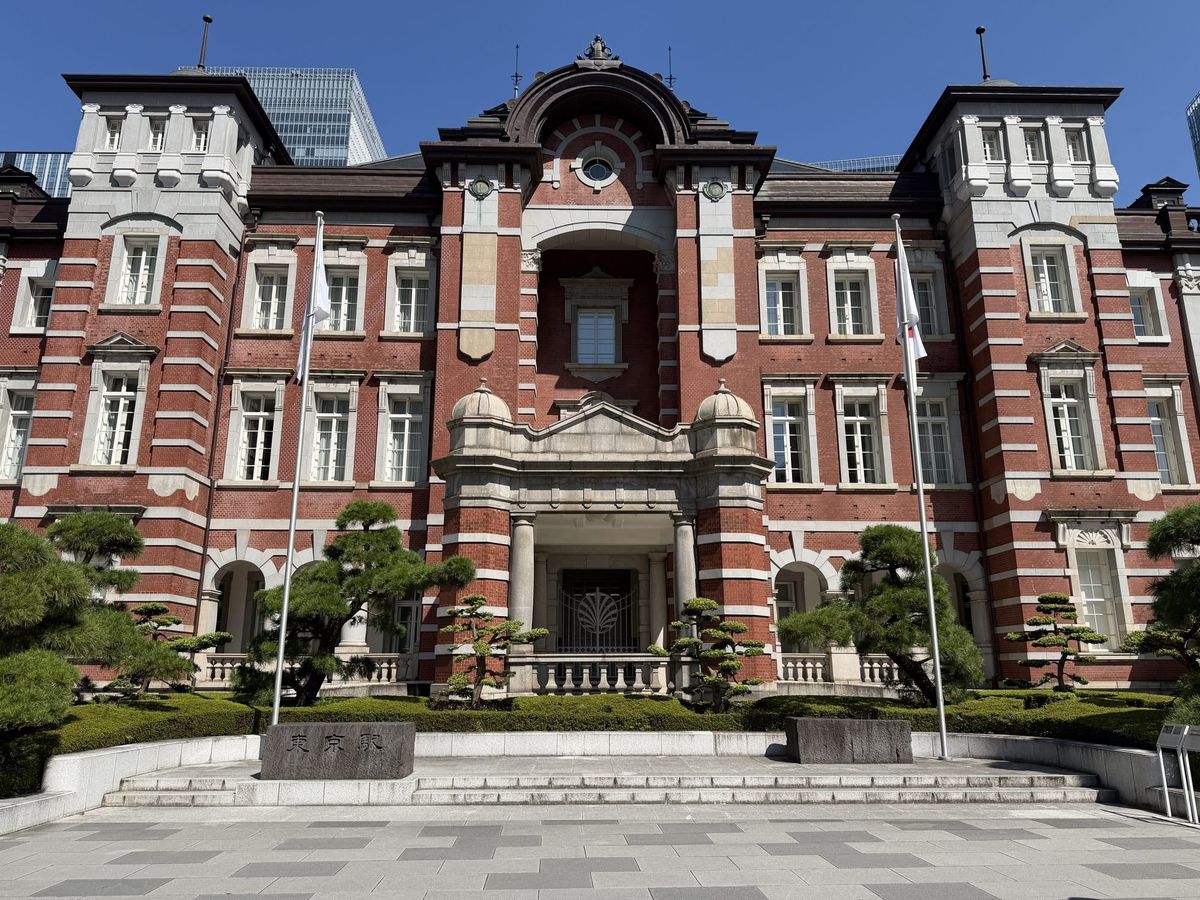
Tokyo Station guide Marunouchi Yaesu exits, in short: go Marunouchi — the historic west side facing the Imperial Palace and Otemachi — if your hotel sits there, such as The Marunouchi Hotel, a 1-min walk from Marunouchi North Exit (from ¥42,000, varies by season). Go Yaesu, the modern east side under the GranRoof canopy toward Ginza and Nihonbashi, if that is your hotel's side, or if you are catching any shinkansen: every shinkansen ticket gate at Tokyo Station, Tokaido group and Tohoku group alike, sits on the Yaesu side. A signed passage inside the gates connects the two sides, so a Marunouchi-side hotel does not cut you off from Yaesu-side platforms — it just adds a few minutes of walking.
Some links in this guide are affiliate links. If you book through them, we may earn a commission at no extra cost to you.
Most English guides to Tokyo Station reuse the same official transit map or a stock photo of the platforms. This guide is built from six photographs taken on-site in August 2026: the departure board that proves the shinkansen split, the sign for the passage between the two sides, and the underground directory that shows where the Keiyo Line actually is. Of the 4 hotels covered below, 2 sit within a 2-min walk of a Tokyo Station exit and the other 2 are 5- and 10-min walks (checked August 2026).
Why Tokyo Station confuses first-timers: two sides, two shinkansen groups, one very distant line
Tokyo Station is where both of Japan's shinkansen networks terminate, and its confusion is architectural rather than navigational: it is two separate street-facing buildings, Marunouchi and Yaesu, joined by concourses that most maps draw as a single block. Add a shinkansen network split into two systems that do not share ticket gates — the Tokaido Shinkansen, run by JR Central and through-running onto JR West's Sanyo Shinkansen beyond Shin-Osaka, on one side; the Tohoku, Yamagata, Akita, Hokkaido, Joetsu, and Hokuriku (via Nagano) Shinkansen, run out of Tokyo by JR East, on the other — and a Keiyo Line platform built decades later on a different basement level entirely, and you have three separate ways to get lost rather than one.
That is a different kind of confusion from Shibuya, where nine converging lines share one crossing, or Akihabara, where JR, Tokyo Metro, and the Tsukuba Express keep separate exit numbering under one roof. At Tokyo Station the lines mostly agree on which side they are near — the problem is that the station itself has two sides, and most first-time visitors do not realize that until they are standing on the wrong one.
Marunouchi vs Yaesu: which side you actually want
Marunouchi and Yaesu are not two exits of one building — they are two different buildings with different histories, and matching your hotel to the correct one saves a cross-station walk with luggage.
| Feature | Marunouchi side | Yaesu side |
|---|---|---|
| Station building | The original 1914 red-brick building, designed by Kingo Tatsuno and restored to its historic form in 2012 | The GranRoof canopy and glass office towers, opened 2013 |
| Faces | The Imperial Palace and Otemachi's office towers | Ginza and Nihonbashi |
| Shinkansen ticket gates | None — cross to the Yaesu side to reach any shinkansen platform | All of them: Tokaido/Sanyo group (platforms 14–19) and Tohoku group (platforms 20–23) |
| Buses and taxis | Taxi ranks at the Marunouchi North and South exits | Long-distance bus terminals (Bus Terminal Tokyo Yaesu and the JR Highway Bus Terminal), plus taxi ranks |
| Closest hotel and exit | The Marunouchi Hotel, 1-min walk from Marunouchi North Exit | Shangri-La Tokyo, 1-min walk from Nihonbashi Exit |
One entry in that table needs a caveat: Shangri-La Tokyo's official address reads Marunouchi, but its entrance faces the Nihonbashi Exit at the north end of the Yaesu side — for matching a hotel to a side, we treat it as Yaesu.
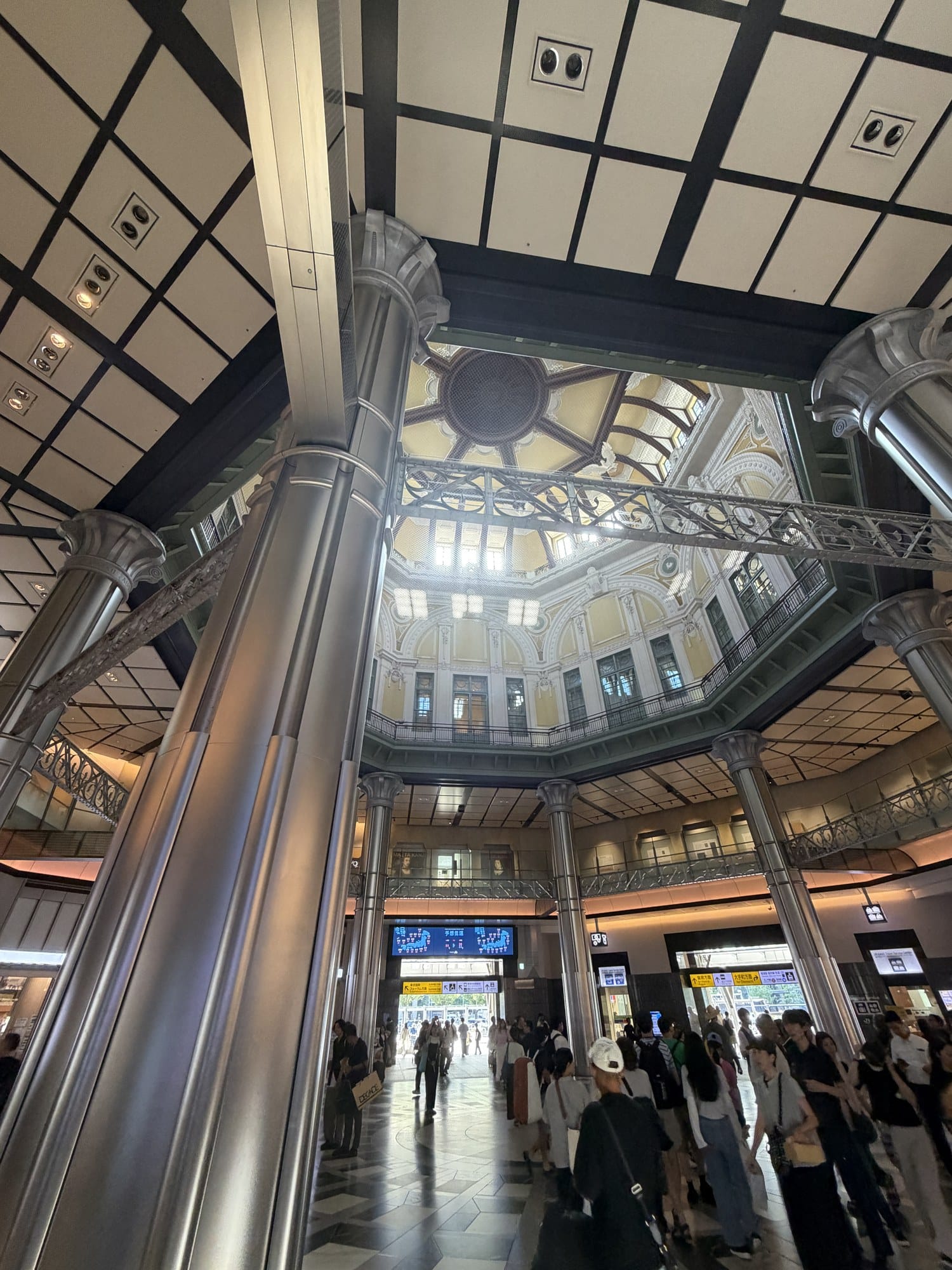
Nagoya Station has a similar two-sided split, Sakura-dori side and Taiko-dori side, covered in our Nagoya Station lines and exits guide — the same rule of matching your hotel to a side applies there too. At Tokyo Station, the Marunouchi side keeps the 1914 building's low, symmetrical profile and the north and south domes restored in the 2012 renovation; the octagonal relief inside those domes is part of that restoration, not the 1914 original, since the roof was rebuilt after wartime damage.
Reading the departure board: Tohoku-group vs Tokaido-group platforms
A departure board in the Marunouchi North Exit concourse, photographed in August 2026, lists three groups of trains side by side on the same panel. One group is headed "Tohoku, Yamagata, Akita, Hokkaido, Joetsu, Hokuriku (via Nagano) Shinkansen." A second, separate group is headed "Tokaido, Sanyo Shinkansen." A third covers "Ueno-Tokyo Line, Tokaido Line" — the ordinary commuter trains that share the same tracks as the Tokaido Shinkansen's operator but run as conventional rail. Seeing all three headed groups on one physical board is the clearest confirmation that Tokyo Station's shinkansen network is not one system with many destinations; it is two unconnected systems, run by two different companies, that happen to share a station name.
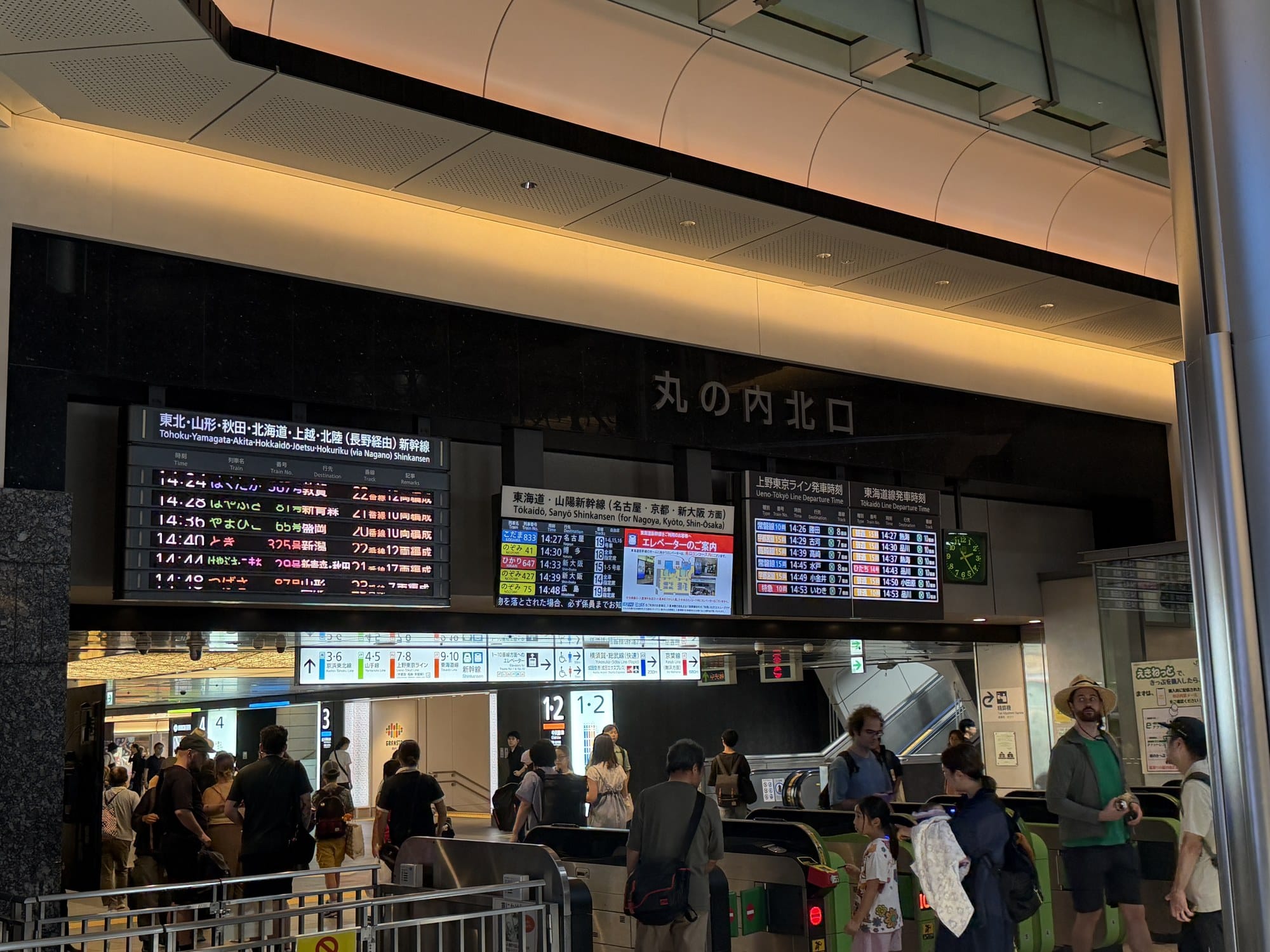
In practice, that split matters most at the ticket gates: the Tokaido/Sanyo group (platforms 14 through 19) and the Tohoku group (platforms 20 through 23) each have their own gate line on the Yaesu side, and a ticket for one network will not open a gate reserved for the other. For the e-ticket machines, reserved-seat rules, and the luggage racks that differ between the two networks, see our companion guide, shinkansen from Tokyo Station.
Crossing between the two sides: the free passage inside and outside the gates
Inside Tokyo Station's ticket gates, signage marks a route labeled "Passage to Yaesu Side," photographed in August 2026 both from a distance and close enough to read the smaller signs beside it. That closer view also lists a JR EAST Travel Service Center and a Midori-no-Madoguchi ticket office along the same stretch of concourse — useful stops if you need to exchange a rail pass voucher or change a shinkansen reservation without leaving the paid area. For its opening hours and what each counter handles, see our JR East Travel Service Center guide.
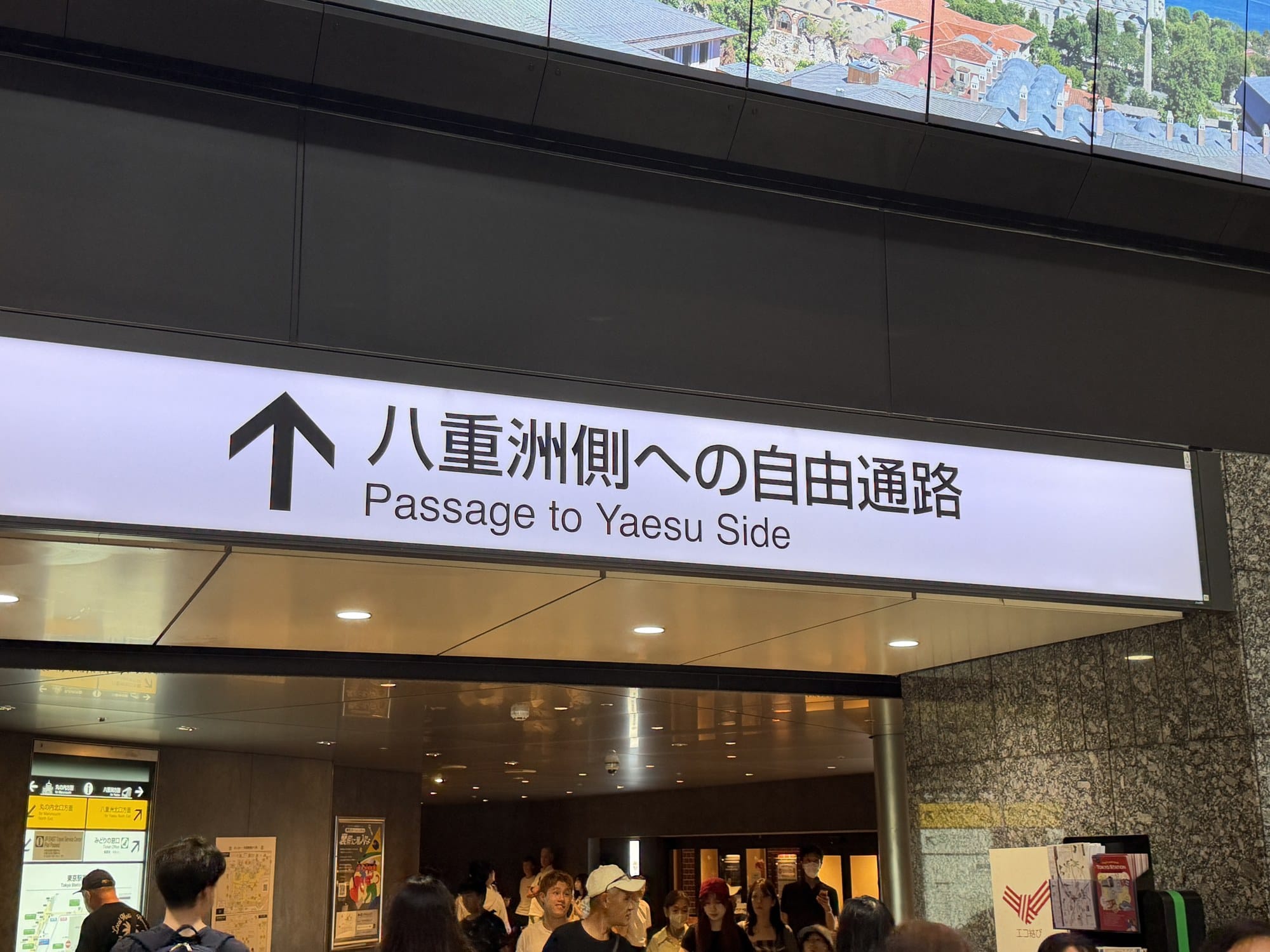
That passage is the practical answer to the Marunouchi-hotel problem: because every shinkansen gate sits on the Yaesu side, a guest at a Marunouchi-side hotel does not need to exit onto the street and re-enter through a different set of gates. Following the signed passage from a Marunouchi-side platform or concourse to the Yaesu-side shinkansen gates keeps you inside the paid area the entire way.
The Keiyo line problem (Disney-bound travellers read this)
The Keiyo Line, the line to Maihama Station for Tokyo Disney Resort, sits apart from every other platform at Tokyo Station, on a lower basement level connected by a long corridor with moving walkways rather than a short stairway. A general information pillar in the Marunouchi underground plaza, photographed in August 2026, lists exits numbered M1 through M3 and M8 through M14 and points travellers toward JR lines, the shinkansen, the Marunouchi Line, the Tozai Line, and the JR Keiyo Line as separate directions from that one pillar — a small sign of how far apart the Keiyo Line sits from everything else the pillar covers.
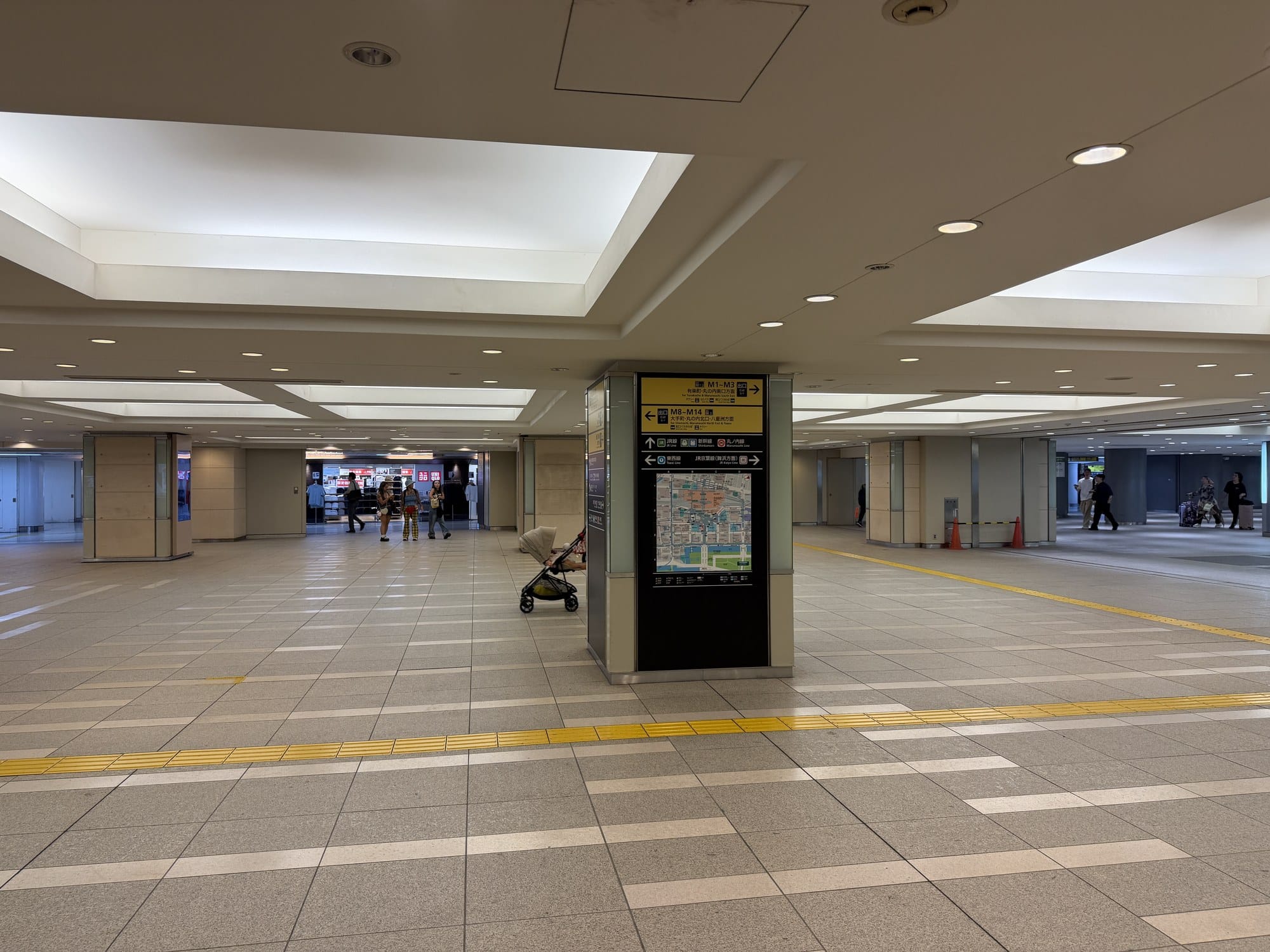
Do not treat the Keiyo Line as a quick transfer. The walk from the main JR platforms to the Keiyo Line is long enough that moving walkways are installed along part of it, and the exact minutes vary by which platform you start from, so budget generously rather than cutting it close, especially with a stroller or heavy luggage bound for Disney Resort.
The underground network: Gyoko passage, Marunouchi/Shin-Marunouchi, and staying dry
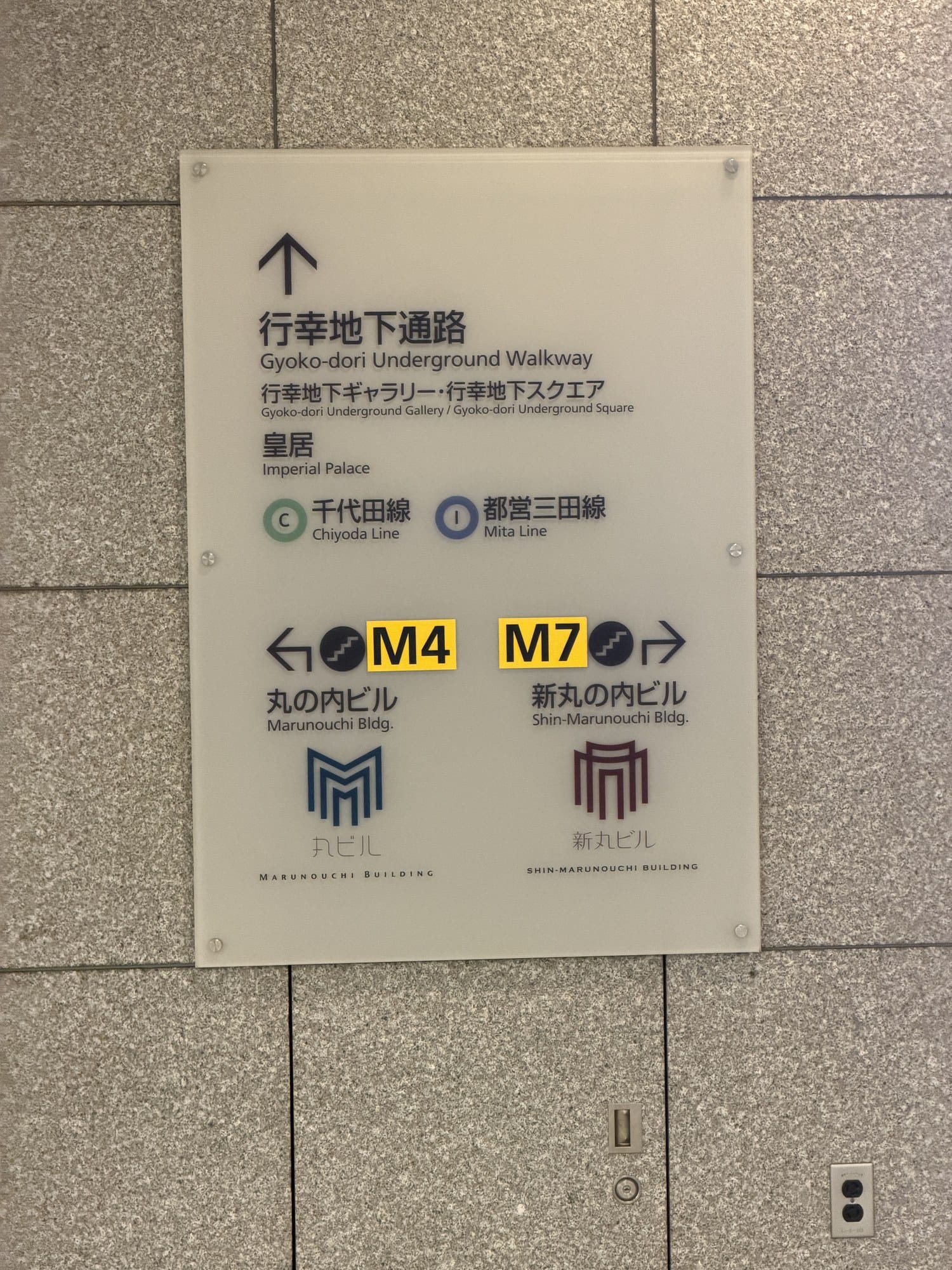
The Gyoko-dori Underground Walkway runs beneath Gyoko-dori, the avenue leading from Tokyo Station's Marunouchi Central Exit toward the Imperial Palace, and connects underground to the Chiyoda Line, the Toei Mita Line, the Marubiru building (exit M4), and the Shin-Marubiru building (exit M7). For anyone without a train ticket, it is a second, gate-free way to move between the Marunouchi side and nearby Otemachi without stepping outside.
That underground network is also the practical way to stay dry between the station and a Marunouchi-side hotel or office tower on a rainy day: the Gyoko-dori passage, the Marunouchi underground plaza, and the connections to Marubiru and Shin-Marubiru all sit below street level, so a guest walking from Tokyo Station to an Otemachi hotel can do the entire route without an umbrella.
Where to stay by side
The four hotels below are all confirmed operating as of our check in August 2026, split two per side so you can match the walk to your itinerary rather than to the station's reputation.
| Name | Area / Exit | Price range | Best for |
|---|---|---|---|
| The Marunouchi Hotel | Marunouchi North Exit (1-min walk, direct underground connection) | from ¥42,000, varies by season | Zero-walk access on the Marunouchi side |
| Ascott Marunouchi Tokyo | Otemachi Sta. direct; 10-min walk from Tokyo Sta. Marunouchi side | from ¥65,400, varies by season | Serviced apartments, families and longer stays |
| Shangri-La Tokyo | Nihonbashi Exit (1-min walk, Yaesu side) | from ¥107,900, varies by season | Luxury, direct access from the Nihonbashi Exit |
| Mitsui Garden Hotel Kyobashi | Yaesu Central Exit (5-min walk, Yaesu side) | from ¥24,980, varies by season | Budget-to-mid, Yaesu side |
Station guide series: this guide is part of the same by-exit approach as our Shibuya, Nagoya, Akihabara, and Roppongi station guides, plus the companion shinkansen practical guide for e-tickets and luggage rules once you have picked your platform.
If Tokyo Station is your arrival point but not where you want to sleep, the nearest real alternative is a short ride up the Yamanote line. Asakusa vs Ueno sets the temple district against the transport node, with rooms from ¥13,686 for two at Asakusa View Hotel.
FAQ: Tokyo Station exits and platforms
Which side of Tokyo Station should I book a hotel on?
Match it to what you are doing after check-in rather than to the station's reputation. The Marunouchi side is a short walk from the Imperial Palace, Otemachi's office towers, and hotels like The Marunouchi Hotel, a 1-min walk from Marunouchi North Exit. The Yaesu side is closer to Ginza, Nihonbashi, and every shinkansen ticket gate — Shangri-La Tokyo, a 1-min walk from the Nihonbashi Exit, sits on that side.
Are the Tokaido Shinkansen and the Tohoku Shinkansen on the same platforms at Tokyo Station?
No. The Tokaido Shinkansen, run by JR Central, uses platforms 14 through 19 (its trains continue onto JR West's Sanyo Shinkansen beyond Shin-Osaka). The Tohoku, Yamagata, Akita, Hokkaido, Joetsu, and Hokuriku Shinkansen, run by JR East, use platforms 20 through 23 with a separate set of ticket gates. Both platform groups sit on the Yaesu side of the station, so the walk that matters is between your entry point and the Yaesu-side gates, not between Marunouchi and Yaesu.
How far is the Keiyo Line platform from the rest of Tokyo Station?
Far enough that it catches first-time visitors heading to Tokyo Disney Resort off guard. The Keiyo Line sits on a lower basement level than every other platform at Tokyo Station, reached by a long connecting corridor with moving walkways rather than a short stairway. Budget more time for this one transfer than for any other change at the station.
Can I walk from the Marunouchi side to the Yaesu side without leaving the station?
Yes. Inside the ticket gates, signage marks a passage between the two sides, so a ticketed passenger can cross from a Marunouchi-side platform to the Yaesu-side shinkansen gates, or the other way, without exiting and re-entering through the fare gates. The Gyoko-dori Underground Walkway offers a second, gate-free underground route between the Marunouchi side and nearby Otemachi for anyone without a train ticket.