Akihabara Station Exits Guide: Lines, Maps & Nearest Hotels
Akihabara station exits guide: map JR Electric Town Exit, Central Exit, Hibiya Line A3 and Tsukuba Express to the nearest hotels in one place.

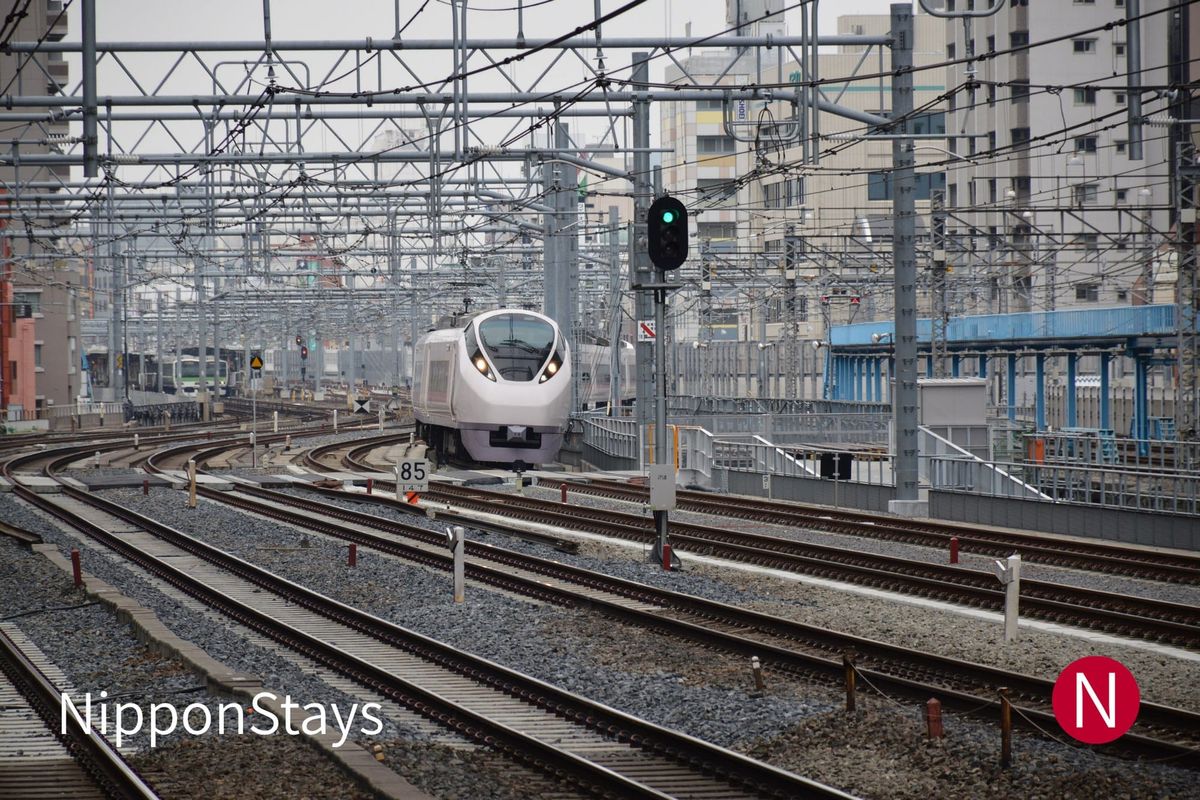
This Akihabara station exits guide exists because three separate train systems share the name "Akihabara" — and first-time arrivals regularly surface at the wrong one. Get the exit right and you are a 1-min walk from your hotel or the start of Chuo-dori's electronics and anime shops. Get it wrong and you spend 20 minutes in a confusing underground passage.
Some links in this guide are affiliate links. If you book through them, we may earn a commission at no extra cost to you.
Below you will find every named exit at each of the three stations, what is near each one, and which hotels sit closest. If you already know your line and just need the hotel-to-exit pairing, skip to the quick lookup table or the booking table at the bottom.
For a broader picture of where to base yourself in the area, see our full Akihabara area guide.
Of the 5 confirmed-operating hotels covered in this guide, 4 are within a 3-min walk of a JR Akihabara exit, and all 5 are within a 4-min walk (checked July 2026).
The three stations at Akihabara — do not mix them up
Three train operators all use the station name "Akihabara," but they are physically different buildings with different concourses, fare gates, and street exits.
- JR East (Yamanote Line, Keihin-Tohoku Line, Chuo-Sobu Local Line) — the main arrival point for most visitors. Trains from Ueno (~3 min), Tokyo (~4 min), Shinjuku (via Sobu Line Local, ~18 min), and Shibuya (~24 min via Yamanote) all stop here. This is the station referred to when hotels advertise "1 min from Akihabara Station."
- Tokyo Metro Hibiya Line (station code H-16) — an underground station on the east side of the JR tracks. Useful if you are coming from Roppongi, Ginza, or Ebisu. It has its own A-series numbered street exits (A1–A5) that are separate from JR's gates.
- Tsukuba Express (TX) — operated by Metropolitan Intercity Railway, the TX Akihabara terminal sits underground roughly 200 m south of the JR Electric Town Exit. Useful for arrivals from Tsukuba and the northeastern suburbs.
All three are within a 5-min walk of each other, connected partly by underground passages. IC cards (Suica, Pasmo) work at JR and the Hibiya Line; the Tsukuba Express uses a separate fare system but also accepts Suica and Pasmo — top up before you board.
JR exits: Electric Town Exit, Central Exit, Showa-dori Exit
JR Akihabara Station has three named exit areas. Knowing which side of the tracks your hotel is on saves you a long circuit around the station building.
Electric Town Exit (Denkigai-guchi)
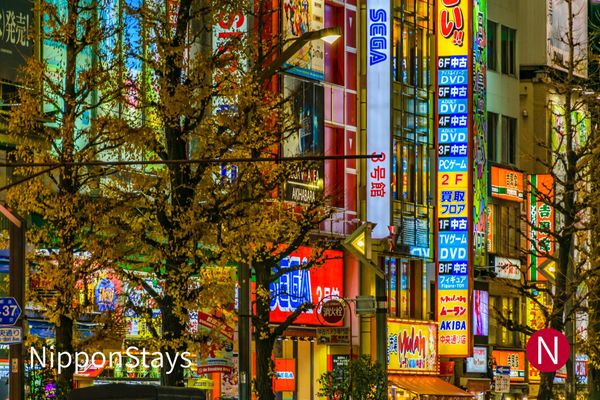
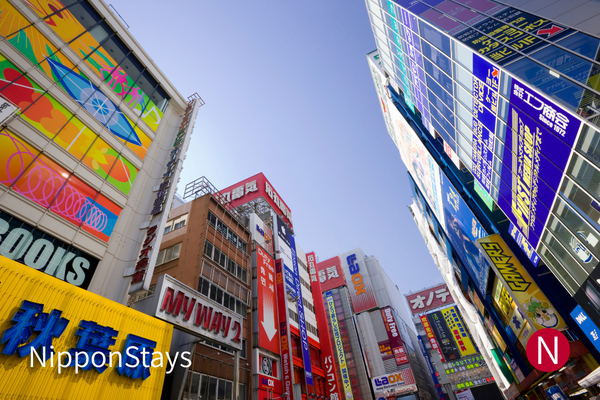
This is the exit most visitors need. It opens directly onto the west side of Chuo-dori, Akihabara's main shopping street. The exit has a north end and a south end; for the largest cluster of electronics and anime shops, use the south end. JR-EAST HOTEL METS PREMIER AKIHABARA is a 1-min walk from the Electric Town South Exit.
Central Exit (Chuo-guchi)
The Central Exit faces east toward Showa-dori. Use it when:
- You need to transfer to the Tokyo Metro Hibiya Line — the Metro entrance is a 3-min walk from the Central Gate along a covered passage.
- Your hotel is on the east (Showa-dori) side of the station. Hotel Resol Akihabara is a 3-min walk from this gate.
- You are staying at remm Akihabara — remm connects directly at the Central Gate (AKIBA TOLIM), with the Electric Town Exit a ~2-min walk through the concourse.
Showa-dori Exit
A quieter exit further north on the east side, also facing Showa-dori. Good for hotels on the east side of the tracks and for the northern part of Akihabara. Akihabara Washington Hotel is approximately a 1-min walk from this side of the station. The Showa-dori Exit is also on the Sobu Line platform level, so if you take the Chuo-Sobu Local Line, this is often the first gate you reach.
Quick orientation: Electric Town Exit = west side, shopping and anime district; Central Exit and Showa-dori Exit = east side, offices and quieter streets.
Metro Hibiya Line and Tsukuba Express exits
Tokyo Metro Hibiya Line (H-16)
The Hibiya Line station is underground below Showa-dori on the east side of the JR tracks. It has five street exits:
- Exit A1 — surfaces on Yasukuni-dori (north end), useful for the area toward Suehirocho.
- Exit A2 — also on Yasukuni-dori, close to A1, good for northern Akihabara streets.
- Exit A3 — the most practical exit for most visitors; it is the shortest path between the Hibiya Line and JR's Central Gate. Take A3, walk straight, and you reach the JR Central Gate concourse. From there you can cross to the Electric Town Exit without going outside.
- Exit A4 — south side of the Hibiya station, toward Iwamotocho.
- Exit A5 — leads to the Iwamotocho Building area, south of the main Akihabara core.
If you arrive on the Hibiya Line and your hotel is on the Electric Town (west) side, take Exit A3, follow the passage to the JR Central Gate, then continue through the JR concourse to the Electric Town Exit. Add roughly 5–7 min to any walk time you see on a hotel's website.
Tsukuba Express (TX)
The TX Akihabara terminal is underground and about 200 m south of the JR Electric Town Exit. From the TX fare gates, an underground passage leads north and connects to both the JR station area and the Hibiya Line exits. The walk from the TX platform to the JR Electric Town Exit is roughly a 3-min walk through the passage. If your hotel is right by the JR Electric Town Exit, factor in this extra few minutes when arriving by TX.
For a full breakdown of hotels by walk time from each exit, see hotels closest to each exit.
Which exit for your hotel — quick lookup
The table below maps the main confirmed-open hotels to their nearest JR exit and gives a rough price range. Rates vary by season and day of week.
| Name | Area | Price range | Best for |
|---|---|---|---|
| remm Akihabara | Central Gate (JR, station-adjacent) | from ¥11,400 for two; rates vary by season | Direct Central Gate connection; ~2-min walk to Electric Town |
| JR-EAST HOTEL METS PREMIER AKIHABARA | Electric Town South Exit (JR, 1-min walk) | from ¥13,000; rates vary by season | 1-min walk; mid-range comfort close to shops |
| Akihabara Washington Hotel | Showa-dori / Central Exit (JR east, 1-min walk) | from ¥9,000; rates vary by season | East side; also close to Hibiya Line Exit A3 |
| Hotel Resol Akihabara | Central Gate (JR east, 3-min walk) | from ¥8,500; rates vary by season | Good value on the east side; near Hibiya transfers |
| Via Inn Akihabara | JR Electric Town Exit (4-min walk) | from ¥6,500; rates vary by season | Budget option with solid access to Electric Town |
Luggage, lockers, and first-time arrival tips
Coin lockers inside the station
JR Akihabara Station has coin lockers in the Electric Town Exit concourse and near the Central Gate. Sizes range from small (for day bags) to large (for full-size suitcases). Lockers tend to fill up by mid-morning on weekends. If you arrive and find them full, shops around the station offer hourly luggage storage through services such as Ecbo Cloak — check the app before you leave for the station.
Early arrival and luggage storage at hotels
Standard check-in at most Akihabara hotels is 14:00–15:00. remm Akihabara offers luggage storage for guests who arrive before check-in; confirm this when booking. Hotel staff at most properties will hold bags even if your room is not ready — call ahead if you have a very early arrival.
Getting to Akihabara from the airports
- From Narita: Take the Narita Express (N'EX) to Tokyo Station, then the Yamanote Line or Keihin-Tohoku Line to Akihabara (2 min). Alternatively, take the Keisei Skyliner to Ueno, then one stop south on the Yamanote Line. Either route takes 60–80 min from the airport.
- From Haneda: Take the Keikyu Line to Shinagawa, then the Yamanote or Keihin-Tohoku Line to Akihabara (about 40 min total). Or take the Tokyo Monorail to Hamamatsucho, then Yamanote Line north to Akihabara.
A note on line fares
JR, Tokyo Metro, and the Tsukuba Express are separate fare systems. Your IC card covers all three, but each journey is billed separately — do not expect a free transfer between them. If you arrive on the Hibiya Line and continue on the Tsukuba Express in the same trip, you pay two fares.
After you exit: quick orientation
From the Electric Town Exit, turn right and you are on Chuo-dori within 30 seconds. A 7-Eleven convenience store and a drugstore are within a 2-min walk. At night the area around the Electric Town Exit stays busy until around 21:00–22:00; the Showa-dori side is quieter by early evening. For hotels by the Electric Town Exit, see hotels by the Electric Town Exit.
Book a hotel by exit
All five hotels below were confirmed operating as of 2025–2026. Rates vary by season, day of the week, and how far in advance you book.
| Name | Area | Price range | Best for |
|---|---|---|---|
| remm Akihabara — check rates | Central Gate (JR, station-adjacent) | from ¥11,400 for two; rates vary by season | Direct Central Gate connection; ~2-min walk to Electric Town |
| JR-EAST HOTEL METS PREMIER AKIHABARA — check rates | Electric Town South Exit (1-min walk) | from ¥13,000; rates vary by season | Mid-range comfort steps from the shopping street |
| Akihabara Washington Hotel — check rates | Showa-dori / JR east side (1-min walk) | from ¥9,000; rates vary by season | Central-area hotel reachable from JR and Hibiya A3 |
| Hotel Resol Akihabara — check rates | JR Central Gate, east side (3-min walk) | from ¥8,500; rates vary by season | Value option near Hibiya Line transfer point |
| Via Inn Akihabara — check rates | JR Electric Town Exit (4-min walk) | from ¥6,500; rates vary by season | Lowest entry price among JR-side options |
For a side-by-side look at all accommodation types in the area — capsule pods, budget private rooms, and 3–4 star hotels — see our full Akihabara area guide.
Trip Essentials for Akihabara
Things worth booking before you land, all in English:
- eSIM — Airalo's Japan eSIM: install it at home and data works as soon as you switch off airplane mode at Haneda or Narita.
- Airport transfer — Welcome Pickups runs fixed-price door-to-door pickups from Haneda or Narita; Klook sells the airport bus and train tickets if you'd rather ride.
- Luggage storage — arriving before check-in? Radical Storage takes bags at shops near Akihabara Station for a flat daily rate.
- Tickets and day trips — Klook covers teamLab tickets, Tokyo Skytree, and maid-cafe reservations; booking ahead skips the ticket-window line.
FAQ: Akihabara Station Exits
Which exit do I use to get to the electronics shops on Chuo-dori?
Use the JR Electric Town Exit (Denkigai-guchi). It opens directly onto the west side of Chuo-dori, Akihabara's main shopping street. Use the south end of the exit for the largest cluster of electronics and anime shops. If you arrive on the Tokyo Metro Hibiya Line, take Exit A3, follow the covered passage to the JR Central Gate, then continue through the JR concourse to the Electric Town Exit — add roughly 5–7 minutes to any walk time.
How many stations are called “Akihabara” and how do I know which one I need?
Three separate train operators use the name: JR East (Yamanote Line, Keihin-Tohoku Line, Chuo-Sobu Local Line), Tokyo Metro Hibiya Line (station code H-16), and the Tsukuba Express. The JR station is the main arrival point for most visitors and the station referred to when hotels advertise “1 min from Akihabara Station.” All three are within a 5-min walk of each other, connected partly by underground passages, and IC cards (Suica, Pasmo) work at JR and the Hibiya Line — the Tsukuba Express charges a separate fare even though it accepts the same cards.
Which hotel in Akihabara is closest to the Electric Town Exit?
JR-EAST HOTEL METS PREMIER AKIHABARA is a 1-min walk from the Electric Town South Exit and is the closest hotel to the main shopping street, with rates from ¥13,000 per night varying by season. Via Inn Akihabara is 4-min walk from the same exit and offers a lower entry price from ¥6,500 per night. remm Akihabara connects directly at the Central Gate with a roughly 2-min walk through the concourse to the Electric Town Exit, making it the closest hotel to JR Akihabara Station itself.
Are there coin lockers at Akihabara Station for luggage?
JR Akihabara Station has coin lockers in the Electric Town Exit concourse and near the Central Gate, in sizes from small day bags to full-size suitcases. They tend to fill up by mid-morning on weekends. If you arrive and find them occupied, shops around the station offer hourly luggage storage through services such as Ecbo Cloak. Most hotels in the area — including remm Akihabara — also store luggage before check-in, which is typically 14:00–15:00.
Information audit: Last fact-checked July 2026 · Prices checked July 2026 (all rates are “from” floors that vary by season) · How this guide was researched: hotel facilities, prices and access details are verified against official and primary sources; we have not personally stayed at every property listed. The author has lived in Tokyo for 30 years · How this site verifies information: About NipponStays.