Onsen With Kids in Japan: Can They Come In, and at What Age?
Onsen with kids in Japan: the nappy rule, prefecture age limits for opposite-sex bathing, and how to book a private bath, with prices checked in 2026.
Yes, children can go into an onsen with kids in Japan — the practical dividing line is not an age on a form, it is nappies. Almost no shared bath admits a child still in diapers, so the room's own tub or a private (kashikiri) bath is the real answer at that stage. Once a child is toilet-trained, the large communal bath is usually open to them until they reach the age at which a prefecture's ordinance stops opposite-sex bathing — most prefectures now set that line at seven. A private bath typically runs from about ¥2,200-3,300 for a 50-minute slot plus a separate bathing fee at day-use facilities (checked August 2026); an overnight ryokan's own fee varies by property. The condition that actually changes the answer is which side of that age line your child is on today.
How our family did it, in three stages
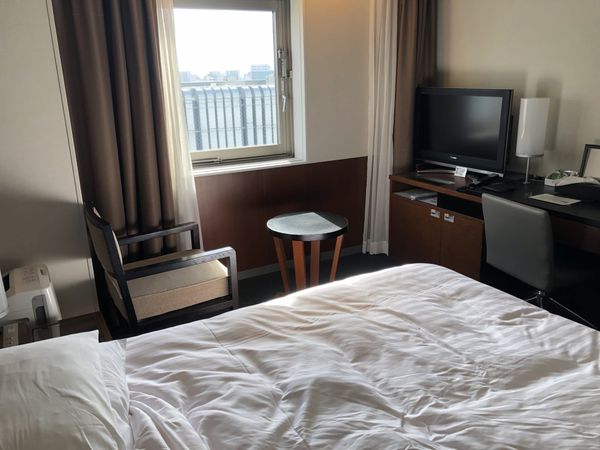
We switched our approach to onsen bathing with our own children three times as they grew, and each boundary was ours, not a rule we looked up. Before our children were out of nappies, we used the room's own bath rather than a shared one — most Japanese hotel rooms come with a bathtub as standard, which is genuinely useful, since a European or North American hotel room is far more likely to have a shower only. From out of nappies to about age five, we took our children into the large public bath, and in our case that meant a father taking a daughter in with him. From six, we switched to a private (kashikiri) bath or the room's own tub instead.
| Stage | Which bath we used | What a facility typically allows | What it costs |
|---|---|---|---|
| Before potty-trained | Room's own tub | Most shared baths do not admit a child still in nappies | Included in the room |
| Out of nappies to about 5 | Large communal bath | Opposite-sex bathing generally allowed under the prefecture's age line | Included in facility use |
| From about 6 | Private (kashikiri) bath or room tub | Several prefectures' opposite-sex limits start around here | From about ¥2,200-3,300 per 50-min slot, checked August 2026, plus admission |
That six-year-old switch was our own decision, made without checking whether a local ordinance required it — the legal line, separate from ours, is the next section. Whether a family is ever turned away is not something we can speak to from our own stays.
The rule that is not ours: the age limit is set by prefecture
The age at which a child may no longer enter the opposite-sex changing room and bathing area is set by prefectural ordinance, not by the hotel or onsen, and prefectures did not all move to the newer figure at the same time. Japan's health ministry lowered its model guidance on December 10, 2020 (notice 生食発1210第1号), recommending prefectures stop mixed bathing at "around 7" rather than the older "around 10." Prefectures adopted the lower figure at different times: Osaka in 2021, Tokyo and Tochigi from January 1, 2022, Hokkaido from April 1, 2023, Hyogo (which covers Arima Onsen) from April 1, 2024, and Chiba by 2024, with Nagano the last of the eight we checked to change, from October 1, 2024 (Nagano City public-health page, checked August 2026). Nara has no single prefecture-wide ordinance; individual facilities, including hotel and ryokan baths, generally apply the same age-7 line under the ministry's guidance rather than a local law setting it.
- National model guidance: around 7 (MHLW notice, December 10, 2020)
- Tokyo, Osaka, Tochigi, Hokkaido, Hyogo, Chiba: 7, each by its own prefectural ordinance and effective date (each prefecture's own page, checked August 2026)
- Nagano: 7 from October 1, 2024, previously 10 — the most recent of the eight to change (Nagano City public-health page, checked August 2026)
- Nara: 7 in practice at individual facilities rather than by a prefecture-wide ordinance (checked August 2026)
Of the eight prefectures checked for this guide, all eight now set the opposite-sex bathing limit at 7 (checked August 2026). The figure is still set prefecture by prefecture rather than nationally, though, and it has been revised repeatedly since the December 2020 MHLW notice — most recently in Nagano. Confirm the figure and its revision date for wherever you are actually staying rather than assuming last year's number, or a neighboring prefecture's number, still holds.
Nappies, babies and the shared bath
Most onsen and public-bath operators exclude any child not yet toilet-trained from the shared bath on hygiene grounds, regardless of age — a separate rule from the opposite-sex age limit above. This is where the room's own bath earns its keep: a bathtub built into the guest room is close to standard in a Japanese hotel or ryokan, in a way it is not across most of Europe or North America, where a shower-only bathroom is the norm even in a mid-range hotel. A private (kashikiri) bath, covered next, is the other route around the nappy rule when the room itself only has a shower.
How a private (kashikiri) bath actually works
A private (kashikiri, 貸切) bath is a bathing space reserved for one group's exclusive use, almost always by reservation rather than something you can walk into unannounced. Three booking channels are common: at the time you book your stay, at the front desk when you check in, or through the property's app once you have arrived; which of the three a given property offers is set by that property, not by any national standard. Two day-use facilities in Ikaho Onsen, Gunma, show what that costs in practice: Hotel Tenbo charges ¥2,750 for a 50-minute open-air private bath and ¥3,300 for a 50-minute family bath, and Oyado Tamaki charges ¥2,200 for its 50-minute open-air 樹 (Akari) bath and ¥3,300 for its 50-minute 小春日和 bath, each on top of a separate day-use entry fee (both facilities' own sites, checked August 2026). A day-use private bath, in other words, runs roughly ¥2,200-3,300 for a 50-minute slot plus admission. An overnight ryokan's own add-on fee can run higher or lower than that day-use figure, and whether it is charged per slot, per person, or waived for guests is set by that property; confirm it before you book.
Room baths and semi-open-air baths as the other private option
A Japanese booking page that lists 露天風呂付客室 (an open-air bath built into the room) describes the other route to private bathing with a child: no separate reservation, because the bath is already yours for the stay, usually at a price step above an equivalent standard room. Hoshino Resorts KAI Tamatsukuri, on Tamatsukuri Onsen in Shimane, is built entirely around this idea — all 24 rooms have their own open-air bath, so the property does not offer a separately bookable kashikiri bath at all; you are not meant to need one (official and third-party listings, checked August 2026). Kinzan, an upmarket ryokan at Arima Onsen in Kobe, does the same at a different scale: its rooms carry a private open-air bath drawing the property's silver-toned spring water, while the shared bathhouse uses Arima's iron-rich golden spring instead — the East Building's standard rooms (63-120m², renovated 2022) and the West Building's suites (up to 200m², renovated 2024) both include one (official site, checked August 2026).
Bathing with a child, practically
A few habits make any of these baths go more smoothly with a child in tow:
- Wash and rinse fully at the washing station before entering the bath itself — this applies to children as much as adults.
- No swimwear in a shared bath; a private (kashikiri) bath is the option if you would rather not go without.
- Long hair gets tied up before entering the water.
- Phones and cameras stay out of the changing room and bathing area entirely.
- Keep a young child's soak short and offer water afterwards — the water runs hotter than a home bath.
- A child who cannot yet stay reasonably quiet is a real reason to book a private bath rather than use the shared one, for your own comfort as much as other bathers'.
Where the family bath is easy to arrange
The two rooms below are evidence that a private bath with a child can be arranged without a separate booking, not a ranking of where to stay — check the current room type and rate before booking, since availability changes.
| Name | Area | Price range | Best for |
|---|---|---|---|
| Hoshino Resorts KAI Tamatsukuri | Tamatsukuri Onsen, Shimane | from ¥37,950 per person, two sharing (checked August 2026) | Every one of the 24 rooms has its own open-air bath; no separate kashikiri booking needed |
| Kinzan | Arima Onsen, Kobe (Hyogo) | from ¥62,700 per person | Room-private silver-spring bath plus a separate golden-spring bathhouse; a splurge stay built around private bathing |
Rates checked August 2026 as the lowest publicly listed rate for a standard room, and vary by season. For onsen ryokan with a bookable private bath rather than one built into every room, see Kyoto ryokan with a private onsen and Arima ryokan with a private bath, or start from our onsen ryokan hub. City hotels with their own hot-spring bath, such as Sapporo hotels with onsen, are a lower-key option. If a tattoo rather than a child is the reason you are checking onsen access, see onsen and tattoos in Japan; for the rest of the pre-booking questions, see our guide to the rest of them.
Once the family bath is booked, the trade-off is worth naming: the grand bath is normally the better bath — larger and properly temperature-managed — and what the private one buys you is timing. Private bath vs shared grand bath sets out what you are actually paying for.
FAQ: onsen with kids in Japan
Can I take my toddler into an onsen in Japan?
Once a child is toilet-trained, most shared onsen baths allow them in with a parent, subject to the prefecture's opposite-sex age limit, which is 7 in all eight prefectures checked for this guide — Tokyo, Osaka, Hyogo, Tochigi, Hokkaido, Chiba, Nara and Nagano — though each reached that figure on its own date, Nagano only from October 1, 2024 (checked August 2026). A child still in nappies is a separate case: almost no shared bath admits them, so the room's own tub or a private bath is the workable answer.
Is there an age limit for a child in the opposite-sex bath in Japan?
Yes, and it is set by each prefecture rather than by the hotel. Japan's health ministry recommended lowering the model age from around 10 to around 7 in a December 2020 notice, and every prefecture checked for this guide had adopted 7 by October 2024, with Nagano the last of the eight to make the change.
Can I book a private onsen bath for my family?
Usually yes, either as a separately reserved kashikiri slot — commonly 50 minutes for roughly ¥2,200-3,300 plus admission at day-use facilities (checked August 2026) — or, at some ryokan, as a bath already built into every room, which needs no separate booking at all. Which of the two a property offers, and whether the fee is per slot or per person, is set by that property, so confirm it before you go.
Are babies in nappies allowed in an onsen in Japan?
Generally no — the great majority of shared baths exclude any child not yet toilet-trained, separately from the opposite-sex age limit that applies to older children. A room with its own bathtub, which is close to standard in a Japanese hotel or ryokan, is the practical way around this rather than a shared bath rule you can ask to have waived.