Koiwai Farm: The Name Is Three Men, and One of Them Built Japan's Railways
Koiwai Farm is named after Ono, Iwasaki and Inoue Masaru, father of Japan's railways. The 1891 founding story, plus hours, admission and access.
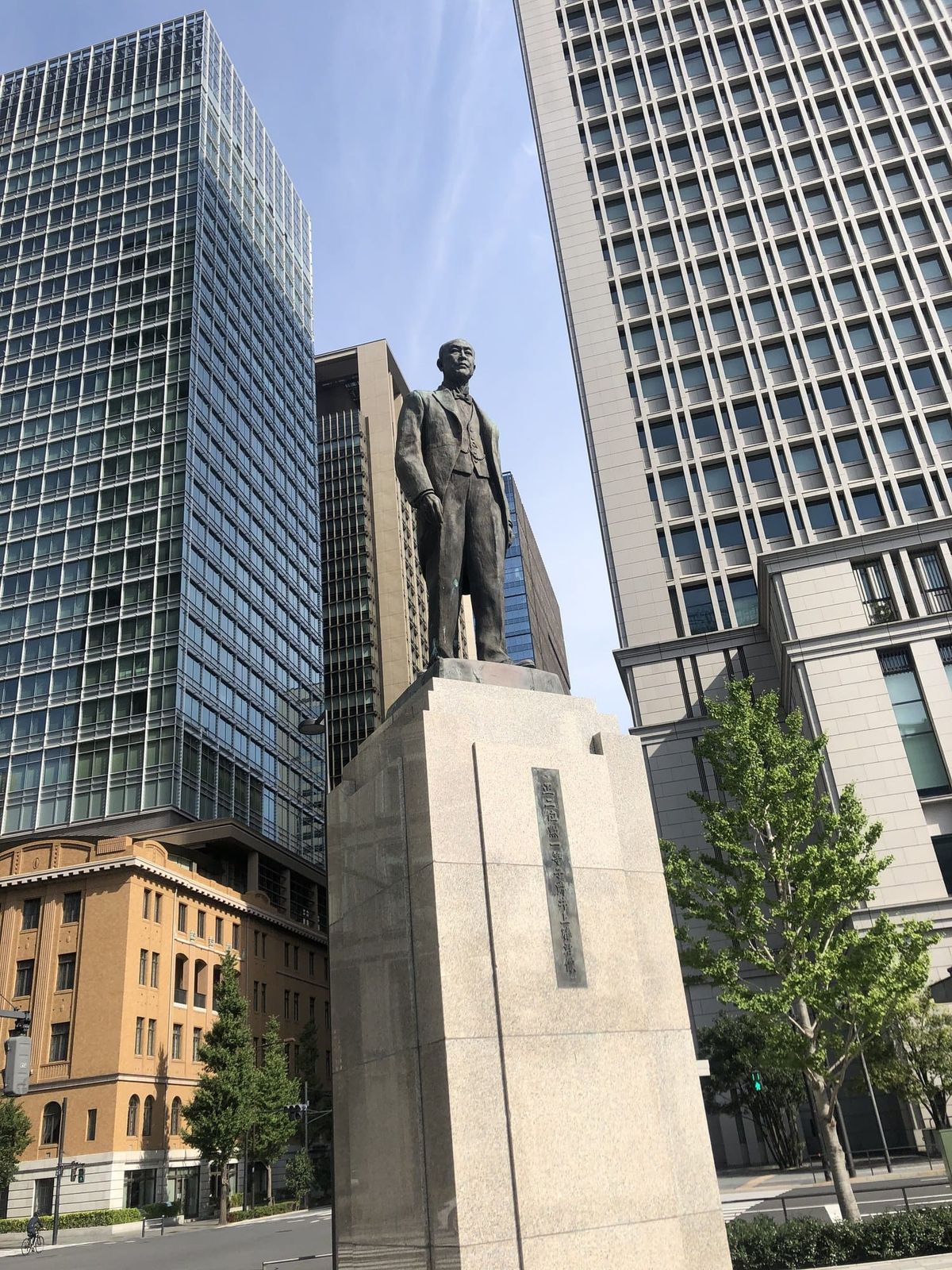
Koiwai Farm, in Shizukuishi, Iwate Prefecture, is named after three men rather than a place. One character comes from each of three surnames — Ono (小), Iwasaki (岩) and Inoue (井) — and together they spell 小岩井, Ko-iwa-i. The three were Ono Gishin, vice-president of the Nippon Railway; Iwasaki Yanosuke, the second president of Mitsubishi; and Inoue Masaru, director-general of the Railway Agency, the man whose statue stands outside Tokyo Station. They founded the farm on 1 January 1891. If you are here for the practical part instead: the visitor area, Makiba-en, runs 09:00–17:00 with last admission at 16:00, and green-season admission is ¥800 for adults (checked August 2026).
One syllable each
The name Koiwai is a compound of three surnames, and no part of it describes the land. Japanese place names usually come from geography — a river mouth, a field, a mountain foot. This one comes from a railway executive, an industrialist and a civil servant, in that order.
The 小 that opens Ono Gishin's surname is read o in Ono and ko in Koiwai, which is why English spellings of the farm and of the man look unrelated. The 岩 is the first character of Iwasaki, and the 井 is the first character of Inoue. Read the three together and you get a word that exists nowhere else in Japanese.
| Name | Position in 1891 | What he contributed | Character in 小岩井 |
|---|---|---|---|
| Ono Gishin | Vice-president, Nippon Railway | Introduced Inoue to Iwasaki and brokered the partnership | 小 (ko) |
| Iwasaki Yanosuke | Second president of Mitsubishi | Put up the capital to buy and clear the land | 岩 (iwa) |
| Inoue Masaru | Director-general of the Railway Agency | Conceived the farm and drove the reclamation plan | 井 (i) |
Inoue is the one of the three with statues at railway stations: one on the Marunouchi side of Tokyo Station, one outside Hagi Station in Yamaguchi, where he was born. The farm is a third place that carries his name, and unlike the statues it is still a business.
Why a railway man wanted a farm
Inoue Masaru was in Morioka on 12 June 1888 as head of the Railway Bureau — the office that became the Railway Agency in 1890 — inspecting the northward construction of what is now the Tohoku Main Line. By the company's own account of its founding, he looked at the volcanic-ash plains west of the city — thin soil, poor drainage, groundwater running off Mount Iwate — and concluded that railway building had taken good fields and woodland out of the country, and that he owed something back in the form of land made productive.
He could not fund it himself. Ono Gishin, vice-president of the Nippon Railway, the private company then laying the line north, connected him to Iwasaki Yanosuke, who was running Mitsubishi after his elder brother's death. Iwasaki provided the money. The farm was established on 1 January 1891, and each man's surname gave up a character to the name.
The railway dates on either side of that founding are worth putting in a row, because the farm exists in the gap between them. Nippon Railway reached Morioka on 1 November 1890. The farm was founded two months later. The full Ueno–Aomori main line opened on 1 September 1891, eight months after that. Koiwai was, in the most literal sense, a project that became possible the moment the rails arrived — the land was cheap because nobody could use it, and it was worth clearing because a train could now carry what came off it.
Inoue ran the farm for its first eight years. In 1899 management passed to the Iwasaki family, to Iwasaki Hisaya, the third head of Mitsubishi, and the operating company Koiwai Farm, Ltd. was established in 1938. The farm covers roughly 3,000 hectares today and still runs as a dairy and forestry business.
Its buildings have been recognised twice. Nine were entered on the national register of tangible cultural properties in 1996, and in February 2017 a group of 21 structures — cattle barns, silos, storehouses, the head office — were designated Important Cultural Properties, the higher category. That is 21 protected buildings on a single farm that is still a working dairy and forestry operation rather than a preserved site, and all 21 are documented in the Important Cultural Property Gallery inside Makiba-en (checked August 2026).
What the place is today
We have not been to Koiwai Farm. What follows is what the farm publishes and what can be checked from here; there is no description of the light on the pastures in this article, because we have not stood in them. The section will be rewritten after a visit.
Makiba-en is the visitor area — one part of the roughly 3,000-hectare property, with the rest a working farm that is not open to walk around. The farm's user guide notes that the animal areas close in winter, so a January visit and a July visit are not the same outing. The details below come from the farm's own site.
| Item | Detail as published by the farm | Checked |
|---|---|---|
| Hours | 09:00–17:00, last admission 16:00 | August 2026 |
| Admission, green season (from 11 April 2026) | ¥800 adults (junior high and older), ¥300 children (age 5 to sixth grade) | August 2026 |
| Dogs | ¥500 per dog; other pets not admitted | August 2026 |
| Bus from Morioka Station | Stop No. 10 in front of JR Morioka Station, bus bound for Koiwai Farm Makiba-en; about 17 km, about 35 min; adult fare ¥750, still shown on the farm's access page at our last check (October 2026) | August 2026 |
| From Koiwai Station (JR Tazawako Line) | About 6 km; taxi 10–15 min, around ¥2,000; roughly an 80-min walk | August 2026 |
| By car | About 15 min (12 km) from Morioka IC on the Tohoku Expressway; free parking for about 1,500 cars | August 2026 |
| Winter | Animal areas closed; admission and hours change with the season | August 2026 |
One more thing that is on the site rather than in a guidebook: the milk and dairy products sold across Japan under the Koiwai name come from a separate company, Koiwai Dairy Products, set up in 1976 as a fifty-fifty joint venture between the farm's operating company and Kirin Beer. The brand in the supermarket chiller and the farm in Iwate are related, but they are not the same business.
If you are following Inoue Masaru
Koiwai is the third point on a line that starts at Tokyo Station, and the whole line can be travelled by rail. Our article on Inoue Masaru and the statue at Tokyo Station covers the first two points — the Marunouchi statue and the one outside Hagi Station in Yamaguchi, where he was born.
The fastest Hayabusa services run Tokyo to Morioka in about 2 hours 10 minutes (checked August 2026); if you want the mechanics of reserved seats and luggage before you board, see our Tokyo Station shinkansen guide. Travellers who prefer to break the journey rather than run it in one go can stop at Sendai, which works as a base for Tohoku day trips.
Koiwai Station itself is a piece of railway heritage, which closes the circle neatly for a farm named after a railway official. The station opened on 25 June 1921 on the Hashiba light railway line, now the JR Tazawako Line, and its original single-storey wooden station building was added to the national register of tangible cultural properties on 6 August 2025.
The poet Miyazawa Kenji got off at that station on 21 May 1922 and walked into the farm. What he wrote afterwards, "Koiwai Farm", runs to 591 lines — his longest poem — and appears in his 1924 collection Spring and Asura. English readers who know Miyazawa from Night on the Galactic Railroad tend not to know that the farm has a place in his work as well.
FAQ: Koiwai Farm and its name
Where does the name Koiwai come from?
Koiwai (小岩井) is made from the first character of each of three surnames: Ono (小), Iwasaki (岩) and Inoue (井). The three men founded the farm in Shizukuishi, Iwate Prefecture, on 1 January 1891. The character 小 is read o in the surname Ono but ko in Koiwai, which is why the connection is invisible in English spelling.
Who were the three founders, and what did each of them do?
Ono Gishin was vice-president of the Nippon Railway and brought the three parties together; Iwasaki Yanosuke, the second president of Mitsubishi, provided the capital; and Inoue Masaru, director-general of the Railway Agency, conceived the farm and directed the reclamation of the volcanic-ash land. Inoue managed the farm until 1899, when it passed to the Iwasaki family under Iwasaki Hisaya.
How do you get to Koiwai Farm from Morioka Station?
Buses for Koiwai Farm Makiba-en leave from stop No. 10 in front of JR Morioka Station and cover the roughly 17 km in about 35 minutes, at an adult fare of ¥750 that the farm's access page still showed at our last check (October 2026). The alternative is JR Koiwai Station on the Tazawako Line, about 6 km short of the entrance, with a taxi costing around ¥2,000. By car it is about 15 min from Morioka IC, and parking is free.
Can visitors see the Important Cultural Property buildings?
Twenty-one structures at Koiwai Farm were designated Important Cultural Properties in February 2017, and all of them are documented in the Important Cultural Property Gallery inside the Makiba-en visitor area. The barns and silos are working buildings on a working farm rather than a museum campus, so access to individual structures depends on the farm's own tours and events. Check the farm's site for what is open on the day you plan to go.