Rain During Autumn Leaves Trip Japan: Where It Helps
Rain during a Japan autumn leaves trip helps moss gardens and gorges but ruins ropeways and light-ups. Where to stay for either outcome, checked August 2026.

Rain during autumn leaves trip Japan: it is not the simple bad news most travelers assume, because it ruins some experiences and quietly improves others, and where a hotel sits decides which one a traveler actually gets. Hoshino Resorts Oirase Keiryu Hotel, built directly against the misty gorge trail in Aomori, and Beniya Mukayu, a 16-room ryokan wrapped around a private moss garden in Kaga's Yamashiro Onsen, both get better, not worse, on a wet day — from ¥50,200 for two and from ¥150,000 for two with dinner and breakfast. The condition that flips the answer: anything built around a long-distance view — a ropeway car, an open observation deck, a light-up meant to be photographed against a clear night sky — loses its entire reason to exist in the rain, and the fix there is picking a city hotel and calling it an indoor day instead.
Wet leaves photograph better, wet crowds are smaller
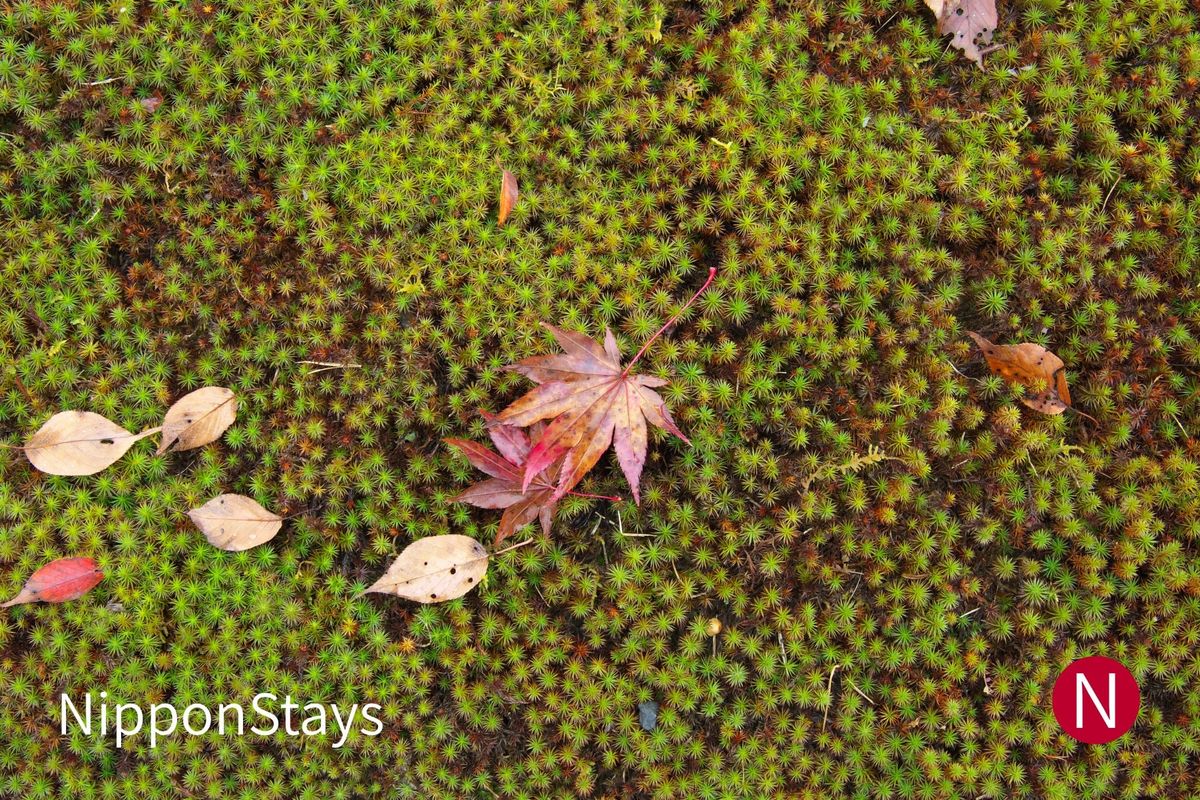
Wet leaves photograph better than dry ones for a simple reason: water saturates color and cuts the glare that washes out a maple canopy in full midday sun, so red and orange read as more intense in a rain-day photo than in a bright one. Rain also thins the crowds that build at famous viewpoints, because day-tour buses and casual walkers are the first group to cancel; the people who show up anyway skew toward travelers who already booked a hotel for that date rather than picked the day off a forecast. The tradeoff runs the other way at anything built around distance: a mountainside seen from a ropeway car, a bridge shot against a clear sky, a garden meant to be framed with a mountain behind it — fog erases all of it, and no amount of saturated color makes up for a view that simply is not there that day.
One caveat applies to every price quoted below: November is peak season at all five properties in this guide, so the from-rates here — checked against each hotel's own booking page or a recognized ryokan agent in August 2026 — reflect a typical off-peak night, not a specific November Saturday. Prices are from-rates for two guests with the meal plan noted; read them as a ranking of which property costs more than which, not as a live quote, and remember that the cheapest room grade at the smaller ryokan sells out months before the season starts.
By place type: where a wet day helps, and where it costs you the trip
| Place type | Rain: better or worse | What to wear | Indoor fallback | From price (2 guests) |
|---|---|---|---|---|
| Misty gorge trail (Oirase, Aomori) | Better — moss saturates, mist thickens between the cedars | Waterproof shoes, a real rain jacket over an umbrella | Hotel's own onsen bath, 0-min walk | From ¥50,200 (Oirase Keiryu Hotel, two meals) |
| Private moss garden ryokan (Yamashiro Onsen, Kaga) | Better — wet stone and moss deepen in color, the garden empties out | Ryokan slippers indoors, an umbrella for the covered garden path | Covered veranda around the garden, 0-min walk | From ¥150,000 (two meals) |
| Ropeway or elevated viewpoint (Hakone, Nikko) | Worse — fog erases the view; service can suspend above roughly 30 m/s wind | Not worth dressing for; rebook for a clear-weather day instead | Ryokan garden or museum galleries nearby, 5-to-12-min walk | From ¥152,000 (Gora Kadan, two meals) |
| Illuminated garden light-up (Kenrokuen, Kanazawa) | Mixed — the light-up runs rain or shine, but paths turn slick and reflections change the photo | Non-slip shoes, a compact umbrella (large ones jam the paths) | A city hotel a short walk or taxi from the garden gate | — |
| City hotel connected to the station (Osaka) | Better by default — a full day never touches the outside air | Whatever a person would wear indoors | Itself: shops, food halls, and a spa without stepping outside | From ¥18,000 (Hotel Granvia Osaka, room only) |
Where rain improves it: gorges, moss gardens, and covered arcades
Oirase Gorge is the clearest case of rain working in a traveler's favor, because the entire route is a shaded riverside trail through cedar and moss rather than a distant panorama. Hoshino Resorts Oirase Keiryu Hotel sits directly on that trail in Towada-Hachimantai National Park, so a guest can step out the door onto the gorge path itself rather than driving or busing to a trailhead; a companion piece already compares basing at Oirase against basing at nearby Lake Towada for travelers weighing which side of the park to sleep on. The same logic holds at Yamashiro Onsen in Kaga, where several of the area's ryokan, including Beniya Mukayu, are built around a private moss-and-stone garden rather than a viewpoint; wet moss reads a deeper green than dry moss, and a rain-day guest often has the garden path to themselves. Miyajima's Omotesando shopping street offers a lower-stakes version of the same idea away from any single hotel: the 350-meter arcade runs a retractable canopy the length of the street, so a rain-day visitor can still eat and shop under cover between ferry crossings. Anyone choosing a ryokan mainly on this logic — garden or gorge visible from the room itself — can browse the wider set of options in the site's onsen ryokan area-by-area guide.
Where it does not: viewpoints, ropeways, and light-ups built for a clear sky
Ropeways and elevated observation decks are the opposite case, because their entire value is a long-distance view that fog simply deletes. The Hakone Ropeway, which most visitors ride to or from Gora Kadan's home area of Gora and Owakudani, suspends operation at wind speeds of roughly 30 m/s or higher and switches to a substitute bus route between Sounzan and Togendai until conditions clear (checked August 2026) — heavy rain alone does not always stop it, but the wind that often travels with a strong front does. Nikko's Akechidaira Ropeway, the classic viewpoint halfway up the Irohazaka road, closed for renewal after January 15, 2026 and is not due to reopen until September 2027 (checked September 2026), so for autumn 2026 the observation elevator at nearby Kegon Falls is the one that matters; it runs its own weather holds and is worth checking on the day rather than assuming the morning forecast settles it. Chuzenji Kanaya Hotel, on the Lake Chuzenji shore below the falls, at least keeps the lake and its own maples visible from the dining room when the viewpoints are fogged in. Kenrokuen's autumn light-up in Kanazawa is scheduled on specific evenings — November 7, 14, 15, 21, 22, 28, and 29, 2026, from 18:00 to 20:45 (checked August 2026) — and does not cancel for rain, but a wet path under lantern light photographs very differently from a dry one, and a first-time visitor expecting the dry-night version should adjust accordingly. Kyoto's temple gardens have their own detailed rainy-day itinerary already published, covered in a dedicated Kyoto piece; this guide stays with the rest of the country rather than repeating that ground.
Choosing a hotel that gives you a rain day, not a ruined one
A hotel earns its place in this guide by giving a guest something worth doing without leaving the building, and that turns out to split the five properties covered here into two groups. Of the five stays in this guide, three — Oirase Keiryu Hotel, Beniya Mukayu, and Gora Kadan — put a garden, gorge, or private view inside the stay itself, so a washed-out day doesn't cost the reason the room was booked in the first place (checked August 2026). The other two, Chuzenji Kanaya Hotel and Hotel Granvia Osaka, work by a different logic: neither promises a rain-proof view, but both sit close enough to an indoor alternative — a lakeside lodge, or a station concourse full of shops and restaurants — that a rain day still has a plan. Travelers building a longer itinerary around the wider country can check regional timing against the site's north-to-south autumn leaves guide before locking in which week to book any of these.
Five stays for a rainy autumn leaves trip
| Name | Area | From price (2 guests) | Best for | Walk to the leaves |
|---|---|---|---|---|
| Hoshino Resorts Oirase Keiryu Hotel | Towada, Aomori | From ¥50,200 for two (two meals) | A gorge that looks better wet | 1-min walk to the Oirase Gorge trail |
| Beniya Mukayu | Yamashiro Onsen, Kaga | From ¥150,000 for two (two meals) | Sitting out a wet day inside a private garden | 0-min walk, garden is on-site |
| Gora Kadan | Gora, Hakone | From ¥152,000 (two meals) | Swapping a fogged-out ropeway day for a garden and onsen | 0-min to the private garden; 12-min walk to Gora Park |
| Chuzenji Kanaya Hotel | Lake Chuzenji, Nikko | From ¥28,000 (room only) | A lakeside base when the Akechidaira Ropeway is socked in | 3-min walk to the lakeside promenade |
| Hotel Granvia Osaka | Umeda, Osaka | From ¥18,000 (room only) | Giving up on the day trip and doing Osaka indoors | 0-min walk, directly connected to Osaka Station |
FAQ: Rain on an Autumn Leaves Trip
Do ropeways stop running in the rain?
Rain alone rarely closes a ropeway, but the wind that often arrives with it does. The Hakone Ropeway suspends service at wind speeds of roughly 30 m/s or higher and runs a substitute bus route between Sounzan and Togendai until conditions clear (checked August 2026, hakonenavi.jp). Nikko's Akechidaira Ropeway sets its own weather holds separately, so checking the specific operator's site on the day beats relying on the general forecast.
Which gardens actually look better wet?
Moss and stone gardens are the clear case: the ryokan gardens around Yamashiro Onsen in Kaga and the mossy riverbank along the Oirase Gorge both deepen in color and empty of day-trippers once rain sets in. Gravel-and-pond gardens or paths built around a single distant skyline mostly just turn slippery underfoot without gaining anything visually in return.
Is November a wet month in Japan?
It depends on the coast. The Sea of Japan side, including Kaga and Kanazawa, is one of the country's wetter regions in November, picking up more rain days than most of the country as the seasonal jet stream funnels moisture against the Hokuriku mountains; the Pacific side, including Nikko, Hakone, and Osaka, tends toward more settled, drier autumn weather once the seasonal rain front clears through October.
Is there an indoor plan for each of these regions?
Yes. Aomori's fallback is the Oirase Keiryu Hotel's own riverside walk and bath; Kaga's is the ryokan gardens of Yamashiro Onsen; Hakone's is Gora Kadan's private garden plus the covered galleries at the nearby Hakone Open-Air Museum; Nikko's is the Chuzenji Kanaya Hotel's lakeside lodge; and Osaka's is Hotel Granvia Osaka, which never requires stepping outside JR Osaka Station's concourses.