Kiroro Ski Resort Guide: Nagamine, Yoichi, Asari, Center
Kiroro ski resort guide to its four zones — Nagamine, Yoichi, Asari and Center — with terrain, season timing, wind holds and where to stay.
This Kiroro ski resort guide starts from one idea: Kiroro is not one mountain — it is three, plus a base area, and which one you ride decides your day. Nagamine has the fastest lift and the widest terrain on its No.2 side, but its No.1 run is graded beginner and is the right call with kids or on a first Japan powder trip. Yoichi looks gentle on the map, but its steepest pitches run harder than the label suggests — a step up once turns feel steady, or the easier way down if you end up there by mistake. Asari is gondola-access-only now and holds the steepest, best-holding snow. Center is the lap machine — about 10 minutes a circuit — for building mileage. A day pass for the 2026-27 season runs from ¥5,800 in early and spring season to ¥9,200 in high season (Dec 12, 2026–Apr 11, 2027), published on Kiroro's official lift price page (checked August 2026), and the one thing that flips this whole plan is wind: it shuts Nagamine's second lift and the gondola before anything else, which changes which of the four zones is worth skiing that day.
The four-zone frame: three mountains and one base area
Kiroro is built across two connected peaks — Nagamine and Asari — with Yoichi as a third, distinct sector served by its own lifts, and Center as the base area between them. Most English-language coverage treats the resort as a single block reached by "the gondola" and "some lifts." That flattens the one thing a first-time visitor needs to know: which zone matches their level and reason for coming. This guide is organized by zone for that reason, and every other article in this cluster picks up one sub-question — season, powder, crowds, tickets — from inside this same frame.
Kiroro's official course map lists 23 marked courses served by ten named lifts, of which nine run — the Asari No.1 pair has not turned for three seasons, through 2025–26 (our writer skis here about 30 days a season). One of the ten is a gondola — the Kiroro Gondola, running 3,300m up to Asari. The longest run, the Asari Dynamic Course, is roughly 4,050m, and the summit sits at 1,180m (Kiroro's official course guide, checked August 2026).
Kiroro in numbers
Every figure below is from Kiroro's own published material and was checked in August 2026. Where the resort has not yet published a 2026-27 value, the previous season's figure is labelled as such rather than carried forward silently.
| Figure | Source and date | |
|---|---|---|
| Season | 28 Nov 2026 – 5 May 2027 (published as provisional) | Official season table, checked Aug 2026 |
| Day pass | ¥5,800 early and spring season; ¥9,200 high season (12 Dec 2026 – 11 Apr 2027) | Official lift price page, checked Aug 2026 |
| 4-hour pass | ¥5,500 early and spring; ¥7,800 high season | Official lift price page, checked Aug 2026 |
| Lifts | 10, of which one is a gondola | Official course map, checked Aug 2026 |
| Marked courses | 23 | Official course map, checked Aug 2026 |
| Longest run | 4,050m (Asari Dynamic Course) | Official course guide, checked Aug 2026 |
| Gondola length | 3,300m to Asari | Official course guide, checked Aug 2026 |
| Summit | 1,180m | Official course guide, checked Aug 2026 |
| Designated tree-run areas | 14; opened area by area on the day, rescue inside them is billed | Official tree-run guide, checked Aug 2026 |
| Night skiing | Center zone only, to 19:00 (2025-26 actual; 2026-27 hours unpublished) | 2025-26 season, checked Aug 2026 |
Two numbers you will see elsewhere are missing here on purpose: base elevation and the beginner/intermediate/advanced split. Kiroro does not publish either in a form we could verify, and the third-party figures in circulation disagree with each other — one widely quoted page still lists 21 courses against the map's 23. A number we cannot source is worse than no number.
At a glance: the four zones compared
| Zone | Access | Level | Best for | Watch out for |
|---|---|---|---|---|
| Yoichi | Own lift line (blue on map) | 1-A intermediate; 1-B beginner but steep (max ~25°); 2-A beginner practice; 2-B advanced | A step up once steady on Nagamine No.1; 2-A easy mileage, 2-B mogul practice | 1-B's beginner label undersells its pitch — not for a true first-timer |
| Nagamine | No.1 (beginner) and No.2 (high-speed) | No.1 is beginner-graded; No.2 opens onto wide upper terrain | No.1 for first-timers and families; No.2 for wide groomers once open | No.2 typically shut into early January; first on wind hold |
| Asari | Gondola only (lift-to-lift route removed) | Steepest terrain on the hill | Best-holding powder on the hill (No.2 A side snow) | No lift shortcut in; gondola is a wind-hold lift too |
| Center | Center lift, base area | Lap zone, about 10 minutes a circuit | Fast laps (~10 min/circuit), night skiing | Center A often reserved; Center B sometimes flagged for pole training — never ski a flagged course |
Yoichi: the blue-lift side, and why the grading is misleading
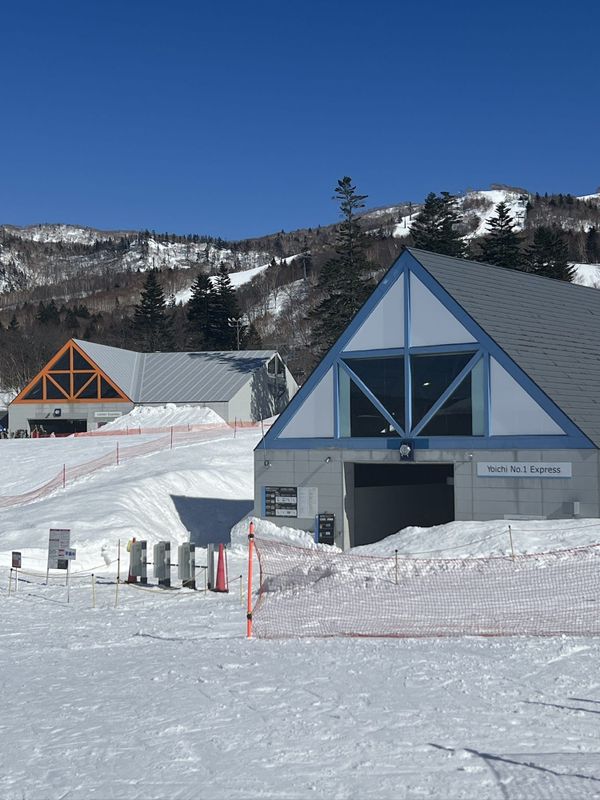
Yoichi is served by its own lift line — marked blue on the trail map — and feeds two main runs, officially graded Yoichi Course 1-A (intermediate) and 1-B (beginner). The numbers tell the real story: 1-A runs about 1,950m with a maximum pitch of 25.7 degrees (roughly 48% grade), and 1-B runs about 2,050m with a maximum of 25.4 degrees (roughly 47% grade) — a beginner-graded run with an intermediate run's steepness. That gap is why we do not send first-time skiers to Yoichi, even though the blue lift line looks inviting on the map.
Behind the main pitch sit Yoichi Course 2-A and 2-B. 2-A is officially grouped with the terrain behind Yoichi rather than graded on its own, but it rides as a gentle practice slope — a regular's read over roughly 30 days a season — though moguls can build up by the end of the season. 2-B is graded advanced: short, left ungroomed with moguls, better suited to practicing technique than to banking easy mileage. Once turns feel steady on Nagamine No.1 (see below), Yoichi 1-A and 1-B are the natural next step; if you end up here by mistake before you're ready, 1-B is the easier way back down — steep for a beginner run, but less steep than the alternative.
Nagamine: where beginners start, and the fast lift for everyone else
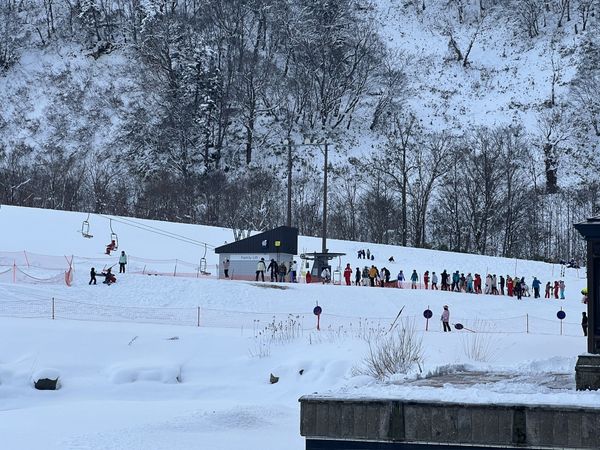
Nagamine No.1 is graded beginner, and it's the run we point first-timers and families to before anywhere else on the mountain — including Yoichi, whose blue lift line looks gentler on the map than it actually rides. The usual progression: Family lift at the base first, Nagamine No.1 once you can link a turn, and only then Yoichi 1-A and 1-B. For the full walkthrough — lift approaches, unload ramps, what to skip — see our guide to Kiroro for kids and beginners.
Nagamine No.2 is a different lift entirely: the fastest on the hill, opening onto wide, satisfying terrain — broad enough that even when there is a line, it moves. The catch is timing: in my experience over roughly 30 days a season here, Nagamine No.2 has typically not opened until early January, because snow coverage on that upper section builds more slowly than elsewhere. That changes a New Year trip planned around this lift — we could not corroborate an exact opening date against Kiroro's published season records, so treat it as a regular's observation, not a guarantee.
The lift itself rarely backs up; the approach to the lift base gets crowded, since it draws a wide mix of ability levels funneling through one entry point.
Asari: gondola access only now, and the steepest terrain on the mountain
Asari used to be reachable by lift-to-lift travel from the other zones; in recent seasons that connection has been removed, and the gondola is now the only way up. An older blog post or forum thread describing a lift route into Asari is describing a version of this resort that no longer exists.
What you get for the gondola ride is the steepest terrain on the hill. The side snow off Asari No.2 A holds up particularly well after a storm, in my experience over roughly 30 days a season — the run I point powder-focused visitors to first once the gondola is running.
Center: 10-minute laps, and the poles you must never ski through
Center is the base-area zone, and its main draw is lap speed: a circuit runs about 10 minutes door to door, making it the place to bank runs rather than find your hardest terrain.
One safety point matters here: Center A is frequently reserved for training and closed to general skiers, and Center B is sometimes flagged off on the left and right for pole training — ski or race clinics using gates. If you see poles set on either side of a run at Center, that section is not open terrain even if the lift above it is running. Do not enter a flagged course; it is reserved, not merely busy.
Powder Ride and what "off-piste" means at Kiroro
From the top of the gondola, ride to the Center Link and you reach Powder Ride: a large face left deliberately ungroomed rather than a backcountry gate. It typically opens around 9:15, a little after the mountain's general 9:00 opening, since it needs its own check first. Ungroomed here does not mean out of bounds or unpatrolled: Powder Ride and the Asari No.2 A side snow described above both sit inside the marked boundary and the rope line, under regular patrol, the same as any groomed run — rescue there is the ordinary kind, at no extra charge.
Powder Ride is not the same thing as Powder Ridge, and English-language pages that use the names interchangeably mean two different places. Powder Ridge is one of Kiroro's 14 designated tree-run areas, entered only through a signed entrance and open on a day-by-day basis — Kiroro runs its tree-run areas 09:00–14:30 but patrol can close any of them regardless, so check the board first. The resort asks you to carry the free Yukiyama GPS app inside, and a helmet is strongly recommended (Kiroro's official tree-run guide, checked August 2026), and rescue there is charged, unlike inside Powder Ride. Know which of the two you are skiing before you go in.
That is why there is no reason to duck the rope anywhere on this mountain: the in-bounds terrain already holds this much untouched snow through Powder Ride and the marked tree-run entrances on a good day. Ropes mark the edge of patrolled ground, not a suggestion — cross one and patrol responds quickly, and the resort can pull your lift pass for the day, or worse, for the season.
Season, snow and wind in one screen
Kiroro's season has typically opened in late November and run into early May, though how much terrain is skiable at each end varies more than the headline dates suggest — our season guide breaks this down month by month. The other variable that reshapes a day here is wind: Nagamine No.2 and the gondola sit highest and most exposed, and are first on wind hold, turning a planned Nagamine or Asari day into a Yoichi-and-Center day with little notice.
Lifts, tickets and getting here
A day lift pass for the 2026-27 season runs from ¥5,800 (early and spring season) to ¥9,200 (high season, Dec 12, 2026–Apr 11, 2027) at the ticket window; the 4-hour pass runs from ¥5,500 to ¥7,800 over the same bands, published on Kiroro's official lift price page (checked August 2026). Our lift tickets guide breaks down the 4-hour option against the day pass. For getting to the resort, see getting to Kiroro from New Chitose Airport; for a storm day around the first gondola, see the powder guide, and for month-by-month conditions, see when to go.
What time do Kiroro's lifts close?
Kiroro sets its daytime closing time by the daylight rather than holding one fixed hour, which is why a single closing time quoted for this resort is usually wrong.
| When | Daytime lifts close |
|---|---|
| Midwinter (December–January) | around 15:30 |
| March, as the days lengthen | progressively later |
| End of the season (spring) | nearer 16:15 |
Lifts open at 09:00 throughout. Two parts of the mountain run on their own clock: Center Express carries the night session until 19:00 in high season, and the designated tree-run areas hold a fixed 09:00–14:30 all season. That 14:30 is a deliberate margin rather than a daylight cut-off, so unlike the lifts it does not move as the season turns — though patrol is still free to close any tree-run area on the day. A 16:15 finish belongs to the end of the season, not to January — plan a January trip around a late-afternoon run and you are planning around 45 minutes that do not exist (2025-26 actuals, checked August 2026; 2026-27 hours are not yet published).
Where to stay
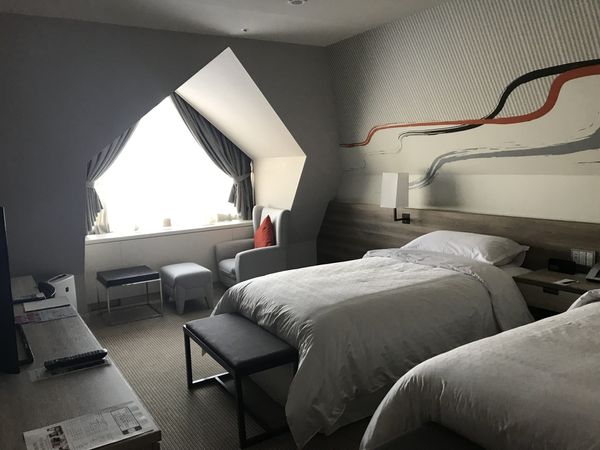
Slope-side puts you closest to the first gondola and the fastest exit at day's end; basing in Otaru trades a short bus ride for more restaurant variety, since the on-mountain hotel restaurants stopped serving non-guests after the Club Med conversion. Our full where to stay at Kiroro guide covers that trade-off; the table below lists the three slope-side properties.
| Name | Area | Price range | Best for |
|---|---|---|---|
| Club Med Kiroro Grand | Kiroro base | All-inclusive package rate; varies by season | Families, all-inclusive dining |
| Club Med Kiroro Peak | Kiroro base | All-inclusive package rate; varies by season | Couples, Exclusive Collection service |
| Yu Kiroro | Kiroro base, ski-in/ski-out | Nightly room rate; varies by season and unit | Self-catering, longer stays |
Check rates for Club Med Kiroro Grand · Check rates for Club Med Kiroro Peak · Check rates for Yu Kiroro
Deciding between the two? See how Kiroro compares with Niseko on snow and crowding, or the wider picture in our Japan ski-base guide.
Deciding how many nights Kiroro deserves before the terrain starts repeating? how many days Niseko, Kiroro and Rusutsu each hold compares it side by side with Niseko and Rusutsu on size rather than snow quality.
FAQ: Kiroro ski resort
Is Kiroro good for beginners?
Yes — start on the Family lift, then move to Nagamine No.1; both are graded beginner and ski that way. Yoichi looks gentle on the map, but 1-B (officially beginner) has a maximum pitch of 25.4 degrees, so save it for after a few days on Nagamine No.1.
What is the difference between Kiroro's four zones?
Nagamine pairs the recommended beginner run (No.1) with the fastest lift and widest terrain on No.2, though No.2 opens late most seasons; Yoichi's runs are steeper than their grading suggests, so it works better as a next step; Asari is gondola-only and the steepest; Center is built for fast, repeatable laps.
Can I ski off-piste at Kiroro?
Kiroro leaves large sections, including Powder Ride and the side snow off Asari No.2 A, deliberately ungroomed but still inside the boundary and rope line, under patrol — normal, free terrain to ski. The 14 designated tree-run areas are a separate layer: open day-by-day through signed entrances, with rescue charged if patrol has to come get you. Ducking the rope to leave the patrolled area entirely is neither — it is enforced not by a fee, but by patrol pulling your lift pass.
How many lifts and courses does Kiroro have?
23 marked courses served by ten named lifts, of which nine actually run (the Asari No.1 pair has not turned for three seasons, through 2025–26). Several are high-speed quads, and one is a gondola — the Kiroro Gondola, running 3,300m up to Asari. The longest run is the Asari Dynamic Course at roughly 4,050m, and the summit sits at 1,180m (Kiroro's official course guide, checked August 2026).
What time do the lifts close at Kiroro?
There is no single answer, because Kiroro moves its daytime closing time with the daylight: around 15:30 in midwinter, progressively later through March, and nearer 16:15 by the end of the season. Lifts open at 09:00 year-round. Center Express runs on to 19:00 for the night session in high season, and the designated tree-run areas hold a fixed 09:00–14:30 all season — that 14:30 is a deliberate margin, not a daylight cut-off (2025-26 actuals, checked August 2026).