Japan's Ski Rope Rules: Out-of-Bounds and Tree Wells
Japan's ski rope rules: Niseko's 11 gates, Kiroro's off-piste areas, and Rusutsu's boundary system, and what crossing a rope actually costs you.
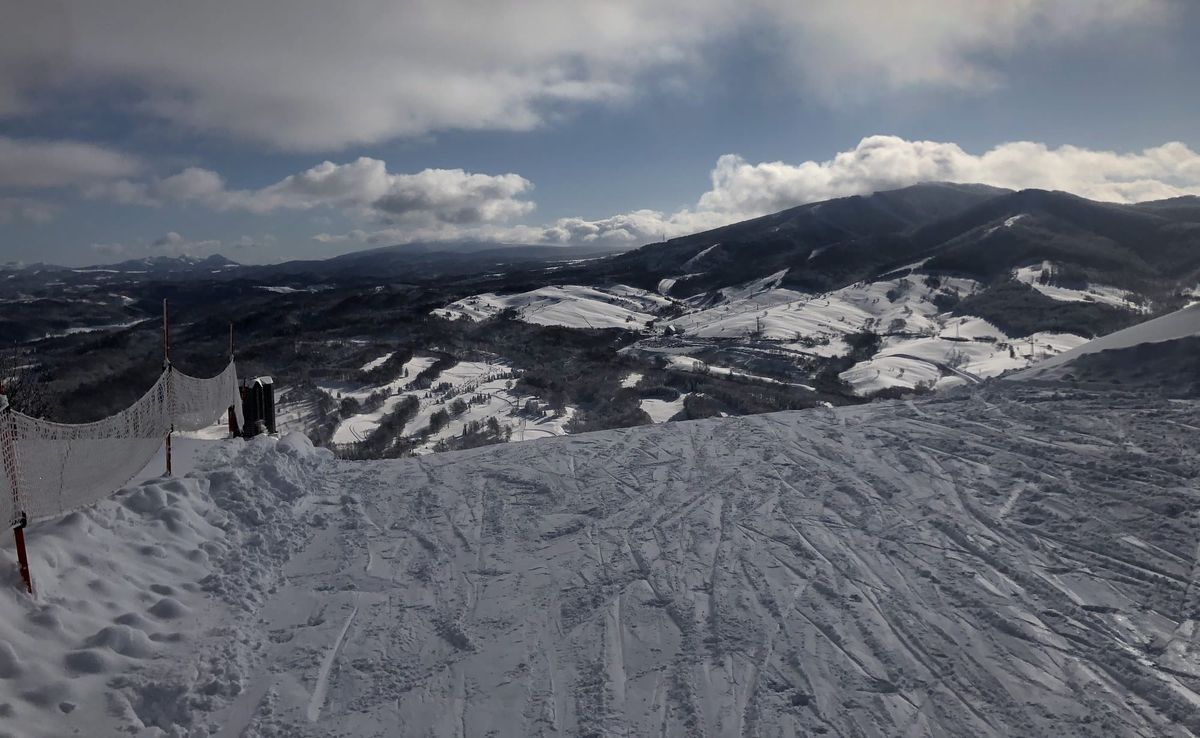
Japan's ski rope rules boil down to one idea across every resort in this guide: the rope, or the resort boundary itself, is a legal line, not a recommendation. Niseko and Kiroro both run marked gates that patrol opens and closes daily, and ducking one instead of waiting for it to open gets a lift pass confiscated on the spot, sometimes for the rest of the trip. Rusutsu skips gates entirely — it opened almost all of its in-bounds terrain instead, so there is no legal way to leave its boundary at all. Which answer applies to you can change hour to hour, because every gate can close the moment the day's avalanche bulletin turns.
One rule explains most of it: the rope is a legal line, not a suggestion
Every Hokkaido resort covered here treats the rope, or the boundary it stands in for, as something you are not supposed to argue with. Niseko's official rules state plainly that skiers must "always use gates when entering backcountry areas" and must not "duck boundary ropes"; violators "may be banned from using the resort facilities by having their lift-pass confiscated and/or refused to reissue a new pass." Kiroro's published policy is just as direct: ducking a rope carries an immediate lift ticket cancellation, and reaching the backcountry from the car park or a private road instead of the resort's own gate is explicitly forbidden. Rusutsu takes a different approach rather than a softer one: it has no gate network at all. The resort opened nearly all of its in-bounds, treed terrain years ago and calls the result "in-bounds backcountry" — so there is simply no rope to duck, only a hard boundary you are expected never to cross.
Gate counts and penalties as published by each resort, checked September 2026; 2026-27 gate operation is not published separately.
| Resort | Gate system? | Gates or named off-piste areas | Where daily status is posted | Penalty for ducking a rope |
|---|---|---|---|---|
| Niseko United & Moiwa | Yes — numbered gates | 11 gates | niseko.nadare.info, updated every morning; also flagged at the gates and lift stations | Lift pass confiscated; reissue can be refused for the rest of the trip |
| Kiroro | Yes — one designated backcountry gate | 14 named in-bounds off-piste areas, plus the backcountry gate | Kiroro Mountain Center desk and the resort's own policy page | Lift ticket cancelled on the spot; can be asked to leave without a refund |
| Rusutsu | No — no legal gate out | 0 sanctioned exits; nearly all in-bounds treed terrain is opened instead | General safety notice on rusutsu.com, not a day-to-day board | No rope to duck; crossing the boundary is treated as a rescue bill, not a ticket |
How the gates are opened and closed
Patrol makes the daily call, fresh each morning rather than set once for the season. At Niseko, the gates sit under the Niseko Annupuri Avalanche Prevention Committee, tied to Niseko Town Hall's Commerce and Tourism Division; its daily bulletin at niseko.nadare.info is written in English every morning by longtime locals, and it is the same information patrol uses to open or hold each of the 11 gates. If you haven't settled on a Niseko base yet, our Niseko where-to-stay guide covers which of the four areas puts you closest to a gate. Kiroro runs a single designated backcountry gate, next to the top station of the Gateway Express lift by the Kiroro Mountain Center, and anyone heading through it is expected to have filed a climbing plan first. Rusutsu has nothing to open or close in the same sense — its in-bounds tree-run network is either skiable that day or marked closed, the same as any groomed piste, and its own materials warn skiers away from the ridgeline between Mt Isola and East Mountain with signage rather than a gate. Wind closures are a separate, more everyday problem; see our guide to Kiroro's lift queues and wind holds for how often that happens.
What "self-responsibility" actually means here
"Self-responsibility" is not a waiver you can shrug off — every resort here attaches a real bill to it. Niseko's rules state a minimum charge of ¥100,000 for search-and-rescue in its backcountry areas, on top of any lift pass consequence. Rusutsu is more specific about what that bill can include: a skier found negligent of the boundary rules is liable for search-and-rescue labor, snow-clearing equipment, cableway operating costs, and even lighting and electricity, and the resort disclaims responsibility for accidents among rule violators. Kiroro's equivalent is procedural rather than itemized: unauthorized backcountry access can mean being asked to leave without a refund, on top of any rescue charge. None of the three publish what your own travel insurance would cover in a rescue like this, so that is worth confirming before you go, not after.
Equipment requirements track the same split. Niseko's rules say backcountry users should wear a helmet and carry an avalanche beacon, and "very highly" recommend adding a probe and shovel; Kiroro's climbing-plan process expects beacon, probe, and shovel as a set. Carrying the gear only helps if you already know how to use it — a skill worth practicing before the trip, not on the mountain. That is separate from what you'd wear on an ordinary groomed day; our Hokkaido January packing guide covers that.
Tree wells are the hazard nobody plans for
A tree well is not a wind feature or a drift — it is the empty space that a tree's own lower branches keep snow from filling, and it grows deeper with every storm that piles snow around the trunk instead of into it. Falling into one headfirst can trigger snow-immersion suffocation (SIS), where the fall dislodges more snow from the branches above and buries the person further; research collected by the US Deep Snow Safety project found that roughly 90% of people involved in tree-well and SIS hazard research could not rescue themselves, and the risk peaks during and right after heavy snowfall — exactly the conditions that draw skiers to Hokkaido's tree runs. A Japan-specific version of that statistic is not published; this is the same figure cited by ski patrols and avalanche-safety organizations across North America. None of this requires crossing a rope. Kiroro's 14 named off-piste areas sit inside the resort boundary and are reached through a gate, not through solo skiing off a groomed run into the trees; the hazard tracks which runs are treed and ungroomed, not which side of a gate a skier is on. The precaution is simple and unglamorous: ride glades with a partner who keeps you in sight, not just in earshot, and agree on a spot to regroup at the bottom of every run.
What I can and cannot tell you from riding here
I ski Kiroro most winters — around 38 days a season over the last five years — and this section is limited to what that actually covers: groomed terrain, how crowded the lifts get, and when the season is best. Crowding is genuinely rare, worth planning around rather than dreading, and it clusters into roughly ten days most seasons: December 29 to January 3, the mid-January long weekend, and the odd day when Niseko's snow doesn't deliver and day-trippers redirect. Late January is consistently the strongest stretch; late November tends to run short on snow, though the exact 2026-27 dates are worth checking against our Hokkaido ski season dates guide. None of that touches Kiroro's backcountry gate — I have not gone through it, and I have not ridden the marked off-piste terrain at Niseko or Rusutsu either, so the gate mechanics, penalties, and tree-well hazard above all come from each resort's own published rules, not personal experience. For groomed-run tactics, our Kiroro first-tracks guide covers that separately.
How much of this you can actually check yourself
Of the three Hokkaido resorts checked for this guide, only one — Niseko — publishes a daily, English-language gate and avalanche bulletin; Kiroro and Rusutsu each post their rules as a static policy page, with no running update in English (checked September 2026). That gap matters for planning: at Niseko you can read the morning's bulletin from your hotel before deciding whether a gate is worth the walk, while at Kiroro and Rusutsu the only way to know today's status is to ask at the mountain center or read the hill itself. Whichever resort you land on, our guide to Japan ski hotels that actually sleep four and the wider Japan ski hub cover the rest of the booking decision.
| Situation | What the resort expects | What happens if you ignore it |
|---|---|---|
| A gate is open | Enter with a beacon (and, at Kiroro, a filed climbing plan) | Nothing — this is the sanctioned way to reach ungroomed terrain |
| A gate is closed | Wait; conditions can reopen it later the same day | Same as ducking a rope: pass confiscation at Niseko, ticket cancellation at Kiroro |
| Ducking a rope instead of using a gate | Never permitted, even while a nearby gate is open | Pass confiscated or cancelled — the penalty does not depend on conditions |
| Crossing Rusutsu's boundary (no gate exists) | Do not leave the marked in-bounds terrain at all | Full liability for search-and-rescue, equipment, and cableway costs if rescued |
| Entering a strictly off-limits area (e.g. Niseko's Yu no Sawa, Haru no Taki) | Stay out regardless of the day's avalanche rating | Same confiscation as ducking a rope — these zones are closed for reasons beyond snow safety |
FAQ: Out-of-bounds skiing in Japan
How many gates does Niseko have, and where do I check if they're open?
Niseko United and Moiwa share 11 gates in total, managed under the Niseko Annupuri Avalanche Prevention Committee. The daily English-language bulletin is posted every morning at niseko.nadare.info, and the same open-or-closed status is flagged at the gates and lift stations themselves.
What actually happens if I duck a rope instead of using a gate?
At Niseko, patrol can confiscate your lift pass on the spot, and the resort's own rules allow refusing to reissue it for the rest of your trip. Kiroro cancels the ticket immediately and can ask you to leave the resort without a refund — neither resort treats this as a warning-first offence.
Can I ski out of bounds at Rusutsu the way I can at Niseko?
No. Rusutsu has no gate system at all — instead of managing exits, it opened up nearly all of its in-bounds treed terrain, so there is nothing comparable to Niseko's backcountry to duck into. Anything past the resort's actual boundary is out of bounds at all times, with full rescue costs billed to a skier found negligent.
How deep can a tree well get, and what should I actually do about it?
A tree well deepens with every storm that piles snow around a trunk instead of filling the space beneath the lower branches, and a headfirst fall into one can trigger snow-immersion suffocation — roughly 90% of people caught this way cannot get out alone. Ride treed, ungroomed runs with a partner who keeps you in sight, not just in earshot, and agree on a regroup point at the bottom of every run.