What to Wear in Hokkaido in January: Layers for -10C Days
Layering for Hokkaido's dry January cold: JMA temperature data, why footwear fails first, and Sapporo hotels with laundry, drying, or a hot-spring bath.
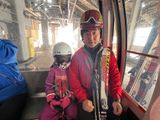
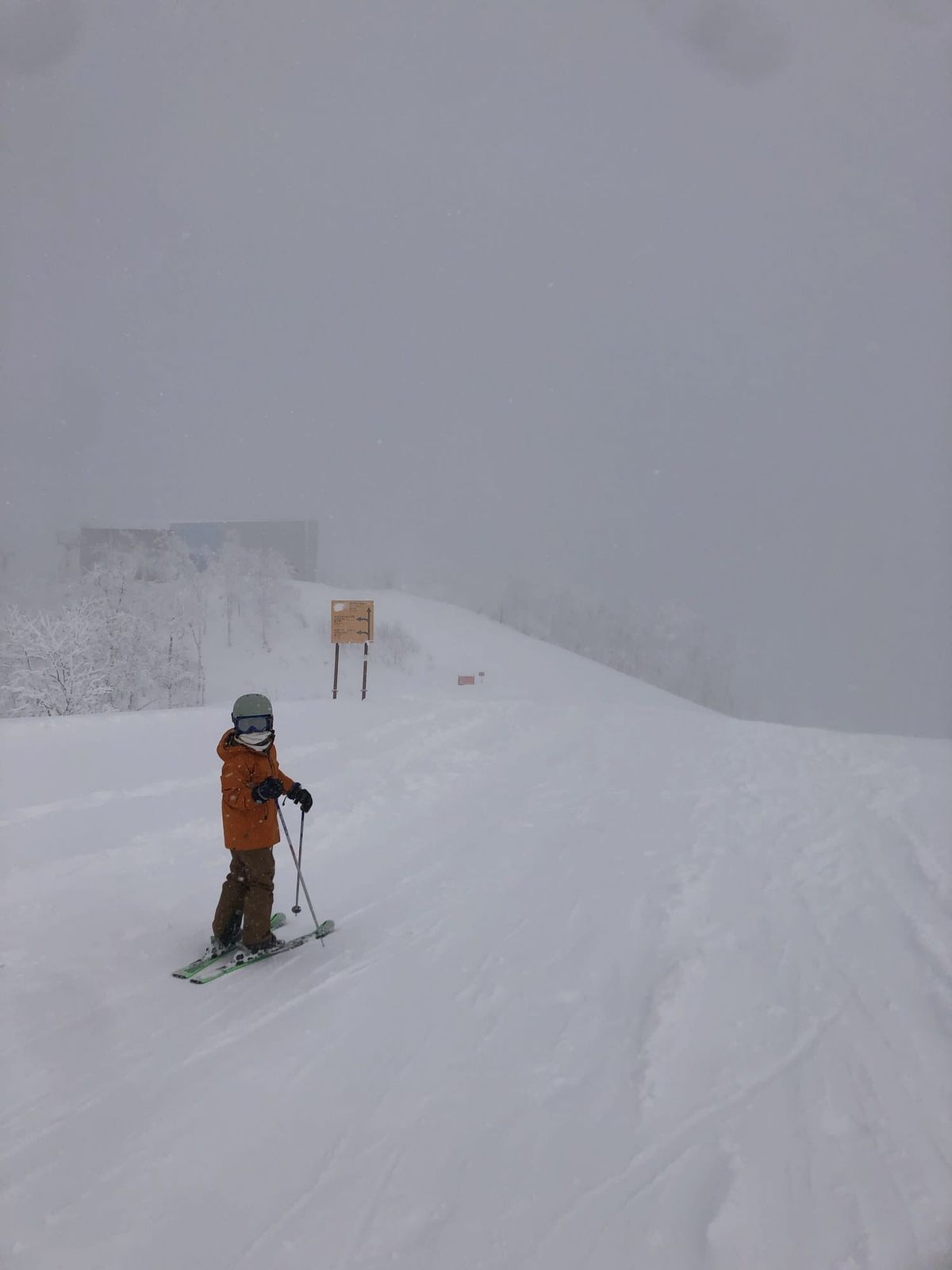
What to wear in Hokkaido in January comes down to two things visitors consistently get wrong: footwear, and the swing between outdoor cold and indoor heat. The cold itself is dry rather than damp, so a three-layer system built around a wicking base layer, an insulating mid layer, and a windproof-not-just-warm shell covers most days outdoors; the layer that comes off matters more than the one that goes on, because trains, department stores, and hotel lobbies across Hokkaido are commonly heated into the low-to-mid 20s Celsius. Onsen Ryokan Yuen Sapporo gives wet gear somewhere to dry and a hot-spring bath to thaw out in from ¥29,800 for two, room-only, and Cross Hotel Sapporo lends a humidifier and takes laundry at reception from ¥9,000 for two, room-only (rates checked August 2026, both vary by season). The answer changes for a ski trip, where a resort's own rental counter covers most of the outer layers anyway.
The Temperature Reality
Hokkaido's January is not one climate but several, and the difference between a Sapporo city trip and an inland or mountain base is large enough to change what belongs in the bag. Night lows across the region cluster around -10C rather than sitting at one fixed number: Sapporo's own average night runs -8 to -9C and its coldest nights of the month fall near -17C, while inland Asahikawa averages a colder -13C overnight, so a traveler splitting time between a city stay and an inland or mountain base should pack for -10C nights as the practical middle of that range, not just for Sapporo's milder average.
| Location | January mean | Typical night low | Coldest extreme | Typical heated interior | Checked |
|---|---|---|---|---|---|
| Sapporo | -3.2C (JMA 1991-2020 normal) | Around -8 to -9C on an average night | Coldest nights of the month typically fall near -17C | 20-24C in lobbies, trains, and shops | Aug 2026 |
| Asahikawa | Roughly -8 to -9C (aggregator average; not a JMA-published normal) | Around -13C on an average night | Japan's national record low, -41.0C, was set here on January 25, 1902 | Same regional heating norm as Sapporo | Aug 2026 |
| Otaru | Roughly -5C (aggregator average; coastal, milder than inland) | Around -8C on an average night | No extreme comparable to Asahikawa on record | Same regional heating norm as Sapporo | Aug 2026 |
| Ski resort base towns (Niseko/Kutchan area) | Roughly -4 to -5C (aggregator average, heavy-snowfall band) | Around -7C on an average night | Extreme cold is less of a factor here than snowfall volume | Lodges and gondola base buildings heated similarly | Aug 2026 |
Of the four locations above, only Sapporo's figure comes from a published Japan Meteorological Agency climatological normal; the other three are averaged from third-party weather aggregators and should be treated as directionally correct rather than official (checked August 2026). Hokkaido-wide, one insulation-industry survey puts the average heated living-room temperature at 19.8C in winter, a household figure that runs cooler than the "heated interior" column above, since that column describes lobbies, trains, and shops rather than homes, and commercial and transit spaces are typically kept warmer than a private living room.
The Layering Rule That Follows From the Data
A working system has three jobs, not three thicknesses: a moisture-wicking base layer to keep sweat off the skin, an insulating mid layer (fleece or a thin down piece) to hold heat, and an outer shell that blocks wind rather than one that is simply warm. Outdoors, the gap between a Sapporo afternoon and a heated shop interior is commonly 25 to 30 degrees Celsius, which is the practical reason the shell and mid layer need to come off in seconds rather than be zipped and buttoned. Cotton is the main thing to leave out of the base layer, since it holds sweat against skin that has just come in from -5C air.
Footwear Is the Actual Failure Point
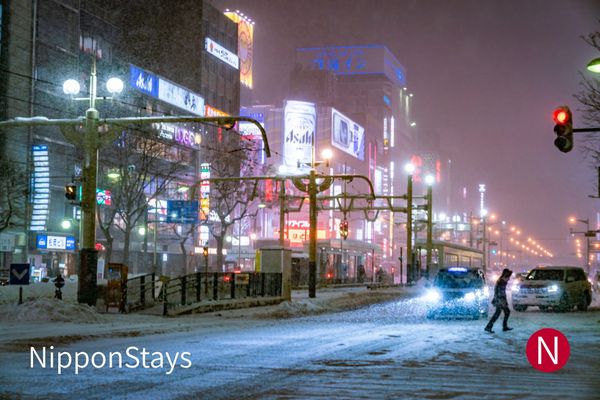
Sapporo's sidewalks are not uniformly snow-covered; repeated freeze-thaw cycles compact the surface into hard, glassy ice that locals call tsurutsuru, and it is this polished ice, not fresh powder, that causes most winter falls. The City of Sapporo's own visitor guidance recommends walking with a lower center of gravity and small, flat-footed steps rather than a normal stride, and notes that removable anti-slip spikes are sold at most convenience stores for exactly this surface. Smooth-soled travel shoes or fashion boots without a rated tread fail on this ice regardless of how warm they are; a boot needs a deep, soft rubber sole rated for ice, not just insulation. Sapporo's Ekimae-dori underground walkway (Chi-Ka-Ho), a roughly 520-meter passage opened in 2011 that connects JR Sapporo Station toward Odori and on to Susukino via the subway concourse, removes the ice problem for that specific route, but it only covers one corridor through the city center and does not reach most hotels directly.
What Can Be Bought After Landing
Nobody needs to pack for every contingency: Uniqlo, present in central Sapporo, stocks Heattech base layers and packable down at prices well below specialist outdoor gear; Workman, a nationwide chain with branches in the city, sells ice-grip boots and clip-on spike attachments built for exactly the pavement described above; and Don Quijote and convenience-store chains sell disposable stick-on hand and foot warmers (kairo) by the box. A traveler who lands under-equipped for Hokkaido's cold can fill the gap on day one rather than before departure.
What Hotels Lend or Provide
Drying wet outer layers overnight is a bigger practical problem in January than most first-time visitors expect, and it is worth checking for before booking rather than after arrival. Some properties supply an in-room air purifier with a humidifier function as standard, which also helps with the dry indoor air that heated buildings produce; a smaller number have a self-service coin laundry with a dryer, useful for gloves and base layers rather than full outerwear; and hotels built around an onsen give a direct way to warm up after a cold walk without needing the room's shower. None of these is universal, so it is a fair question to put to a property before booking rather than assume.
The Ski-Trip Difference
Everything above changes shape once the trip is a ski trip rather than a city one. Resort rental counters typically cover the outer shell jacket and pants, gloves, and ski or snowboard boots as a package, so the packing list shrinks to base layers, mid layers, and personal items such as goggles; the failure points described for city pavement (smooth soles, no spikes) mostly disappear once a visitor is in rented ski boots rather than street shoes. What does not change is the base-layer logic above, since a lift line at -7C has the same wicking-and-insulating requirement as a Sapporo sidewalk at -3C.
Hotels With Laundry, Drying, and a Bath
All six hotels mapped for this guide offer laundry, split evenly between self-service coin laundry (Onsen Ryokan Yuen Sapporo, Mitsui Garden Hotel Sapporo, Richmond Hotel Sapporo Odori) and reception-handled laundry (JR Tower Hotel Nikko Sapporo, Cross Hotel Sapporo, OMO7 Asahikawa); three of the six also include an onsen or hot-bath facility on-site (checked August 2026).
| Hotel | Area | Laundry / drying | Bath | From price (for two guests, room-only) |
|---|---|---|---|---|
| Onsen Ryokan Yuen Sapporo | Central Sapporo | Self-service laundry rooms with irons on the 2nd and 9th floors | Natural hot-spring bath piped in from Noboribetsu Onsen, plus sauna | ¥29,800 |
| JR Tower Hotel Nikko Sapporo | Atop Sapporo Station | Dry-cleaning and laundry service via reception | Indoor mineral hot-spring bath on-site | ¥19,000 |
| Mitsui Garden Hotel Sapporo | Central Sapporo | Self-service coin laundry in a 2nd-floor utility lounge; in-room air purifier/humidifier | None | ¥13,700 |
| Richmond Hotel Sapporo Odori | Odori | Coin laundry on the 6th and 10th floors; in-room air purifier with humidifier function | None | ¥14,100 |
| Cross Hotel Sapporo | Near Sapporo Station | Paid laundry via reception; humidifier available to borrow | None | ¥9,000 |
| OMO7 Asahikawa by Hoshino Resorts | Asahikawa | Laundry service via front desk; iron and board on request | The Spa Plateau on-site hot-bath facility (not a free-soak onsen) | ¥25,000 per room |
Readers deciding whether to sleep in Sapporo at all, rather than splitting time toward the airport or Otaru, can compare neighborhoods in NipponStays' Sapporo areas guide, and readers who want the onsen bath prioritized over a laundry room can start from NipponStays' Sapporo hotels with onsen. Anyone traveling with enough gear to need a full wash rather than a quick dry should also see NipponStays' hotels with an in-room washing machine, and general questions worth asking before booking any of the above are collected in NipponStays' hotel-booking questions guide. For the colder inland comparison referenced in the climate table, NipponStays' Asahikawa base guide covers that city on its own terms.
What you wear depends on where January takes you: the Sapporo winter events 2027 calendar covers the outdoor festival days in Sapporo, and when to go to Kiroro says how cold and how deep a Kiroro week runs. When Japan ski hotels sell out is the reminder that the warm hotel at the end of the day also needs booking early.
FAQ: Dressing for a Hokkaido January
How cold does it actually get in Hokkaido in January?
Sapporo's January mean is -3.2C under the Japan Meteorological Agency's 1991-2020 normal, with the coldest nights of the month typically falling near -17C. Inland Asahikawa runs several degrees colder on average and once recorded Japan's all-time national low of -41.0C, set there on January 25, 1902.
Are special boots needed for walking in Sapporo in January?
Yes, if the plan includes street walking rather than staying inside stations and malls. Sidewalks compact into hard, glassy ice that the city itself warns about, and smooth-soled shoes fail on it regardless of insulation; a rated ice-grip sole, or clip-on spikes sold at convenience stores and Workman branches, addresses the actual hazard.
Will hotel rooms be too warm for the layers packed for outdoors?
Often, yes. Common areas such as lobbies, trains, and shops typically run 20-24C, while one regional survey puts household living rooms at a cooler 19.8C average in winter; either figure sits far above outdoor temperatures, so a system that unzips or peels off in seconds is more useful than one built purely for maximum warmth.
What changes if this is a ski trip rather than a city trip?
Resort rental counters typically supply the outer shell, pants, gloves, and boots as a package, so the packing list narrows to base and mid layers plus personal items like goggles; the city-pavement footwear problem described above mostly disappears once a visitor is standing in rented ski boots instead of street shoes.