When Your Japan Domestic Flight Is Cancelled: Why We Keep an Award Ticket in Reserve
Award tickets on United and Atmos cancel for free, so a backup seat costs nothing if unused. How we used it twice, and where the ethical line sits.

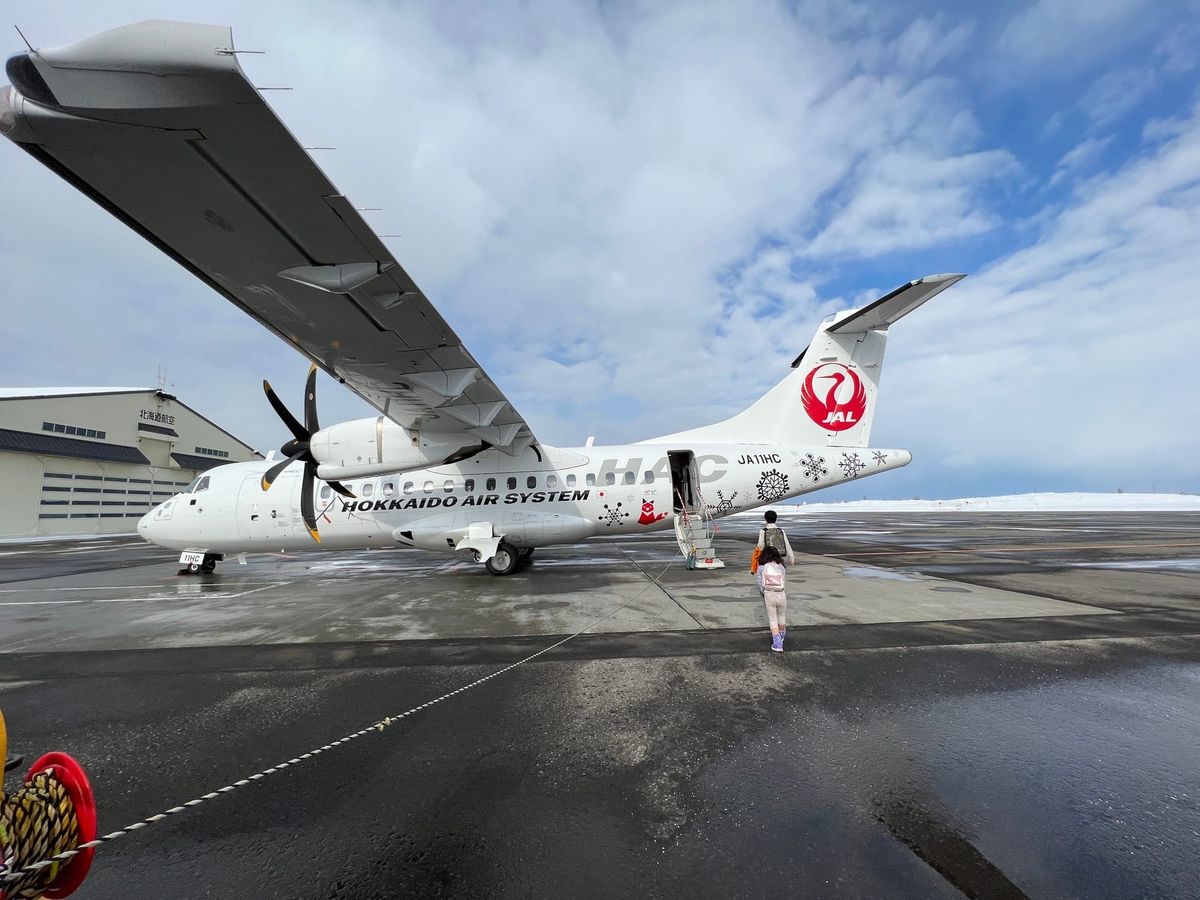
If your Japan domestic flight is cancelled, the fastest recovery is usually a seat you already hold. Award tickets booked through United MileagePlus or Atmos Rewards can be cancelled for free with the miles returned, which means a backup booking costs you nothing if you do not use it. We have done this twice — once to get home after a cancellation, once to hold a morning seat through a blizzard we expected to lose. Both times the ticket cost nothing in the end.
This is not a trick, and it is not free money. It works because two American programmes charge no cancellation fee while the Japanese ones do, and because award seats can be booked on the day. Used carelessly it takes seats from other passengers, so the second half of this guide is about where the line sits.
Two things that happened to us
Hiroshima, a cancelled JAL flight. Our return flight was cancelled outright. Rather than join the rebooking queue, we searched United on the spot and found an ANA seat on the last departure of the evening, booked it on the phone in the terminal, and flew home that night. The award seat existed because ANA and JAL release inventory independently — the JAL disruption had no effect on what United could sell.
New Chitose to Haneda, a blizzard. Forecasts pointed to a storm heavy enough that our afternoon departure looked unlikely to operate. We booked an ANA seat on the following morning as a backup, kept both, and waited. The original flight departed. We cancelled the backup and the miles came back. Total cost of the insurance: nothing.
The second case is the more useful pattern. The value was not the flight — we never took it. The value was removing the scenario where the flight is cancelled at 16:00, three hundred other passengers start rebooking simultaneously, and the first available seat is two days out.
Why the cancellation fee is the whole story
This strategy only works because of an asymmetry between programmes. Cancel an award ticket booked with Japanese miles and you pay to put them back. Cancel one booked with United or Atmos miles and you do not.
| Programme | Airline | Cost to cancel and reclaim miles |
|---|---|---|
| United MileagePlus | ANA | None |
| Atmos Rewards | JAL | None; fares displayed as refundable |
| ANA Mileage Club | ANA | Fee applies (¥3,000 scale) |
| JAL Mileage Bank | JAL | Fee applies (¥1,000 scale) |
| Discounted domestic cash fare | Either | Often non-refundable or heavily penalised |
Of the five ticket types compared above, only two return your miles at no charge when you cancel — and both are foreign programmes rather than Japanese ones (checked August 2026). That asymmetry is the entire reason this works.
That last row is why a cheap cash fare is a poor backup. The advance-purchase fares that make domestic flying affordable in Japan are the ones with the harshest change rules. A refundable cash fare exists but costs several times more. The award ticket sits in the useful middle: cheap to hold, free to release.
How to do this without abusing it
A held seat is a seat nobody else can buy. On a thin route on a bad-weather day, that matters to real people standing at the same counter. We hold one seat, on a flight we would genuinely take, and we release it the moment we know we do not need it.
What we do not do, and would ask you not to do either:
- Do not hold several options. One backup, not four departures across two airlines "to see how it goes."
- Do not book flights you would never take. If the 06:00 departure is one you would refuse on principle, it is not a backup, it is a blocked seat.
- Do not sit on it after you know. Once your original flight is airborne or you have committed to the train, cancel. It takes a minute online and the seat goes back into inventory while someone can still use it.
- Do not do this routinely. This is for genuine disruption risk — a forecast storm, a typhoon track, a same-day cancellation — not for every flight because the miles are cheap.
Programmes can and do act against patterns of speculative booking. Beyond that, the reason to keep this narrow is simply that the person behind you in the queue is trying to get home too.
The other options: the train, and waiting
An award seat is one tool. Two others are often better.
The Shinkansen keeps running when aircraft cannot. Snow, fog and crosswinds close airports far more readily than they stop trains, and for anything on the Tokyo–Osaka–Hiroshima–Fukuoka spine the train is competitive on door-to-door time anyway. Our Tokyo Station guide covers the practical side of switching to rail at short notice. For Hokkaido this helps less — the rail connection south is long, and flying is usually the only realistic option.
Waiting is sometimes right. Japanese carriers rebook cancelled passengers onto their own later flights without charge, and on dense routes the next departure may be within a couple of hours. The backup ticket earns its value on thin routes and at the end of the day, when the next seat is tomorrow rather than later.
| Recovery option | Works best when | Cost if unused | Weakness |
|---|---|---|---|
| Held award seat | Thin route, last flight of the day, storm forecast | Nothing (United, Atmos) | Two seats at most; blocks inventory while held |
| Shinkansen | Tokyo–Osaka–Hiroshima–Fukuoka corridor | Nothing if unreserved | No use for Hokkaido or the southern islands |
| Airline rebooking | Dense route with frequent departures | Nothing | You queue with everyone else; may be next day |
| Refundable cash fare | You need two confirmed seats together | Nothing, but ties up the money | Several times the price of a discounted fare |
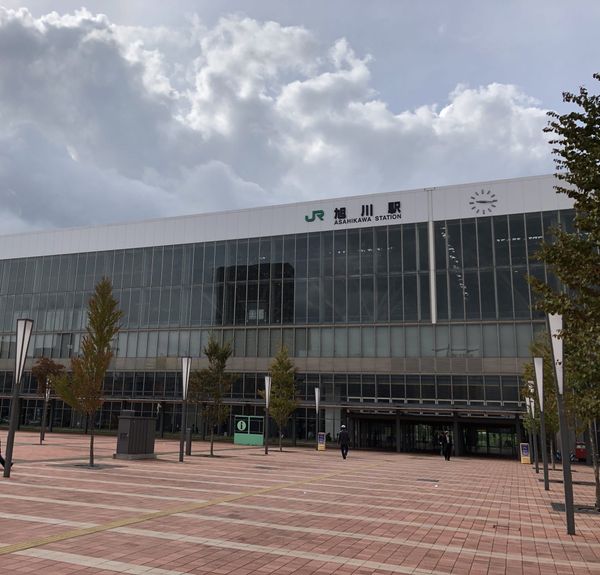
If the disruption strands you in Hokkaido, the choice of airport matters as much as the airline. Our comparison of Asahikawa versus New Chitose in winter covers which one keeps operating, and New Chitose airport hotels is the practical answer to an overnight you did not plan.
What to check the moment a flight is cancelled
Order matters when several hundred people are doing the same thing.
- Search the other alliance first, on your phone, before you join the queue. JAL and ANA release inventory independently, so a JAL cancellation says nothing about ANA availability.
- Check the last departure of the day. It is the one that decides whether you sleep at home or near the airport.
- Then join the queue. Your place in line still gets you a free rebooking; the award search just means you are not dependent on it.
- Release anything you no longer need. Both the backup and, if the airline rebooks you, the original.
For which programmes reach which airline, and what the seats cost, start with our guide to using foreign miles inside Japan.
Japanese airlines treat a cabin briefing as something that has already been paid for. On 12 August 1985 JAL 123 came down on Osutaka Ridge in Gunma and 520 people died; what that accident asks of passengers follows the line from there to Haneda in January 2024, where 379 people left a burning aircraft in 18 minutes.
FAQ: Flight cancellations in Japan
Can I hold a backup flight for free with miles?
With United MileagePlus or Atmos Rewards, yes — both return the miles at no charge when you cancel, so an unused backup costs nothing. The Japanese programmes charge a fee to reclaim miles, and discounted cash fares are usually non-refundable. Keep it to one seat on a flight you would actually take, and release it as soon as you know.
My JAL flight was cancelled. Will ANA have seats?
Possibly, because the two airlines manage award inventory separately and a disruption at one does not consume the other's seats. That is exactly how we recovered from a cancellation in Hiroshima — the ANA seat on the last evening departure was available through United while JAL was rebooking its own passengers.
Is the Shinkansen a better backup than a flight?
On the Tokyo–Osaka–Hiroshima–Fukuoka corridor, usually yes. Trains keep running in weather that closes airports, and door-to-door times are comparable. For Hokkaido and the southern islands the train is not a practical substitute, which is where a held award seat is worth the most.
How quickly can I book an award seat on the day?
United sells same-day ANA award seats online, and we have booked one standing in a terminal after a cancellation. Availability is the constraint rather than timing — in our searches ANA releases at most two seats per flight, so check more than one departure if there are several of you.