Shojin Ryori Kyoto Where to Stay: What It Actually Means
Shojin ryori means no meat or fish, not vegan. Izusen at Daitokuji serves it for ¥4,500-¥6,500 — what's confirmed and where to stay nearby.

Searches for 'shojin ryori Kyoto where to stay' are usually asking two things at once: where to eat this cuisine, and which hotel makes that easy. Shojin ryori is not a certified vegan cuisine — it means no meat and no fish, and that is as far as the official description goes. At Izusen's Daijiin branch inside Daitokuji, courses run ¥4,500, ¥5,500 and ¥6,500, the restaurant is open 11:00–16:00 year-round (closed only 28–31 December), and parties of five or fewer do not need a reservation. For a base, Dormy Inn Premium Kyoto Ekimae near Kyoto Station keeps a plain room-only plan and sits on the direct bus route to the temple gate, while Mitsui Garden Hotel Kyoto Shijo is on the subway line that reaches it with one change. The one condition that changes this answer: if you need a confirmed vegan meal — no dashi, no alliums — ask before you go, since neither Izusen nor most ryokan kitchens put that guarantee in writing.
What "Shojin Ryori" Actually Promises (and Doesn't)
The word itself covers more ground than the English word "vegan" does, and the gap between the two is where most disappointed reviews come from.
| Term | What's confirmed | What's not addressed | Where it applies |
|---|---|---|---|
| Shojin ryori (the general term) | No meat, no fish — a rule rooted in Buddhist monastic kitchens | Dashi stock and the five pungent alliums (garlic, onion, leek and similar) — practice varies by kitchen | Any restaurant or ryokan that offers it |
| Izusen's "shojin teppatsu ryori" | Official material states the food uses no meat and no fish (checked September 2026) | The same material never mentions dashi or alliums, and never uses the words vegetarian or vegan | Izusen, Daijiin sub-temple, Daitokuji |
| A ryokan's vegetable-only course | Prepared to your request if you ask at the time of booking | Not every kitchen can fully accommodate it | See our ryokan kaiseki guide, linked below |
| "Vegetarian" / "vegan" (Western labels) | A defined, checkable standard in English-language food writing | Not a category Japanese temple-cuisine kitchens use to describe themselves | Confirm case by case, not from the menu label |
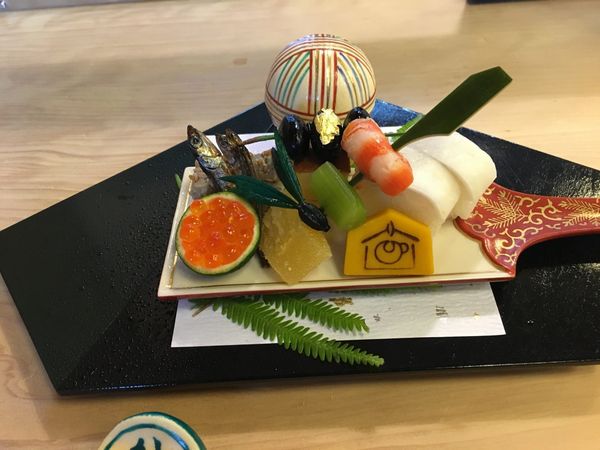
Izusen's own site states plainly that the food is made "without meat or fish," using only grains, beans and vegetables, and stops there — it does not say vegetarian, does not say vegan, and does not mention how stock is made (checked September 2026). The author's own read, having eaten there: it works if your expectation is "vegan-leaning," not if you need a strict guarantee. Don't arrive expecting a Western vegan menu translated into Japanese; expect a genuinely old dietary discipline that predates the Western term by centuries and was never built to match it exactly.
Izusen, Inside Daitokuji's Daijiin Sub-Temple
Izusen's Daijiin branch sits inside the grounds of Daijiin, one of Daitokuji's sub-temples, at 4 Daitokujicho, Murasakino, Kita-ku — the restaurant, not a separate temple you need to find first.
- Hours: 11:00–16:00 (last order 16:00), open year-round except 28–31 December (checked September 2026).
- Courses: three fixed menus — ayame at ¥4,500, yuri at ¥5,500, and botan at ¥6,500 — served in the lidded iron bowls (teppatsu) the style is named for.
- Reservations: required only for parties of six or more; five or fewer can walk in.
On a past visit, the author didn't have a reservation and was still seated — but that came down to luck, not a guarantee. The policy itself is what actually protects a table: book ahead if you can, and you don't have to think about the rest.
Source for hours, courses and the reservation threshold: Izusen's own Daijiin branch page; source for the no-meat, no-fish claim: Izusen's description of its cooking. Neither page has an English version, so bring a translation app if your Japanese is limited.
Finding Izusen Inside Daitokuji
Daitokuji is not a single building you walk toward and photograph, the way you would at Kinkakuji. It's a walled complex built around a main hall, with a wide cluster of sub-temples inside the grounds — and most of those sub-temples function as private residences for resident priests, closed to casual visitors for most of the year. Only a handful keep regular public hours, and which ones do can shift with each season's special openings, so treat any specific list you find online as a snapshot, not a permanent map. What that means in practice: come for lunch at Izusen and whichever sub-temple happens to be open that day, not for one must-see hall.
Two routes get you to the gate. From Kyoto Station, board bus 204, 205 or 206 and ride about 40 minutes to the Daitokuji-mae stop, which puts you right at the entrance. From central Kyoto, take the Karasuma Line subway north to Kitaoji Station, then a short bus (about 7 minutes) covers the rest — the faster option if you're already staying along that subway line.
Asking a Ryokan for a Vegetable-Only Course, and When That Fails
Kyoto's kaiseki ryokan can prepare a vegetable-only or shojin-style course if you ask when you book. Our guide to kaiseki at Kyoto ryokan covers which inns take that request and how to phrase it, and it's upfront about the limit: not every kitchen can fully accommodate the ask, so following up by email before you arrive is worth the extra step.
The same caveat that applies to Izusen applies here. A kitchen confirming "no meat, no fish" is not the same as confirming no dashi and no alliums, so say exactly what you need — strict vegan, or simply meat- and fish-free — rather than asking generically for "vegetarian" and hoping the kitchen reads your intent correctly.
The Practical Answer: Room-Only, Plus Eating Out
If none of that lines up cleanly with your dates, the simplest fix is to stop routing dinner through the hotel altogether. Book a plain room-only rate, treat Izusen — or a ryokan's shojin course, arranged in advance — as one deliberate meal rather than every meal, and eat the rest of the trip the way you'd eat anywhere else in Kyoto.
This also sidesteps the awkward middle ground where a hotel's Western-style breakfast buffet quietly runs on the same dashi and animal stock as everything else on the table. Skipping it removes a decision you'd otherwise have to interrogate every morning. If cost, not dietary planning, is what's driving a room-only choice, our budget hotels in Kyoto guide lists other room-only options across the city.
Where to Base Yourself for This
The right base depends on which of the two routes to Daitokuji you'd rather take, not on which neighborhood sounds nicest.
| Name | Area | Setting | Best for |
|---|---|---|---|
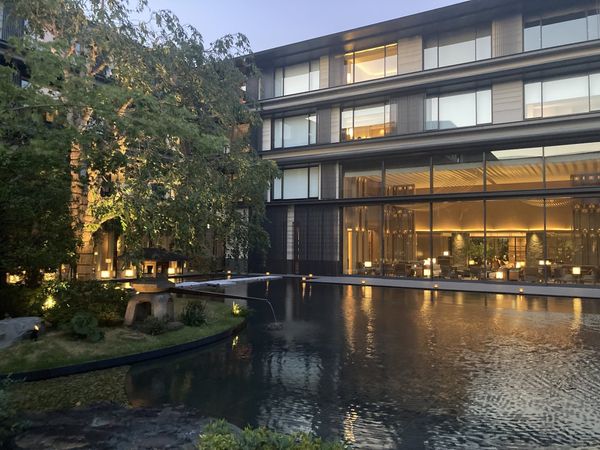
| Dormy Inn Premium Kyoto Ekimae | Kyoto Station (3-min walk from the Central Exit) | Business hotel with a room-only plan and its own natural hot-spring bath | Riding bus 205 or 206 straight to Daitokuji-mae, no transfer |
| Mitsui Garden Hotel Kyoto Shijo | Shijo/Karasuma (6-min walk from Karasuma Line Shijo Station, Exit 2) | Standard city hotel | A one-line subway ride north to Kitaoji Station, then a short bus to the temple |
| A ryokan from our kaiseki list | Varies | Full-service ryokan | Guests who'd rather have a vegetable-only course brought to their room than travel out to Izusen — see our ryokan kaiseki guide |
Both hotel routes land you at the temple gate in well under an hour, door to door. If this specific meal isn't the only thing shaping where you stay, our broader Kyoto area guide compares the rest of the city's neighborhoods.
Trip Essentials for Kyoto
Things worth booking before you land, all in English:
- eSIM — Airalo's Japan eSIM: install it at home and data works as soon as you switch off airplane mode at Kansai Airport.
- Luggage storage — arriving before check-in? Radical Storage takes bags at shops near Kyoto Station for a flat daily rate.
- Tickets and day trips — Klook covers Arashiyama activities, tea ceremonies, and Nara day trips; booking ahead skips the ticket-window line.
FAQ: Vegetarian and Vegan Eating in Kyoto
Is shojin ryori the same as vegan food?
Not by guarantee. Shojin ryori means no meat and no fish — that much is explicit in Izusen's own description (checked September 2026) — but neither Izusen nor the wider tradition addresses dashi stock or the five pungent alliums (garlic, onion, leek and similar), which a strict vegan diet excludes. Treat it as "vegan-leaning" and confirm the specifics directly if you need a firm guarantee.
Do I need to book ahead at Izusen in Daitokuji?
Only if your party is six or more — groups of five or fewer can walk in. Izusen is open 11:00–16:00 (last order 16:00) year-round, closed only 28–31 December. A reservation isn't required for a small group, but it removes the one variable you can't control by showing up.
Can my ryokan prepare a vegetable-only meal instead?
Often, yes, if you request it when you book — our ryokan kaiseki guide covers which inns take that request. Not every kitchen can fully accommodate it, so confirm by email before you arrive, and be specific about whether you need strict vegan or simply meat- and fish-free, since the two aren't automatically the same thing in a Japanese kitchen.
What's the easiest way to reach Daitokuji from central Kyoto?
From Kyoto Station, bus 204, 205 or 206 reaches the Daitokuji-mae stop in about 40 minutes with no transfer. From anywhere on the Karasuma subway line, ride north to Kitaoji Station and take a short bus (about 7 minutes) the rest of the way — usually the faster option if your hotel is already on that line.