How to Book Kaiseki Restaurants in Kyoto: 5 Yes, 2 No
How to book kaiseki restaurants in Kyoto: which of 8 take English reservations, which need Japanese, and what a hotel concierge can do.

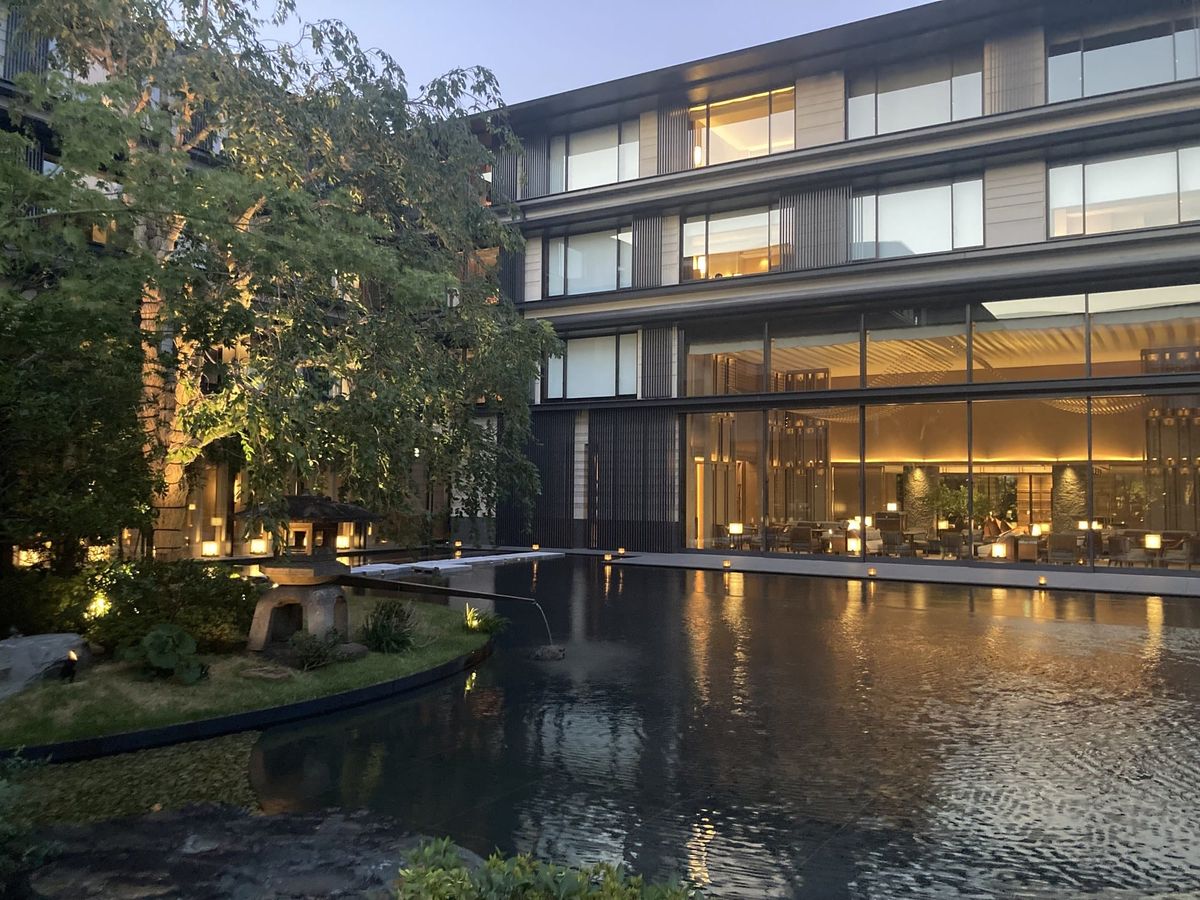
Booking is the barrier at Kyoto's best-known restaurants, not the meal itself. This guide to how to book kaiseki restaurants in Kyoto covers eight well-regarded places: five let you reserve yourself in English — Chimoto, Hyotei, Tankuma Kitamise, Kinobu, and Kodaiji Wakuden — two currently take reservations by phone in Japanese only — Tenyu and Shuhaku — and one, Izusen, needs no advance booking at all for parties of five or fewer (checked September 2026). If you're comfortable phoning a Kyoto restaurant in Japanese yourself, none of this matters. If you're not, it's the case for staying somewhere with a concierge: at the Westin Miyako Kyoto, the front desk placed my reservation at Kodaiji Wakuden with a single phone call.
The eight places, and who can book them
Eight of eight, phoning is how a reservation actually gets confirmed — but which language that phone call happens in depends entirely on the restaurant, not on you. I've eaten at all eight over many visits to Kyoto since the 2010s, so this list is places I've actually been, not places pulled from someone else's roundup. What follows is what each restaurant's own website says about itself and how to book it, checked September 2026.
| Restaurant | Style (its own description) | English page | English booking route | Book it yourself? |
|---|---|---|---|---|
| Chimoto | Kaiseki (懐石料理) | Yes | Own site, English reservation form (3-day cutoff) | Yes |
| Hyotei | Kaiseki, based on tea kaiseki (茶懐石) | Yes | Pocket Concierge EN or TableCheck EN | Yes |
| Tankuma Kitamise | Kaiseki (懐石); course menus labeled 会席 | Yes | TableCheck EN | Yes |
| Kinobu | Kyoto cuisine; no "kaiseki" label; 会席 and shojin courses | Yes | My Concierge Japan (EN, Traditional & Simplified Chinese, Korean) | Yes |
| Kodaiji Wakuden | Ryotei (料亭) | Yes | Pocket Concierge (linked only from the English page) | Yes |
| Tenyu | Tempura specialist (天ぷら専門店); evening "kaiseki tempura course" | No | TableCheck, Japanese only | No |
| Shuhaku | "Small kappo-style" restaurant (割烹) | No | None published | No |
| Izusen | Shojin ryori (精進鉄鉢料理) | No | No booking route — none needed for five or fewer | Walk in* |
*Izusen's own policy asks only parties of six or more to reserve ahead (checked September 2026).
The five you can book yourself
Chimoto publishes an English reservation form on its own site, but the form closes three days before your date, so it isn't a same-week option (checked September 2026). Hyotei lists both Pocket Concierge and TableCheck in English, and Hyotei's own words for its food are "tea kaiseki cuisine based on the traditional tea ceremony" — a direct lineage to the tea room, not a banquet room. Its Nanzenji-area annex is also a six-min walk from Keage Station on the Tozai subway line.
Tankuma Kitamise takes English bookings through TableCheck. Its own site calls the restaurant kaiseki (懐石), though the printed course menus use the banquet-style term 会席 — a small but real distinction between two words that both romanize as "kaiseki." On the one visit when I ate there, the restaurant explained the courses in English to the table of overseas guests next to us — a single observation at a single restaurant, on a single day, not evidence that Kyoto's kaiseki restaurants speak English as a rule.
Kinobu books through My Concierge Japan, which runs in English, Traditional and Simplified Chinese, and Korean. Kinobu is also the one restaurant here that avoids the word kaiseki altogether, describing its food instead as Kyoto cuisine built around banquet-style (会席) and shojin (vegetarian) courses.
Kodaiji Wakuden lists Pocket Concierge, but the link sits only on the English version of the site — easy to miss if you land on the Japanese pages first. I didn't use it: I had the concierge desk at the Westin Miyako Kyoto place the call instead, which is the point of the next section.
The two that are Japanese only
Tenyu is a tempura specialist (天ぷら専門店); its evening menu is billed as a "kaiseki tempura course," which is as close as the restaurant gets to that word. It has no English site and takes bookings through TableCheck in Japanese only, so a phone call from someone who speaks the language — or a concierge — is the way in. One detail worth knowing if you're staying at a traditional inn: Tenyu's own site describes its main branch as close to the ryokan Tawaraya, and lists Tawaraya among its related properties.
Shuhaku describes itself as "a small kappo-style restaurant" (割烹) — a counter format rather than a private room — and doesn't run its own domain; it's listed through Gurunavi, with no English options anywhere in the chain.
What a concierge actually does, and which hotels have one
A concierge makes the phone call in Japanese, confirms the date, time, and party size, and becomes your point of contact if the plan changes. That's what happened for me at the Westin Miyako Kyoto: even though Kodaiji Wakuden does technically list an English booking service, I let the hotel's front desk handle it, and it took them one call.
At the Westin Miyako Kyoto specifically, this is a service the front desk offers as a matter of course — I didn't have to ask twice. Whether every four- and five-star hotel in Kyoto handles restaurant calls the same way isn't something this guide has confirmed hotel by hotel, so ask about it directly when you check in rather than assume it.
The honest version of this, though, is narrower than "you need a concierge for Kyoto kaiseki." Read the table above again: the well-known names — Chimoto, Hyotei, Tankuma Kitamise, Kinobu, Kodaiji Wakuden — mostly publish their own English booking routes. A concierge matters most for the smaller counter restaurants that don't: Tenyu and Shuhaku. If your list is one of the famous five, you may not need a concierge at all — but it's still the reason a hotel with staffed guest services is worth paying for once your list includes the smaller places, or where Kyoto's best ryokan for kaiseki aren't a fit for your dates.
Lead times and cancellation terms you should know before you call
Chimoto's English form is explicit: book at least three days out (checked September 2026). Izusen is the opposite case — no booking needed for five people or fewer, though six or more should reserve ahead. For the two Japanese-only restaurants, and for Kodaiji Wakuden if you skip its English link, plan to call — or have your hotel call — several business days ahead rather than the same day; small counters run on a handful of seats a night and fill from regulars first.
None of these eight restaurants publishes a cancellation policy or no-show fee on its site, so this isn't something to assume either way. Ask directly when you book, or have your concierge ask on your behalf — it's a normal question and a much smaller one than the reservation itself.
One more thing worth knowing before you call: Tankuma Kitamise posts its closed days on a rolling calendar rather than fixed weekly days off, and at our September 2026 check it hadn't posted a single closed date for that month. Don't assume "always open" from that — check the current calendar before you commit to a date.
Choose your base by where you want to eat
Two kinds of evidence sit behind the hotels below, and they aren't the same strength. Four are hotels where I've personally had the concierge desk handle a restaurant call — the Westin Miyako Kyoto, Four Seasons Hotel Kyoto, Ritz-Carlton Kyoto, and Hotel The Mitsui Kyoto. The rest come from the Japan Concierge Association's member list (checked September 2026), a Japanese industry body whose members are either individual concierge professionals or hotels enrolled as institutional members — the list doesn't always say which for a given entry, so treat "member" as "has a concierge presence," not as a specific job title. A listing there is evidence a hotel has one; it is not evidence that an unlisted hotel doesn't — the Westin, Four Seasons, and Mitsui are all absent from that list despite the concierge desks I've used at each of them directly.
| Hotel | How I know it has a concierge | Area |
|---|---|---|
| Westin Miyako Kyoto | Used directly | Keage/Nanzenji — 5-min walk to Hyotei's annex |
| Four Seasons Hotel Kyoto | Used directly | Higashiyama, near Myoho-in |
| Ritz-Carlton Kyoto | Used directly; also a Japan Concierge Association member | On the Kamo River near Nijo-Ohashi, Nakagyo-ku |
| Hotel The Mitsui Kyoto | Used directly | Adjacent to Nijo Castle, Nakagyo-ku |
| Park Hyatt Kyoto | Japan Concierge Association member (checked Sept 2026) | Higashiyama, at the entrance to Ninenzaka near Kiyomizu-dera |
| Hotel Granvia Kyoto | Japan Concierge Association member (checked Sept 2026) | Inside Kyoto Station |
For the wider shortlist of high-end Kyoto stays, see our luxury hotels in Kyoto guide; for the Westin specifically, our full review covers the room categories and the rest of what its concierge desk can arrange. Source for Hyotei's own description of its cuisine and hours: Hyotei's official site.
Trip Essentials for Kyoto
Things worth booking before you land, all in English:
- eSIM — Airalo's Japan eSIM: install it at home and data works as soon as you switch off airplane mode at Kansai Airport.
- Airport transfer — Klook sells fixed tickets and transfers from Kansai Airport to Kyoto Station, useful if you'd rather book the ride than work out train changes on arrival.
- Luggage storage — arriving before check-in, or heading straight to a restaurant with bags? Radical Storage takes bags at shops near Kyoto Station for a flat daily rate.
- Tickets and day trips — Klook covers Arashiyama activities, tea ceremonies, and Nara day trips; booking ahead skips the ticket-window line.
FAQ: Booking Restaurants in Kyoto
Can I book Kyoto's best-known restaurants myself if I don't speak Japanese?
Five of the eight restaurants in this guide — Chimoto, Hyotei, Tankuma Kitamise, Kinobu, and Kodaiji Wakuden — publish an English-language booking route you can use yourself (checked September 2026). The other two, Tenyu and Shuhaku, currently only publish Japanese reservation channels.
What does a hotel concierge do that I can't do myself?
A concierge calls the restaurant in Japanese, confirms the date, time, party size, and any dietary needs, and stays your point of contact if plans change. At the Westin Miyako Kyoto, the concierge desk placed my Kodaiji Wakuden reservation with one phone call.
Do I need to book Izusen in advance?
Not if there are five of you or fewer. Izusen's own policy only asks parties of six or more to reserve ahead; it's inside the Daijion sub-temple at Daitokuji and open daily except December 28–31 (checked September 2026).
Are all of these eight restaurants "kaiseki restaurants"?
No, and lumping them together hides useful information. Hyotei and Chimoto describe themselves as kaiseki, Kodaiji Wakuden calls itself a ryotei, Tenyu is a tempura specialist, Shuhaku uses kappo, and Kinobu and Izusen avoid the word kaiseki entirely. The label on the door tells you as much about the format — counter, private room, tea room — as it does about the food.