Kaiseki vs Kappo vs Ryotei: What You're Booking in Kyoto
Kaiseki vs kappo vs ryotei in Kyoto: what eight restaurants call themselves, how long each takes, and which you can book yourself.

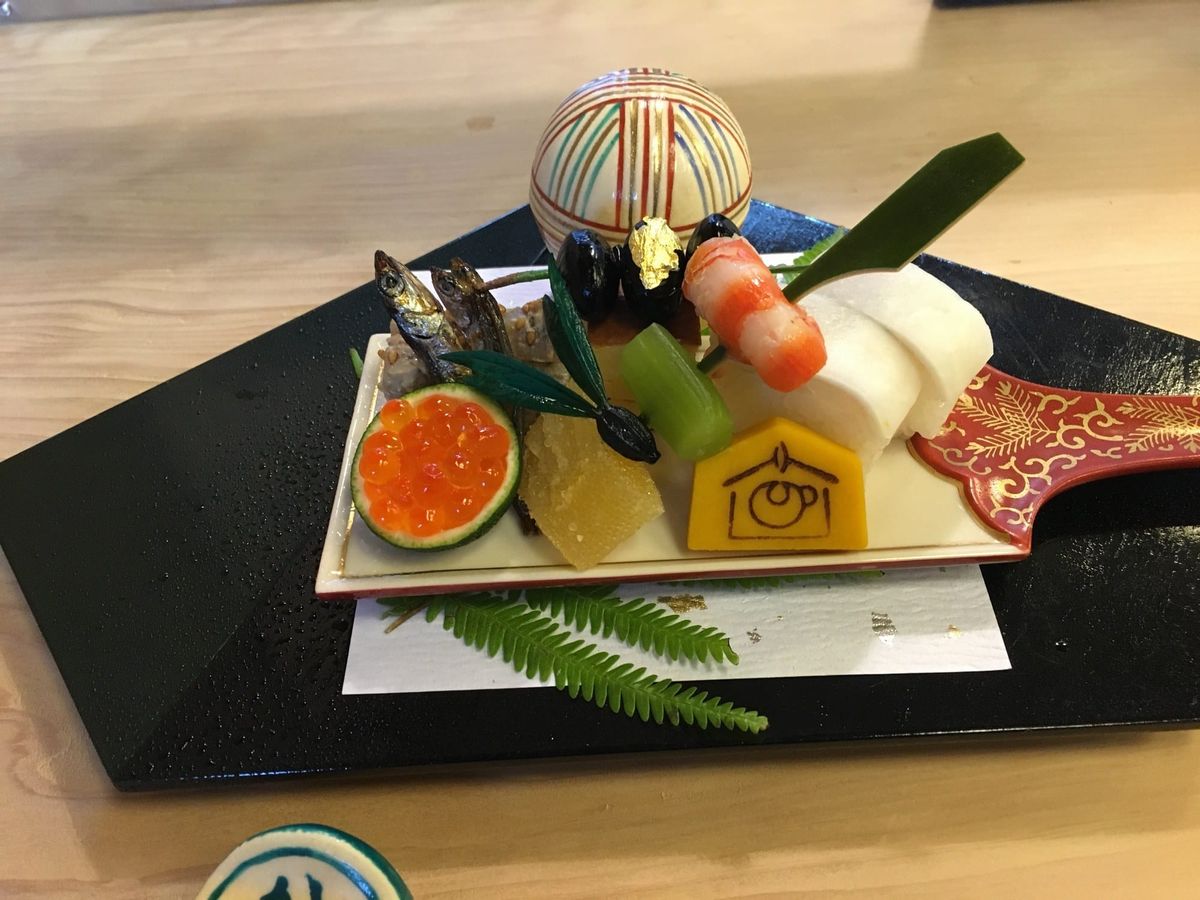
Kaiseki vs kappo vs ryotei is a question about the room you're booking, not the quality of the food. Kaiseki is a fixed seasonal course usually served in a private room; kappo puts you at a counter facing the chef, with a looser pace; and ryotei is a private-dining house built around events, not a single tasting menu. Kyoto blurs even these three further — one tempura specialist in this guide calls its own evening menu a "kaiseki tempura course," and a historic kaiseki restaurant's printed menu is labeled with the banquet-style word instead. The condition that actually changes your decision: whether you'd rather skip the reservation altogether by staying at a ryokan that serves its own kaiseki dinner, such as Hiiragiya, a Kyoto ryokan operating since 1818 — or go out to one of the eight restaurants below and book a table yourself.
I've eaten at all eight of the restaurants below across repeat trips to Kyoto over the years, which is the baseline for including a place here rather than a proxy for rating it — the selection is places I've actually sat down at, not a scrape of someone else's roundup.
The Labels, Side by Side
Checked against each restaurant's own website in September 2026, the eight places below use six different official labels for what an English-language listing would flatten into one word: kaiseki (懐石), kaiseki written with the banquet character (会席), ryotei, kappo, tempura specialist, and shojin (temple) cuisine.
| Restaurant | Format (its own words) | Roughly how long | Seating | Book it yourself? |
|---|---|---|---|---|
| Hyotei | Kaiseki, based on tea kaiseki (茶懐石) | ~2 hrs | Private rooms | Yes |
| Tankuma Kitamise | Kaiseki (懐石); printed menus say 会席 | ~2 hrs | Private rooms, plus a 7-seat counter kept since 1928 | Yes |
| Chimoto | Kyo-ryori; self-described "old-established kaiseki" | ~2 hrs | Private rooms over the Kamo River | Yes |
| Kinobu | No "kaiseki" — 会席, shojin, and catering courses | ~2 hrs | Private rooms | Yes |
| Kodaiji Wakuden | Ryotei | Open-ended evening | Private rooms | Yes |
| Tenyu | Tempura specialist; evening "kaiseki tempura course" | ~90 min | 10-seat counter, two small private rooms | No |
| Shuhaku | Kyo-ryori, "a small kappo style" | ~90 min–2 hrs | 12-seat counter and tatami section | No |
| Izusen | Shojin (temple) cuisine | ~45–60 min, lunch only | Tatami hall in a sub-temple | No booking needed (5 or fewer) |
The "roughly how long" column is typical for the format, not a published policy at any single restaurant — confirm the pace when you book. For exactly how to book each of these eight yourself, our guide to booking Kyoto's restaurants in English goes through the options one by one; for what Izusen's shojin label promises and doesn't, see our shojin ryori guide.
懐石 and 会席 Are Not the Same Word
懐石 (kaiseki) and 会席 (also romanized kaiseki) are two different words that happen to collide in English, and untangling them explains most of what looks like inconsistency among Kyoto's top kitchens.
懐石 grew out of the tea ceremony: a spare, restrained meal meant to settle the stomach before a bowl of matcha, refined in the 16th century around the tea master Sen no Rikyu. Rice and soup come first, before the other dishes. 会席 developed later, as food for banquets and drinking parties — richer, more festive, and built to be enjoyed for its own sake, with rice and soup held back until just before dessert (per the Michelin Guide's explainer on the two words).
Hyotei is explicit about which one it is: its English site describes the restaurant as "tea kaiseki cuisine based on the traditional tea ceremony" (checked September 2026, Hyotei's official site). Its Nanzenji-area annex is six minutes on foot from Keage Station on the Tozai subway line, in the same pocket of the city as hotels including the Westin Miyako Kyoto. Chimoto, on the Kamo River, calls itself a京料理 restaurant built on an "old-established kaiseki" foundation (checked September 2026, Chimoto's official site). Tankuma Kitamise's own promotional language uses 懐石, but its printed course menus are labeled with the banquet-style 会席 instead — even inside one restaurant, the two words don't always agree (checked September 2026, Tankuma Kitamise's official site). Kinobu goes further and drops the word kaiseki from its own site altogether, describing its food as Kyoto cuisine offered through 会席, shojin, and delivery-catering (仕出し) courses — a restaurant that draws the line on purpose rather than leaving it blurry (checked September 2026, Kinobu's official site).
料亭 (Ryotei) — Kodaiji Wakuden
A ryotei is not a fancier kaiseki restaurant; it is a different kind of business, built around reserving a private room for an evening rather than a seat for a single tasting menu.
Kodaiji Wakuden, tucked into the hillside below Kodaiji temple in Higashiyama, is the one restaurant in this guide that calls itself simply "Ryotei" in English, without reaching for the word kaiseki at all (checked September 2026, Kodaiji Wakuden's official site). Historically, a ryotei's private rooms were also where geisha and maiko performed between courses — a tradition the word still carries, even though it is not a given at every modern ryotei booking. What the label reliably promises today is the structure: you reserve the room, and the evening is built around it, rather than around a fixed multi-course script running on a clock.
割烹 (Kappo) — Shuhaku's "Small Kappo Style"
A kappo restaurant puts the cutting board in front of you instead of behind a wall, and the format is built around watching one chef work, not following a set sequence of courses.
Shuhaku, near Yasaka Pagoda in Higashiyama, describes its own cooking as Kyoto cuisine served "in a small kappo style" (checked September 2026). It seats twelve in total, split between the counter and a small tatami section. It has no website of its own — the closest thing to an official presence online is its Gurunavi restaurant listing — and no English-language booking route is published anywhere in that chain, which makes it one of the few names in this guide where booking on your own, in English, is not really on the table.
The counter itself isn't unique to restaurants that call themselves kappo. Tankuma Kitamise, which labels itself kaiseki rather than kappo, has kept one since it opened: founded in 1928 by Kurisu Kumasaburo, its own site says it has valued a counter where guests can talk to the chefs since its earliest days, with seating for seven at its Kyoto honten (checked September 2026, Tankuma Kitamise's official site). A kappo label describes a whole restaurant's structure; a counter by itself is just one piece of that — Tankuma has run one for close to a century without ever adopting the word.
Tempura as a Destination — Tenyu
Tempura gets sold to visitors as a quick lunch, but Tenyu treats it as the entire evening, and its own site opens with a detail most English guides miss: it is the tempura specialist belonging to one of Kyoto's most exclusive ryokan.
Tenyu's own site describes itself as located "close to our main house, Tawaraya Ryokan," in Fuyacho, and lists the ryokan among its related properties (checked September 2026, Tenyu's official site). The two share an owner but are booked separately — a table at Tenyu is its own reservation, not part of a Tawaraya room rate. Its evening tasting menu is labeled 懐石てんぷらコース ("kaiseki tempura course") on the Japanese site: another kitchen reaching for the word kaiseki to describe a fixed sequence of small courses, whatever the tea-ceremony meaning covered above. Seating is a ten-seat counter upstairs plus two small private rooms downstairs, and booking runs through TableCheck in Japanese only.
Why the Labels Stay This Precise
One reason Kyoto's top kitchens keep these distinctions this exact, instead of blurring them into one marketing word for visitors, is a standing peer-review culture among the chefs themselves.
The monthly trade magazine 専門料理 (Senmon Ryori), published by Shibata Shoten, runs an ongoing feature built around the 柴田日本料理研鑽会 (Shibata Japanese Cuisine Study Group). Its November 2025 issue, titled around "where the 4th-generation study group is headed," centered on chefs Takahashi Takuji and Takahashi Yoshihiro — the publisher's own listing uses 髙橋, the tall-ladder variant of the character, for both (checked September 2026, Shibata Shoten's November 2025 issue page). The group's full membership isn't published, and its earlier generation is a separate set of chefs from the current one; what is public is that the format has passed from one generation of Kyoto chefs to the next and is still running as a magazine feature, most of a century into the city's kaiseki tradition. A trade press that keeps documenting how the city's kitchens critique each other's work in public is a plausible structural reason the vocabulary on their own websites — kaiseki, 会席, ryotei, kappo — stays this exact, rather than settling into one loose word for everything.
Ryokan Dinner or Restaurant: Choose by Label
The simplest way to skip every reservation above is to let a ryokan handle dinner, and that choice is itself a label decision, not just a lodging one.
| If you want… | Pick | What you get | How you book |
|---|---|---|---|
| Zero extra reservations, dinner arrives as part of the stay | A ryokan that serves its own kaiseki, such as Hiiragiya | Multi-course seasonal dinner, no separate table to find | Booked together with the room |
| A well-known kitchen, booked yourself, in English | Hyotei, Tankuma Kitamise, Chimoto, Kinobu, or Kodaiji Wakuden | Formal seasonal course or ryotei room, roughly 2 hours | Each restaurant's own English page or booking platform — see the table above |
| A counter seat and a chef you can watch | Shuhaku (kappo) or Tenyu (tempura) | Shorter, more conversational, less scripted | Japanese only — through a hotel concierge |
| A meat- and fish-free lunch near a quiet temple | Izusen, inside Daitoku-ji's Daijiin sub-temple | Temple-set shojin lunch, no reservation for five or fewer | Walk in, or call ahead for larger groups |
If you'd rather keep dinner and lodging separate — eat wherever you like and skip the ryokan's own kitchen — our guide to ryokan with dinner versus room-only rates covers what that trade-off costs and saves, and our Kyoto kaiseki ryokan guide lists more ryokan built around an included dinner. For the wider question of which part of Kyoto to base yourself in at all, start with our Kyoto area guide.
Trip Essentials for Kyoto
Things worth booking before you land, all in English:
- eSIM — Airalo's Japan eSIM: install it at home and data works as soon as you switch off airplane mode at Kansai Airport.
- Airport transfer — Klook covers bus, train, and private transfers from Kansai Airport.
- Luggage storage — arriving before check-in? Radical Storage takes bags at shops near Kyoto Station for a flat daily rate.
- Tickets and day trips — Klook covers Arashiyama activities, tea ceremonies, and Nara day trips; booking ahead skips the ticket-window line.
FAQ: Kyoto's Dining Formats
What's the actual difference between kaiseki and kappo?
Kaiseki is a fixed sequence of small courses, typically served in a private room on a set timeline. Kappo puts you at a counter facing the chef, with a looser, more conversational pace and no requirement to sit through a formal script. Shuhaku describes itself explicitly as kappo rather than kaiseki for exactly this reason.
Is tea kaiseki (茶懐石) the same as kaiseki?
Not by origin. Tea kaiseki (茶懐石) is the restrained meal built to prepare a guest for a bowl of matcha at a tea ceremony, with rice and soup served first. The word also gets used more loosely, as a general label for any fixed-course tasting menu — Hyotei is one of the few restaurants in this guide that names tea kaiseki as its actual foundation, rather than borrowing the word as a marketing label.
What does ryotei actually mean in Japan?
A ryotei is a private-dining house built around reserving a whole room for an evening, historically including geisha entertainment between courses, rather than a restaurant serving a single seasonal tasting menu. Kodaiji Wakuden is the ryotei in this guide, and it describes itself in English simply as "Ryotei," without reaching for the word kaiseki at all.
How long does a kaiseki dinner take?
Roughly two hours for a full private-room kaiseki course is typical, shorter at a kappo counter, and closer to an hour for a shojin lunch — but this varies by restaurant and isn't published as a fixed policy anywhere in this guide, so it's worth asking when you book.