Why Does Japan Close Highways Before Snow Arrives?
Why does Japan close highways before snow arrives? MLIT traces its 243 closure sections to a 65-hour, 1,500-vehicle pile-up on Route 8 in 2018.

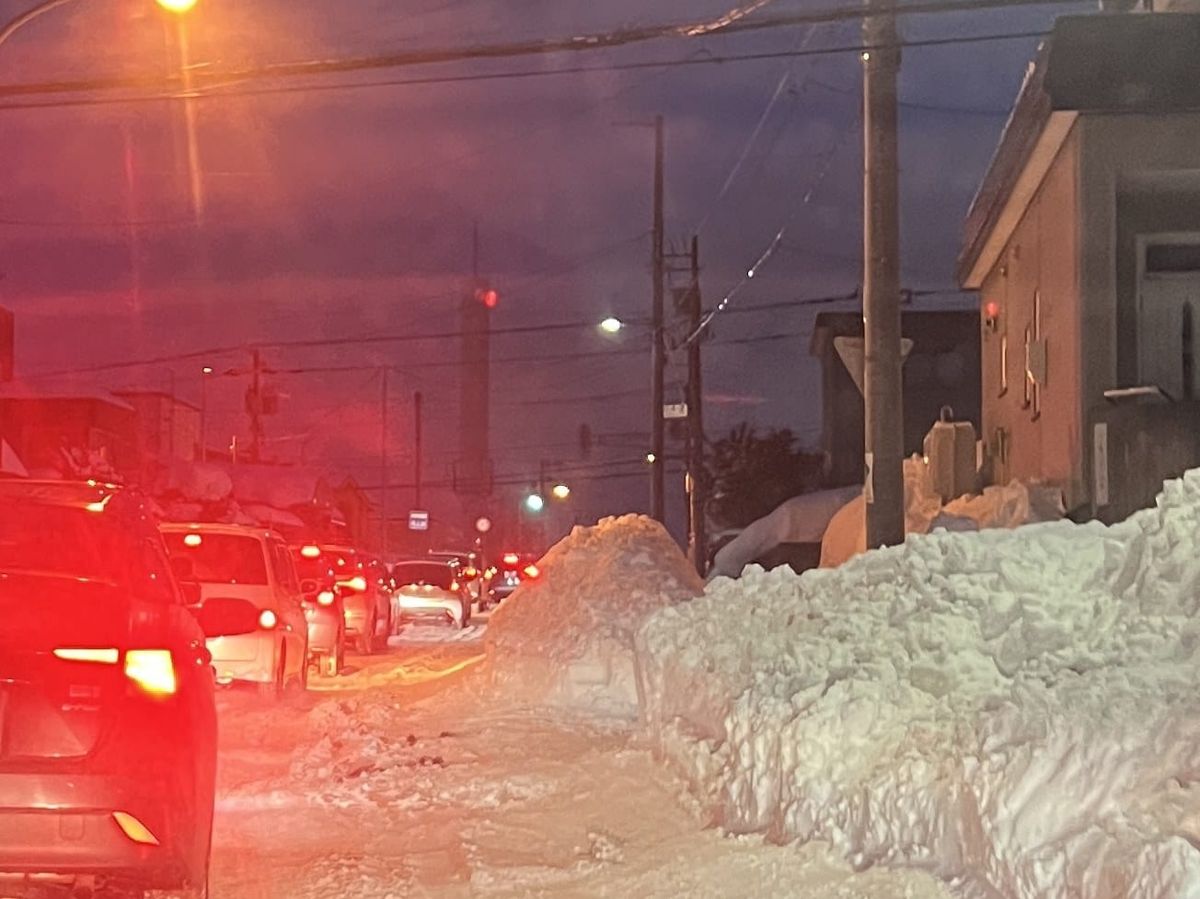
Quick Answer: Japan's transport ministry does not wait for a highway to jam before shutting it — it pre-designates stretches that close on a forecast, not on a stuck truck. For FY2025 (the 2025-26 season), MLIT lists 243 of these "preventive-closure sections" nationwide, totalling roughly 3,500km (MLIT, checked September 2026); the FY2026-27 list had not been published as of this check, so that count is the most recent confirmed figure, not next winter's. If you typed "why does Japan close highways before snow arrives" expecting red tape, the real answer is one catastrophe: in February 2018, roughly 1,500 vehicles were trapped on Route 8 near the Fukui-Ishikawa border for 65 hours. Drive in snow country between December and March and a preventive closure belongs in your itinerary planning, not on your list of surprises.
The current list: how many sections, how long
MLIT keeps a running, region-by-region list of "preventive-closure sections" — stretches of national highway that shut down as routine practice before a storm hits, not as an emergency response once trucks are already stuck on a grade.
| Fiscal year | Sections | Total length | Published | Source |
|---|---|---|---|---|
| FY2025 (Reiwa 7) — winter 2025-26 | 243 | ~3,500 km | Live on MLIT's site; exact publish date not stated on the page itself | MLIT, "Preventive-closure sections during heavy snow," checked September 2026 |
| FY2026-27 — winter 2026-27 | Not yet published | Not yet published | — | Checked September 2026; MLIT typically refreshes the list in late autumn |
The list is regional, not a single blanket rule. In Hokkaido it includes the Kutchan Pass on Route 5 — the road most people driving between Otaru or Sapporo and the Niseko-Kiroro area use if they're on the surface road rather than the expressway — and the Nakayama Pass on Route 230 between Sapporo and Jozankei, both designated since FY2018 (Hokkaido Regional Development Bureau's section list, checked September 2026). Tohoku's list includes a roughly 28km stretch of Route 4 at Okunakayama in Iwate. None of these roads sit closed all winter; they're simply pre-cleared so a closure can be declared within minutes of a forecast, rather than discovered only after the first truck loses traction.
February 2018, Route 8 in Fukui — the event that rewrote the rule
The reason Japan's road managers now close highways before conditions turn dangerous, rather than after, traces to two back-to-back storms in the winter of 2018 — and the widely repeated shorthand that fixes the date as "January 2018" gets the worse of the two wrong.
On January 22, 2018, more than 20cm of snow fell on central Tokyo — the heaviest in four years — and the Shutoko (Metropolitan Expressway) shut down roughly 70% of its network, taking up to four days to fully reopen. Less than two weeks later, from February 4, a separate and far larger storm hit the Hokuriku region: Fukui City recorded its heaviest snowfall in 37 years, and on Route 8 near the Fukui-Ishikawa border, stalled trucks without chains triggered a stranding that stretched roughly 46km at its worst and trapped an estimated 1,500 vehicles. The vehicles were still being cleared 65 hours later, from 8:30am on February 6 to 1:00am on February 9 (MLIT's interim report on winter road traffic, first issued May 2018 and revised March 2021, checked September 2026). That Fukui event, not the Tokyo one, is the case study MLIT itself cites when it explains why the old approach failed.
From "don't close what you manage" to "life first, close early"
MLIT's own account of the shift is unusually direct about what it replaced: every road manager's old goal was to avoid closing the specific road they were responsible for; the new goal is to put human life first and thoroughly avoid mass vehicle standstills on trunk roads at all, even if that means closing broadly and simultaneously "without hesitation" (MLIT's interim report, revised March 2021, checked September 2026).
That revision did not come from the 2018 storms alone. Two more mass-standstills in the following winters made the case again: in December 2020, roughly 2,100 vehicles (1,750 in one direction, 350 in the other) were stranded on the Kanetsu Expressway between Minakami and Koide interchanges, with the last section reopening only at 9:30pm on December 19 — about 59 hours after the closure began. Then in January 2021, a separate storm stranded roughly 1,600 vehicles on the Hokuriku Expressway between Fukui and Kanazu interchanges. MLIT's own conclusion was blunt: the previous target of simply minimizing closure duration was not enough, because road managers had been hesitating to close at all. The 2021 revision tells them explicitly not to fear a false alarm.
How NEXCO and MLIT decide when to close
The trigger for a preventive closure is a forecast and the road surface, not a snow gauge that has already reached a dangerous reading. The Kanto Regional Development Bureau's own explanation states the closure is carried out "based on weather forecasts and road-surface conditions... without hesitation, before safe passage becomes impossible" (MLIT Kanto Regional Development Bureau, checked September 2026). National roads that run parallel to an expressway are, in most cases, closed at the same moment the expressway closes — because traffic diverted off a closed expressway is exactly what overwhelms the parallel road next and recreates the same standstill one level down.
What this means if you are driving
Every winter I drive in Hokkaido, the Sasshu or Doo expressway between Otaru, Sapporo, and Kiroro closes at least two or three times for exactly this reason, and I get rerouted onto the ordinary road below — I can't tell you which months, only that it happens every season I've been on the road. That is the behavior a preventive-closure system is designed to make routine rather than alarming: build slack into a same-day transfer, keep the fuel tank comfortably above half before a storm, and treat a closed on-ramp as an ordinary Tuesday rather than a travel failure. If you're deciding between a bus and self-driving for the Sapporo-Kiroro corridor specifically, that trade-off is covered in our comparison of the bus versus a rental car; for what actually comes standard on a winter rental in terms of tires and equipment, see our guide to studless tires and 4WD in Japan. Our broader guide to renting a car in Hokkaido in winter covers the rest of the decision.
The dated number worth remembering
For FY2025 — the most recently published season — MLIT lists 243 preventive-closure sections nationwide, totalling roughly 3,500km; the FY2026-27 count had not been published as of this check, on September 23, 2026 (MLIT, checked September 2026). Treat any figure quoted for a season before MLIT's own autumn update as the previous year's number carried forward, not a confirmed one.
Three storms, one lesson
Three separate mass-standstills across three consecutive winters are the primary-source case MLIT itself uses for closing early rather than waiting for a truck to get stuck.
| Winter | Location | Vehicles stranded | Duration | Source |
|---|---|---|---|---|
| February 2018 | Route 8, Fukui-Ishikawa border | ~1,500 (max) | 65 hours to clear (Feb 6, 8:30am – Feb 9, 1:00am) | MLIT interim report, checked September 2026 |
| December 2020 | Kanetsu Expressway, Minakami IC–Koide IC | ~2,100 (1,750 one direction, 350 the other) | ~59 hours (Dec 17, 10:20am – Dec 19, 9:30pm) | MLIT interim report, checked September 2026 |
| January 2021 | Hokuriku Expressway, Fukui IC–Kanazu IC | ~1,600 (max) | Not broken out to the same detail in MLIT's own report | MLIT interim report, checked September 2026 |
Each of the three storms shares the same root cause: a stalled truck on a grade, followed by a closure decided too late to stop the queue behind it from growing. That is precisely what a preventive closure is meant to pre-empt — closing the road before the first truck stalls, not after. For how the same winter turns Sapporo's sidewalks into a separate hazard once you're off the highway, see our companion piece on winter-road fall statistics in Sapporo.
FAQ: Snow road closures in Japan
How many highway sections does Japan close preventively before snow arrives?
For FY2025 (the 2025-26 season), MLIT designated 243 preventive-closure sections nationwide, totalling roughly 3,500km. The FY2026-27 list had not been published as of September 2026, so travelers planning a winter drive should check MLIT's page closer to departure rather than assume the count is unchanged.
Why did Japan change its highway-closure policy?
After roughly 1,500 vehicles were stranded for 65 hours on Route 8 near Fukui in February 2018, and after two further mass-standstills — about 2,100 vehicles on the Kanetsu Expressway in December 2020 and about 1,600 on the Hokuriku Expressway in January 2021 — MLIT abandoned the old goal of each road manager avoiding closures on the road they control, in favor of closing broadly and without hesitation before conditions turn dangerous.
Is a preventive closure the same as an emergency closure?
No. A preventive closure is decided in advance from a weather forecast and road-surface conditions, before travel becomes unsafe. An emergency closure follows an incident already underway, such as a stalled truck blocking a lane, and by definition starts later and clears more slowly.
What should I do if my route is on the preventive-closure list?
Plan for it as routine, not as bad luck: build slack into same-day transfers, keep fuel above half before a storm is forecast, and have the parallel national road in mind as the fallback, since it's usually the one carrying diverted traffic once the expressway closes. Drivers heading through Hokkaido in winter should expect this two or three times in an ordinary season.