HOTEL THE MITSUI KYOTO vs Ritz-Carlton Kyoto: The Bath Takes Swimwear
Both are Marriott, so Bonvoy is no tiebreaker. The Mitsui's thermal spring takes swimwear so couples share it; rooms and breakfast are a draw.

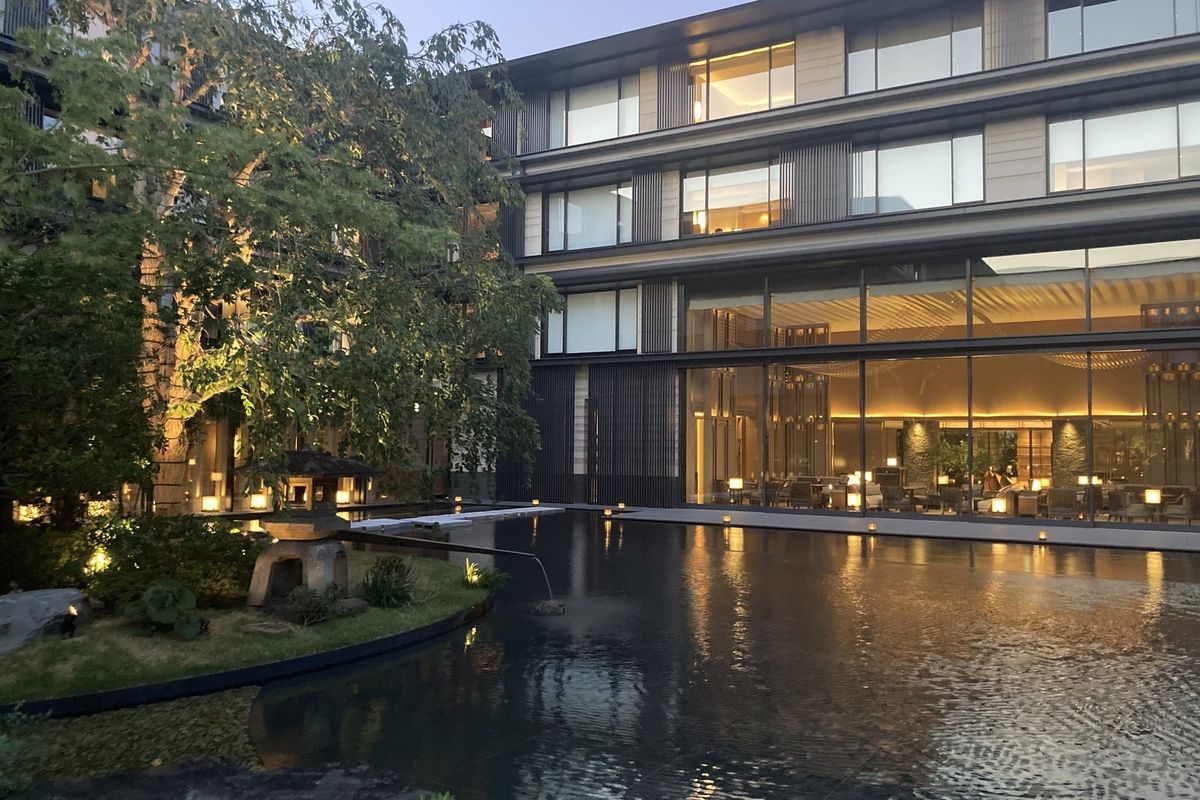
Choosing between HOTEL THE MITSUI KYOTO vs Ritz-Carlton Kyoto comes down to water, because the loyalty programme does not separate them — both are Marriott properties and both earn and burn Bonvoy points. The Mitsui has a natural thermal spring you enter in swimwear, free to guests with free swimsuit rental, from ¥132,826 for two at our check. The Ritz-Carlton has a basement pool and sauna, the Kamo River outside, and Gion within a walk, from the same ¥132,826 for two. We have stayed at both, more than once at the Ritz-Carlton, and the honest summary is that rooms and breakfast are a draw — location and what you do with an afternoon are what actually differ.
Both are Marriott, so points are not the tiebreaker
This surprises people who assume the Mitsui is an independent Japanese hotel. Its full name is HOTEL THE MITSUI KYOTO, a Luxury Collection Hotel & Spa — Luxury Collection is a Marriott brand, which puts it in the same programme as the Ritz-Carlton. Both accrue and redeem Marriott Bonvoy points, and Bonvoy status benefits apply at both.
That removes the argument that usually settles luxury comparisons. If you were planning to burn a certificate or a points balance, you can do it at either. What is left is the hotel itself, and on that they are genuinely different buildings with different reasons to exist.
There is a second thing status does not buy here: neither hotel has a club lounge. Elite members who plan around lounge breakfast and evening canapés should reset that expectation for both (central Kyoto's one exception is The Westin Miyako Kyoto). At this end of Marriott's Kyoto portfolio the benefit arrives as restaurant dining and hotel facilities instead, so check what your tier actually converts to at the specific property rather than assuming the usual pattern. It is a genuine surprise the first time, and it is the same surprise at both hotels — which is why it cannot break the tie either.
If a lounge is what you want in Kyoto, the answer is neither of these. The Westin Miyako Kyoto has one — the Westin Club — but read the access rules: it goes with the suite categories or with Marriott Platinum status, not with the hotel's ¥30,776 entry room. That is the honest answer rather than a workaround at a hotel that cannot provide it.
Location decides more than anything else here
Kyoto's sights are not evenly distributed, and these two hotels sit on opposite sides of the historic core.
The Mitsui faces Nijo Castle — where the Tokugawa shoguns stayed on visits to Kyoto, and a World Heritage site — on the western side of central Kyoto. The plot has its own history: the Mitsui main family held the Aburanokoji residence there for more than 250 years, and the hotel is built on that ground.
The Ritz-Carlton sits on the bank of the Kamo River in Nakagyo Ward, on the eastern edge of the centre. That places Pontocho, Gion and the approach to Higashiyama within walking distance, and it means river-facing rooms look at water and, beyond it, the eastern hills.
Neither is remote. Both are central. But if your Kyoto is temples in the east and dinner in Gion, the Ritz-Carlton saves you a taxi every evening; if it is Nijo Castle, the Imperial Palace and the western temples, the Mitsui does.
The hot spring is the Mitsui's real argument — and you wear swimwear in it
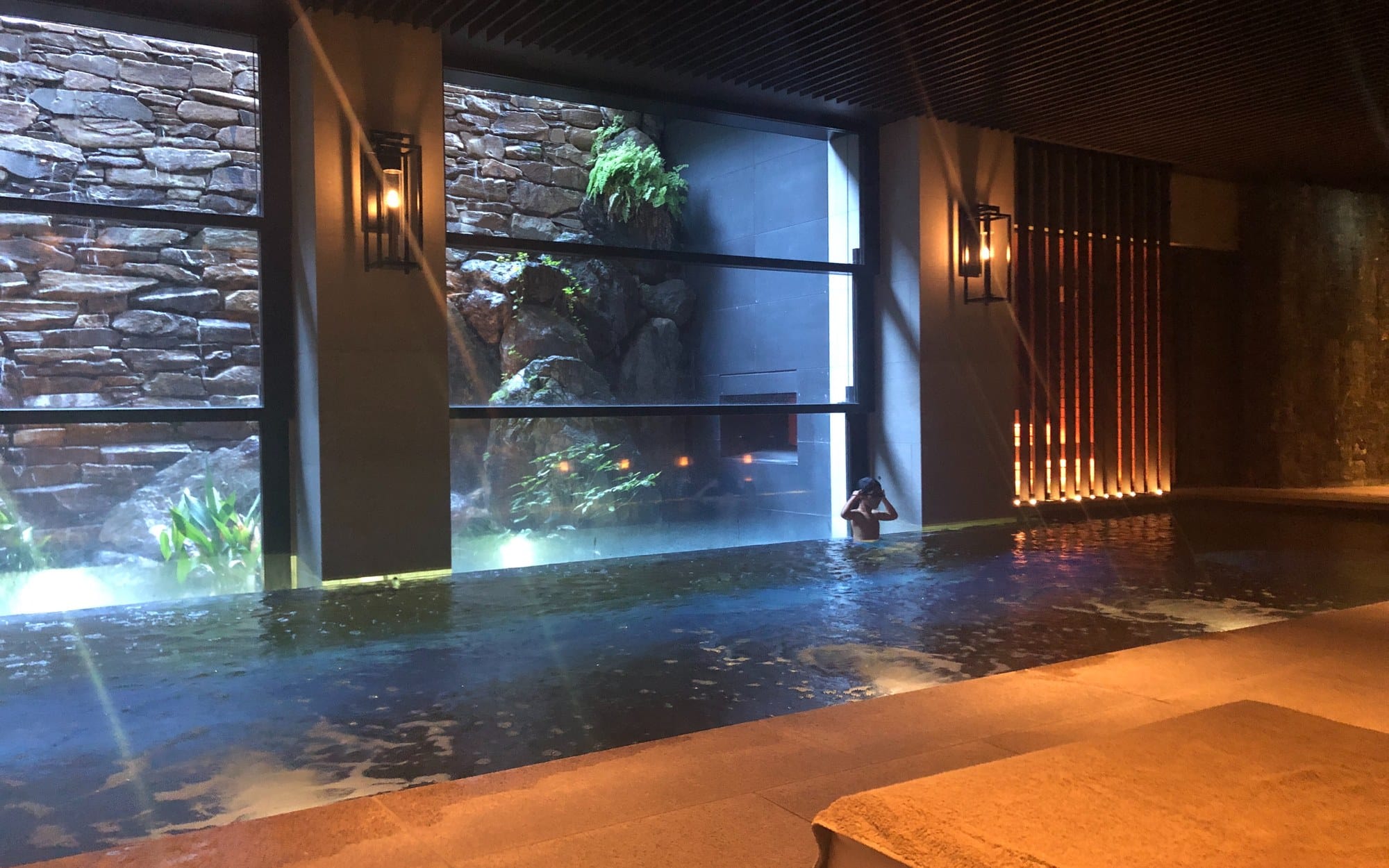
A natural hot spring rises on the Mitsui's site, and the hotel built its spa around it — a thermal spring facility fed by that source, plus a private onsen of over 100 m². Having genuine onsen water inside a central Kyoto luxury hotel is unusual, because Kyoto city is not an onsen town; the usual answer is to leave for Arashiyama or Kurama.
The detail that matters, and that almost no English source states plainly: the thermal spring requires swimwear. It is not the naked, gender-separated bathing most visitors picture when they read the word onsen. It is mixed, and a couple can use it together, which a conventional hotel onsen does not allow.
- Open 07:00–23:00, and free for hotel guests.
- Swimsuit rental is free, so you do not need to pack one.
- Children aged 4–12 are permitted between 09:00 and 17:00. Outside that window it is adults only.
That last line is the one to plan around. Go before 09:00 or after 17:00 and it is an adult space; on our stay in those hours it was quiet and there were no children in it. If you have been putting off Japanese bathing because of the undressing, this is the version that removes the objection — and the free rental removes the excuse.
The Ritz-Carlton has no equivalent claim to natural spring water. If bathing in an actual hot spring is part of what you are buying at this price, that is a clean point of difference rather than a matter of taste.
What the Ritz-Carlton gives you instead
The Ritz-Carlton answers with a different kind of afternoon. Its heated indoor pool is in the basement, with a sauna and steam room alongside, and across several stays we have found it the more comfortable place to spend an hour than the equivalent facilities at most hotels in this bracket.
The other thing it does better is dinner. The Japanese restaurant Mizuki holds a Michelin star, and the kitchen's reach shows up in small places — Pierre Hermé desserts are available in the hotel, and you can finish a tempura meal with one, which is not a combination most hotels would attempt. If eating well without leaving the building matters, this is the stronger house.
Neither hotel has a club lounge, as covered above, so what the Ritz-Carlton offers an elite member instead is this — the restaurants and the basement floor rather than a room with canapés in it.
The rooms and the breakfast are a draw
It would be convenient to report that one hotel is better appointed than the other. On our stay, the Mitsui's rooms were excellent — well finished, immaculate, nothing to fault — and at this price the Ritz-Carlton's are too. Room quality is not what separates them, and with both floors at the same rate, choosing on it would be inventing a difference.
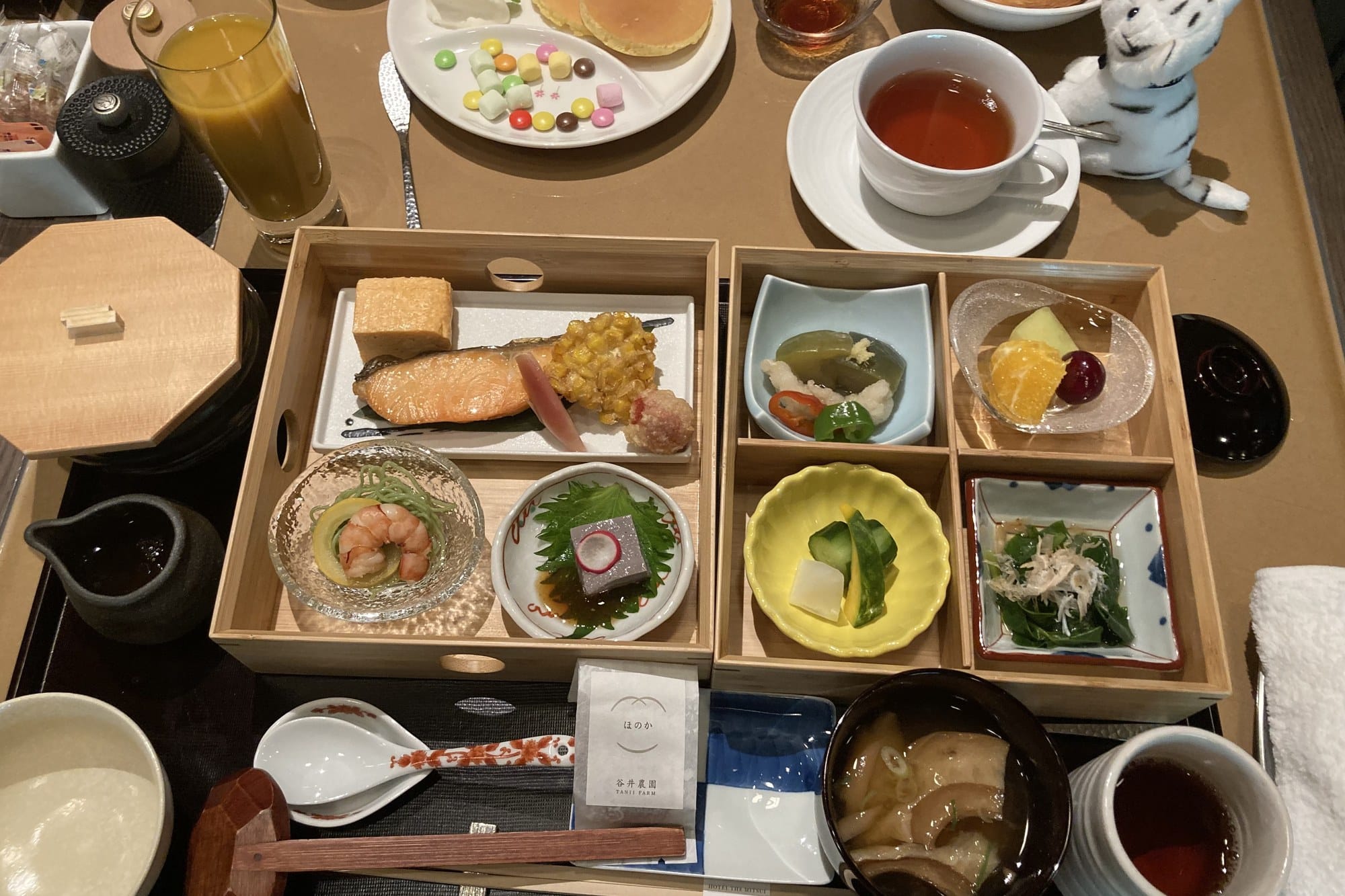
Breakfast is the same story, which is worth saying because breakfast is often where hotels at this level separate. The Mitsui's is very good. The Japanese breakfast at the Ritz-Carlton Kyoto, which we have also eaten, is its equal. Neither is a reason to pick the other.
The practical consequence is that the comparison collapses to two questions — which side of the city, and do you want the bath — rather than the long amenity list these hotels publish.
| Name | Area | Price range | Best for |
|---|---|---|---|
| HOTEL THE MITSUI KYOTO | Opposite Nijo Castle, central-west | from ¥132,826 for two | Natural hot spring on site, newer building, western Kyoto sights |
| The Ritz-Carlton Kyoto | Kamo River, Nakagyo, central-east | from ¥132,826 for two | River views, walking distance to Gion and Higashiyama |
Both figures are the lowest advertised rate for two people with no date specified, checked in August 2026. Actual rates in cherry blossom and autumn colour season run far above these floors.
Age, size and what that feels like
The Mitsui opened in November 2020 with 161 rooms, 22 of them suites. The Ritz-Carlton opened in February 2014 with 134 rooms, including 17 suites across nine types and one Japanese-style room.
Six years is a meaningful gap at this level — the Mitsui's rooms and systems are simply newer. Against that, the Ritz-Carlton has had a decade to settle its service, and it has held a Forbes Travel Guide Five-Star rating for nine consecutive years as of 2026, which is the kind of consistency a new opening cannot claim yet.
Both hotels sit under 165 rooms, which by international luxury standards is small. Neither will feel like a convention property.
How to actually decide
Work through it in this order and you will not need to compare amenity lists.
- Which half of Kyoto is your trip? East, with Gion and Higashiyama, points to the Ritz-Carlton. West and central, with Nijo Castle and the Palace, points to the Mitsui.
- Does a bath change your day? If yes, the Mitsui's natural hot spring settles it, and this weighs heavier in winter.
- Travelling as a couple? The Mitsui's thermal spring takes swimwear, so you use it together. A conventional hotel onsen separates you at the door.
- Do you want to eat in the hotel? Ritz-Carlton. A Michelin-starred Japanese restaurant and Pierre Hermé desserts is a deeper bench than most hotels carry.
- Do you have Bonvoy status? Both take it, but the Ritz-Carlton has no club lounge, so confirm what your tier converts to before you count on it.
- Comparing rooms or breakfast? Do not bother. Across our stays they were a draw, and the difference you are looking for is not there.
| If this is you | Area | Price range | Best for |
|---|---|---|---|
| First Kyoto trip, temples in the east | Kamo River | from ¥132,826 | The Ritz-Carlton — you walk to more of what you came for |
| Winter trip, bath-led | Nijo Castle | from ¥132,826 | The Mitsui — natural hot spring on site |
| Repeat visitor, western Kyoto | Nijo Castle | from ¥132,826 | The Mitsui — closer to the sights you have not done |
| Burning Bonvoy points | Either | Points | Both qualify; decide on location instead |
If neither is quite right, Kyoto's luxury tier is deeper than these two — our Kyoto kaiseki ryokan guide covers the traditional alternative at a similar spend, and central Kyoto machiya stays cover the case where you would rather have a house than a hotel. For the wider question of which base suits a first trip, see Kyoto vs Osaka.
FAQ: HOTEL THE MITSUI KYOTO vs Ritz-Carlton Kyoto
Is HOTEL THE MITSUI KYOTO a Marriott hotel?
Yes. Its full name is HOTEL THE MITSUI KYOTO, a Luxury Collection Hotel & Spa, and Luxury Collection is a Marriott brand. It earns and redeems Marriott Bonvoy points, as does the Ritz-Carlton Kyoto, so the loyalty programme does not distinguish the two.
Which is more expensive, the Mitsui or the Ritz-Carlton Kyoto?
Neither, at the floor. Both showed the same undated lowest rate of ¥132,826 for two at our check in August 2026, which is why price is not the way to separate them. Both climb steeply in cherry blossom and autumn colour season.
Does HOTEL THE MITSUI KYOTO have an onsen?
Yes, and it is a genuine one — a natural hot spring rises on the hotel's own site and feeds a thermal spring facility, alongside a private onsen of more than 100 m². That is unusual for central Kyoto, which is not an onsen district.
Do you need a swimsuit at the Mitsui's thermal spring?
Yes, and you do not need to pack one — swimsuit rental is free. The thermal spring is a mixed swimwear facility rather than the naked, gender-separated bathing that the word onsen usually implies in Japan, so couples can use it together. It is open 07:00–23:00 and free for hotel guests, with children aged 4–12 admitted between 09:00 and 17:00.
Does either hotel have a club lounge?
Neither does. Both recognise Marriott Bonvoy status, but the benefit arrives through restaurants and hotel facilities rather than lounge access, so confirm what your tier converts to at the specific property before booking on that assumption. If a lounge is what you want in Kyoto, the Westin Miyako Kyoto is the Marriott property to look at instead.
Which has the better rooms and breakfast?
Neither, in our experience. The Mitsui's rooms were excellent and its breakfast very good, and the Japanese breakfast at the Ritz-Carlton Kyoto is its equal. The two hotels separate on location and on the hot spring, not on room quality or food.
Which hotel is closer to Gion?
The Ritz-Carlton Kyoto, which sits on the Kamo River in Nakagyo Ward and puts Pontocho, Gion and the Higashiyama approach within walking distance. HOTEL THE MITSUI KYOTO is on the western side of the centre, opposite Nijo Castle, and is better placed for the Imperial Palace and the western temples.