A Yamanashi Winery Day Without a Car: Sleep at Isawa-Onsen
One station serves both of Yamanashi's best wineries, and the town to sleep in is two stops away. Train, taxi, and nobody has to be the driver.

A Yamanashi winery day works without a car, and the trick is to sleep at Isawa-Onsen rather than in the wine country itself. Enzan, the station that serves both of the area's best wineries, has very little accommodation; Isawa-Onsen is a full onsen town twelve minutes away by train. From Shinjuku the limited express reaches it in about 90 minutes for ¥3,890. From Enzan a taxi reaches Manns Wines Katsunuma in about seven minutes and 98WINEs in about twenty for around ¥3,000 — and because nobody is driving, everybody drinks. Rooms at Isawa-Onsen start from ¥15,840 for two at Isawa Tokiwa Hotel.
Why you sleep two stops away from the wine
The instinct is to stay as close to the vineyards as possible. In this corner of Yamanashi that is the wrong instinct.
Enzan is the right station — it serves both wineries and the taxis are there — but the town around it is small and the accommodation thin. Isawa-Onsen, twelve minutes back down the same JR line, is an established onsen town with the depth of choice that implies.
The other argument is what the day ends with. A winery day is a day of small pours in the sun, and finishing it in hot water rather than in a station hotel is a genuinely different evening. This is the only one of Japan's wine regions where the option exists.
The two wineries are opposites, which is why you do both
Yamanashi has dozens of wineries. These two are worth the day because they sit at opposite ends of what a winery visit can be, and doing both in one day makes each one clearer.
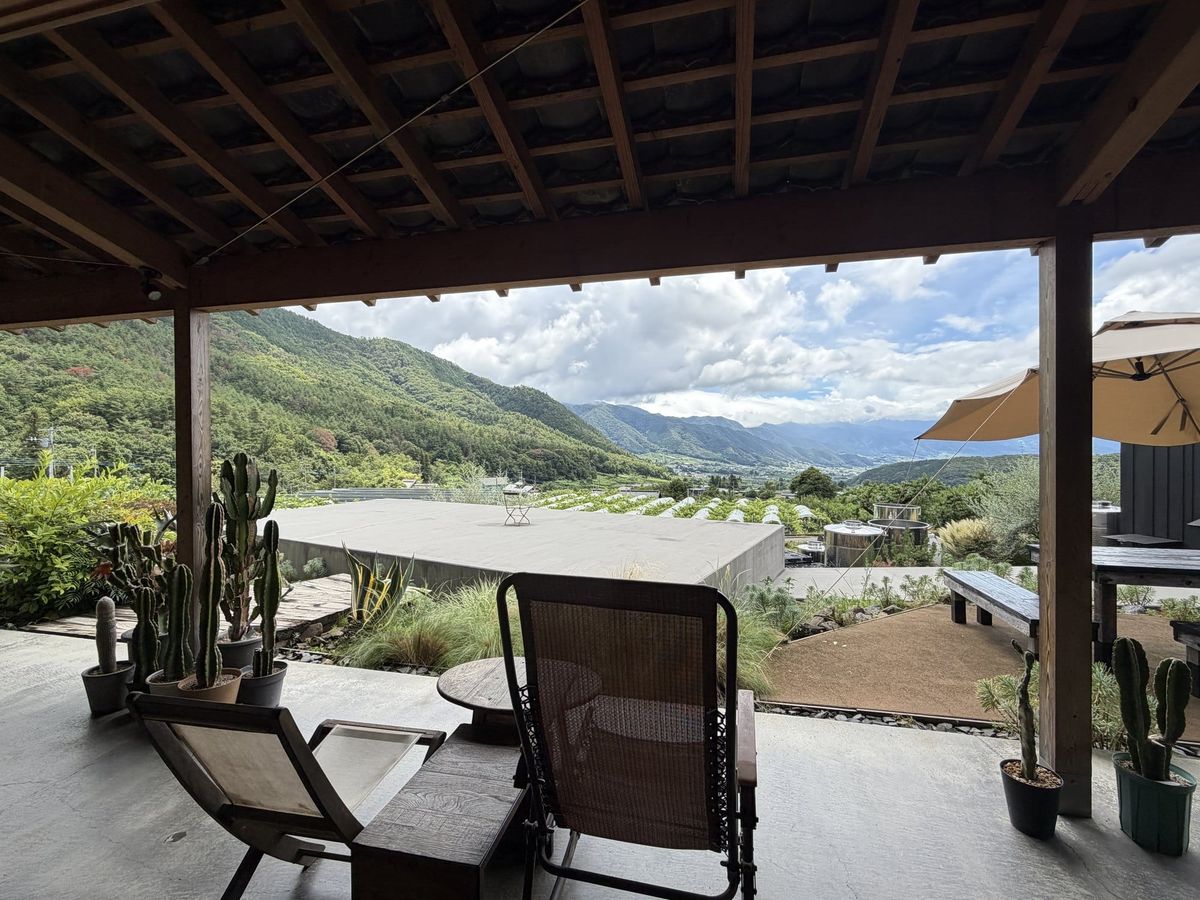
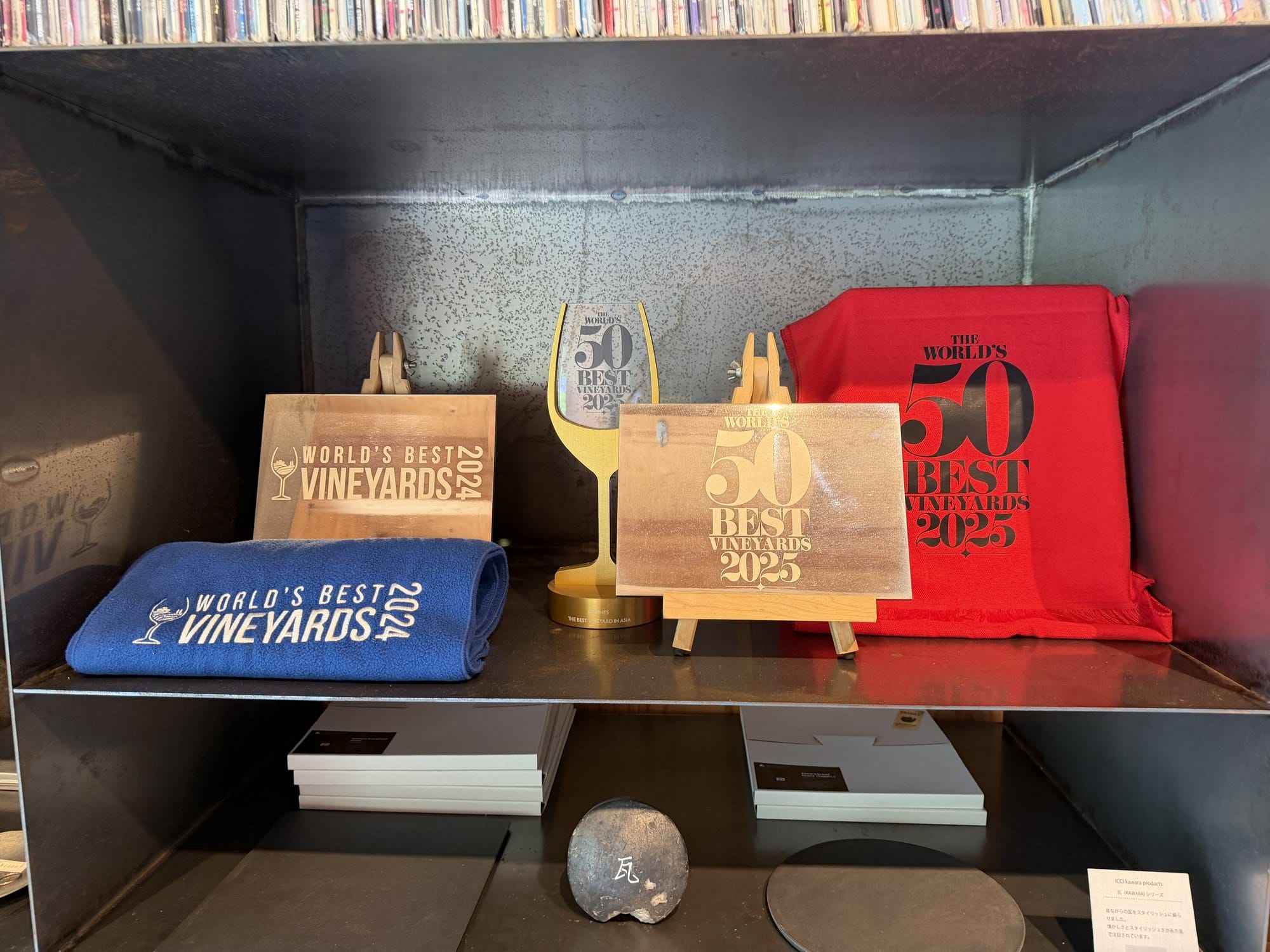
98WINEs is the boutique. It ranked 20th in The World's 50 Best Vineyards 2025 and holds the Best Vineyard in Asia title, and it opens on Saturdays and Sundays only, 09:00 to 17:00. The tasting is a single decision: ¥800 for all four wines, poured under coloured caps that match the caps on the bottles so you can see which is which. The terrace looks straight down a valley with Mount Fuji dead ahead, when the cloud allows.
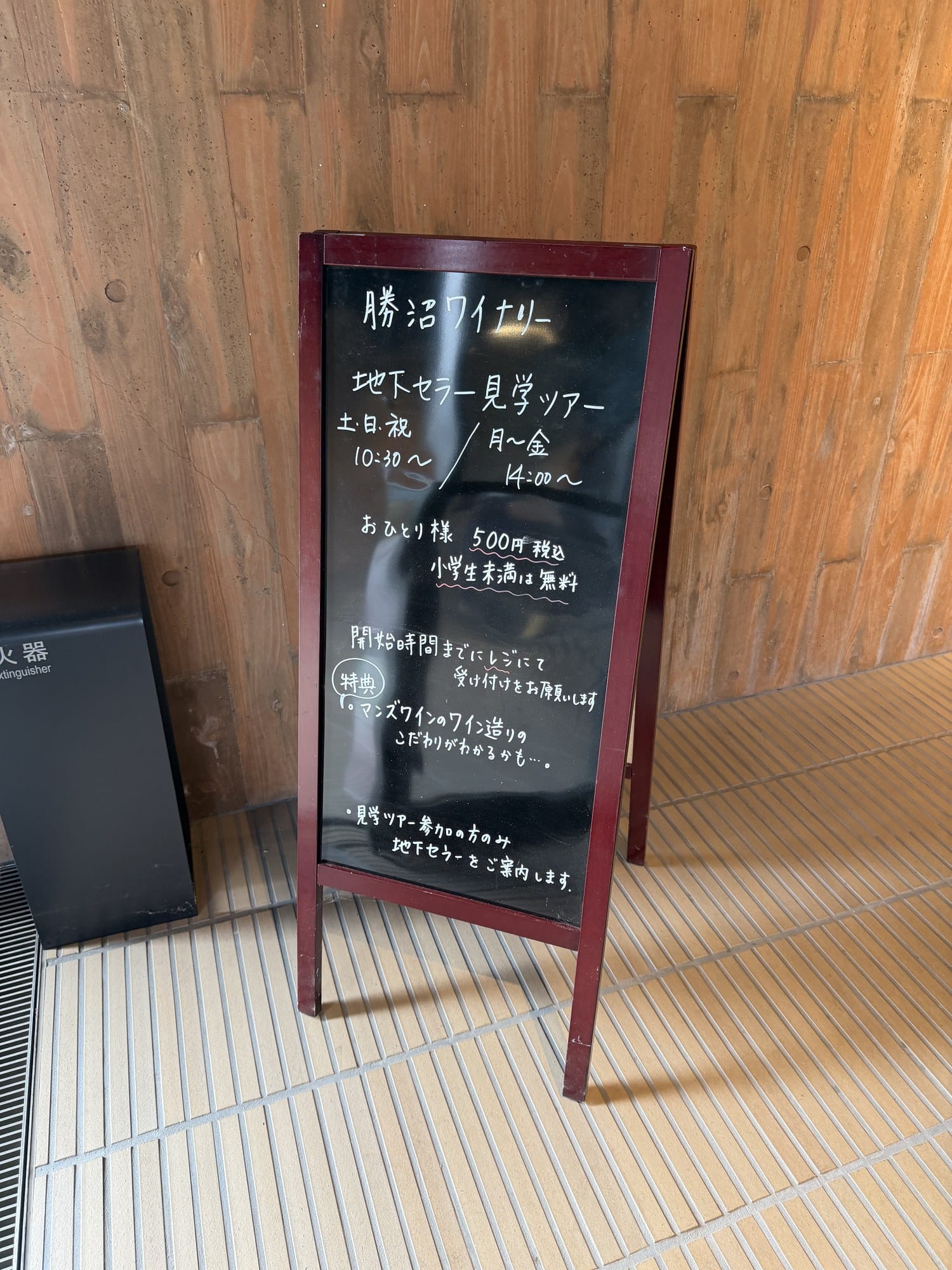
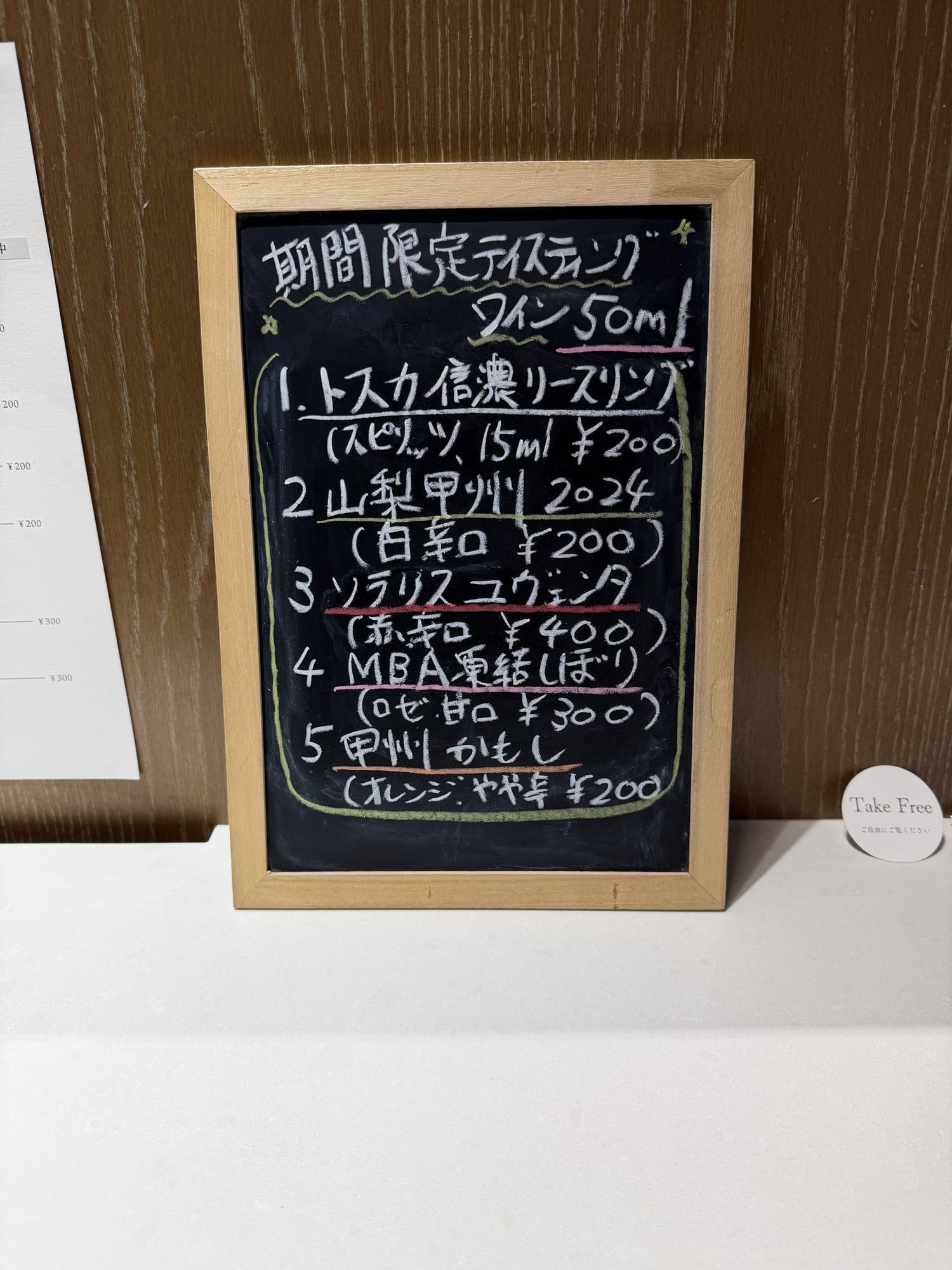
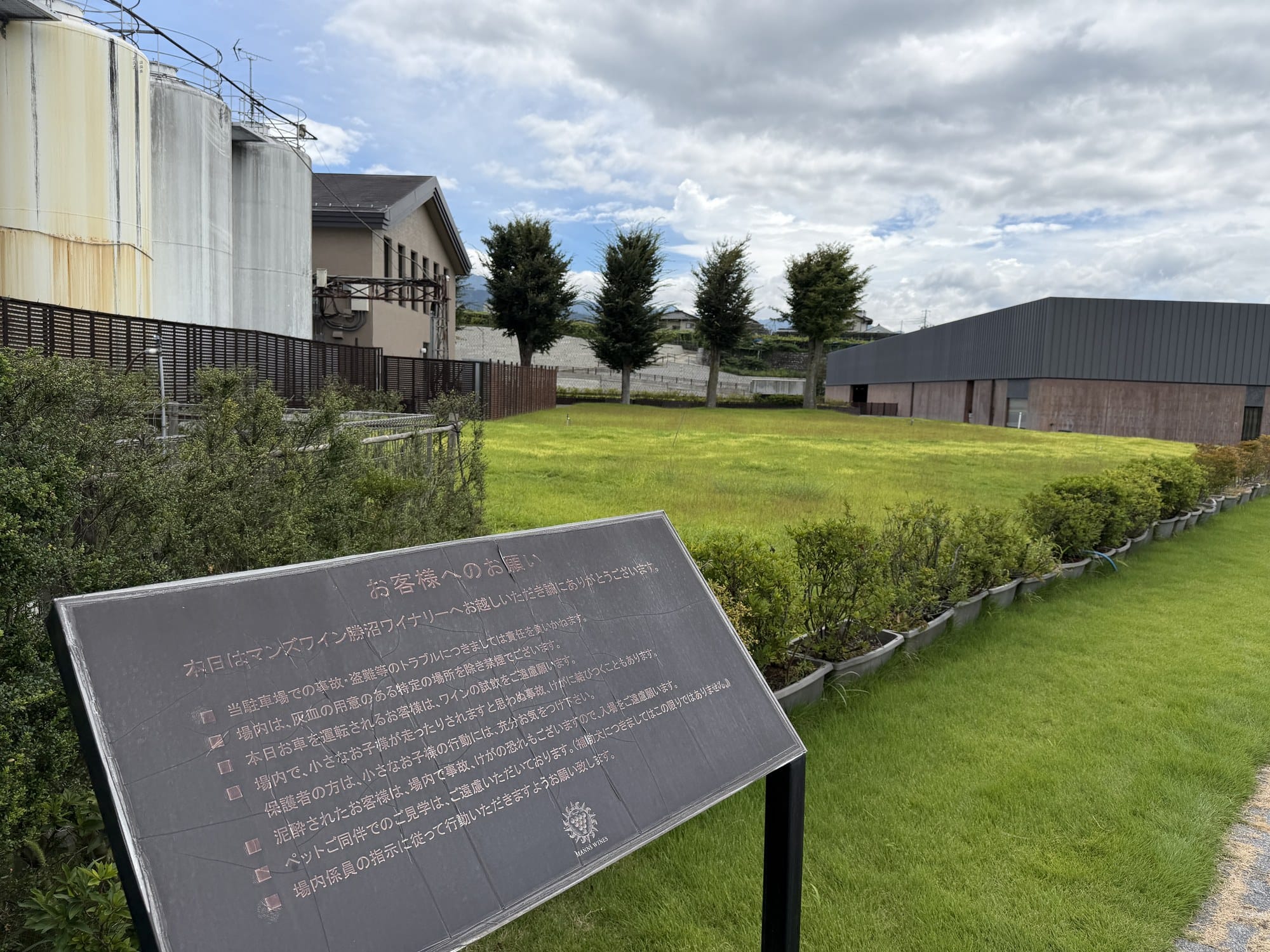
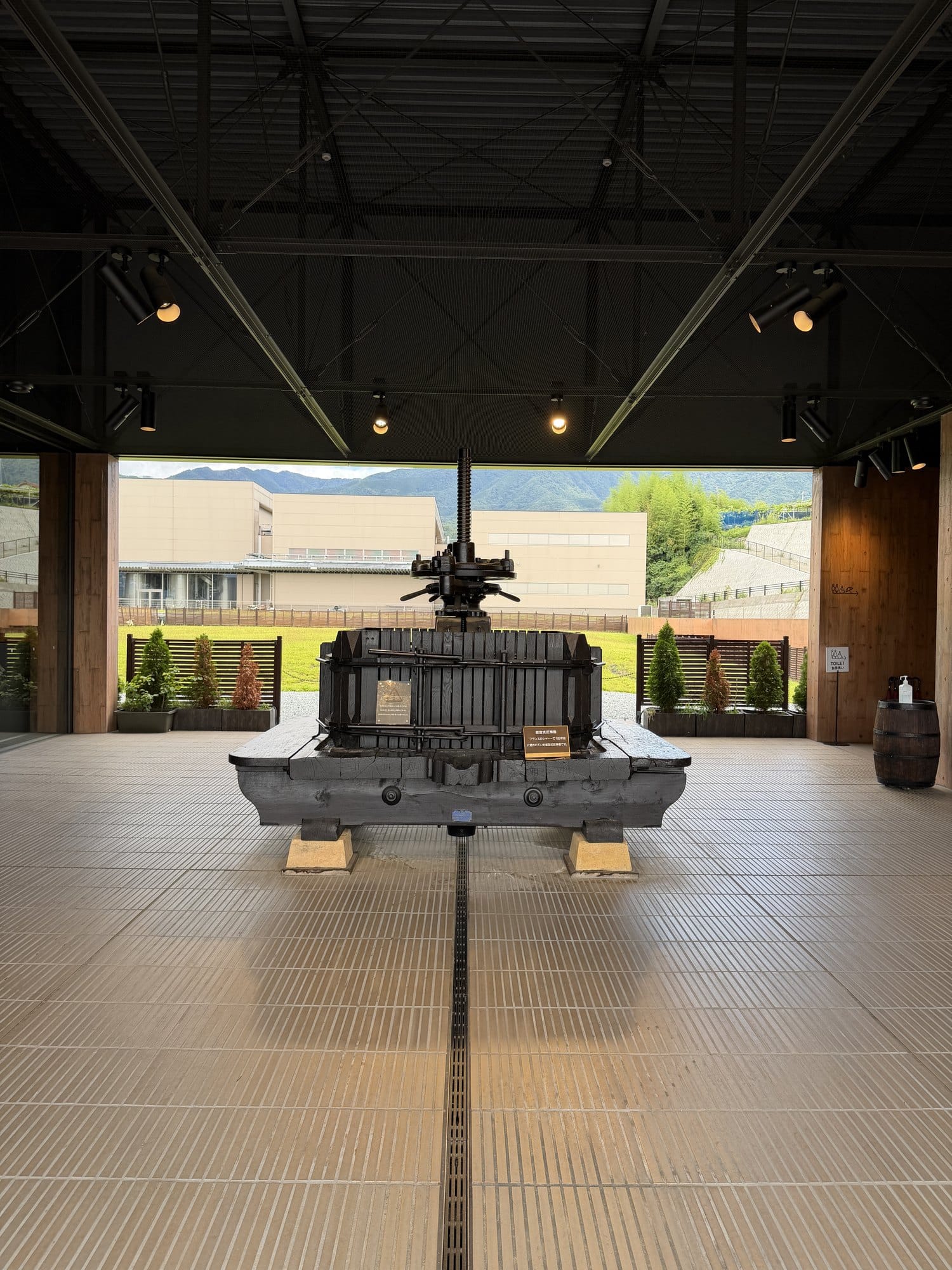
Manns Wines Katsunuma is the opposite: a long-established producer, open every day, with a numbered tasting list you build yourself. A single pour of sparkling starts at ¥200, Koshu and Muscat Bailey A at ¥300, and the Nagano bottlings run to ¥800. Sets range from ¥800 for five sparkling wines to ¥2,200 for the top range. There is also a guided underground cellar tour, and the cellar is not otherwise open — the tour is the only way in. Two different tours run under that name, and the website describes only the one you book ahead: weekdays (Monday to Friday, excluding public holidays) are the standard version, 30 to 40 minutes for ¥500 including tax; weekends and public holidays are the premium version, about an hour, taking in areas otherwise closed to the public, at ¥1,500 with three wines or ¥1,000 with two juices, starting at 14:00. Reservations open three months ahead and close two days before your visit (checked against Manns' own Katsunuma winery page, August 2026). ⚠ The other one is not on the website: a walk-up tour advertised on a blackboard at the entrance, ¥500 including tax, free below elementary-school age, at 10:30 on weekends and public holidays and 14:00 Monday to Friday, signed up for at the till before it starts. So arriving without a booking is not the dead end the website implies — what you cannot get on the day is the premium version.
What you can see from the terrace is not what is in your glass
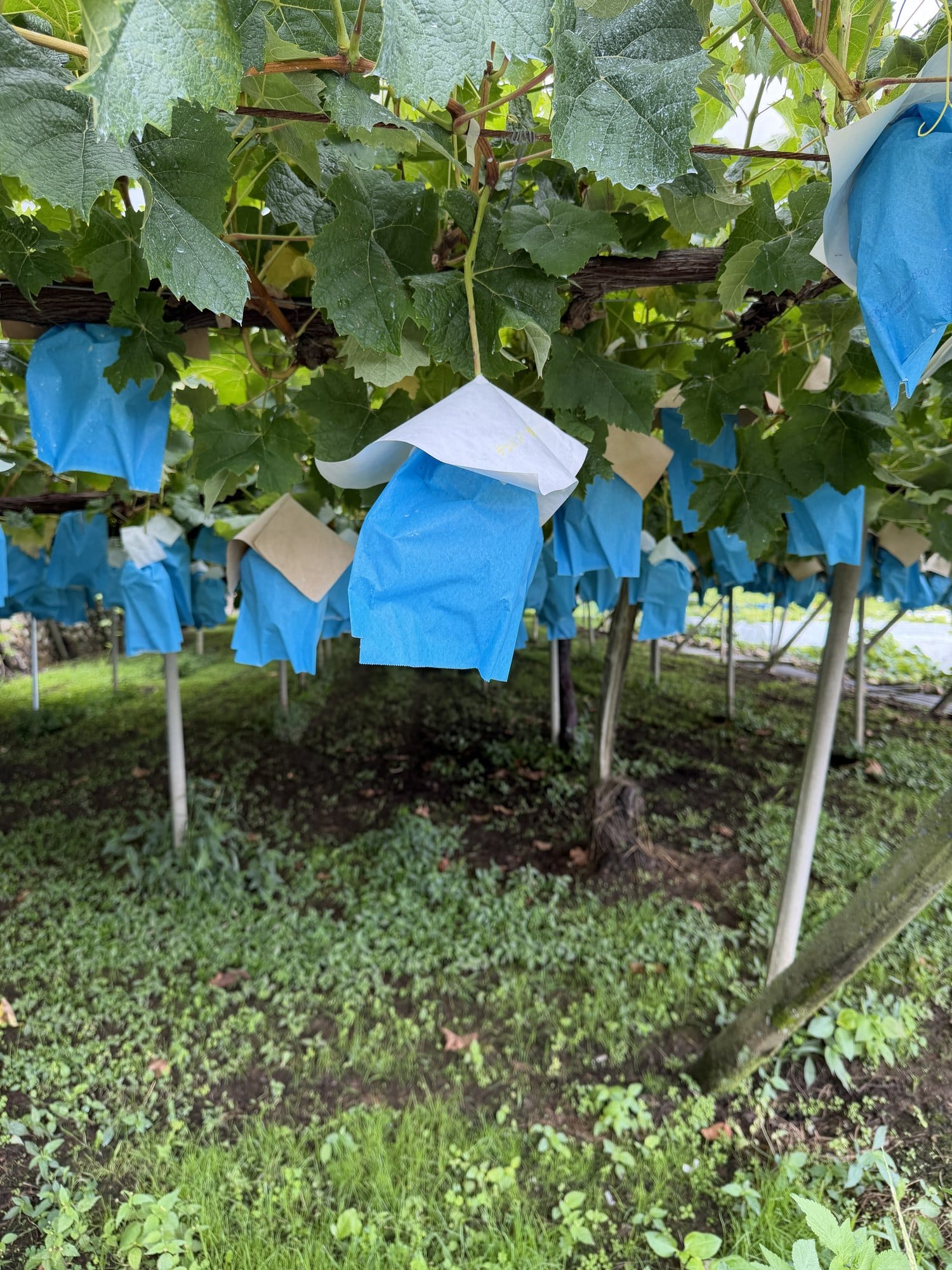
The view from 98WINEs runs over rows of vines with every bunch wrapped in pale blue paper. It looks like the answer to where the wine comes from. It is not.
Those are eating grapes. Bagging each bunch by hand is standard practice for table fruit in Japan, protecting it from rain, disease and birds through a growing season that includes both a rainy season and typhoons. The vines are trained overhead on a pergola for the same reason — to get air moving under the canopy.
The wine fruit comes from around Katsunuma, further down the valley. Yamanashi's grape country is really two industries sharing a landscape, and Koshu straddles them by being both a wine grape and a fruit-shop grape. That is also why the estate sells bottled grape juice at ¥2,450 alongside the wine, under a local grower's name — the fruit below the terrace has somewhere to go.
The taxi costs more than the wine
Worth saying plainly, because the headline numbers make this look cheaper than it is.
A return taxi from Enzan to 98WINEs is roughly ¥6,000. The tasting there is ¥800. Add a pâté and a slice of cheesecake — both of which arrive plated like restaurant courses rather than winery-café food, at ¥1,200 and ¥800 — and two people spend around ¥3,600 inside the winery and ¥6,000 getting to it.
That is not an argument against going. It is an argument for doing both wineries in one day, because the fixed cost is the travel and the marginal cost of the second stop is a seven-minute fare.
How the day actually runs
The schedules do most of the planning for you, and they point in different directions depending on the day of the week.
On a Saturday or Sunday. Go to 98WINEs first — it opens at 09:00 and the view is better in the morning light — then taxi back for the 14:00 premium cellar tour at Manns, which is the fixed appointment in the day. The tour is the constraint, not the opening hours: book it at least two days ahead and build the rest of the day around it.
On a weekday. 98WINEs is closed, so the day is Manns alone, and the standard cellar tour runs at 14:00 for ¥500. That is a half day rather than a full one, and it is a reason to arrange the trip around a weekend if you can — the weekend tour is longer and goes further in, though it costs more.
Book 98WINEs ahead — it asks you to, and two open days a week is not much capacity. We arrived without a reservation at midday on a Saturday in August and were seated, but that is one visit rather than a rule.
Where to stay at Isawa-Onsen
Isawa-Onsen is a working onsen town rather than a resort, which keeps the rates sensible for what you get.
| Name | Area | Price range | Best for |
|---|---|---|---|
| Isawa Tokiwa Hotel | Isawa-Onsen | from ¥15,840 for two | The onsen base, twelve minutes from the wine |
| Hanayagi no Sho Keizan | Isawa-Onsen | from ¥16,720 for two | Meals included, so the evening needs no planning |
| Dormy Inn Kofu Marunouchi | Kofu | from ¥12,152 for two | A city alternative if the onsen rates climb |
Rates are the lowest advertised for two with no dates specified, checked in August 2026. Onsen rates here often include dinner and breakfast while city hotel rates do not, so compare after meals rather than on the headline. The town's range runs wider than the table suggests — of the twelve Isawa-Onsen properties we checked, the entry rate for two ran from ¥15,840 to ¥59,840, so the ryokan tier here reaches well above what a first look at the town implies.
Which of the two, if you only do one
| If this is you | Winery | Cost | Best for |
|---|---|---|---|
| Travelling midweek | Manns Katsunuma | from ¥200 a pour | The only one open — 98WINEs is weekends only |
| You want the view | 98WINEs | ¥800 for four wines | Terrace facing Mount Fuji |
| You want to understand how it is made | Manns Katsunuma | ¥500 cellar tour | The cellar is tour-only |
| You hate choosing from menus | 98WINEs | ¥800, all four | One decision, then you sit down |
| You want to taste widely and cheaply | Manns Katsunuma | ¥200–¥800 a glass | Build your own flight across two prefectures |
For the wider picture, our guide to Japan's wine regions covers how Yamanashi differs from Nagano and Hokkaido, and the Chikuma River Wine Valley guide covers the Nagano trail — which is relevant here, because Manns pours its Nagano wines at the Katsunuma counter and you can taste both prefectures without leaving the room.
FAQ: a Yamanashi winery day
Can I visit Yamanashi wineries without a car?
Yes, and you should if you want to drink. Take the train to Enzan, then taxis — about seven minutes to Manns Wines Katsunuma and twenty to 98WINEs. Wineries here post notices asking drivers not to taste, so a rental car costs one person their day.
Why stay at Isawa-Onsen rather than near the wineries?
Because Enzan has little accommodation and Isawa-Onsen is a full onsen town twelve minutes away on the same line. You also finish a day of tasting in hot water rather than in a station hotel, which no other Japanese wine region lets you do.
How much does a Yamanashi winery day cost?
Less inside the wineries than getting to them. The tasting at 98WINEs is ¥800 for four wines and a pour at Manns starts at ¥200, but the return taxi from Enzan to 98WINEs is around ¥6,000. Doing both wineries in one day is how you make the travel cost worth paying.
Is 98WINEs open on weekdays?
No — Saturdays and Sundays only, 09:00 to 17:00. Manns Wines Katsunuma opens daily, and its guided cellar tour starts at 14:00 whichever day you go — the standard tour (¥500) on weekdays, the longer premium tour (¥1,500 with wine) on weekends and holidays. Reservations close two days before, so it is not something you can decide on the morning. If your trip is midweek, plan for Manns alone.
Do I need to book?
For the Manns cellar tour, yes — bookings close two days before the visit, so it cannot be arranged on the day. 98WINEs asks you to as well, and with two open days a week that is the safe move. We arrived at midday on a Saturday in August without a reservation and were seated, but treat that as one data point rather than a policy.