Japanese Wine Regions: Three Places, Three Grapes, One Problem
The World's 50 Best Vineyards has two Asian entries and both are Japanese, 100km apart, sharing almost no grapes. Yamanashi, Nagano and Hokkaido compared.

Japanese wine regions are easier to navigate than they look, because the whole country reduces to three of them and they grow different things for reasons you can see from the road. The World's 50 Best Vineyards list has exactly two Asian entries and both are Japanese: 98WINEs in Yamanashi at number 20, which also holds the Best Vineyard in Asia title for 2025, and Château Mercian Mariko in Nagano at number 46. They sit about 100km apart and share almost no grape varieties. Start in Yamanashi if you want Japan's own grape and the shortest trip from Tokyo, Nagano if you want European varieties grown at altitude, and Hokkaido if you are chasing cool-climate reds.
Two vineyards, two prefectures, almost nothing in common
The award list is a useful way in precisely because the two Japanese entries are so unalike.
98WINEs sits above the Koshu basin in Yamanashi and works with Koshu and Muscat Bailey A — two grapes that are effectively Japan's own. Château Mercian Mariko sits in the Chikuma River valley in Nagano and works with Merlot, Chardonnay, Cabernet Sauvignon and Riesling. One is making wine from what Japan already had; the other is making wine from what Europe brought.
Neither is more authentic than the other. But knowing which one you want saves you from a trip built on the wrong expectation, and the split runs cleanly through the whole country.
Why Japanese vineyards look strange the first time
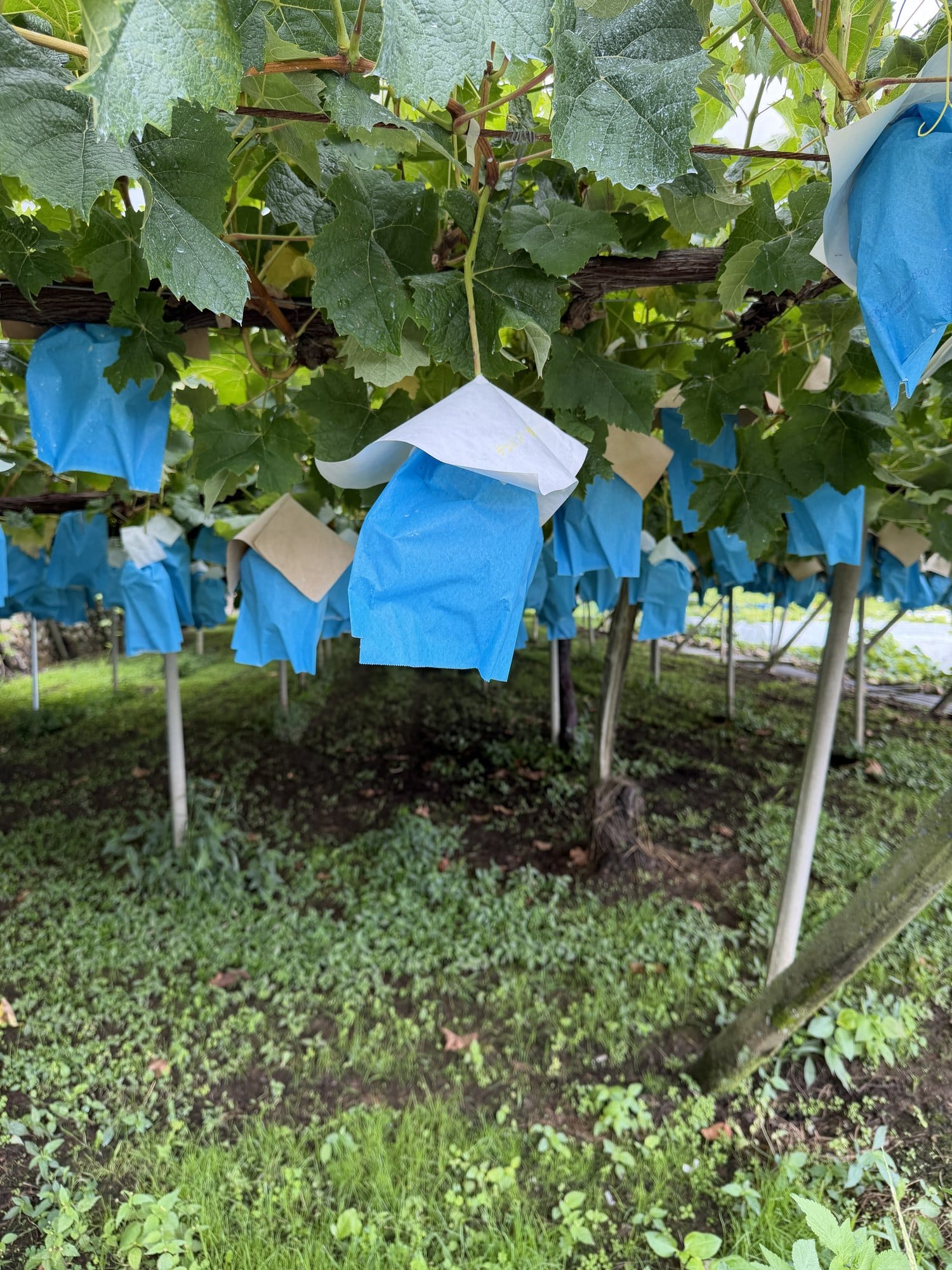
Two things surprise visitors who have walked European vineyards, and both are answers to the same problem.
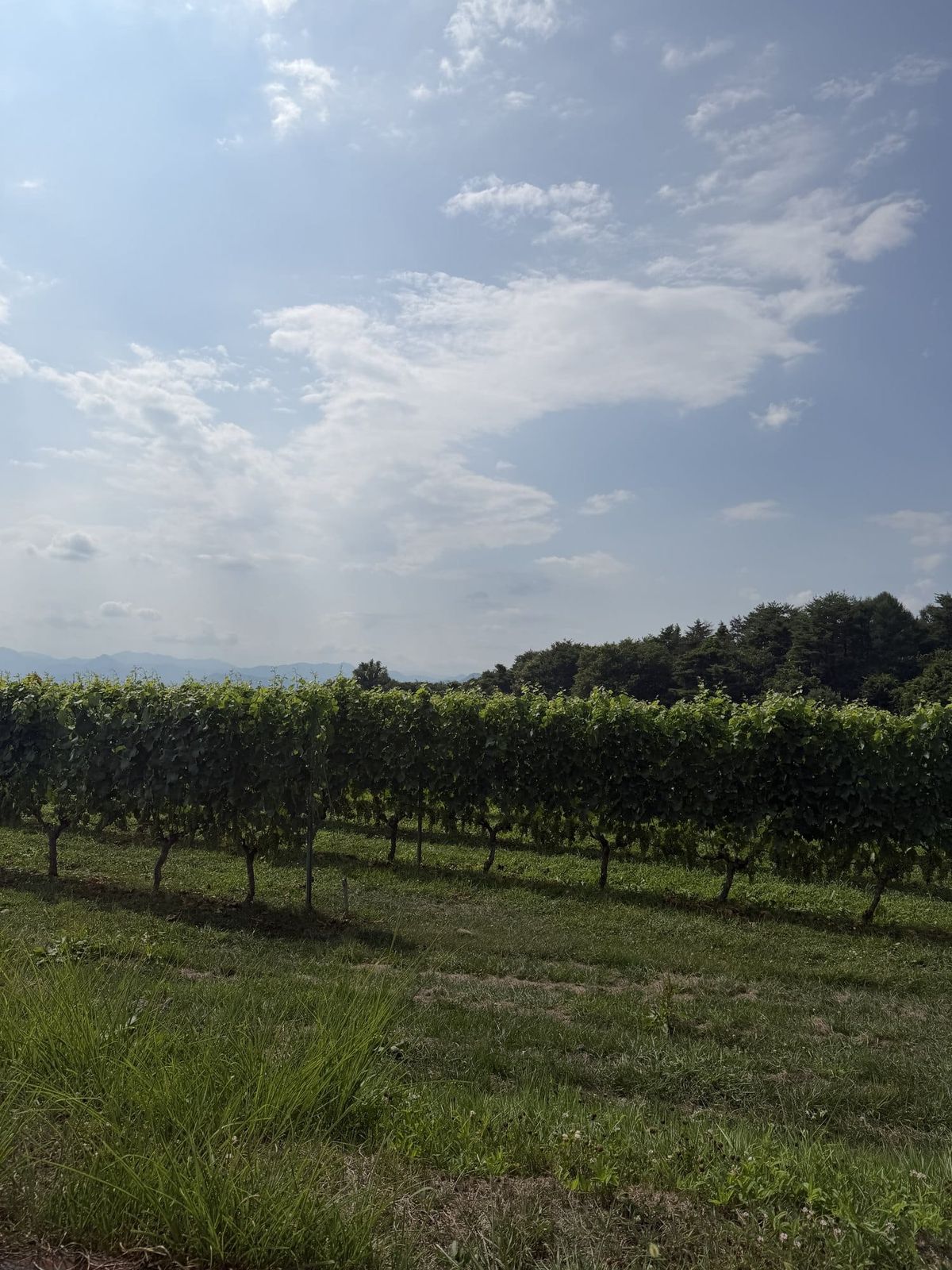
The first is that the vines are often trained overhead on a pergola rather than in the waist-high rows you know, so you walk under the fruit rather than beside it. The second is that individual bunches are wrapped in paper bags — a wall of pale blue paper where you expected grapes.
Japan's growing season is hot and wet, with a rainy season and then typhoons. Raising the canopy gets air moving through it; bagging protects the fruit from rain, disease, birds and insects. Both practices come out of humidity rather than tradition for its own sake.
One nuance worth carrying: bagging is standard for table grapes, and Japan's grape country grows a great deal of fruit for eating. At 98WINEs the bagged bunches below the terrace are eating grapes; the wine fruit comes from Katsunuma, further down the valley. The vineyard you photograph is often not the vineyard in your glass.
Yamanashi: Japan's own grape, ninety minutes from Shinjuku
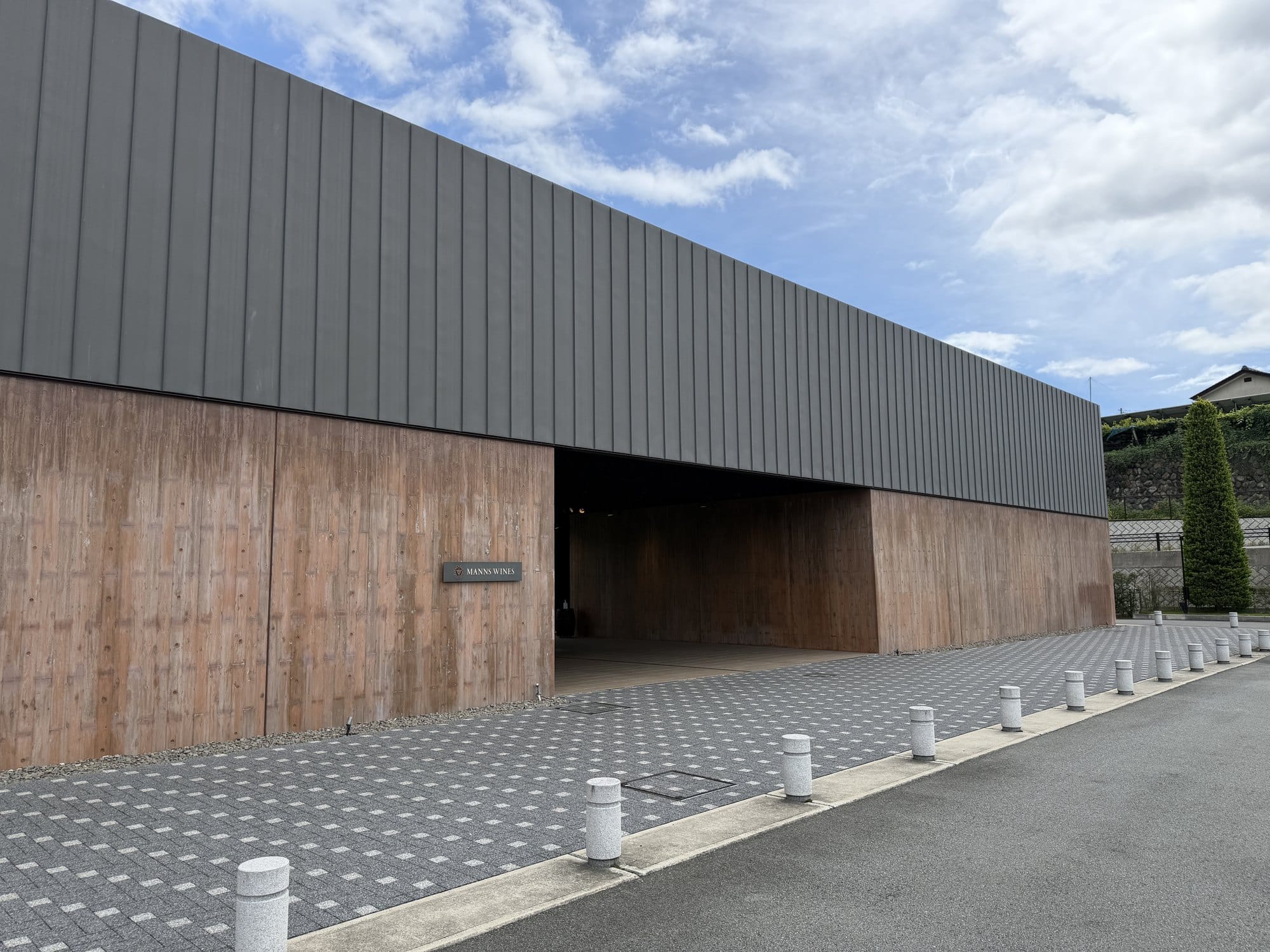
Yamanashi is where most people should start. The limited express from Shinjuku reaches Isawa-Onsen in about 90 minutes for ¥3,890, and the wine country begins two stops further on.
The grape is Koshu — pale pink-skinned, grown in Japan for centuries, and unusual in being both an eating grape and a wine grape. The wines are light, dry and citrus-edged, and they are the thing you cannot taste anywhere else. Muscat Bailey A is the red equivalent.
The practical shape of a Yamanashi day is train to Enzan, then taxi. From that one station a seven-minute ride reaches Manns Wines Katsunuma, where a single pour starts at ¥200, and a twenty-minute ride reaches 98WINEs, where a tasting of the full four-wine range is ¥800.
Nagano: European varieties, grown high
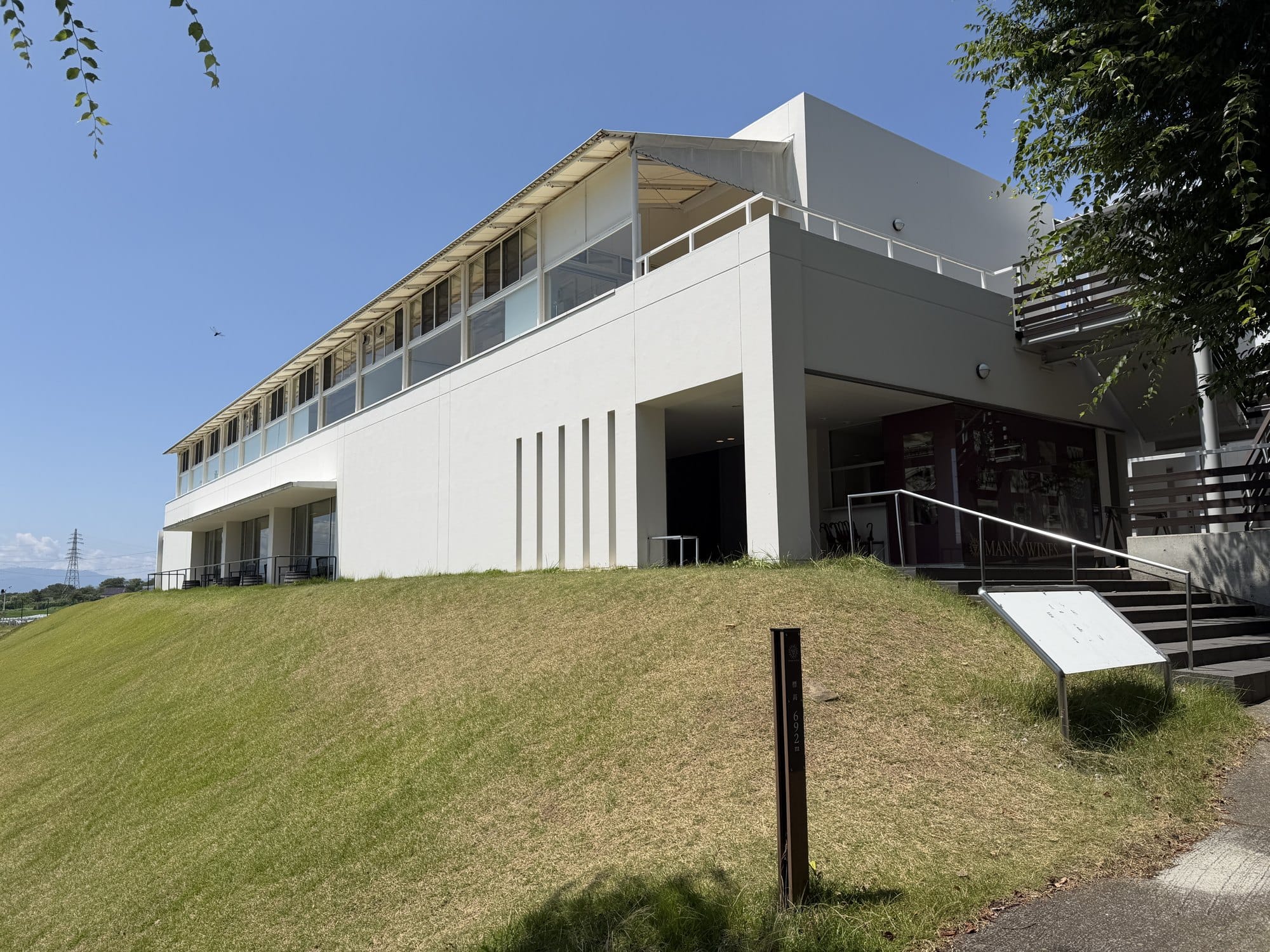
Nagano is the counterweight. The Chikuma River Wine Valley runs northeast from Karuizawa through Komoro, Tomi and Ueda, following a single railway line, and the estates along it grow the international varieties.
Altitude is the reason. Higher, drier and with a bigger day-night temperature swing than the Kofu basin, the valley suits Merlot and Chardonnay in a way Yamanashi does not. Château Mercian Mariko is the anchor and has been on the World's 50 Best list six years running.
It is also the most walkable winery cluster in Japan outside Yamanashi, because the Shinano Railway strings the stops together — which matters more than it sounds, for reasons covered below.
Hokkaido: cool climate, and the drink that is not wine
Hokkaido is the newest of the three and the hardest to do casually. Its reputation rests heavily on Yoichi, where Domaine Takahiko makes the country's most sought-after Pinot Noir — and does not open to the public, so drinking it means finding a bar rather than booking a tour.
Yoichi is also where Nikka distils whisky, and Niseko now has a gin distillery, so a Hokkaido drinks trip is naturally a mixed one rather than purely wine.
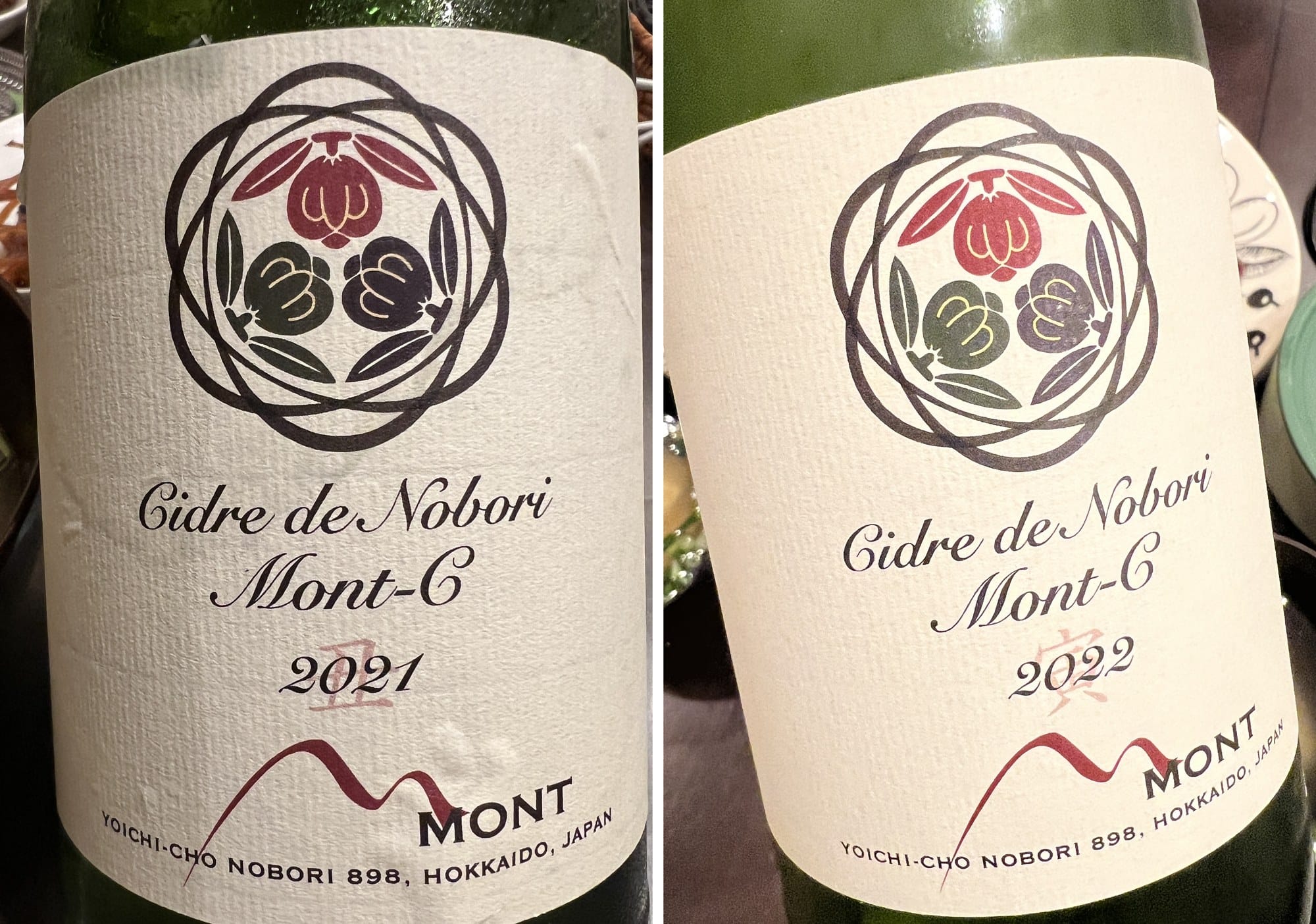
The clearest case is not a distillery at all. Domaine Mont, a small winery in the same village, also presses cider: Mont-C, made from Yoichi apples, fermented with wild yeast and bottled without added sulphites. It is made every year rather than as a one-off — we have drunk the 2021 and 2022 — and in July 2026 the German glassmaker Spiegelau and the town of Yoichi released a joint version, Mont-C Drei 2025, together with a glass designed for it. That bottling reached drinks lists at the Imperial Hotel Tokyo, Mandarin Oriental Tokyo and HOTEL THE MITSUI KYOTO among others, though we have not tasted it ourselves (checked August 2026). Production is small and each release sells out, so it is something to ask for rather than plan a trip around. If cider itself is the reason you are travelling, Aomori is where the volume is; Yoichi is where a winemaker happens to make it.
Otaru is the practical base for all of it, from ¥12,936 for two at Otaru Asari Classe Hotel, with Yoichi a short train ride west.
| Region | Grapes | Getting there | Best for |
|---|---|---|---|
| Yamanashi | Koshu, Muscat Bailey A | 90 min from Shinjuku to Isawa-Onsen, ¥3,890 | A first Japanese wine day, and the grape you cannot taste elsewhere |
| Nagano (Chikuma) | Merlot, Chardonnay, Cabernet, Riesling | Shinano Railway from Karuizawa | European varieties, and the most rail-friendly cluster |
| Hokkaido (Yoichi) | Pinot Noir and cool-climate whites | Train west from Otaru | Wine bars rather than cellar doors, plus whisky and gin |
Rankings and prices checked in August 2026. Of the vineyards on The World's 50 Best Vineyards 2025 list, two are in Asia and both are in Japan — 98WINEs at 20 and Château Mercian Mariko at 46 — which is a smaller number than the size of the country's wine industry would suggest and a useful reminder that this is still a young scene.
A fourth region worth watching: Kyushu
Kyushu is not in the table above, and that is deliberate: the three regions are where a first Japanese wine trip should go. But two southern producers have become hard to leave out. Kumamoto Wine Farm's Kikuka Night Harvest Kobushino 2023 took a gold medal and a top-ten place at Chardonnay du Monde 2026, judged against 471 wines from 25 countries (announced 3 April 2026). Tsuno Wine in Miyazaki grows its grapes under more than 4,000 mm of rain a year, five to eight times what the world's classic wine regions get, and has been making wine there since 1994. Neither is a day trip from Tokyo, so treat them as a reason to add wine to a Kyushu itinerary rather than the other way round; both are covered in our guide to Kyushu wineries.
The problem nobody mentions: you cannot drive and taste
This is the through-line across all three regions, and it decides more of your itinerary than the grape does.
Japan enforces drink-driving law strictly, and wineries assume you know it. The notice board at Manns Wines Katsunuma asks, in plain language, that anyone driving that day refrain from tasting. Nobody is being unfriendly — they simply expect visitors to arrive by car, because most Japanese visitors do.
So a rental car buys you range at the cost of one person's entire day. There are three ways around it:
- Sleep in the wine country and take taxis. In Yamanashi this works because one station serves both major wineries. A return taxi runs roughly ¥6,000 to the further one, which is more than the tasting costs but buys the whole group a drink.
- Pick the region with the railway. Nagano's Chikuma valley strings its estates along the Shinano Railway, so the wineries come to the line rather than the other way round.
- Let the driver drink juice, deliberately. Japanese wineries take this seriously enough to bottle it properly — at 98WINEs the estate grape juices are sold at ¥2,450, the same shelf as the wine. That price makes sense once you understand who it is for.
How to fit one into a normal trip
- Two weeks in Japan, one wine day. Yamanashi. It is the only one you can do from Tokyo without rearranging anything else.
- You already know wine and want to compare. Nagano. The international varieties give you a reference point Koshu does not.
- You want the grape you have never had. Yamanashi, and drink Koshu rather than the Chardonnay.
- Hokkaido was already on the itinerary. Yoichi, but plan it as bars and distilleries rather than cellar doors.
- You want to sleep somewhere good. Yamanashi again — the wine country sits beside an onsen town, which none of the others manage.
| If this is you | Region | Base | Best for |
|---|---|---|---|
| One wine day inside a Tokyo trip | Yamanashi | Isawa-Onsen, 90 min from Shinjuku | Koshu, and an onsen at the end of it |
| You know wine and want a reference point | Nagano | Along the Shinano Railway | Merlot and Chardonnay at altitude |
| Nobody wants to be the driver | Yamanashi or Nagano | Enzan by taxi, or the railway | Both work without a car |
| Already going to Hokkaido | Yoichi | from ¥12,936 for two in Otaru | Bars and distilleries, not cellar doors |
| You want the highest-ranked one | Yamanashi | Enzan, weekends only | 98WINEs — number 20, and Best in Asia |
For each region in detail, our Chikuma River Wine Valley guide covers the four Nagano estates and which days they close, where to drink Domaine Takahiko covers the Yoichi problem of a winery that does not admit visitors, and Yoichi wine bars covers the evening. If your Hokkaido drinks trip widens beyond wine, the Nikka Yoichi distillery tour and Niseko's gin distillery cover the spirits, and Aomori cider and sake covers the northern Honshu equivalent.
FAQ: Japanese wine regions
Which Japanese wine region should I visit first?
Yamanashi, for most people. It is about 90 minutes from Shinjuku by limited express, it grows Koshu — the grape you cannot taste anywhere else — and it holds the highest-ranked vineyard in Asia. Nagano is the better choice only if you specifically want European varieties.
What is Koshu wine like?
Light, dry and citrus-edged, made from a pale pink-skinned grape grown in Japan for centuries. Koshu is unusual in being both an eating grape and a wine grape, which is why Yamanashi's landscape mixes vineyards for drinking with vineyards for the fruit shop.
Why are the grapes in paper bags?
Rain, disease, birds and insects. Japan's growing season is hot and wet, and bagging each bunch protects it — as does training the vines overhead on a pergola so air moves through the canopy. Bagging is most common on table grapes, so bagged fruit beside a winery is not necessarily destined for the bottle.
Can I visit Japanese wineries without a car?
Yes, and you should if you intend to taste. Yamanashi works as a train to Enzan plus taxis, with one station serving both major wineries. Nagano's Chikuma valley estates sit along the Shinano Railway. Wineries post notices asking drivers not to taste, so the car costs one person their day.
How many Japanese wineries are on the World's 50 Best list?
Two, as of the 2025 list, and they are the only Asian entries on it — 98WINEs in Yamanashi at number 20, which also took the Best Vineyard in Asia title, and Château Mercian Mariko in Nagano at number 46. The list is published annually in November.