Best Wineries to Visit in Japan: Which Ones Let You In
Japan's most wanted wines come from wineries you cannot enter: 14 of Yoichi's 16 say no. Where to walk in, what the wine is really like, what you can buy.

The best wineries to visit in Japan are mostly not the ones making the wine you have heard about. In Yoichi, Hokkaido — the district with the biggest reputation in Japanese wine — the town's own winery guide lists sixteen producers, and fourteen of them state plainly that visits are not possible. That gap is the most useful thing to know before you plan anything.
So plan the visiting and the drinking as two separate problems. For one place that is both open and pouring something excellent, go to Château Mercian Mariko in Nagano: walk-in tasting counter, no reservation, open daily from April through November. For the view, go to 98WINEs in Yamanashi — weekends and holidays only, ¥800 for four glasses, and the terrace faces Mount Fuji. In Hokkaido, book a bar rather than a winery.
Which wineries actually let you in
I have been into all but one of these: Mariko, VillaDest and Manns Wine Komoro in Nagano in August 2026, 98WINEs and Manns Wine Katsunuma in Yamanashi later the same month, and Sapporo Fujino's shop and café. The exception is the last row, which is here because it is the one most people are trying to find.
| Winery | Region | Walk-in? | Grapes | Best for |
|---|---|---|---|---|
| Château Mercian Mariko | Nagano (Ueda) | Yes — counter, no booking | Merlot, Chardonnay, Syrah | The one bottle worth the budget |
| Manns Wine Komoro | Nagano (Komoro) | Yes — glasses from ¥300 | Ryugan, Shinano Riesling, Merlot | Native grapes and a daily cellar tour |
| VillaDest | Nagano (Tomi) | Yes — closed Wednesdays, shut in winter | Pinot Gris, Sauvignon Blanc | Lunch with a vineyard view |
| 98WINEs | Yamanashi (Koshu) | Yes — weekends and holidays only | Koshu, Muscat Bailey A | The terrace, and Mount Fuji in front of it |
| Manns Wine Katsunuma | Yamanashi (Koshu) | Yes — open daily | Koshu | The weekday fallback, ¥500 cellar tour |
| Sapporo Fujino Winery | Hokkaido (Sapporo) | Yes — shop and café | Natural-method whites | Wine you can actually carry home |
| Domaine Takahiko | Hokkaido (Yoichi) | No — closed to visitors | Pinot Noir only | Drinking in a Yoichi or Otaru bar |
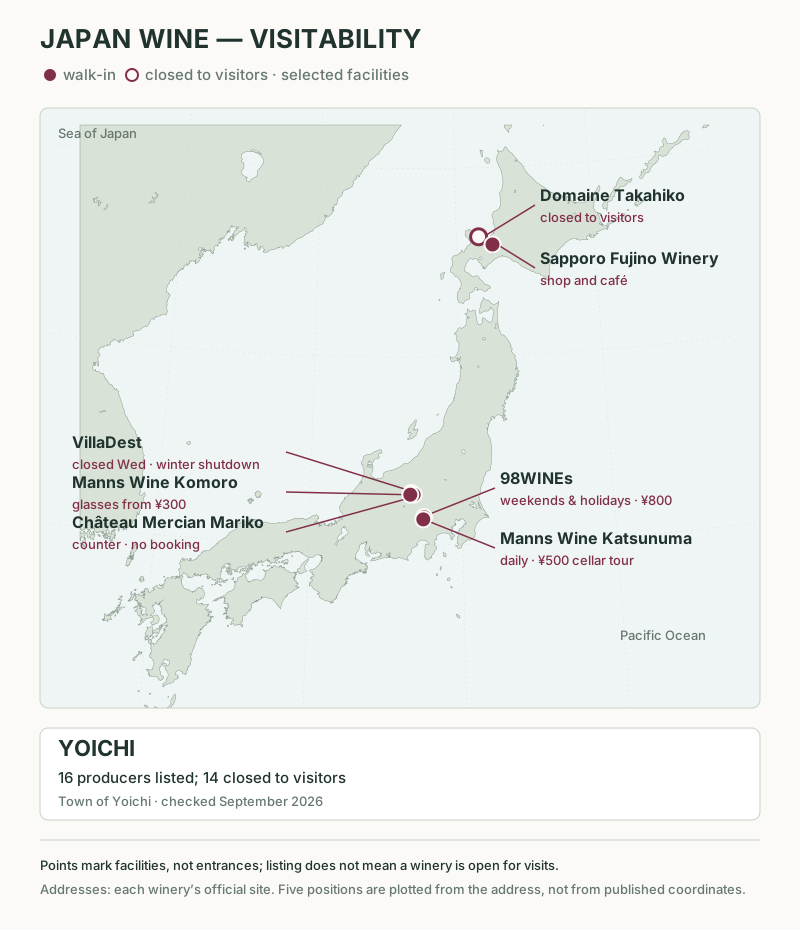
Of the seven wineries in the table above, six take walk-in visitors and one does not admit the public at all (checked September 2026).
The Yoichi problem: fourteen of sixteen say no
Yoichi, an hour west of Sapporo, is where Japan's most talked-about small producers are. It is also where you are least likely to get through a gate. The town publishes a winery guide covering sixteen producers; fourteen are marked closed to visitors, with a request not to turn up at the farms unannounced. Two are open: Yoichi Winery, where the tour is self-guided and groups book ahead, and OcciGabi, which admits visitors by reservation on a guided lunch course at ¥6,600 per person.
Domaine Takahiko is on the closed list. It grows Pinot Noir and nothing else across five hectares, makes about 25,000 bottles a year, and sells nothing direct. If you want to drink it, you drink it in a bar — a solved problem in Yoichi and Otaru, covered in where to drink Domaine Takahiko and the wine bars near Yoichi Station.
What the wine is actually like
A disclosure first: my everyday drinking is red, and that shapes everything below. Each verdict here is one bottle or one glass, not a survey.
The wine that stopped me was the Mariko Syrah 2022 (¥6,500). I had not expected Japan to be making a red at that level, and it is the one Japanese bottle I would put in front of a European drinker without a preamble.
Domaine Takahiko's Nana-tsu-mori Pinot Noir is the other. The acidity is clean, which is the reason I like it; and the savoury note — the "dashi" quality people repeat about this wine — is genuinely there, reading as a difference of place rather than a trick of winemaking. That is also the stated aim: on the town's winery guide, Takahiko Soga describes wanting wine with the umami and delicacy that suits people raised in a dashi culture.
Sapporo Fujino Winery is the one I would send most visitors to buy. The aromatics are the point — floral, and worth a large glass.
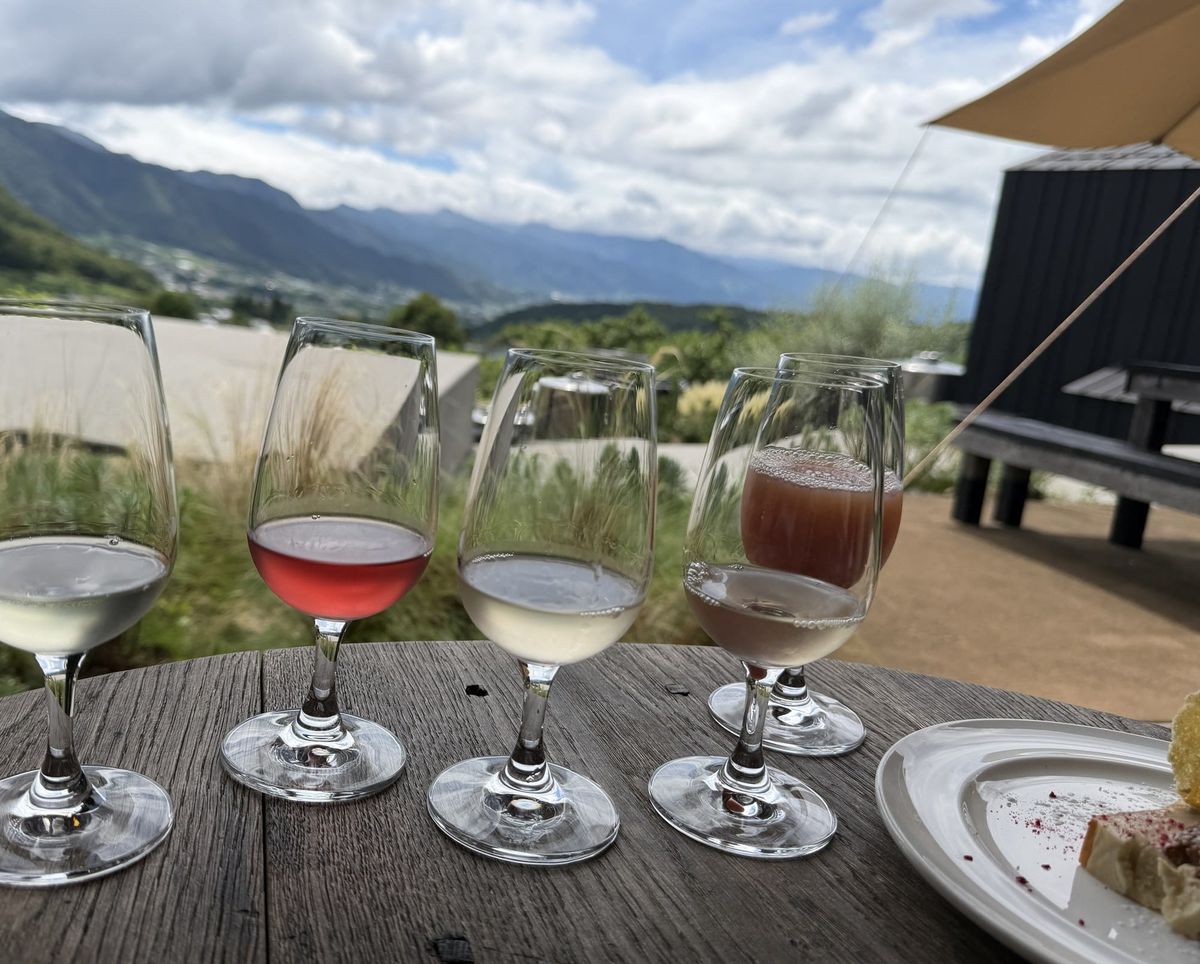
The native white grapes are where I part company with the enthusiasm. Manns' sparkling Ryugan is lighter than a blanc de blancs, and if that is your reference point it will leave you wanting more. Their Koshu Cryo-Extraction 2025 (¥3,300, a first vintage of 864 bottles, 8% alcohol) does better — fresh, easy and worth the glass — though it does not have the perfume or the richness of a Sauternes. Koshu and Ryugan are worth drinking for what they are — grapes with a long history in Japan — rather than as a benchmark. 98WINEs, ranked twentieth in the world, did not change that for me, and its rosé was the glass I liked best. Nagano's estates are covered in the Chikuma River Wine Valley guide.
What you can take home
Availability runs in a gradient, and it is roughly the reverse of desirability.
At one end, Domaine Takahiko sells nothing at the winery; bottles reach a limited number of retailers in Yoichi, Sapporo and elsewhere in Japan. Lan Seqqua, in the same Nobori district, is stricter still: no direct sales at all, and the year's wine released in a single batch each March. Domaine Yui, also in Nobori, is likewise closed to visitors.
At the other end, Sapporo Fujino's shop and café are open to anyone, Yoichi Winery runs its own shop and online store on a production of about 100,000 bottles a year, and OcciGabi sells from its own shop. If you want a Japanese bottle in your suitcase rather than a story about one you could not buy, that is where to look.
What "World's Best Vineyards" actually measures
Two Japanese estates appear on the World's 50 Best Vineyards 2025 list: 98WINEs at number 20, which also holds the Best Vineyard in Asia title, and Château Mercian Mariko at 46. Read the award for what it is. It is voted by an academy of more than 700 sommeliers, travel and wine-tourism specialists and trade professionals, and what they rank is the place — somewhere to taste and to learn how wine is made, with architecture, cellars and on-site restaurants counted in.
It is not a ranking of what ends up in the glass. That distinction matched my own trip exactly: 98WINEs was the better afternoon, Mariko was the better bottle. For the geography behind all three regions, see Japanese wine regions.
Building the trip
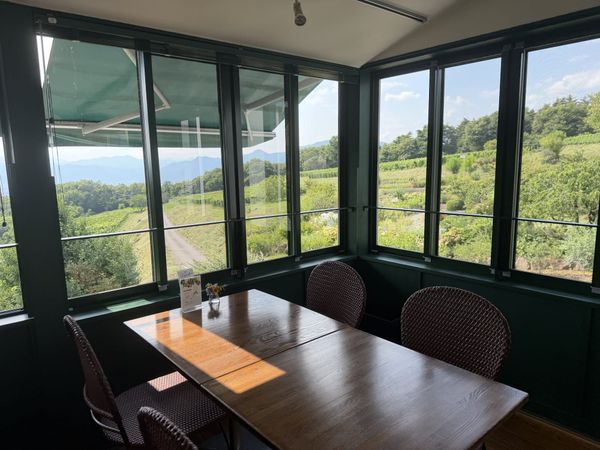
Yamanashi and Nagano both work as day trips from Tokyo, and both work without a car — which matters more here than usual, because the whole point is to drink. Hokkaido is the opposite: the wineries are shut, so you build the evening around bars and sleep nearby.
| Winery | Open | Tasting | Without a car | Buy on site |
|---|---|---|---|---|
| Château Mercian Mariko | Daily Apr–Nov; closed Tue/Wed Dec–Mar | From ¥400 per 40ml glass | Taxi from Ueda | Yes |
| Manns Wine Komoro | Daily Apr–Nov; closed Tue/Wed Dec–Mar | ¥300–500 per glass; tour 13:30 | Free shuttle from Komoro | Yes |
| 98WINEs | Weekends and holidays, 9:00–17:00 | ¥800 for four glasses | Taxi from Enzan, about 20 min | Yes |
| Manns Wine Katsunuma | Daily, 9:00–17:00 | From ¥200 per glass; cellar tour ¥500 | Taxi from Enzan, about 7 min | Yes |
| Sapporo Fujino Winery | Shop 10:00–17:00, irregular closing days | Café on site | Bus or taxi from Sapporo | Yes |
| Yoichi wineries (most) | Closed to visitors | None | Train from Otaru | No |
The car-free Yamanashi version — one station, two wineries, a hot-spring town to sleep in — is laid out in a Yamanashi winery day from Isawa-Onsen. For Hokkaido, where to stay in Yoichi covers whether the night is worth it, and Kyushu has two wineries of its own if you are heading south instead.
FAQ: visiting wineries in Japan
Can I visit Japanese wineries without a car?
Yes, and you should, because tasting and driving do not mix. From Enzan Station in Yamanashi, Manns Wine Katsunuma is about a 7-minute taxi ride and 98WINEs about 20 minutes. In Nagano, Manns Wine Komoro runs a free shuttle from a car park two minutes' walk from Komoro Station, and Mariko is a taxi ride from Ueda.
Which Japanese winery should I visit first?
Château Mercian Mariko in Nagano. It takes walk-in tastings at a counter with no reservation, pours from about ¥400 for a 40ml glass, and is open daily from April to November — though it closes Tuesdays and Wednesdays from December through March.
Why can't I visit Domaine Takahiko?
Because it does not admit visitors, and it is not unusual in that. Of the sixteen producers in the town of Yoichi's winery guide, fourteen are listed as closed to the public, with a request not to enter the farms unannounced. The wine is poured in bars in Yoichi and Otaru instead.
Is Koshu wine worth buying?
Buy it for what it is rather than as a benchmark. Koshu is Japan's own white grape and has been grown here for centuries, but at my last tasting the Koshu wines — including a ¥3,300 sweet Cryo-Extraction made in a first run of 864 bottles — read as fresh and light rather than deep. Nagano's reds impressed me considerably more.
Information audit — Last fact-check September 2026
- Personally visited: Château Mercian Mariko, VillaDest and Manns Wine Komoro (Nagano, August 2–4, 2026); 98WINEs and Manns Wine Katsunuma (Yamanashi, August 15, 2026); Sapporo Fujino Winery — all self-funded. Domaine Takahiko, Lan Seqqua and Domaine Yui were tasted but not visited: they do not admit the public.
- Yoichi winery visiting policy (16 producers listed, 14 closed to visitors; Yoichi Winery self-guided, OcciGabi by reservation at ¥6,600): counted from the Town of Yoichi wine-tourism winery guide, September 2026.
- Domaine Takahiko scale and sales route (Pinot Noir only, 5ha, about 25,000 bottles a year, no direct sales) and Takahiko Soga's stated aim of umami and delicacy: Town of Yoichi winery guide, September 2026.
- Lan Seqqua (Nobori district, no direct sales, one release each March): lanseqqua.jp, September 2026.
- World's 50 Best Vineyards 2025 ranks (98WINEs #20 and Best Vineyard in Asia; Château Mercian Mariko #46) and the judging basis (academy of 700+ sommeliers, travel and wine-tourism specialists; ranks the visitor experience): the50.com, September 2026.
- Opening hours, tasting prices and access confirmed on site in August 2026; winter closures at Mariko and Manns Komoro confirmed by staff. Hours and prices change — check before travelling.
- Tasting impressions are the author's own, from single bottles or single glasses, and the author's habitual drinking is red wine.
- Monetization: none. This article contains no affiliate links and no hotel price anchors.