Yakushima 2 Day Itinerary: Island Drive, Forest & Flying-Fish Food
Yakushima 2 day itinerary: drive the Seibu-rindo, walk Shiratani Unsuikyo forest, and eat flying fish & kubiore-saba. Plus ferry Plan B for fog days.
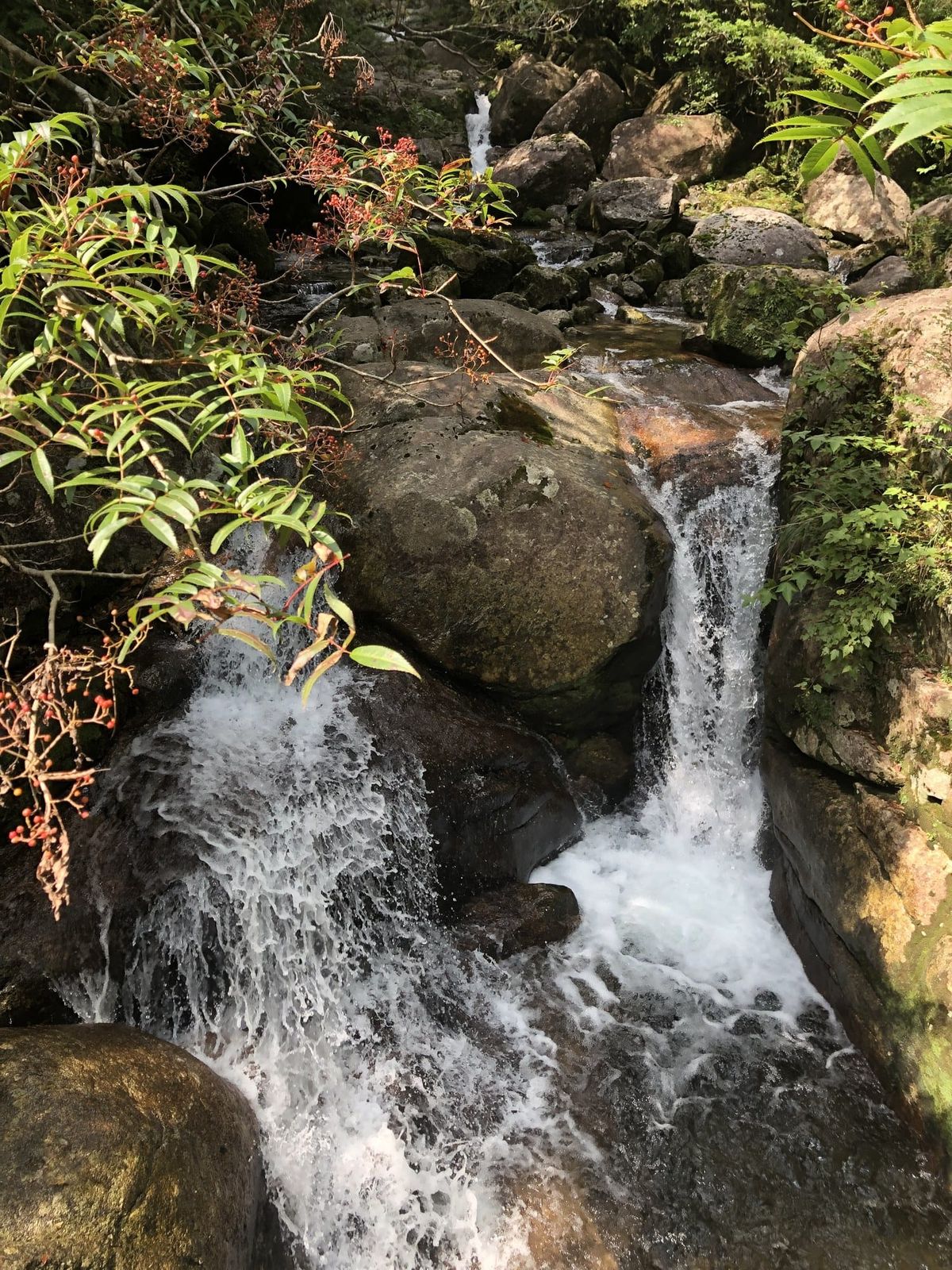
This Yakushima 2 day itinerary covers the three things the island does best: driving the ring road past waterfalls and wild coast, walking into old-growth cedar forest, and eating the kind of flying fish and fresh mackerel that simply do not travel. Here is a day-by-day plan built around those pillars, plus honest notes on the weather, the narrow Seibu-rindo road, and keeping the Toppy high-speed ferry in your back pocket as a Plan B.
Some links in this guide are affiliate links. If you book through them, we may earn a commission at no extra cost to you.
Of the 4 accommodations in this guide, 2 start below ¥10,000 per night — Minshuku Manten from ¥6,000 and Yakushima Green Hotel from ¥8,000 — while the luxury end reaches ¥60,000 at sankara hotel & spa (checked July 2026).
Where to Base for This Itinerary
Most accommodation clusters around Miyanoura in the north and Anbo on the southeastern coast. For a two-day loop that covers both driving and forest, I would base at Miyanoura: it is a few minutes from the main port (useful if a flight is cancelled and you switch to the ferry), and Shiratani Unsuikyo Ravine is a 30-min drive south.
| Name | Base | Price range | Best for |
|---|---|---|---|
| THE HOTEL YAKUSHIMA Ocean & Forest | Miyanoura (near port) | from ¥20,000 | Port-side convenience, on-site dining, wide sea views |
| sankara hotel & spa Yakushima | Mugio (south coast) | from ¥60,000 | Adult couples after quiet, forest-edge setting, fine dining |
| Yakushima Green Hotel | Anbo | from ¥8,000 | Budget base close to the ferry terminal |
| Minshuku Manten | Near Yakushima Airport | from ¥6,000 | Budget trekker base on the southeast side |
Rates vary by season; expect peak prices in May–August and around Golden Week. Book well in advance, especially if a JAXA launch is scheduled — island hotels fill up fast. See our full Yakushima accommodation guide for more options by area.
Before You Arrive: Get Here and Have a Plan B
Japan Air Commuter (JAC), a JAL group regional airline, runs flights from Kagoshima Airport to Yakushima Airport in about 35–40 minutes. The route from Kagoshima is the most frequent; flights from Itami and Fukuoka also exist but are fewer — confirm the current schedule when booking.
Here is the real-world caveat: Yakushima is one of the rainiest places in Japan, and fog cancels flights with little warning. When that happens, the fallback is the Toppy or Rocket high-speed jetfoil from Kagoshima's South Pier, which takes about ~2 hours and runs roughly five round trips a day in summer (operated by Tane-Yaku Jet Foil). If your flight is scrubbed, head for the port — travellers have made the dash by taxi or rental-car drop-off to catch the next jetfoil departure. The slower car ferry (Yakushima Ferry 2) takes about four hours but runs in rougher sea conditions and carries vehicles. Budget an extra day at the beginning or end of your trip as a weather buffer; this is not optional advice.
Use Kagoshima city as your before-and-after hub. See where to stay in Kagoshima for mainland base options.
Day 1: The Island Loop Drive
Yakushima is roughly circular, about 132 km around the coast. In a rental car, that circuit takes approximately three to four hours of driving without stops — add stops and a full morning-to-evening day works well. Book your car before you arrive; walk-up rentals are unreliable, and the island has limited stock.
Morning: North and West Coasts
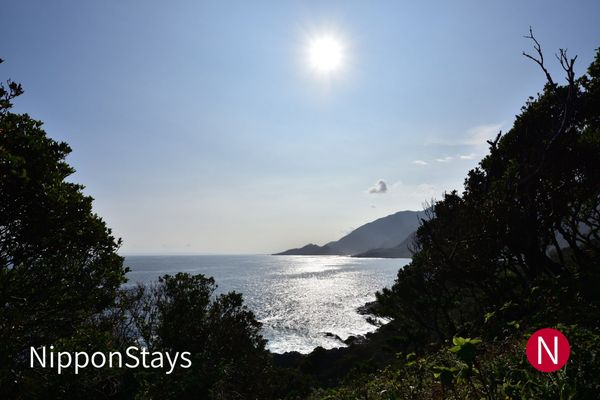
Head out from Miyanoura port heading west along the north coast. The first stretch is open ocean on one side and forested hills on the other. Stop at Ohko-no-taki Waterfall on the west side — an 88-metre drop that is a 5-min walk from the car park, with no admission fee. After heavy rain (which is most of the time on Yakushima) the volume is dramatic.
Continuing south brings you to the Seibu-rindo Forest Road, a 20-km stretch of single-lane road through the UNESCO World Heritage core zone. This is the highlight of the drive and also requires the most care:
- The road is one lane; use pull-off bays to pass oncoming traffic
- Yakushima macaques sit in the middle of the road and will not move for your car — drive slowly around them
- Yakushima sika deer appear suddenly from the undergrowth
- Do not stop the car or feed any animals; congestion blocks the narrow road and feeding wildlife is prohibited
- Allow about one hour for the full 20-km length, not counting time to watch wildlife
The road emerges on the southwest coast, where the terrain opens out again.
Afternoon: South and East Coasts
The south and east coasts are flatter and easier to drive. Stop at Senpiro-no-taki Waterfall near Hara Village — a 60-metre drop with a car park, gift shop, and toilets, and only a 1-min walk from the viewing area. After heavy rain it is spectacular.
From Hara, head north back to your base via Anbo. Total driving is comfortable in a full day with multiple stops. The island's extreme rainfall — Yakushima averages more rain than almost anywhere in Japan — means that some waterfall stops will be even better than expected, but also that you should carry rain gear at all times and expect roads to be slippery.
Day 2: Forest Walk and Food
Morning: Shiratani Unsuikyo Ravine
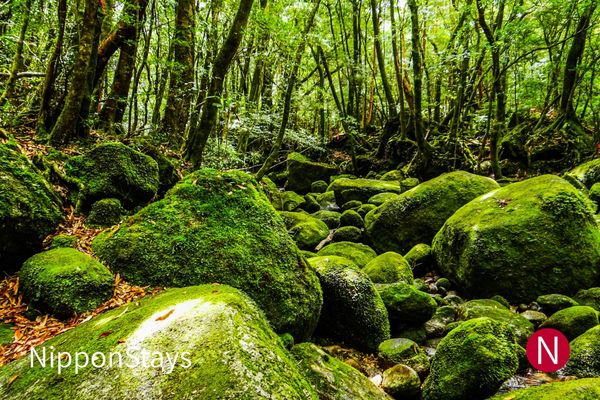
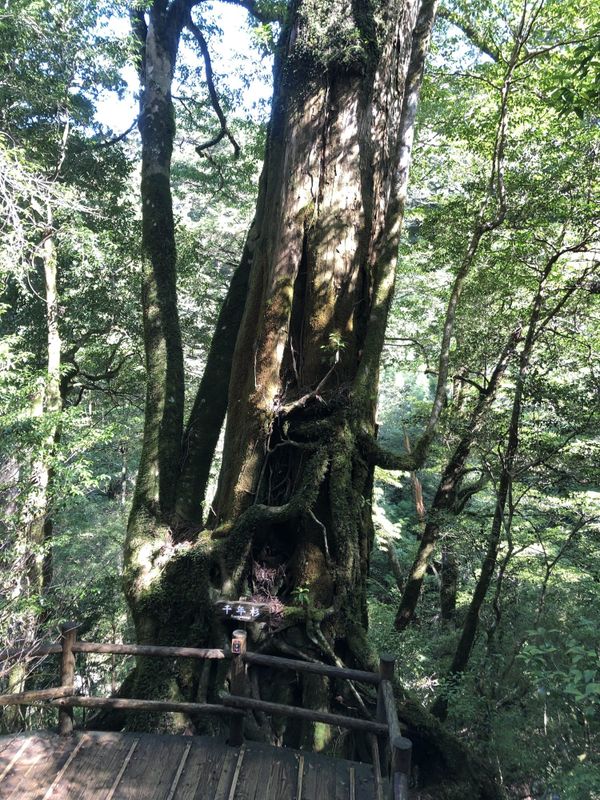
Shiratani Unsuikyo Ravine is the lighter-effort alternative to the full Jomon Sugi trek, which is a demanding 8–10 hour round trip that deserves its own day and a guided tour. For a two-day itinerary where Day 1 is the drive, Day 2 morning works well at Shiratani.
Trails range from about one hour (the Yaoi cedar course) to three to four hours (the Bugyosugi or Taikoiwa courses). No permit is required. The ravine is about 30 minutes from Miyanoura Port by car. A small bus service also runs, but the timetable is infrequent — a rental car gives you more control. If you want to extend the forest immersion into a full guided day at Jomon Sugi instead, see our Jomon Sugi tour guide for how to book an English-speaking guide.
Afternoon: Food — Tobiuo and Kubiore-Saba
Yakushima's food case rests on two things that are genuinely hard to eat elsewhere.
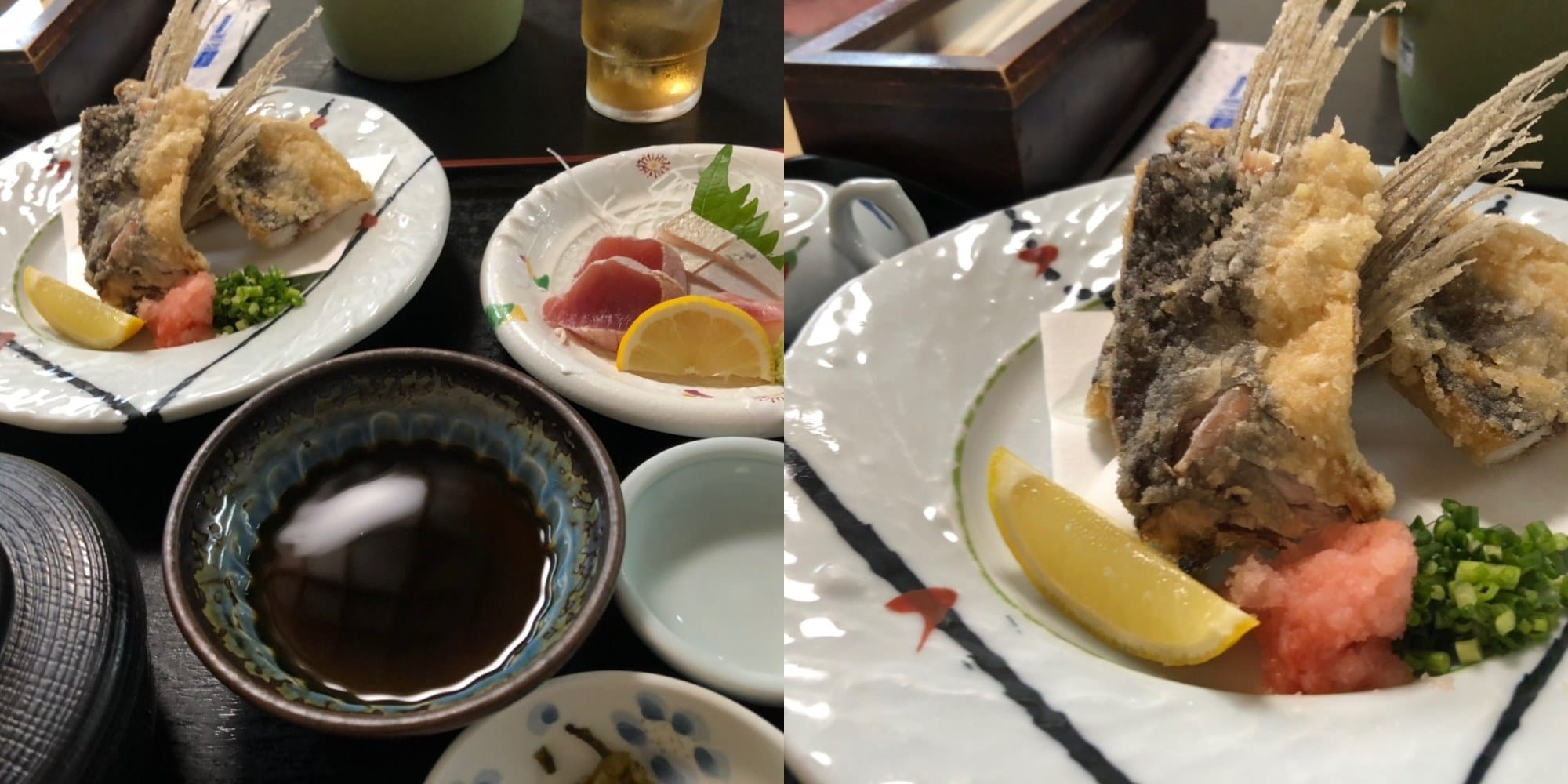
Flying fish (tobiuo) are caught in warm offshore waters and served deep-fried — sometimes as crispy whole-fried pieces with wings spread, sometimes as karaage, sometimes as sashimi. The texture is distinct from the standard izakaya fish lineup. Shiosai in Miyanoura is one of the best-known spots for deep-fried flying fish; it has an English menu and no reservation required. Cash only.
Kubiore-saba — neck-breaking mackerel — is the other essential. Yakushima fishermen snap the mackerel's neck at the moment of landing, draining the blood into brine and keeping the fish at peak freshness. The result can be served as sashimi. The freshness window is about half a day, which is why eating saba sashimi in Tokyo is difficult — by the time it gets there, the freshness has gone. On Yakushima you eat it the day it came out of the water. Jizakana Ryori Waka Daisho in Miyanoura is known for kubiore-saba as a signature dish. Sankara hotel & spa also features it in the restaurant menu for hotel guests.
Seasonal availability of mackerel can vary; if you visit in a low-season period, confirm with the restaurant whether it is on the menu.
The Night Sky
Yakushima has low light pollution and clean air from surrounding ocean. Clear nights — less common than you might hope given the rainfall — reward a walk away from settlement to see the sky. Keep expectations general: the island is rainy and overcast much of the time, but when conditions are right it is striking. If this is a priority for your stay, choosing accommodation away from the brighter parts of Miyanoura or Anbo gives a better baseline. Sankara hotel & spa, on the south coast, is well positioned for this.
Practical Notes
- Rain gear is non-negotiable. Even on days that start clear, Yakushima can produce heavy rainfall within the hour. Waterproof jacket and shoes matter
- Book the rental car well in advance — do not assume walk-up availability
- Book popular restaurants (especially Waka Daisho) ahead; seating is limited on a small island
- Rates at all accommodations vary by season; confirm when booking
- Keep the Toppy / Rocket ferry booking information saved on your phone for the return leg — if fog rolls in on departure day, you need to move fast
Where to Stay: End-of-Article Comparison
| Name | Base | Price range | Best for |
|---|---|---|---|
| THE HOTEL YAKUSHIMA Ocean & Forest — check rates | Miyanoura | from ¥20,000 | Port access, ocean view, on-site dining |
| sankara hotel & spa Yakushima — check rates | Mugio (south coast) | from ¥60,000 | Adult couples, fine dining, forest setting, night sky |
| Yakushima Green Hotel — check rates | Anbo | from ¥8,000 | Budget, ferry-terminal convenience |
| Minshuku Manten — check rates | Near Yakushima Airport | from ¥6,000 | Budget, southeast trekking base |
Rates vary by season. For the sankara review in detail, see our sankara hotel & spa Yakushima review.
Trip Essentials for Kagoshima
Things worth booking before you land, all in English:
- eSIM — Airalo's Japan eSIM: install it at home and data works as soon as you switch off airplane mode at Kagoshima Airport. Comparing providers? See our Japan eSIM guide.
- Tickets and day trips — Klook covers Sakurajima tours and Kyushu rail passes; booking ahead skips the ticket-window line.
FAQ
Can you drive around Yakushima in a day?
The island circuit is about 132 km and takes roughly three to four hours of non-stop driving. With stops at the Seibu-rindo road, Ohko Falls, and Senpiro Falls, a full day is comfortable. The circuit alone is not a half-day if you want to actually stop.
How rainy is Yakushima?
Very. Yakushima is one of the rainiest places in Japan. Rain can arrive at any time of day regardless of morning forecast. Pack a waterproof jacket and waterproof footwear every day.
What is the Seibu-rindo road like?
It is a 20-km single-lane road through the World Heritage forest on the western coast. Macaques and deer share the road. Drive slowly, do not feed wildlife, and use the passing bays. Allow about one hour for the section.
Where do I eat flying fish on Yakushima?
Shiosai in Miyanoura is a well-known choice, with an English menu and no reservation required. For kubiore-saba, Jizakana Ryori Waka Daisho in Miyanoura is recommended — book ahead as seating is limited.
What if my flight to Yakushima is cancelled?
Head to Kagoshima's South Pier and take the Toppy or Rocket high-speed jetfoil, which runs about five times a day in summer and takes ~2 hours to Miyanoura. The slower car ferry also runs daily. Build one extra buffer day into your trip so a cancelled flight does not cost you an island night.
Information audit: Last fact-checked July 2026 · Prices checked July 2026 (all rates are “from” floors that vary by season) · How this guide was researched: hotel facilities, prices and access details are verified against official and primary sources; we have not personally stayed at every property listed. The author has traveled in this area personally; original photographs on this site are from those trips · How this site verifies information: About NipponStays.