Ruriko-in Autumn 2026: Two Windows With No Booking
Ruriko-in's peak autumn weeks are a postal lottery that closed in August. The other 50 open days need no booking at all.

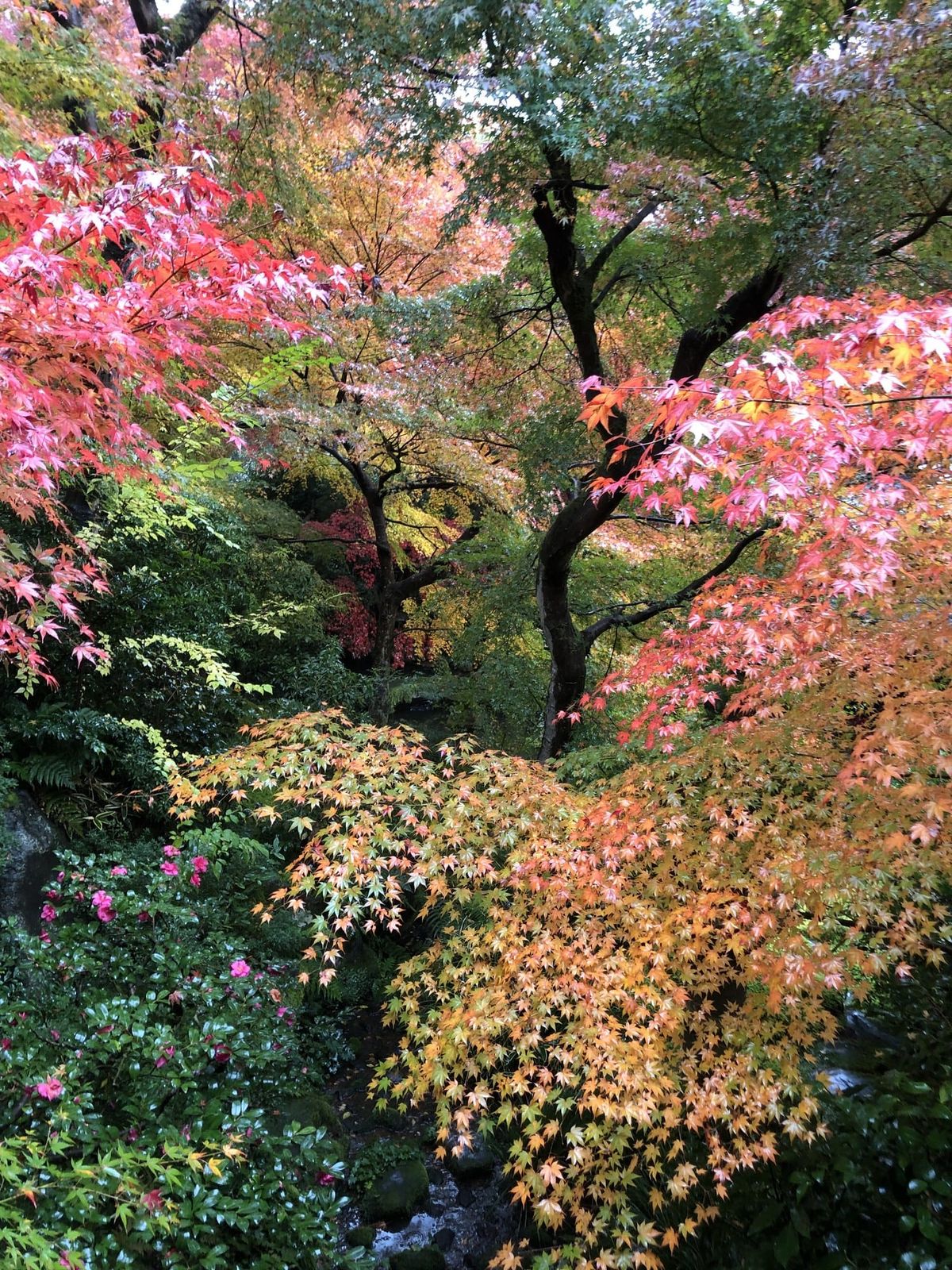
Ruriko-in autumn visits split into three periods in 2026, and they are not equally easy to arrange. The peak weeks — 13 November to 6 December 2026 — are a lottery you enter by return postcard, and applications closed on 20 August. The other fifty days need no booking at all: turn up, pay ¥2,000, walk in. So if you are planning now, your two windows are 1 October to 12 November and 7 December to 13 December. The second one is the interesting one, and most English guides do not mention it exists.
The three periods, and only one of them needs a postcard
The temple publishes one autumn opening but runs it as three different operations. The difference matters more than the dates suggest, because the middle block is the one every guidebook points you at.
| Period (2026) | Booking | Gates | Last entry |
|---|---|---|---|
| 1 Oct – 12 Nov | None. Just turn up | 10:00–17:00 | 16:30 |
| 13 Nov – 6 Dec | Postal lottery, closed 20 Aug | 9:00–18:00 | 17:30 |
| 7 Dec – 13 Dec | None. Just turn up | 10:00–17:00 | 16:30 |
Admission is ¥2,000 per person for the whole period, with junior and senior high school students at ¥1,000 on production of a student card. One primary-school or pre-school child comes free with each adult; a second child is ¥1,000. There are no closed days once the autumn opening starts. Of the 74 days Ruriko-in is open this autumn, 50 need no booking at all — but the 24 that do are precisely the peak weeks (checked August 2026).
What the postcard lottery actually involves
For 13 November to 6 December, the temple runs a draw rather than first-come booking, and the mechanics rule out most overseas visitors before they start.
You apply by return postcard — the Japanese ōfuku hagaki, a pre-paid two-part card you buy at a post office or convenience store. One card covers one date and up to four people. Applications had to be postmarked by 20 August 2026, and results went out as returned postcards around 25 September. On the day you bring that returned postcard plus photo ID for every person in your group; without either, you are turned away at the gate. Winners are given a twenty-minute check-in slot inside their chosen band, so a request for the 9:00–11:00 window might come back as 10:00–10:20.
There is no same-day entry, no changing dates or numbers, and — stated plainly on the application sheet — no telephone or email enquiries of any kind, including asking whether your card arrived or whether you won. Submitting several applications with the names shuffled between applicant and representative voids all of them.
If you live outside Japan, this is not a system you can realistically use: it needs a Japanese postal address to receive the reply, a card bought in person, and the form filled in Japanese. Unless you have a friend in Japan willing to apply on your behalf, treat the peak weeks as closed and plan around them.
Window one: go before 13 November
The first window runs from 1 October to 12 November and needs nothing but ¥2,000 at the counter. Its weakness is honest to state: it ends just before the colour peaks. Our own dated photographs from Kyoto autumns fall on 21–25 November across three different years, which is after this window closes.
What you get instead is a garden turning rather than turned — greens and oranges together, with the maples over the pond going first. Early November also means the ten o'clock opening is genuinely a ten o'clock opening, rather than a queue that formed at nine.
Window two: go after 6 December
The 7–13 December window is the one worth knowing about. It needs no booking, it sits after the lottery crowds have gone, and in recent years the colour has been holding later into December than the old guidebook dates suggest. That is a trend rather than a promise: some years the maples are bare by the first week of December, and we have no December photographs of our own to show you.
Before committing a whole day to it, check the Japan Meteorological Agency's phenological records for Kyoto, which log the date maples are judged to have turned each year and go back decades. It is the one public dataset that will tell you whether late colour is a pattern or a memory.
Getting to Yase
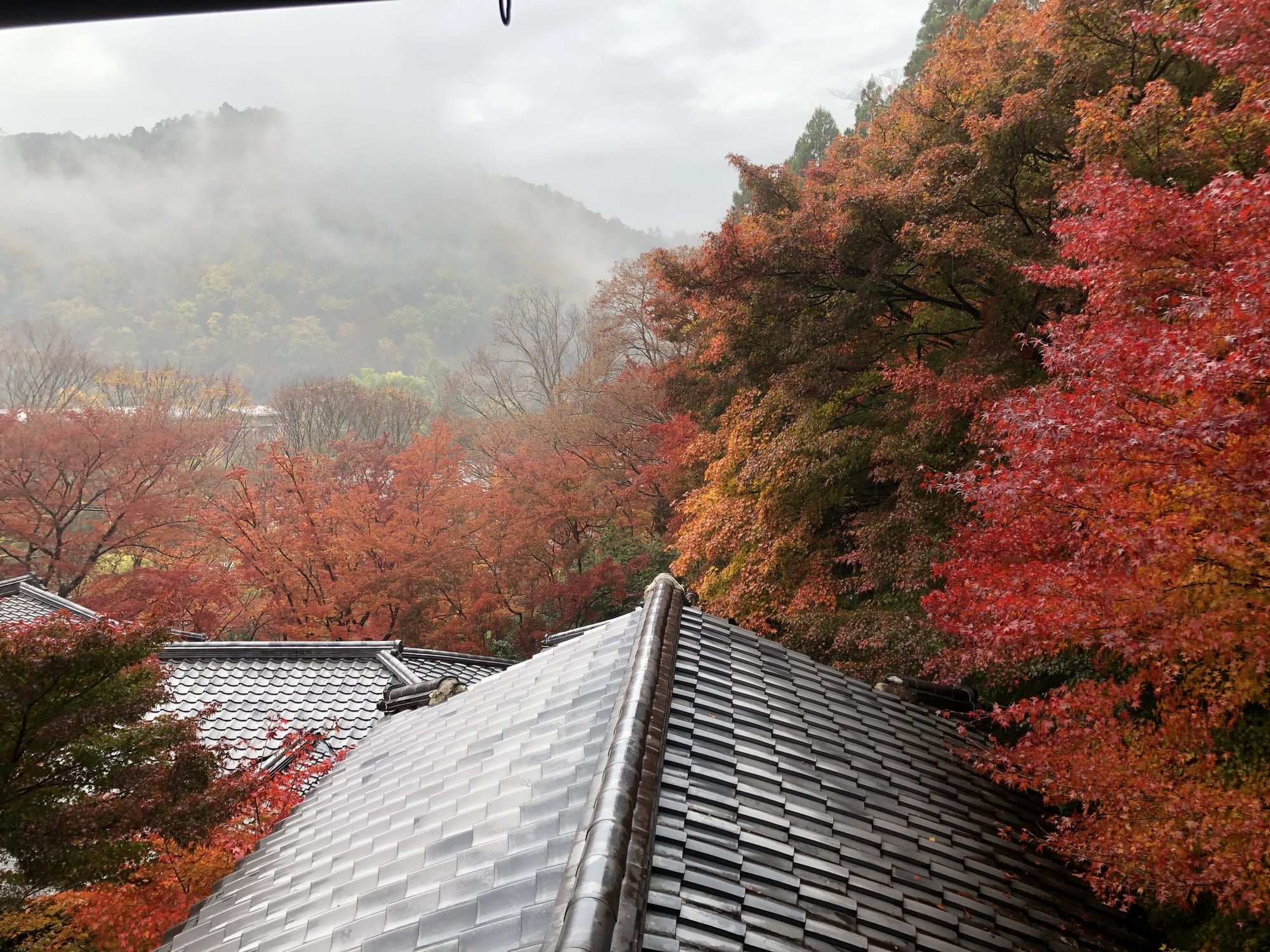
Ruriko-in sits at Yase, at the northern end of the Eizan Electric Railway, and the approach is part of the visit. The Takano River runs beside the road up to the temple; on a wet morning the mist sits on the valley wall behind it, which is the view you will not get from any of the central Kyoto temples.
Take the Eizan line to Yase-Hieizanguchi, the terminus, and walk. Check current running times and fares on the operator's site before you go, as services thin out outside peak season. There is no car park — the temple asks visitors to come by public transport, and there is nowhere to leave a car nearby.
What fifty minutes inside looks like
We were at the river at 9:20 and out of the garden at 10:09 — call it fifty minutes for the whole stop, including the walk up. Inside, the sequence is short and deliberate: the shoin upstairs first, where the view is out and down across tiled roofs into the valley, then the garden below, where the maples close over the path and the stream runs through moss.
That morning was fog and rain, and it made the place better rather than worse. The mist flattened the far hillside into layers, and the wet moss went the deep green that dry moss never manages. If your Kyoto trip has one bad-weather day in it, this is where to spend it.
Where to stay for an early Yase morning
Yase is at the far north of the city, so the practical question is not "where is closest" but "where can you leave from without a rush-hour change". The Karasuma subway line runs north to Kokusaikaikan, and the Eizan line starts at Demachiyanagi; anything within reach of those two makes a 10:00 opening comfortable.
| Name | Area | From price (2 guests) | Best for |
|---|---|---|---|
| The Westin Miyako Kyoto | Higashiyama / Okazaki | from ¥38,000 | Walking to Nanzen-ji before breakfast, then north to Yase |
| Central Kyoto (Kawaramachi / Sanjo) | Central | from ¥14,000 | One change to Demachiyanagi, best for a first trip |
| Kyoto Station area | South | from ¥12,000 | Subway straight up the Karasuma line; easiest with luggage |
Prices are from-rates at two guests. Autumn and cherry-blossom season are a different market from the rest of the Kyoto year — the same room can be several tiers of price apart, and rooms in the last two weeks of November go early. Some visitors deal with it by staying in Osaka and travelling in, which is a real option rather than a compromise; see our guide to basing yourself in Osaka for day trips to Kyoto. For the year-round picture of which base suits which trip, see our guides to Kawaramachi versus Kyoto Station and staying in Gion and Higashiyama. If you are still choosing a base for the whole trip, start with where to stay in Kyoto for autumn leaves. These are normal-season from-rates and they are not a guide to what you will pay in the last two weeks of November. In that window the same room routinely sits several tiers higher, the cheapest rooms in any property go months ahead, and a rate you saw in August will not still be there. Treat every number here as a way of ranking these places against each other, not as a price. Put your own dates in before you plan around any of them.
Trip Essentials for Kyoto
Things worth booking before you land, all in English:
- eSIM — Airalo's Japan eSIM: install it at home and data works as soon as you switch off airplane mode at Kansai Airport.
- Airport transfer — Klook covers bus, train, and private transfers from Kansai Airport.
- Luggage storage — arriving before check-in? Radical Storage takes bags at shops near Kyoto Station for a flat daily rate.
- Tickets and day trips — Klook covers Arashiyama activities, tea ceremonies, and Nara day trips; booking ahead skips the ticket-window line.
FAQ: visiting Ruriko-in in autumn
Can I book from overseas?
Not for the 13 November to 6 December period. That block is drawn by postal lottery using a Japanese return postcard, applications closed on 20 August 2026, and the temple accepts no phone or email enquiries. The other 50 open days need no booking at all.
What if I miss both no-booking windows?
Then Ruriko-in is out for this trip, and the honest answer is to spend the morning elsewhere in the north rather than travelling to Yase on the chance of getting in. The valley approach along the Takano River is free and open, but the temple itself will turn you away without a returned postcard.
Is it worth ¥2,000?
For a fifty-minute visit that is a high per-minute price by Kyoto standards, where ¥500 is a common temple admission. What you are paying for is the upstairs view out over the valley, which no other Kyoto garden offers. On a clear day we would think twice; on the wet morning we went, it was the best thing we saw that week.
Is it better in the rain?
Yes, and that is not a consolation. Mist separates the far hillside into layers you cannot see on a bright day, and the moss and stone in the lower garden hold colour when wet. Bring shoes you do not mind soaking — the garden path is stone and moss, not gravel.
Do the opening hours change during the lottery period?
They do. From 13 November to 6 December the gates open at 9:00 and close at 18:00, with last entry at 17:30 — an hour earlier and an hour later than the rest of the season, which runs 10:00 to 17:00 with last entry at 16:30 (checked August 2026).