Where to Stay in Okuhida Onsen in Winter (5 Villages)
Okuhida has five onsen villages. Hirayu is the bus terminal; Shinhotaka pairs the ropeway with snow-view baths. Which of the nine inns fits your trip?
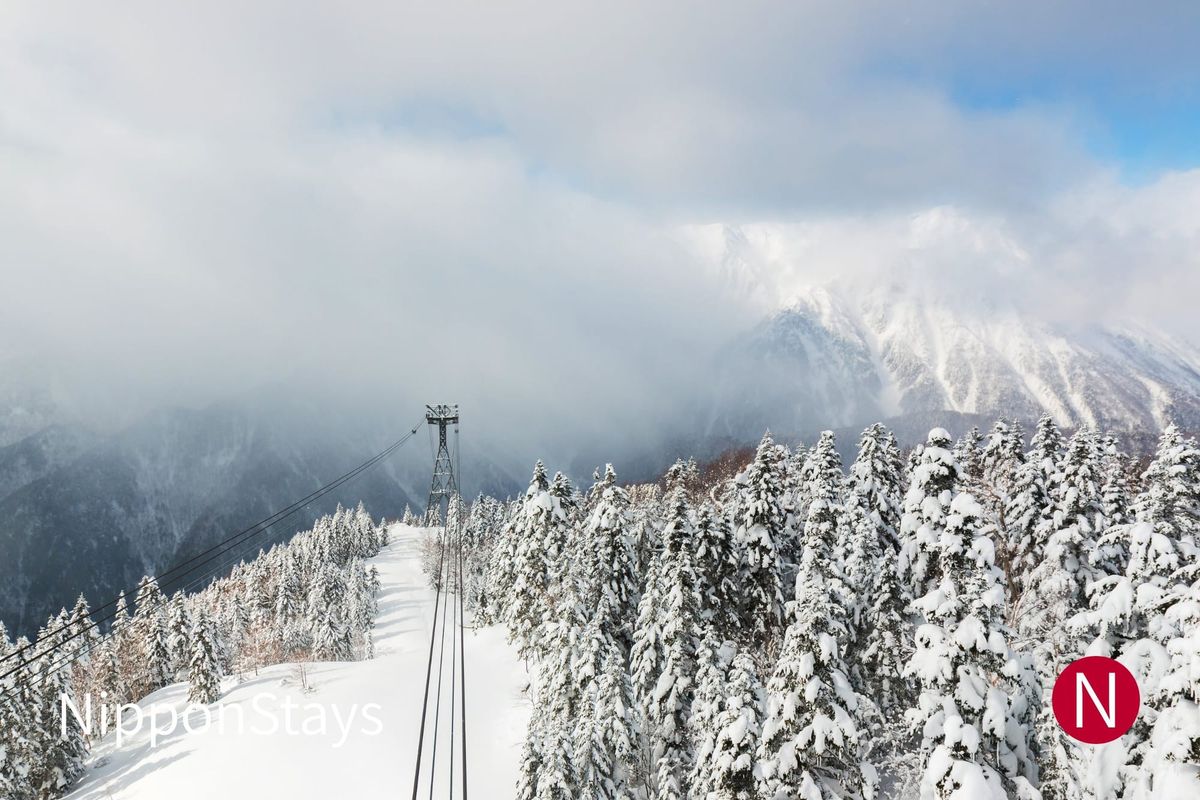
Quick Answer: Where to stay in Okuhida Onsen in winter depends on what you need more: a transfer point or a mountain view. If you're passing through to Takayama, Matsumoto, or Shirakawa-go, pick Hirayu — it's the bus terminal itself, and three of its four inns bookable online sit a 2- to 7-min walk away, among them Hotel Hirayunomori Annex. If a snow-view soak matters more than the transfer, go deeper into the valley to Shinhotaka, home to Yarimikan and its outdoor bath facing Yari-ga-take. The condition that changes the answer: Shinhotaka Ropeway's only scheduled 2026 maintenance closures fall in June and late November, outside the December–March window, so this winter a snow view doesn't depend on the ropeway running at all.
Five villages, one bus line
Okuhida Onsen is not one town but five, strung along a single valley road at the western foot of the Northern Alps: Hirayu, Shin-Hirayu, Fukuji, Tochio, and Shinhotaka. The Nohi Bus Hirayu–Shinhotaka route runs roughly hourly from Takayama and stops, by name, at all five — Hirayu Onsen, Shin-Hirayu Onsen, Fukuji Onsen, Tochio Onsen, and the Shinhotaka Ropeway terminus — so every village on this list is on the same one bus line, without a transfer between them (Nohi Bus route map, checked September 2026). A one-way fare from Takayama to Hirayu is ¥1,600, and continuing from Hirayu to the Shinhotaka Ropeway is another ¥910, for a door-to-door journey of roughly 1.5 to 1.75 hours in normal winter conditions (Nohi Bus Hirayu–Shinhotaka line timetable, checked September 2026). Hirayu Bus Terminal is also the interchange for the joint Nohi/Alpico highway bus to Matsumoto, a roughly 88-minute ride.
What this route does not cover directly is Shirakawa-go. If a Shirakawa-go loop is part of the plan, our guides to renting a car for Takayama and Shirakawa-go in winter and where to stay for the Shirakawa-go winter light-up cover that leg; this article stays with the Okuhida side of the trip.
The nine inns we could verify
| Property | Village | Walk to bus stop | Snow-view outdoor bath | Room for 4 | Bookable online |
|---|---|---|---|---|---|
| Hotel Hirayunomori Annex | Hirayu | 2-min walk (Hirayu Bus Terminal) | Yes, at a sister bathhouse a 5-min walk away, free for guests | Not confirmed | Yes |
| Hirayukan (Miyama Ouan Annex) | Hirayu | 3-min walk | Yes, on-site onsen baths | Not confirmed | Yes |
| Miyama Ouan | Hirayu | 7-min walk | Yes, on-site rotenburo | Not confirmed | Yes |
| Hirayu-no-Mori | Hirayu | In the village centre; exact minutes not published | Yes — 16 outdoor baths on the grounds | Not confirmed | Yes, room-only plans |
| Okuhida Garden Hotel Yakedake | Shin-Hirayu | Near the Shin-Hirayu Onsen stop; exact minutes not published | Yes, private rental rotenburo with Alps views | Not confirmed | Yes |
| Yumoto Choza | Fukuji | Near the Fukuji Onsen stop; exact minutes not published | Partly — the large outdoor bath had a partial closure at last check (shared spring-source issue) | Not confirmed | Yes |
| Yamano Hotel (Hodakaso) | Shinhotaka | About 5 min by car from the ropeway; no confirmed walk-in stop | Yes, mixed-gender source-fed bath | Not confirmed | Yes |
| Yakenoyu | Shinhotaka (Nakao) | About 20-min walk from the Nakao Kogen-guchi stop | Not confirmed in what we could verify | Not confirmed | Yes, reservation link (phone preferred) |
| Yarimikan | Shinhotaka (Kamisaka) | Near the Kamisaka stop on the same line; exact minutes not published | Yes — the bath faces Yari-ga-take directly | Yes, a storehouse-style cottage sleeps 5–6 | Mostly by phone; an online reservation page exists |
Hirayu — the transfer village
Hirayu is where the bus stops before it goes anywhere else, which makes it the easiest of the five for anyone without a car. Four of the nine inns in our dataset sit in Hirayu, and three of those are a 2- to 7-min walk from the terminal: Hotel Hirayunomori Annex at 2 minutes, Hirayukan at 3, and its sister property Miyama Ouan at 7 (each inn's official access page, checked September 2026). Hirayu-no-Mori, best known locally as a day-bathing complex with 16 outdoor baths, also takes overnight room-only bookings and sits in the same village centre.
The trade-off is scenery: Hirayu is the widest, most developed of the five villages, so it doesn't have the deep-valley, single-peak views that draw people to Shinhotaka. What it has instead is every onward connection — Takayama, Matsumoto, and the Shirakawa-go transfer covered in the linked guides above — leaving from the same terminal your inn is a short walk from.
Shinhotaka — the ropeway end
Shinhotaka sits at the far end of the same bus line, roughly 40–45 minutes past Hirayu, and it's the village built around the Shinhotaka Ropeway rather than a transfer point. The structural reason to stay here regardless of the ropeway's schedule is that the snow view comes from the inn's own bath, not from riding to the top: Yarimikan, in the Kamisaka area, has an outdoor bath that looks directly at Yari-ga-take, and its storehouse-style annex is the only room in this dataset explicitly confirmed to sleep four to six people (Yarimikan official site, checked September 2026). Yamano Hotel, run by the Hodakaso group, is a five-minute drive from the ropeway base station with its own mixed-gender source-fed bath. Yakenoyu, in the Nakao area, is the most remote of the three — about a 20-minute walk from the nearest confirmed bus stop, so it suits a stay with a rental car or a taxi transfer more than a bus-only itinerary.
On the ropeway itself: the operator's 2026 fiscal-year plan lists exactly two maintenance closures, June 15–26 and November 24–27, 2026, and neither falls inside December–March (Shinhotaka Ropeway official site, checked September 2026). That's worth knowing, but it isn't the reason to book Shinhotaka — the inns' own baths are.
Shin-Hirayu, Fukuji, Tochio — quieter, fewer beds
The other three villages sit between Hirayu and Shinhotaka on the same road, and in the dataset we could verify online, they have far less to choose from. Shin-Hirayu has one bookable inn, Okuhida Garden Hotel Yakedake, with a private rental rotenburo facing the Alps. Fukuji has one, Yumoto Choza, known for its irori (hearth) dining and a large outdoor bath that was only partly usable at our last check. Tochio has none in our dataset at all. None of that means these villages have nothing — Shin-Hirayu in particular is the largest of the three, with roughly 38 hotels and ryokan by the local tourism association's count — it means our booking data only reaches this far, so treat these two named inns as options rather than a full village comparison, and expect fewer date choices than Hirayu or Shinhotaka.
How the nine inns split across the valley
Of the nine Okuhida inns we could book online and verify against their own official pages, four are in Hirayu, three are in Shinhotaka, one is in Shin-Hirayu, one is in Fukuji, and none are in Tochio in this dataset (checked September 2026). That split is the practical reason Hirayu and Shinhotaka carry this guide: between them they hold seven of the nine inns and both ends of the same bus line.
Pick by trip
| Trip shape | Best village | Why |
|---|---|---|
| Shirakawa-go loop, no car | Hirayu | Same terminal as the Takayama/Matsumoto buses; see the linked Shirakawa-go guides for that leg |
| Ropeway day trip | Shinhotaka | You're already at the base station the next morning |
| Family of four | Shinhotaka (Yarimikan) | Only inn in this dataset with a confirmed room for four to six |
| No car, minimal walking | Hirayu | Three of four inns are a 2- to 7-min walk from the terminal |
For a wider comparison of onsen towns across Japan, including how private-bath-only ryokan differ from ones with shared baths, see our onsen and ryokan hub and our guide to private versus shared baths. If Gero, on the train line out of Takayama, is also on the shortlist, our comparison of Gero and Okuhida in winter covers the trade-off between the two.
Trip Essentials for Takayama
Things worth booking before you land, all in English:
- eSIM — Airalo's Japan eSIM: install it at home and data works as soon as you switch off airplane mode at Chubu Centrair.
- Tickets and day trips — Klook covers Shirakawa-go tours and the Shinhotaka Ropeway; booking ahead skips the ticket-window line.
FAQ: Okuhida Onsen in Winter
How long does it take from Takayama to Okuhida by bus in winter?
About 50–55 minutes to Hirayu (¥1,600 one way) and roughly another 40–45 minutes on to the Shinhotaka Ropeway (¥910 more), for a total of 1.5 to 1.75 hours door to door in normal conditions. The bus runs about once an hour and stops by name at all five Okuhida villages.
Is the Shinhotaka Ropeway running in winter 2026–27?
Based on the operator's published 2026 fiscal-year plan, yes — the only two scheduled maintenance closures are June 15–26 and November 24–27, 2026, both before the December–March window this guide covers. Always check the ropeway's own site close to your travel date in case that changes.
Which Okuhida village should I stay in without a car?
Hirayu, because it is the bus terminal itself. Three of its four inns bookable online in this dataset are a 2- to 7-min walk from where the bus stops, and it's also the transfer point for onward buses to Takayama and Matsumoto.
How many Okuhida inns can I actually book online?
We verified nine directly against their own official sites as of September 2026: four in Hirayu, three in Shinhotaka, one in Shin-Hirayu, and one in Fukuji. Tochio has none in this dataset, which doesn't mean it has no inns — only that we couldn't confirm current, bookable ones there.