Is Chinese New Year a Bad Time to Visit Japan? Feb 6, 2027
Lunar New Year 2027 is Feb 6. It doesn't hit all of Japan evenly — Niseko and Kyoto tighten hardest, and Sapporo's Snow Festival overlaps it directly.

Quick Answer: Is Chinese New Year a bad time to visit Japan? Not everywhere — Lunar New Year 2027 falls on Saturday, February 6, and the travel surge lands roughly a week either side of that date, but it does not hit Japan evenly. It concentrates on Niseko and Kyoto, the two destinations with the heaviest Greater China visitor share, while most of the country barely notices. If your dates are fixed to that window, book Hilton Niseko Village or Kyoto Tower Hotel now rather than later. If your dates are flexible, shifting a week earlier or later — or picking a city other than Niseko or Kyoto — avoids the squeeze entirely. Both cities price this window well above their normal-season floor, and Niseko's ski-season rates sit in a different band from Kyoto's to begin with — treat any from-price you see for early February as a starting point for comparison, not a booking-ready number.
The date is fixed — February 6, 2027
Chinese New Year 2027 falls on Saturday, February 6, the start of the Year of the Fire Sheep (Goat). That date is a matter of astronomy, not policy, so it will not move. What is not yet fixed is how many days off travelers from mainland China, Taiwan, Hong Kong, and South Korea actually get around it — mainland China's public holiday calendar for 2027 is typically published by the State Council in November or December of the preceding year, and Taiwan, Hong Kong, and South Korea (Seollal) follow their own separate announcement schedules. Until those are out, treat "the peak lasts about a week either side of February 6" as the safe planning assumption, not a confirmed holiday span.
Where the demand actually lands
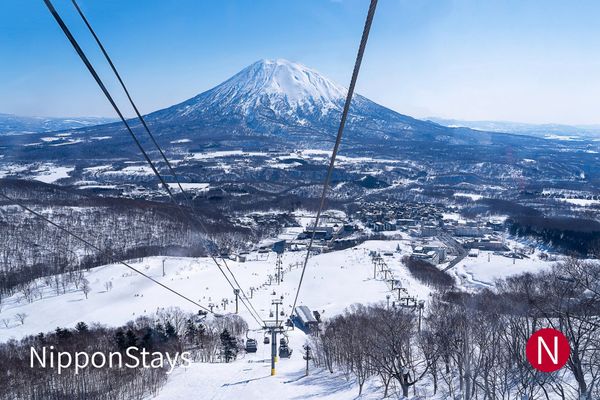
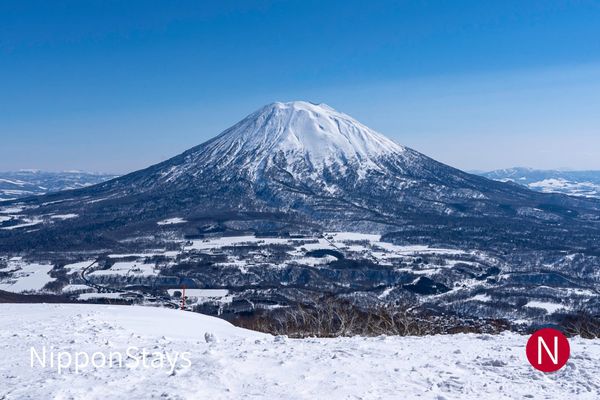
Lunar New Year does not raise hotel prices uniformly across Japan. It concentrates where Greater China visitors already go in disproportionate numbers: Hokkaido's ski resorts, above all Niseko, and Kyoto's temple and ryokan districts. A first-time visitor spreading a two-week itinerary across five or six cities will barely notice the week — rooms in Osaka, Tokyo, or Fukuoka tighten only slightly. Someone specifically trying to book a Niseko chalet or a Kyoto machiya for early February is competing for the same inventory as a large, date-locked travel segment, and that is where rates and availability move the most.
| Destination | How much it tightens | When to book by | Alternative |
|---|---|---|---|
| Niseko | Sharp — peak ski season overlaps directly with the holiday window | 3+ months ahead for the week of Feb 6 | Kiroro, about 60 km away (1 hr 15 min by car in winter conditions) with comparable snow and thinner crowds — see our Kiroro vs. Niseko comparison |
| Kyoto | Noticeable — city hotels and popular ryokan sell out first | 6-8 weeks ahead | Osaka as a base, with Kyoto as a day trip |
| Sapporo | Compounded — Lunar New Year overlaps the Snow Festival itself | 3+ months ahead if visiting Feb 4-11 | Shift arrival to after Feb 11 |
| Tokyo, Osaka, Fukuoka | Mild — demand is absorbed by a much larger room supply | 2-3 weeks ahead is usually enough | No adjustment needed |
The double peak — Sapporo Snow Festival overlaps
The 77th Sapporo Snow Festival runs Thursday, February 4 through Thursday, February 11, 2027, across the Odori, Susukino, and Tsudome sites — confirmed on the festival's official site (snowfes.com). That eight-day run sits directly on top of the Lunar New Year window, so Sapporo is the one city in Japan where the two peaks compound rather than one absorbing the other. Anyone planning to be in Sapporo for the festival and traveling from Greater China or South Korea should expect the tightest hotel market of the two events combined, not just the festival on its own.
How to dodge it
Three ways to avoid the squeeze, in order of how much control you have over your dates:
- Move earlier. The last week of January is climatically identical in Niseko and only slightly less crowded in Kyoto, with meaningfully more room availability.
- Move later. The back half of February, after the festival closes on the 11th and Lunar New Year travel tapers, is the easiest booking window of the two months.
- Change destination. If your dates cannot move, swap Niseko for Kiroro or Rusutsu, or swap central Kyoto for an Osaka base with day trips in.
2027 week-by-week
| Week (2027) | What's happening | Crowd level | Recommendation |
|---|---|---|---|
| Jan 25-31 | Regular ski season, pre-holiday | Low-moderate | Best value window for Niseko and Kyoto |
| Feb 1-3 | Snow Festival setup; early Lunar New Year arrivals begin | Rising | Book now if not already done |
| Feb 4-8 | Snow Festival (Feb 4-11) overlaps Lunar New Year (Feb 6) | Peak | Only if dates are fixed — book 3+ months out |
| Feb 9-11 | Snow Festival closing days; Lunar New Year travel tapering | High | Still tight in Sapporo and Niseko |
| Feb 12-20 | Both events over | Low-moderate | Easiest booking window of the month |
Of the four destination groups in the table above, two — Niseko and Sapporo — tighten sharply enough to need three months' lead time, while Tokyo, Osaka, and Fukuoka absorb the same week with two to three weeks' notice (checked October 2026). Kyoto sits in between, needing six to eight weeks. That spread is a reason to book early for the two tight destinations, not a reason to avoid them altogether; the crowding is concentrated, not universal.
For a wider read on how Niseko's crowding compares to its neighbor across the valley, see our Kiroro vs. Niseko powder and crowds comparison. If Kyoto during this window feels too tight and you are weighing a different base city entirely, our Kyoto vs. Osaka where-to-stay guide covers the trade-off. And if your February trip is built around a specific fixed date rather than a festival, our Kyoto Marathon 2027 where-to-stay guide works through the same book-early logic for race weekend.
Snow Festival dates are confirmed directly by the organizer at snowfes.com's official 2027 event announcement.
Trip Essentials for Japan
Things worth booking before you land, all in English:
- eSIM — Airalo's Japan eSIM: install it at home and data works as soon as you switch off airplane mode at Haneda, Narita, Kansai, or wherever you land.
- Tickets and day trips — Klook covers the Japan Rail Pass, teamLab tickets, and shinkansen-linked day trips; booking ahead skips the ticket-window line.
FAQ: Lunar New Year in Japan
When is Lunar New Year 2027?
Lunar New Year (Chinese New Year) 2027 falls on Saturday, February 6, marking the start of the Year of the Fire Sheep. The date is fixed by the lunisolar calendar and will not change; what remains unannounced as of October 2026 is how many holiday days surround it in mainland China, Taiwan, Hong Kong, and South Korea.
Is Lunar New Year a bad time to visit Japan?
Not for most of Japan. It is a genuinely bad time to try to book a first-choice Niseko chalet or a popular Kyoto ryokan without advance planning, because both destinations draw heavy Lunar New Year travel from Greater China. Tokyo, Osaka, and most other cities see only a mild bump and remain easy to book two to three weeks out.
Does the Sapporo Snow Festival overlap with Lunar New Year in 2027?
Yes. The 77th Sapporo Snow Festival runs February 4-11, 2027, and Lunar New Year falls on February 6 within that window — confirmed by the festival's official announcement. Sapporo hotels in that eight-day stretch face the combined demand of both events, making it the tightest single week covered in this article.
How far ahead should I book if I'm traveling during this window?
For Niseko or Sapporo during February 4-11, aim for three months or more ahead. For Kyoto over the same general window, six to eight weeks is usually enough. For everywhere else in Japan, two to three weeks ahead remains sufficient even during Lunar New Year.