Kyoto Autumn Leaves: Be at the Gate by 8:40, Not 9:00
We were at Nanzen-ji's sanmon at 8:37 in late November — and a dozen people were already there. What an early start in Kyoto actually buys you.

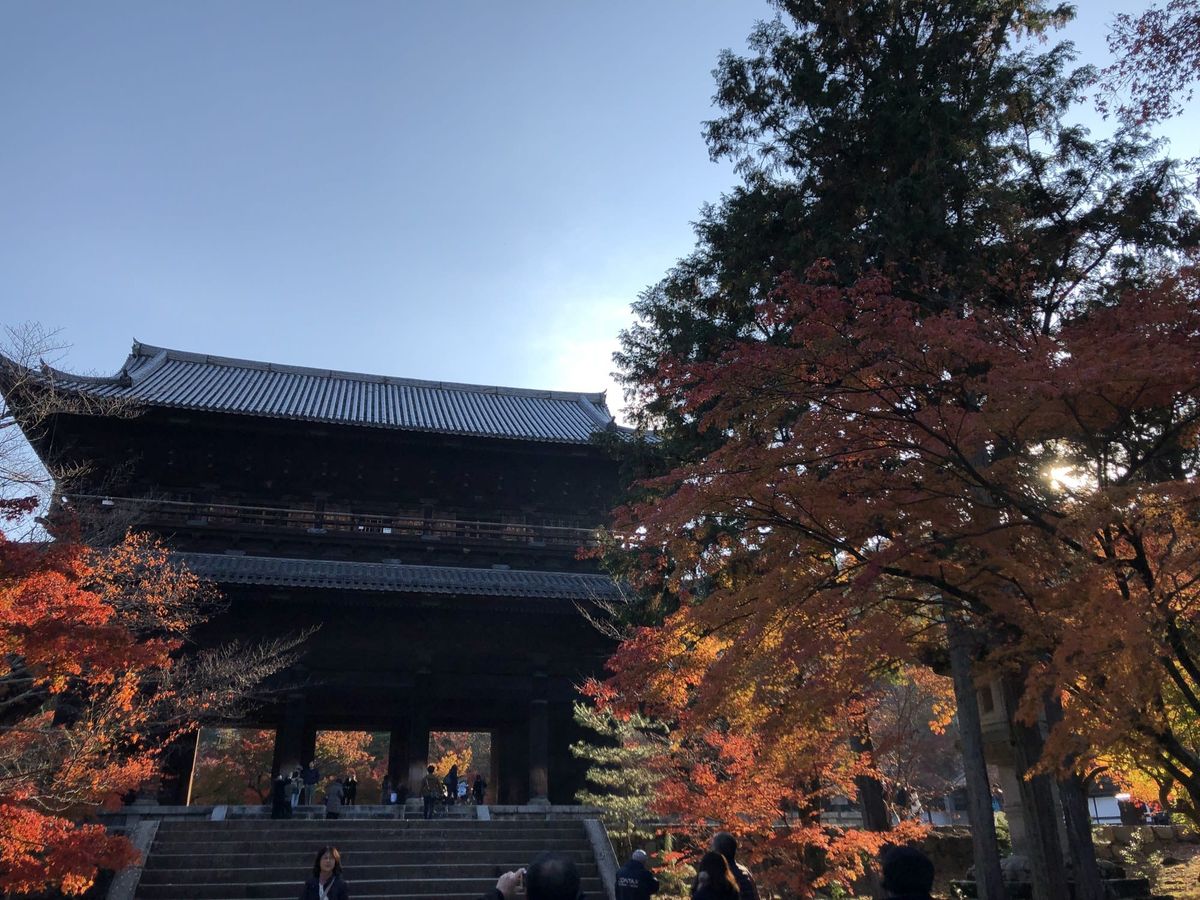
Kyoto autumn leaves are not a 9am activity. Most temple gates open somewhere between 8:30 and 9:00, and the difference between arriving twenty minutes before that and arriving an hour after is the difference between a garden and a queue. We were standing in front of Nanzen-ji's sanmon at 8:37 on a late-November morning, and the honest report is that a dozen other people were already there. Early does not mean empty. It means you are inside before the coaches are.
What 8:37 at Nanzen-ji actually looks like
The photograph we took that morning has people in it. Not a crowd — a scattering along the approach, a couple standing under the maples, someone crouched with a camera — but enough to say plainly that "get there early and have it to yourself" is not true of the well-known temples in the last two weeks of November.
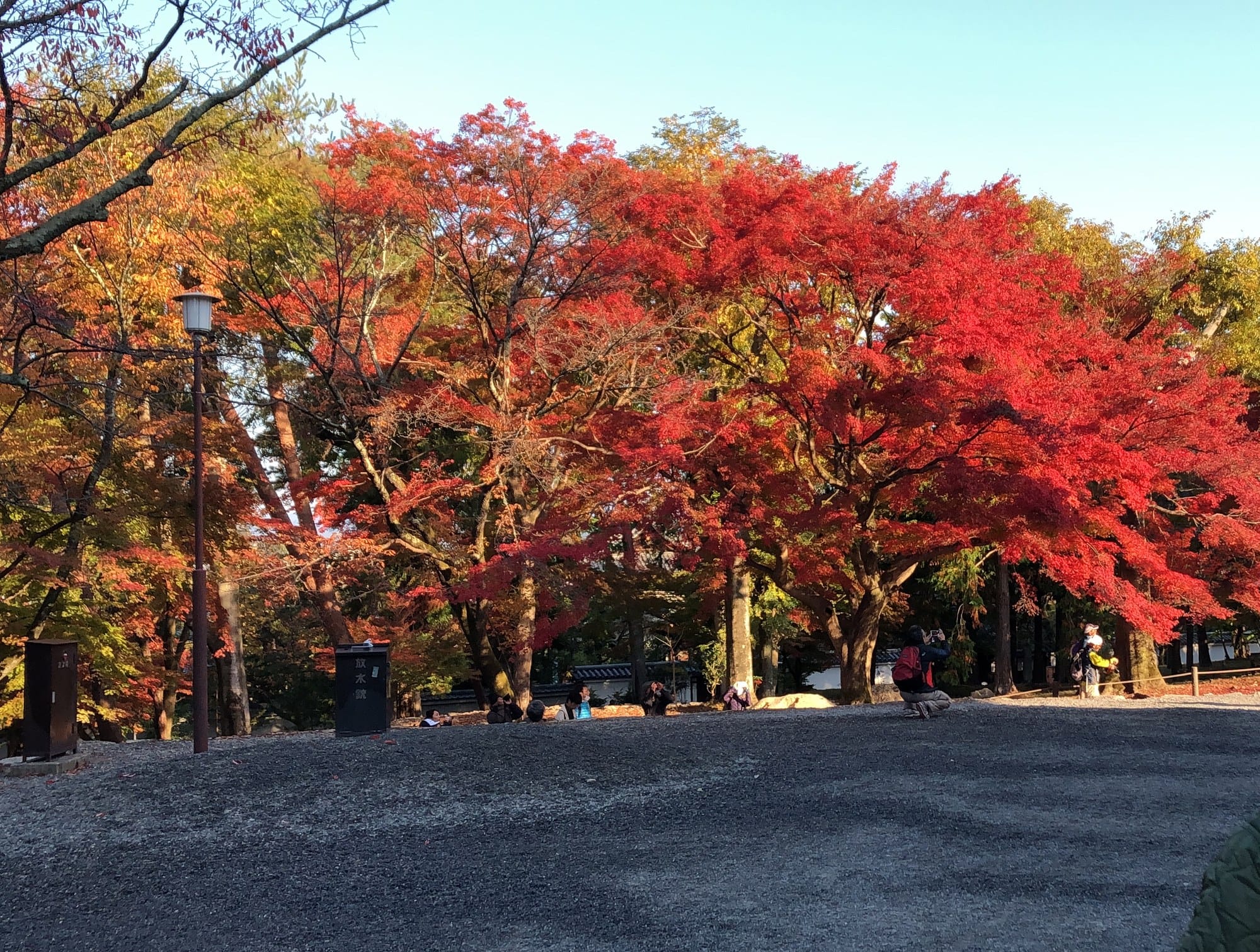
What you get instead is the light. At 8:37 the sun was still low enough to come through the maples from behind rather than above, which is the difference between red leaves and red leaves that glow. By mid-morning that angle is gone and does not come back until the light drops in the afternoon, by which time the crowd has arrived.
The other thing you get is the walk in. The approach to a temple at that hour is a different experience from the same approach at eleven — you can stop in the middle of it without standing in someone's way.
What an early start actually buys you
The value is not uniform through the morning. It falls off in steps rather than gradually.
| When | What it is like | Worth it for |
|---|---|---|
| 20 min before opening | A dozen people, low sun through the leaves | The one temple you care most about |
| First hour after opening | Filling steadily; still possible to stand still | Gardens you look at rather than walk through |
| Mid-morning | Coach groups arrive; one-way circuits back up | Wide grounds where crowds disperse |
| Afternoon | Busiest, then thins near closing | Interiors, and anywhere with a late light |
The practical reading of that table is to spend your early hour on somewhere with a fixed viewing point — a garden you sit and look at — and leave the walk-through temples with wide grounds for later, when a crowd spreads out rather than queues.
Check the gate time, not the opening time
Kyoto temples publish opening hours that vary by season, and autumn hours are often different from the rest of the year. Some open the grounds before the halls; some run separate evening admissions that change the daytime schedule. Check the current times on each temple's own site for the dates you are going — a schedule you copied from a blog is the most common reason people arrive at a locked gate.
One number that does not appear on those pages: how long it takes you to get there. Which is really the question this article is about.
Where you have to be sleeping for this to work
An 8:37 arrival on foot means a hotel within about twenty minutes' walk. That is a small part of Kyoto — Okazaki and Higashiyama for the eastern temples, the area north of Imadegawa for the northern ones. Everywhere else means a bus or subway at a time when both are carrying commuters, and a 20-minute journey on paper becomes 35 with the wait.
We walked to Nanzen-ji from the Westin Miyako, which sits on the hill above Okazaki. That is the specific reason the morning worked, and it is worth being blunt about the trade: a base like that costs more per night and is further from dinner than a central hotel.
| Name | Area | From price (2 guests) | Best for |
|---|---|---|---|
| The Westin Miyako Kyoto | Okazaki / Higashiyama | from ¥38,000 | Walking to Nanzen-ji and the eastern temples before opening |
| HOTEL THE MITSUI KYOTO | Nijo | from ¥132,826; about ¥260,000 for a mid-November night | Central, with the northern temples one short ride away |
| Cross Hotel Kyoto | Kawaramachi | from ¥26,000 | Balancing early mornings against being able to walk to dinner |
Prices are from-rates at two guests and climb sharply in the last two weeks of November. This is the one part of the plan where the early-morning argument can break down: the hotels close enough to walk from are also the ones that price hardest in autumn and spring. If the walkable options are out of range, basing yourself in Osaka and accepting a later start is a more honest trade than paying peak rates for a room you only sleep in. Of the six Kyoto temple mornings we have timestamped across three autumn trips, the only ones that started before 9:00 were the two where we could walk from the hotel (checked August 2026). For how these bases compare across a whole trip rather than one morning, see our guides to Gion and Higashiyama and Kawaramachi versus Kyoto Station. For the autumn-specific version of that decision — which base buys you mornings, which buys you a rain plan — see where to stay in Kyoto for autumn leaves. These are normal-season from-rates and they are not a guide to what you will pay in the last two weeks of November. For scale: HOTEL THE MITSUI KYOTO, from ¥132,826 for two on an undated search, came to about ¥260,000 for two in one room on a mid-November night when we checked in September 2026 — roughly double. In that window the same room routinely sits several tiers higher, the cheapest rooms in any property go months ahead, and a rate you saw in August will not still be there. Treat every number here as a way of ranking these places against each other, not as a price. Put your own dates in before you plan around any of them.
Early rising is worth three mon
There is a Japanese proverb for this: hayaoki wa sanmon no toku — early rising is worth three mon. A mon was the small copper coin of the Edo period, and three of them was close to nothing. The proverb does not promise you a fortune for getting up. It promises a small, dependable gain.
That is exactly the right expectation for a November morning in Kyoto. You will not have the temple to yourself, and anyone who tells you otherwise has not queued at Nanzen-ji in the last week of the month. What you get is three mon's worth: the low light, the walk in without stopping for anyone, and being through the gate before the coaches. Small, and reliably there.
The one thing worth setting an alarm for
If you do this once on a trip rather than every day, spend it on a garden you view from a fixed point rather than a route you walk. A rock garden or a shoin looking out over a valley rewards being early in a way that a pond circuit does not — you can sit, and the sitting is the visit. On a walk-through site, arriving early mostly means walking the same loop with fewer people, which is pleasant but not transformative.
The same calendar has another edge. If the dates are already fixed and they fall after the third week of November, the question flips from how early to start to whether anything is left: lowland Kanto, Kansai and Kyushu cities usually hold color from around November 20 into early December, while Hokkaido, Tohoku and highland resorts are finished. Is late November too late for autumn leaves splits the country into the two halves.
Trip Essentials for Kyoto
Things worth booking before you land, all in English:
- eSIM — Airalo's Japan eSIM: install it at home and data works as soon as you switch off airplane mode at Kansai Airport.
- Airport transfer — Klook covers bus, train, and private transfers from Kansai Airport.
- Luggage storage — arriving before check-in? Radical Storage takes bags at shops near Kyoto Station for a flat daily rate.
- Tickets and day trips — Klook covers Arashiyama activities, tea ceremonies, and Nara day trips; booking ahead skips the ticket-window line.
FAQ: early mornings in Kyoto in autumn
Can I get breakfast that early?
Not at most hotels, where breakfast service typically starts at 7:00 and gets busy by 8:00. If you are leaving at 8:15 you are either eating at the first sitting or taking something from a convenience store. Plan the coffee, not just the temple.
Are the grounds open before the main hall?
At some temples yes, at others the whole site opens at once, and it varies by season. This is the specific thing to check on the temple's own site rather than assume — arriving for a 9:00 grounds opening when the hall you came for opens at 10:00 is a common way to lose an hour.
Is it worth it in the rain?
Less so for crowd reasons — rain thins the crowd by itself, so the early advantage shrinks. It is still worth it for light, in the sense that an overcast morning gives you even light all day and nothing to wait for.
Will I actually have the place to myself?
No, and any guide that promises that has not been in Kyoto in the last week of November. At 8:37 at Nanzen-ji there were about a dozen people already on the approach. What you avoid is not other visitors but coach groups, which arrive later and move as a block.