Kurashiki Bikan Historical Quarter Ryokan Hotels: Stay in the Old Town
Ryokan and hotels inside Kurashiki's Bikan Historical Quarter: canal-side inns, Ivy Square, and where to stay to wake up before the crowds arrive.

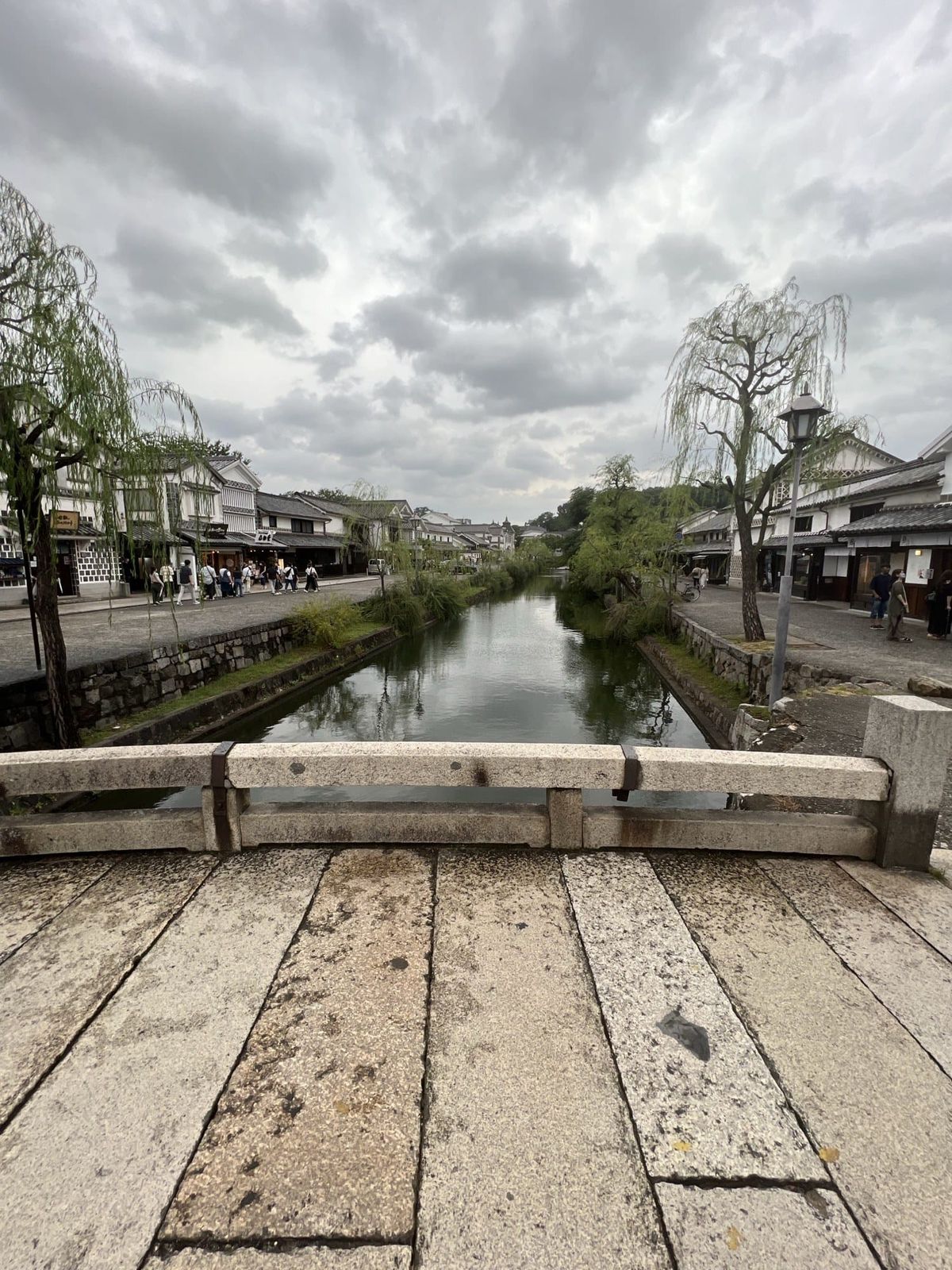
The best Kurashiki Bikan historical quarter ryokan hotels for canal access are Ryokan Kurashiki (from ¥45,000 per person, recently renovated with 8 rooms) and Ryori Ryokan Tsurugata (from ¥22,000 per person, an Edo-period building dating to 1744) — both put you steps from the canal at 6 a.m., before day-trip coaches arrive. If the full ryokan format — kaiseki dinner at a set time, yukata in the corridors — is not what you're after, Kurashiki Ivy Square (from ¥12,000 per room) gives you the heritage brick atmosphere with more flexibility and a much shorter booking window.
Of the 4 properties covered in this guide, 2 are full-inclusion ryokan — Ryokan Kurashiki (8 rooms) and Ryori Ryokan Tsurugata (11 rooms) — with kaiseki dinner and breakfast included in the rate, while the remaining 2 properties require no meal commitment (checked July 2026).
Inside the Quarter vs Just Outside: The Core Decision
Finding the right Kurashiki Bikan Historical Quarter ryokan hotels comes down to one question: how close do you actually want to be to the canal? The quarter is a 15-min walk from Kurashiki Station, which is itself about 15 minutes by JR Sanyo Line from Okayama. That geography shapes everything about where you stay.
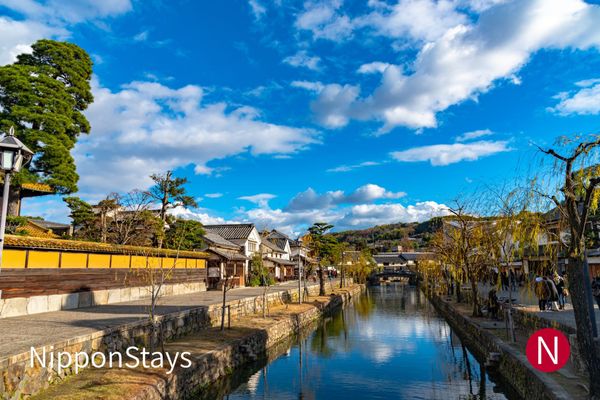
Inside means waking up before the day-trippers arrive, when the willow-lined canal and whitewashed kura warehouses are still quiet. A short walk out means more inventory, more price points, and still under a 10-min walk to the canal. Both strategies work. This guide covers both.
Some links in this guide are affiliate links. If you book through them, we may earn a commission at no extra cost to you.
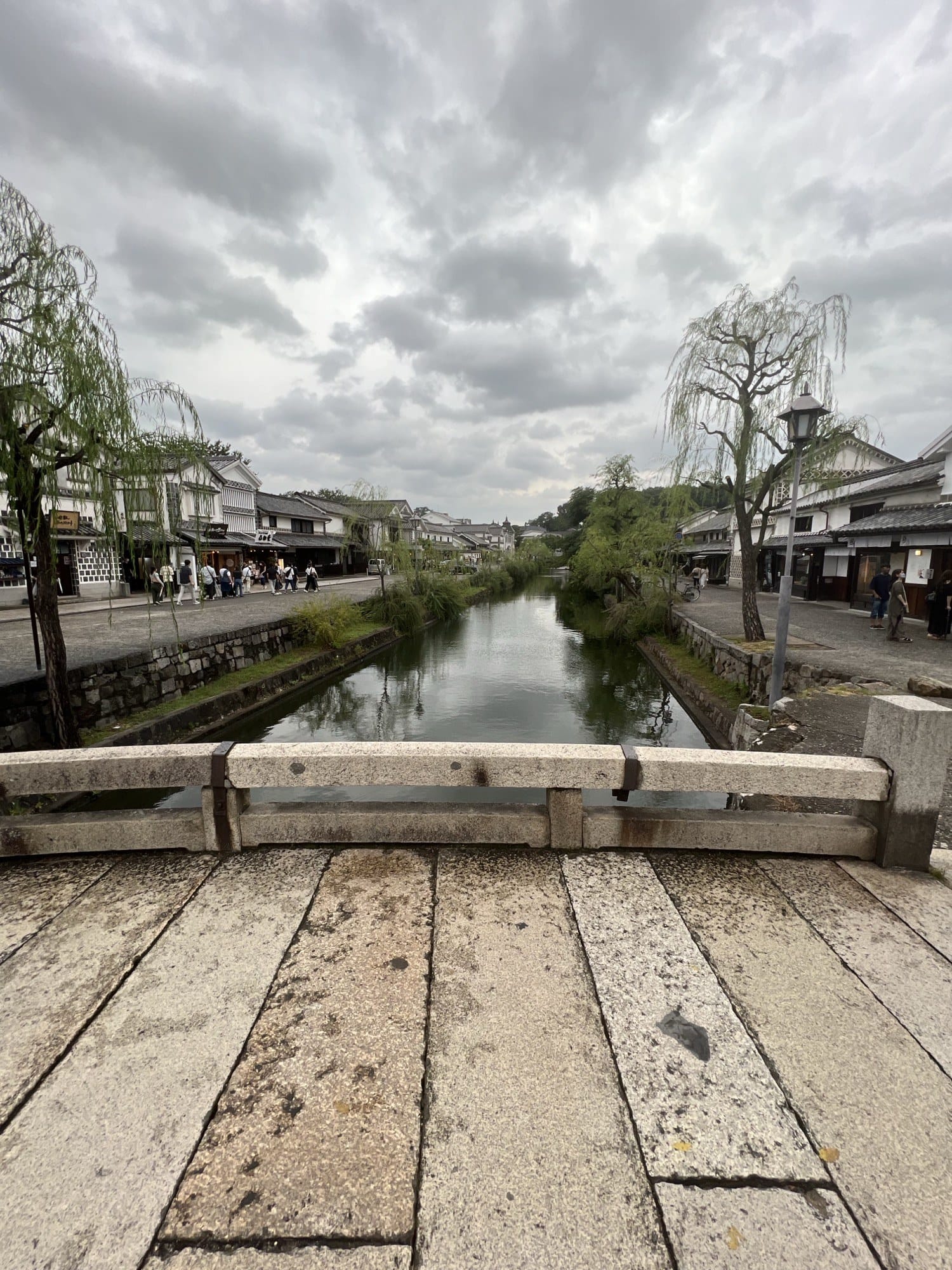
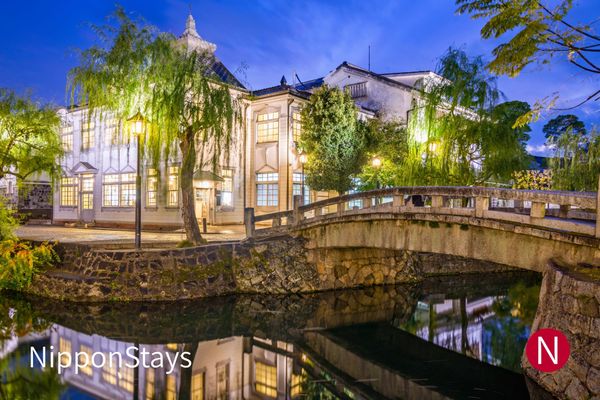
A stone bridge over the Bikan quarter canal, Kurashiki.
Quick Comparison: Bikan Quarter Stays
| Name | Area | Price range | Best for |
|---|---|---|---|
| Ryokan Kurashiki | Canal-side, Bikan quarter heart | from ¥45,000 per person (varies by season) | Couples, special occasions, full kaiseki dinner |
| Ryori Ryokan Tsurugata | Inside Bikan quarter | from ¥22,000 per person (varies by season) | Traditional ryokan experience with multicourse meals |
| Kurashiki Ivy Square | Edge of Bikan quarter, ~5-min walk to canal | from ¥12,000 per room (varies by season) | Heritage setting with Western comforts, larger groups |
| Kurashiki Royal Art Hotel | ~3-min walk to Bikan quarter | from ¥12,000 per room (varies by season) | Spacious rooms (all 40m²+), near-quarter convenience |
All prices are per person or per room per night as noted and vary by season and day of the week. Check rates for your specific dates.
Ryokan and Machiya-Style Inns on the Canal
Ryokan Kurashiki sits in the centre of the Bikan quarter in a cluster of joined traditional buildings, the oldest of which dates to the Edo period. The ryokan closed for a major renovation in December 2023 and reopened in August 2024 with updated guest rooms, a refreshed restaurant, and a private bath. It now has 8 rooms plus 2 residences — the small scale is the point. Rates include kaiseki dinner and breakfast, which is why the per-person price floor looks high relative to a standard hotel room: you're paying for two meals of significant quality alongside the accommodation.
The location means you can walk to the canal in under two minutes, before any day-trip bus has arrived and before the gallery shops have opened their shutters. That window — roughly 7 a.m. to 9 a.m. — is what Ryokan Kurashiki guests consistently describe as the reason they booked. Book well in advance; the ryokan has very limited capacity.
Ryori Ryokan Tsurugata is housed in an Edo-period building originally constructed in 1744 and sits inside the Bikan quarter. The property has 11 rooms and follows the same kaiseki-plus-breakfast model. Check-in is from 3 p.m. and check-out is at 10 a.m. Guests consistently rate its location a 9.8 out of 10 on major booking platforms, which reflects the fact that it is, quite literally, surrounded by the heritage streetscape.
Both properties require a full commitment to the traditional stay format: you are staying in a ryokan, which means yukata in the corridor, multicourse dinner at an assigned time, and a level of hospitality that makes you feel slightly overdressed if you wander back in trainers at 10 p.m. That is not a drawback — it is the product. But it is worth knowing before you book.
Converted-Warehouse and Heritage Hotels
Kurashiki Ivy Square is built inside the red-brick cotton mill constructed in 1889. The brick exterior is the original factory building; the guest rooms and courtyards have been arranged around the old industrial structure. It sits on the eastern edge of the Bikan quarter, roughly a 5-min walk from the canal. With 145 rooms, it is significantly larger than the ryokan options above and correspondingly more available on short notice.
The property has two restaurants, a bar, a gift shop, and a wine cellar — practical for a group or a trip where not everyone wants to commit to an evening kaiseki schedule. Rooms start at around 15m² for a single and go up to a 51m² royal suite. The smaller rooms are compact but the setting makes up for the floor area. The ivy-covered brick courtyard in particular is something no modern business hotel can replicate.
From Kurashiki Station's South Exit, it's roughly a 10-min walk to Ivy Square. The Ohara Museum of Art is a 5-min walk through the quarter from the hotel — a useful base if the museum is your primary reason for visiting.
Kurashiki Royal Art Hotel sits about a 3-min walk from the Bikan quarter boundary, a 10-min walk from Kurashiki Station. All rooms are at least 40m², with separate shower rooms — a real point of difference in Japan, where bathroom space is rarely a given. The building itself is contemporary, so you're trading the heritage atmosphere for practical comfort. The on-site restaurant occupies a converted rice storehouse. Rates are competitive for the area and the room size.
Comparison Table: Full Breakdown
| Name | Area | Price range | Best for |
|---|---|---|---|
| Ryokan Kurashiki | Canal-side, inside Bikan quarter | from ¥45,000 per person (varies by season) | Special-occasion stay, quiet early morning canal access |
| Ryori Ryokan Tsurugata | Inside Bikan quarter | from ¥22,000 per person (varies by season) | Authentic Edo-period ryokan with multicourse meals |
| Kurashiki Ivy Square | Eastern edge, ~5-min walk to canal | from ¥12,000 per room (varies by season) | Heritage atmosphere, more flexibility, larger parties |
| Kurashiki Royal Art Hotel | ~3-min walk to quarter | from ¥12,000 per room (varies by season) | Spacious rooms, modern comforts, competitive rates |
All prices are per person or per room per night as noted and vary significantly by season. Peak periods include cherry blossom season (late March to mid-April) and autumn foliage (mid-November). Check rates for your specific dates.
The Payoff: Waking Up in the Quarter Before the Crowds
Kurashiki Bikan draws significant day-trip traffic from Okayama, Hiroshima, and Osaka. By 10 a.m. on a weekend, the canal-side walkways are full. By 3 p.m., the main lane between the canal and the Ohara Museum is a slow shuffle. By 5 p.m., it begins to empty — and by 7 p.m., only guests staying in the quarter are around.
The canal illumination runs until 10 p.m. in warmer months and 9 p.m. in cooler months, lighting the willow reflections and the white-and-black kura facades with a soft wash that the daytime crowds never see. This is the specific experience that staying in the Bikan quarter — rather than commuting in from Okayama — makes possible.
If you're debating between basing in Okayama versus Kurashiki, the answer often comes down to this evening question. Both cities are connected by JR Sanyo Line in approximately 15 minutes, so daytime logistics are equivalent. But if you want to walk the canal at 6 a.m. before breakfast, you need to be sleeping in Kurashiki. For a longer treatment of that decision, see our Kurashiki accommodation guide and the Okayama pillar guide.
The Ohara Museum and Why It Changes the Calculation
The Ohara Museum of Art opened in 1930, making it Japan's first private museum focused primarily on Western art. It was funded by Magosaburo Ohara, a local industrialist, and houses a collection that includes El Greco's The Annunciation — a 16th-century oil painting that is simply not what you expect to encounter in a Okayama Prefecture canal town. The directness of that juxtaposition is something visitors consistently remark on: this level of Western art, collected and permanently displayed at this scale, in what remains a mid-sized regional city.
Museum hours run 9 a.m. to 5 p.m. from March through November (last entry 4:30 p.m.), and 9 a.m. to 3 p.m. from December through February (last entry 2:30 p.m.). The museum is closed on Mondays. Note that the museum was scheduled for a closure period from February 9 to April 24, 2026 — check current opening status before planning your visit, as the closure period may affect your dates.
Staying in the Bikan quarter means you can visit first thing at 9 a.m. when the museum is quietest, then use the rest of the morning to walk the canal before the day-trip crowds build. Ivy Square is particularly well-placed for this — you can reach the museum's front entrance in a 5-min walk from the hotel.
Getting Here and Connecting Onward
From Kurashiki Station's South Exit, the Bikan quarter is roughly a 10-min to 15-min walk due south, following well-marked signs. The South Exit is the side you want for the quarter; the North Exit faces the commercial district and connects you to highway bus services.
Kurashiki is on the JR Sanyo Line. From Okayama Station, the journey takes approximately 15 minutes and trains run frequently throughout the day. A single fare is modest — around ¥330 at our last check — which makes the Okayama–Kurashiki round trip easy to factor in regardless of which city you base in.
Onward connections from Kurashiki Station: Hiroshima is around 35–40 minutes by Shinkansen from Okayama Station (Nozomi/Sakura; around 60 minutes on the slower Kodama). If you're combining Kurashiki with the broader Chugoku region, see our Hiroshima accommodation guide for hotel picks near Hiroshima Station and the Peace Memorial area.
Pick by Stay Type
For a special-occasion stay: Ryokan Kurashiki is the obvious choice — the scale, the rebuilt interiors, and the canal-side position make it one of the more considered ryokan experiences in the Chugoku region. Book early; it fills quickly.
For a traditional ryokan without the top-end rates: Ryori Ryokan Tsurugata delivers the Edo-period building and multicourse meals in a setting that is, if anything, even more historically rooted. The 11-room capacity keeps the experience intimate.
For flexibility and larger groups: Ivy Square gives you the heritage architecture without the full-ryokan commitment. You can eat in the hotel restaurant or head out into the quarter for dinner. Rooms are available on shorter booking windows than the ryokan properties, and the brick-courtyard setting is genuinely distinctive.
For practical comfort with easy quarter access: The Kurashiki Royal Art Hotel's 40m²+ rooms and separate shower rooms are a real advantage for a two- or three-night stay where you need actual space to unpack. The 3-min walk to the quarter is short enough to be a non-issue, and rates are generally more competitive than the canal-side options.
For a broader look at Kurashiki accommodation across all price points, including business hotel options near the station, see our full Kurashiki guide. For the wider question of whether to base in Okayama or Kurashiki, the Okayama area guide covers the decision in detail.
Trip Essentials for Okayama
Things worth booking before you land, all in English:
- eSIM — Airalo's Japan eSIM: install it at home and data works as soon as you switch off airplane mode at Okayama Airport.
- Tickets and day trips — Klook covers Kurashiki and Naoshima day tours; booking ahead skips the ticket-window line.
FAQ: Kurashiki Bikan Quarter Ryokan and Hotels
What is the difference between staying inside the Bikan quarter versus near Kurashiki Station?
Staying inside the Bikan quarter — at Ryokan Kurashiki or Ryori Ryokan Tsurugata — means the canal and kura warehouses are less than a 2-min walk from your door at any hour, including the quiet early-morning window before day-trip groups arrive. Kurashiki Station hotels sit about a 10-min to 15-min walk from the canal; they offer more price variety and more available rooms, but you give up that early-morning access. Kurashiki Ivy Square and Kurashiki Royal Art Hotel fall between these two positions — inside or on the edge of the quarter, but without the full ryokan format.
Do the Bikan quarter ryokan include meals?
Both Ryokan Kurashiki and Ryori Ryokan Tsurugata operate on a dinner-and-breakfast included model. The per-person price floors — from ¥45,000 and from ¥22,000 respectively — cover both meals as well as the room. This is standard for this class of ryokan; the kaiseki dinner in particular is a significant part of what you are booking. If you prefer not to commit to on-site meals, Kurashiki Ivy Square and Kurashiki Royal Art Hotel do not require dinner bookings.
How far is the Bikan quarter from Kurashiki Station?
From Kurashiki Station's South Exit, the Bikan historical quarter is roughly a 10-min to 15-min walk due south, following well-marked signs. Use the South Exit — the North Exit faces the commercial district on the opposite side of the station. Kurashiki Station itself is about 15 minutes from Okayama Station by JR Sanyo Line, making it a straightforward day trip from either city.
Is the Ohara Museum of Art walkable from the Bikan quarter hotels?
The Ohara Museum of Art sits at the northern entrance of the Bikan quarter canal area. From Ryokan Kurashiki and Ryori Ryokan Tsurugata, the museum's front entrance is under a 5-min walk. From Kurashiki Ivy Square, the museum is about a 5-min walk through the quarter. The museum is closed on Mondays; check current hours before visiting, as seasonal hours apply and a temporary closure period ran from February to April 2026.
Information audit: Last fact-checked July 2026 · Prices checked July 2026 (all rates are “from” floors that vary by season) · How this guide was researched: hotel facilities, prices and access details are verified against official and primary sources; we have not personally stayed at every property listed. The author has traveled in this area personally; original photographs on this site are from those trips · How this site verifies information: About NipponStays.