Ohara Museum of Art Kurashiki Where to Stay: Art, Canal Quarter & Hotels
Ohara Museum of Art in Kurashiki holds El Greco's Annunciation and world-class Western art. Where to stay in the Bikan quarter or day-trip from Okayama.
On the question of Ohara Museum of Art Kurashiki where to stay: if the museum is the main reason for your trip, base in the Bikan Historical Quarter. Ryokan Kurashiki (from ¥45,000 per person with meals) puts you 5-min walk from the entrance and lets you arrive at opening before day-tour groups; Kurashiki Ivy Square (from ¥12,000 per room) is a converted 1889 cotton mill 10-min walk from the Ohara, with 145 rooms that book less tightly. If you're combining the museum with a broader Okayama itinerary, Hotel Granvia Okayama (from ¥14,000 per room, station-connected) works as a day-trip base — the JR Sanyo Line gets you from Okayama to Kurashiki in about 15 minutes for ¥330.
Of the 5 accommodation options covered in this guide, 2 are within a 10-min walk of the Ohara Museum: Ryokan Kurashiki (8 rooms, from ¥45,000 per person) and Kurashiki Ivy Square (145 rooms, from ¥12,000 per room), both confirmed open at our last check (checked July 2026).
What the Ohara Museum Actually Is
Deciding on the Ohara Museum of Art Kurashiki where to stay is a two-part question: understanding what makes this museum worth the trip, then picking the right base. Japan has no shortage of museums, but the Ohara Museum of Art in Kurashiki occupies a genuinely unusual position. Founded in 1930 by local industrialist Magosaburō Ōhara, it was Japan's first private museum dedicated primarily to Western art. That fact alone is worth sitting with. While most of the country was still decades away from routine international travel, Ōhara was funding a painter named Torajiro Kojima to travel across Europe and acquire major works for a permanent collection in a small canal town in western Japan.
Some links in this guide are affiliate links. If you book through them, we may earn a commission at no extra cost to you.
The museum's main building — a neoclassical stone structure that looks quietly out of place next to the white-walled Edo-period warehouses of the Bikan Historical Quarter — houses works by El Greco, Monet, Gauguin, Rodin, and Matisse, among others. The collection grew from Kojima's European acquisitions and has expanded through decades of additions across several annexes on the museum grounds.
Getting there is straightforward. From Kurashiki Station's South Exit, it is a 15-min walk through the shopping arcade to the Bikan quarter, with the museum sitting right at the canal-side heart of it. Alternatively, a local bus from stop 3 at the station to the Ohara Bijutsukan stop takes about 2 minutes and costs ¥200 — useful if you're carrying bags or arriving on a hot summer day.
The El Greco Question
The most striking single work in the collection is El Greco's The Annunciation (c. 1590). In 1922, Kojima spotted it at a gallery in France and wrote to Ōhara immediately, enclosing a photograph and requesting funds. The price was 150,000 francs — roughly ¥200–300 million in current value. Ōhara agreed. The painting made its way to Kurashiki, and it has been here ever since.
Standing in front of it now, the question that surfaces isn't really about art history or monetary value. It's simpler: why does this level of Western art exist in a provincial Japanese canal town? The answer is specific: one wealthy industrialist, one dedicated painter-agent, one series of purchasing trips to Europe in the 1920s, and a building completed in 1930 to house the result. There was no broader policy, no national mandate. It happened because two individuals decided it should.
That specificity is part of what makes the Ohara worth the trip. It doesn't feel like a branch of a larger institution. It feels like the product of a particular decision made at a particular moment, and the work has stayed here for nearly a century since.
Visiting: Hours, Admission, and What to Expect
The museum is open Tuesday through Sunday. It is closed on Mondays (or the following Tuesday when Monday falls on a public holiday) and from December 28 through December 31.
- Hours (March–November): 9:00–17:00 (last admission 16:30)
- Hours (December–February): 9:00–15:00 (last admission 14:30)
- Admission: from ¥2,000 for adults; student and youth pricing lower. Confirm current rates on the official website (ohara.or.jp) before visiting, as pricing has varied across sources.
The museum complex consists of the main Western art gallery plus several annexes: a Crafts Gallery (mingei works), an Asiatic Museum (East Asian art), a Morikawa Hall (20th-century Western works), and a contemporary gallery for rotating exhibitions. Plan 90 minutes minimum for the main building alone. Two hours gives you the annexes without rushing.
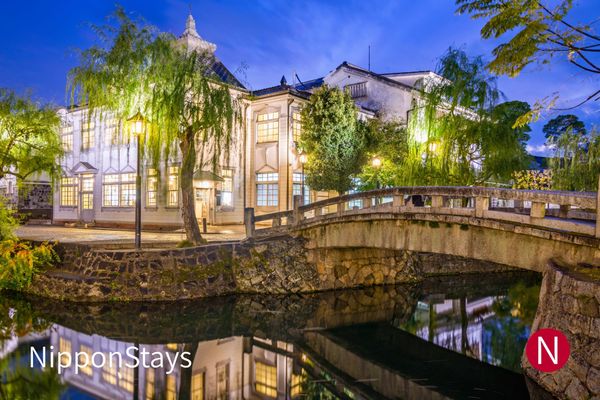
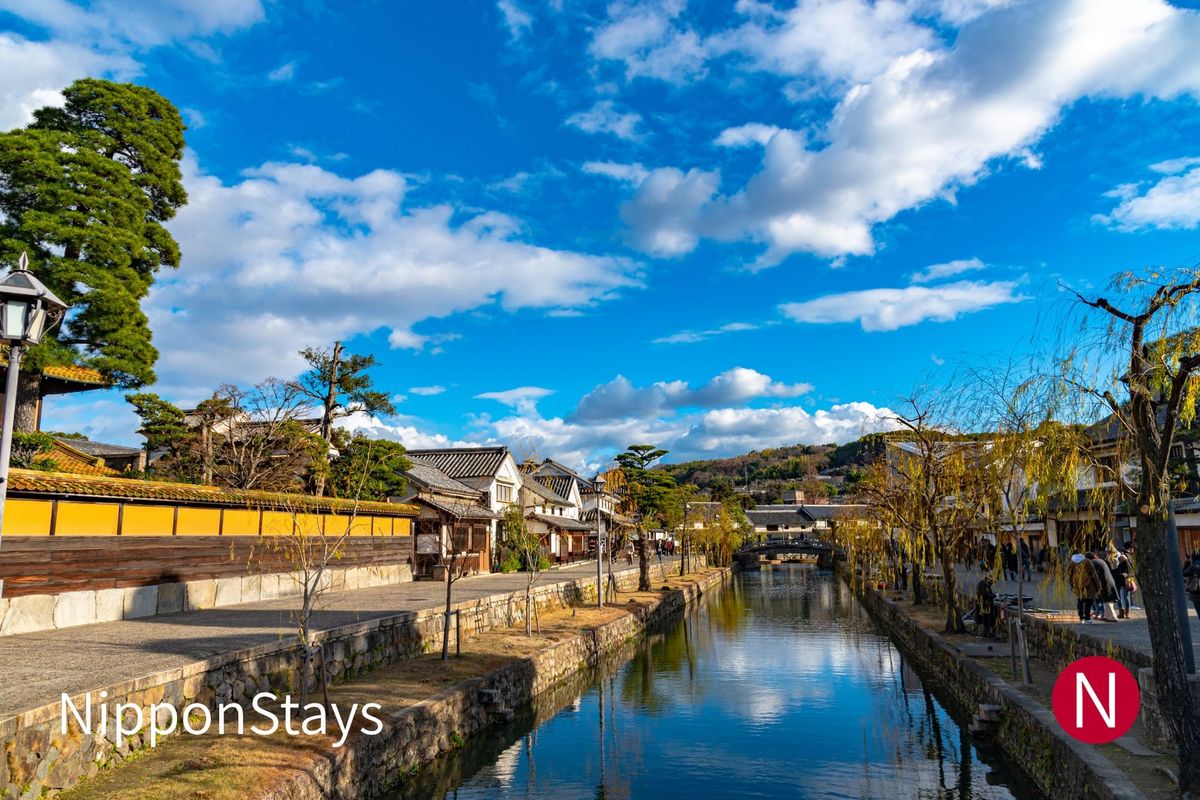
The Bikan quarter directly surrounds the museum. The canal, with its white-walled kura storehouses and willow trees, starts a few steps from the museum entrance. Arriving early — at opening — means the El Greco room before the day-tour groups arrive. By mid-morning in peak season, the main gallery gets crowded.
Where to Stay for an Art-First Trip
The choice between Kurashiki and Okayama as a base depends on how you're structuring the visit. Here's how I'd break it down.
| Name | Area | Price range | Best for |
|---|---|---|---|
| Ryokan Kurashiki | Bikan quarter, canal-side | from ¥45,000 per person (varies by season) | Art-first couple; 8-room ryokan in the quarter itself, 5-min walk to museum |
| Kurashiki Ivy Square | Near Bikan quarter | from ¥12,000 per room (varies by season) | Heritage atmosphere at accessible prices; converted 1889 cotton mill |
| Kurashiki Royal Art Hotel | Near Kurashiki Station | from ¥12,000 per room (varies by season) | Good room sizes, easy transit connections to both Okayama and the Bikan quarter |
| Hotel Granvia Okayama | Okayama Station (direct access) | from ¥14,000 for two per room (varies by season) | Day-trip to Ohara from Okayama; shinkansen-connected, large hotel amenities |
All prices are per room per night unless noted (Ryokan Kurashiki is per person with meals) and vary by season and day of the week. Check rates for your specific dates.
If the museum is your primary reason for the trip: Stay in Kurashiki, ideally in or immediately adjacent to the Bikan quarter. Ryokan Kurashiki sits 5-min walk from the museum entrance and has 8 rooms, so it books up — reserve early. Kurashiki Ivy Square is a larger property (145 rooms) in a converted cotton mill from 1889, with its own history embedded in the building, and sits within 10-min walk of the Ohara. Waking up in the quarter means you can arrive at the museum at 9:00 on a weekday before the buses from Okayama and Hiroshima deposit their groups.
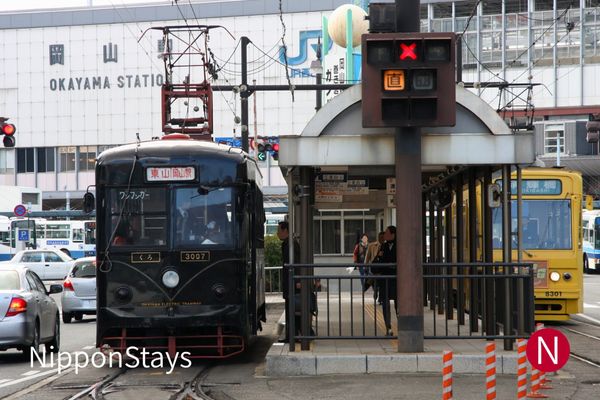
If you're combining Ohara with a broader Okayama itinerary: Basing in Okayama and day-tripping to Kurashiki works well. The JR Sanyo Line from Okayama to Kurashiki takes about 15 minutes and costs ¥330, with trains running roughly every 15 minutes. Use the South Exit at Kurashiki, walk through the shopping arcade, and you're at the Bikan quarter and museum. Hotels near Okayama Station — Hotel Granvia Okayama (directly connected to the station) or Mitsui Garden Hotel Okayama (about 5-min walk from the East Exit) — cover this base comfortably.
For a more detailed breakdown of where to stay in the Bikan quarter itself, see our Kurashiki Bikan quarter ryokan and hotel guide. For the full picture of stays across both cities, see our Kurashiki area guide and our Okayama area guide.
Pairing the Ohara with Korakuen and a Naoshima Day
A two-night itinerary built around the Ohara naturally extends in two directions.
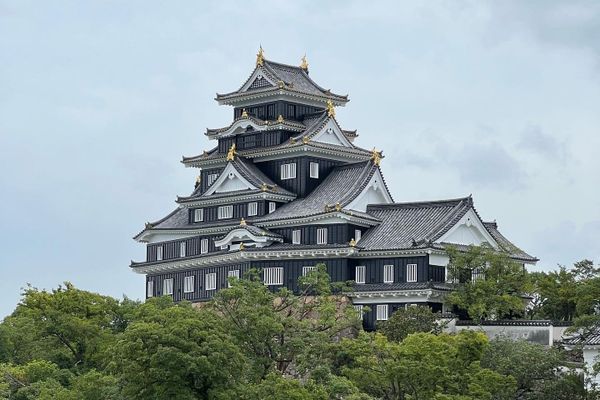
Korakuen Garden and Okayama Castle are a 15-min train ride from Kurashiki, then a 20-min tram or taxi from Okayama Station. Korakuen — one of Japan's three great landscape gardens — is open 7:30–18:00 (March 20–September 30) and 8:00–17:00 (October 1–March 19), with admission from ¥500 for adults. A combined ticket with Okayama Castle runs ¥800. The castle (Ujo, or Crow Castle) was renovated and reopened in 2022 with updated exhibits across multiple floors. Spend a morning in the garden and an hour in the castle; the two together make a full half-day from Okayama Station.
Naoshima is accessible from the Okayama side via JR's Uno Line to Uno Station (some services require a transfer at Chayamachi — check the timetable for your departure), then the Shikoku Kisen ferry from Uno Port to Naoshima's Miyanoura Port — about 20 minutes on the water for ¥370 one way. The ferry runs roughly 12 times daily. Confirm current timetables at the port or on the Shikoku Kisen website before an early start; the last return ferry from Miyanoura is in the early evening. A Naoshima day pairs naturally with an Okayama or Kurashiki base: art island in the morning, back on the mainland by afternoon. For the full route and planning detail, see our guide to Okayama as a gateway to Naoshima.
A practical two-night structure: arrive in Kurashiki, spend evening and morning in the Bikan quarter with the Ohara Museum as the centrepiece, then shift base to Okayama for Korakuen and a Naoshima day before heading on. The 15-min train between the two cities means you lose almost no travel time in the move.
The Bikan Quarter After Dark
One argument for staying overnight in Kurashiki rather than day-tripping from Okayama: the Bikan quarter after the buses leave. By late afternoon, most day visitors have gone. The quarter is illuminated after sunset — white-walled storehouses and the canal surface lit with landscape lighting designed by Isamu Ishii. The effect is quieter and more considered than the daytime version. Guests staying at participating ryokan can borrow traditional paper lanterns free of charge (limited number available). There is no special ticket or reservation required for the nighttime quarter; you simply walk in.
The Kurashiki Haruyoi Akari spring light festival adds seasonal lantern installations to the quarter, typically in late March or early April — check current dates on the Okayama Prefecture tourism site before planning around it.
Where to Stay: Final Comparison
| Name | Area | Price range | Best for |
|---|---|---|---|
| Ryokan Kurashiki | Bikan quarter, canal-side | from ¥45,000 per person (varies by season) | Immersive overnight in the quarter; top pick for a special art-focused trip |
| Kurashiki Ivy Square | Near Bikan quarter | from ¥12,000 per room (varies by season) | Heritage building, accessible rates, 10-min walk to Ohara Museum |
| Kurashiki Royal Art Hotel | Near Kurashiki Station | from ¥12,000 per room (varies by season) | Comfortable mid-range; easy JR connections to Okayama and Bikan quarter |
| Mitsui Garden Hotel Okayama | Okayama Station, ~5-min walk (East Exit) | from ¥10,000 per room (varies by season) | Okayama base for day-tripping to Kurashiki and Naoshima |
| Hotel Granvia Okayama | Okayama Station (direct connection) | from ¥14,000 for two per room (varies by season) | Shinkansen arrival, large hotel facilities, best all-round Okayama base |
All prices are per room per night unless noted (Ryokan Kurashiki is per person with meals) and vary by season and day of the week. Check rates for your specific dates.
For more options across both cities, see where to stay in Kurashiki and where to stay in Okayama.
Trip Essentials for Okayama
Things worth booking before you land, all in English:
- eSIM — Airalo's Japan eSIM: install it at home and data works as soon as you switch off airplane mode at Okayama Airport.
- Tickets and day trips — Klook covers Kurashiki and Naoshima day tours; booking ahead skips the ticket-window line.
FAQ: Ohara Museum of Art and Kurashiki Hotels
Is it worth staying overnight in Kurashiki just for the Ohara Museum?
Yes, if the museum is the main reason for your visit. An overnight in the Bikan quarter means you can arrive at the Ohara when it opens at 9:00, before day-tour groups from Okayama and Hiroshima arrive. Staying at Ryokan Kurashiki (5-min walk from the museum) or Kurashiki Ivy Square (10-min walk) also lets you explore the canal quarter in the evening after most visitors have left — the atmosphere after dark is noticeably quieter and the storehouses are lit with landscape lighting.
Can I visit the Ohara Museum as a day trip from Okayama?
Day-tripping from Okayama works well. The JR Sanyo Line runs from Okayama Station to Kurashiki in about 15 minutes for ¥330, with trains roughly every 15 minutes through the day. From Kurashiki Station's South Exit, the Bikan quarter and the museum are a 15-min walk through the shopping arcade. Plan to arrive early — by mid-morning in peak season the main El Greco room gets crowded. Hotel Granvia Okayama (from ¥14,000) and Mitsui Garden Hotel Okayama (from ¥10,000, 5-min walk from the East Exit) are the two most convenient Okayama Station bases for this approach.
How much time do you need at the Ohara Museum of Art?
Allow 90 minutes minimum for the main Western art gallery, which holds El Greco's Annunciation and works by Monet, Gauguin, and Matisse. The museum complex includes four additional annexes — a Crafts Gallery, Asiatic Museum, Morikawa Hall, and contemporary gallery. Two hours gives you the main building and annexes without rushing. The museum closes on Mondays (or the following Tuesday when Monday is a public holiday) and from December 28 through December 31; hours shorten to 9:00–15:00 in winter (December through February).
Which hotel is closest to the Ohara Museum of Art?
Ryokan Kurashiki is the closest overnight option — an 8-room traditional inn operating since 1957, located inside the Bikan Historical Quarter about a 5-min walk from the museum entrance. Kurashiki Ivy Square is the next closest, a 10-min walk through the quarter, with significantly more availability at from ¥12,000 per room. Kurashiki Royal Art Hotel near Kurashiki Station (from ¥12,000 per room) adds about 15 minutes on foot to the museum, but offers easier JR connections to Okayama.
Information audit: Last fact-checked July 2026 · Prices checked July 2026 (all rates are “from” floors that vary by season) · How this guide was researched: hotel facilities, prices and access details are verified against official and primary sources; we have not personally stayed at every property listed. The author has traveled in this area personally; original photographs on this site are from those trips · How this site verifies information: About NipponStays.