Kairakuen Plum Festival Day Trip From Tokyo, or Stay in Mito?
Kairakuen's plum festival is 65-75 min from Tokyo by train. When a day trip works, and when the light-up or frozen Fukuroda Falls are worth a stay.

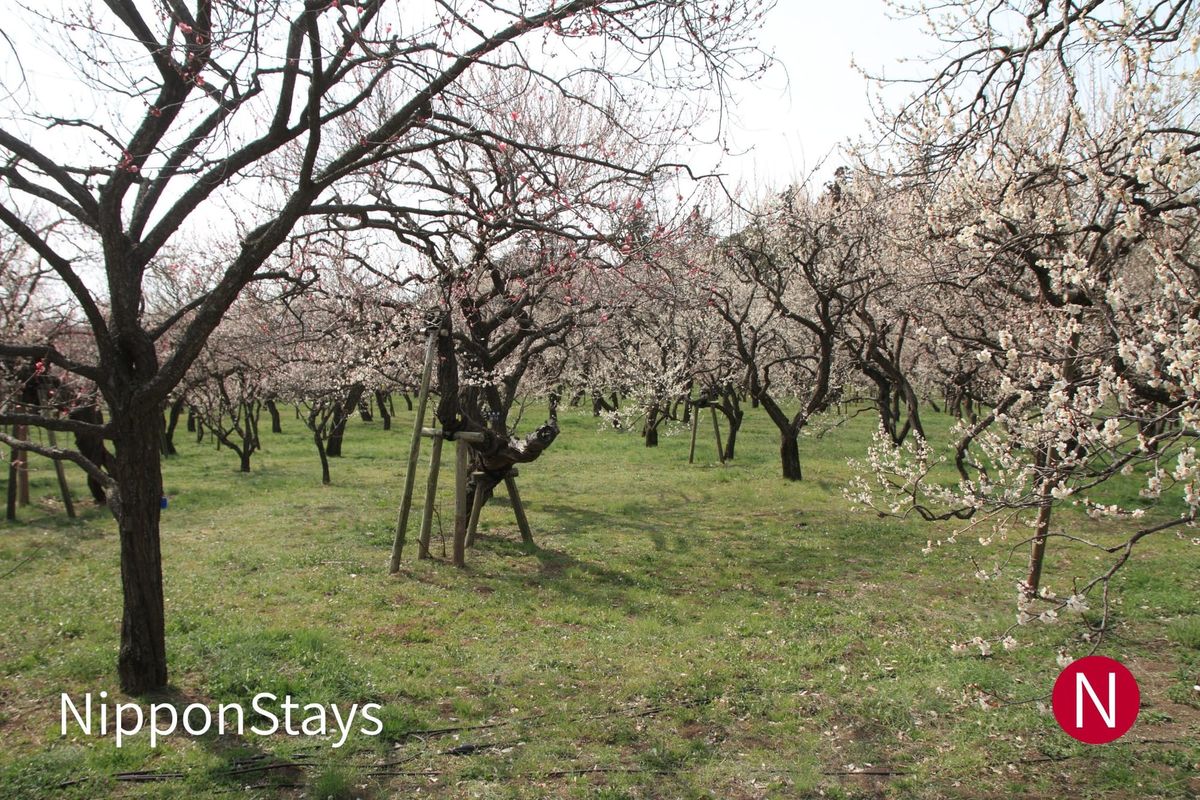
Quick Answer: A Kairakuen Plum Festival day trip from Tokyo is the default plan: the Hitachi or Tokiwa limited express covers Tokyo, Ueno or Shinagawa to Mito Station in roughly 65–75 minutes, and a Kanto Railway bus from the station's north exit reaches the garden in about 15 minutes (¥270 one-way). The two reasons to stay the night instead are the weekend plum light-up, which runs well past the last easy train home, and pairing the trip with Fukuroda Falls, which freezes into an "ice waterfall" in the same season. If you do stay, book near Mito Station itself: Daiwa Roynet Hotel Mito and APA Hotel Mito-Ekimae are both about a 1-minute walk from the south exit.
Day trip, one night, or two: what each plan actually adds
The decision comes down to what you want to see after dark, not how far Mito is — 65–75 minutes each way makes it one of the closer plum-viewing day trips out of Tokyo. The table below lines up the three realistic plans against what you gain by staying.
| Plan | Train | Kairakuen Station open? | What you add |
|---|---|---|---|
| Day trip | Hitachi/Tokiwa round trip, same day | Only helps on one of its scheduled days (see below); otherwise use the regular bus from Mito Station | Nothing extra — home by evening |
| One night — the light-up | Same trains in, stay through a Fri/Sat/Sun/holiday evening | Same rule applies | UME The Lights after dark, plus Yoru-Ume Matsuri if your night lands on its one date |
| Two nights — plus Fukuroda Falls | Same trains in, then the JR Suigun Line out to Fukuroda the next morning | Same rule applies | A full morning at the frozen falls before the ice starts melting in the sun |
The 130th festival ran February 11 to March 22, 2026 — the 131st isn't dated yet
Mito's plum festival has a confirmed history but, as of this check, no confirmed future: the 130th "Mito no Ume Matsuri" ran from February 11 (Wednesday, a national holiday) through March 22 (Sunday), 2026, a six-week, 40-day run at Kairakuen and the adjoining Kodokan hall (mitokoumon.com, official festival site, checked September 2026). The 131st festival — the one that would fall in 2027 — had not been announced on that same official site as of this check. Any "2027 dates" you see quoted elsewhere right now are almost certainly last year's dates relabeled, which is exactly the trap this guide is trying to help you avoid. Until an official 2027 date appears, plan around the usual pattern: opening on or near the February 11 national holiday and running about six weeks into late March.
Kairakuen itself opens 6:00 a.m.–7:00 p.m. during the festival window. Admission is a flat ¥320 for adults and ¥160 for children during the festival — the free entry Ibaraki residents normally get with ID, and the free entry everyone gets between 6:00 and 9:00 a.m. year-round, both stop applying for the festival's duration (Kairakuen official admission guide, checked September 2026).
The temporary Kairakuen Station only runs inbound, and only on some days
A one-platform temporary station named Kairakuen opens on the Joban Line specifically for the festival, and it has two catches worth knowing before you build a day trip around it. First, in 2026 it operated 9:45 a.m.–4:35 p.m. on every weekend and public holiday across the six-week festival, plus nine extra weekdays clustered in two blocks (February 24–27 and March 2–6) — not the full run. Second, it takes only trains heading toward Mito and Iwaki; there's no platform for the other direction, so anyone heading back to Tokyo has to backtrack to Mito Station first (mitokoumon.com festival access page, checked September 2026). There's also no ticket machine at the temporary station, so buy your ticket before you board. None of this affects the ordinary route through Mito Station and the 15-minute bus — it's only relevant if you specifically want the shortcut station.
Why stay: the weekend plum light-up
UME The Lights is the reason a day trip stops being enough if you want to see the garden after dark. In 2026 it ran Friday, Saturday, Sunday and holiday nights from February 13 to March 15, 6:00–8:30 p.m., with advance tickets at ¥800 for adults and ¥400 for elementary/middle-school children (¥1,000/¥500 bought at the gate on the day). A separate, single-night event called Yoru-Ume Matsuri ran on March 7, 2026, 5:00–8:00 p.m., but at a different spot — the Kodokan and Mito Castle ruins rather than Kairakuen itself (mitokoumon.com festival event page, checked September 2026). Neither event repeats mid-week, so a day trip on a Tuesday gets you the plum blossoms and none of the illumination.
Why stay two nights: Fukuroda Falls freezes into an ice waterfall
Fukuroda Falls has nothing to do with plum blossoms, which is exactly why it's worth the extra night — it's a separate winter attraction an hour or so up the JR Suigun Line from Mito, and the two seasons overlap. In a cold winter the 120-meter, four-tiered falls partly or fully freezes into what's called hyōbaku (氷瀑), typically from late December through February; because the ice melts as the sun climbs, an early-morning visit shows more frozen surface than an afternoon one (Daigo Town Tourist Association, checked September 2026). The observation platforms operate year-round with no closures — winter hours (December–April) are 9:00 a.m.–5:00 p.m., admission ¥500 for adults and ¥300 for children, and an elevator carries you up to the second platform (Daigo official town site, checked September 2026). From JR Fukuroda Station, it's a roughly 10-minute local bus ride to the Takimoto stop (¥260 adult one-way) and a further 10-minute walk to the falls, or about a 10-minute taxi if the bus timing doesn't line up (Daigo Town Tourist Association access page, checked September 2026).
How much of the 2026 festival the shortcut station actually covered
Of the 130th festival's 40 days (February 11–March 22, 2026), the temporary Kairakuen Station was open on 24 of them — every Saturday, Sunday and national holiday in the run, plus the nine extra weekdays in late February and early March, checked September 2026 against the festival's own access page and Japan's 2026 national holiday calendar. That leaves 16 days, mostly ordinary weekdays outside those two blocks, where the shortcut simply isn't running and the bus from Mito Station is your only option. It's a useful number for planning: booking a weekend or holiday date gets the shortcut for free, but a random Tuesday in late January or a Wednesday in mid-March does not.
Where to sleep near Mito Station
Both hotels below sit right at Mito Station's south exit, which matters most if you're catching an early bus to the garden or a late one back from the light-up.
| Stay | Walk to Mito Station | Sleeps four? | Best for |
|---|---|---|---|
| Daiwa Roynet Hotel Mito | 1-min walk (direct connection via the COMBOX310 building, south exit) | No — largest room (Universal Twin, 35 m²) tops out at three with a paid rollaway bed | Travelers who want to walk in from the platform with no outdoor stretch at all |
| APA Hotel Mito-Ekimae | 1-min walk (south exit) | No — standard single/twin business-hotel rooms | Solo and two-person trips prioritizing price over room size |
Trip Essentials for Tokyo
Things worth booking before you land, all in English:
- eSIM — Airalo's Japan eSIM: install it at home and data works as soon as you switch off airplane mode at Haneda or Narita.
- Airport transfer — Welcome Pickups runs fixed-price door-to-door pickups from Haneda or Narita; Klook sells the airport bus and train tickets if you'd rather ride.
- Luggage storage — arriving before check-in? Radical Storage takes bags at shops near Tokyo's major stations for a flat daily rate.
- Tickets and day trips — Klook covers teamLab tickets, Tokyo Skytree, and Hakone day trips; booking ahead skips the ticket-window line.
FAQ: Kairakuen Plum Festival
How long does it take to get from Tokyo to Kairakuen?
Budget about 65–75 minutes on the Hitachi or Tokiwa limited express from Tokyo, Ueno or Shinagawa to Mito Station, then a roughly 15-minute bus (¥270 one-way) from the station's north exit platform 6 to the garden. Door to door, that's under two hours each way.
Is the temporary Kairakuen Station worth planning around?
Only if your visit falls on one of its open days. In 2026 that was every weekend and holiday across the six-week festival plus nine specific weekdays in late February and early March — 24 of the festival's 40 days. It also runs inbound only, so you'd still take the regular Mito Station bus on the way back.
How much does it cost to get into Kairakuen during the festival?
¥320 for adults and ¥160 for children during the festival window, with no exceptions — the free admission Ibaraki residents get the rest of the year, and the free early-morning window (6:00–9:00 a.m.) that applies year-round, both pause for the festival's duration.
Can I see the plum blossoms and Fukuroda Falls' ice waterfall on the same trip?
Yes — the falls' frozen season (typically late December through February) overlaps most of the plum festival. It takes a second night, since the falls are up the JR Suigun Line from Mito and best seen in the early morning before the ice starts to melt.
For the rest of February's flower spots, see our guide to plum and early cherry blossoms across Japan. If Fukushima's coast is also on your route, our Hamadori guide covers Mito as a stopover point rather than a festival base. For the shinkansen leg into Tokyo, see our Tokyo Station practical guide, and for onsen options elsewhere in Japan if Mito doesn't fit your itinerary, see our onsen and ryokan hub. Dazaifu's plum season, on the other side of the country, is covered separately in our Dazaifu plum blossom guide.