Is It Worth Staying in Yokohama? Overnight vs Tokyo Day Trip
Is it worth staying in Yokohama overnight? Compare day-trip vs overnight options with real transit costs and which travelers should stay.

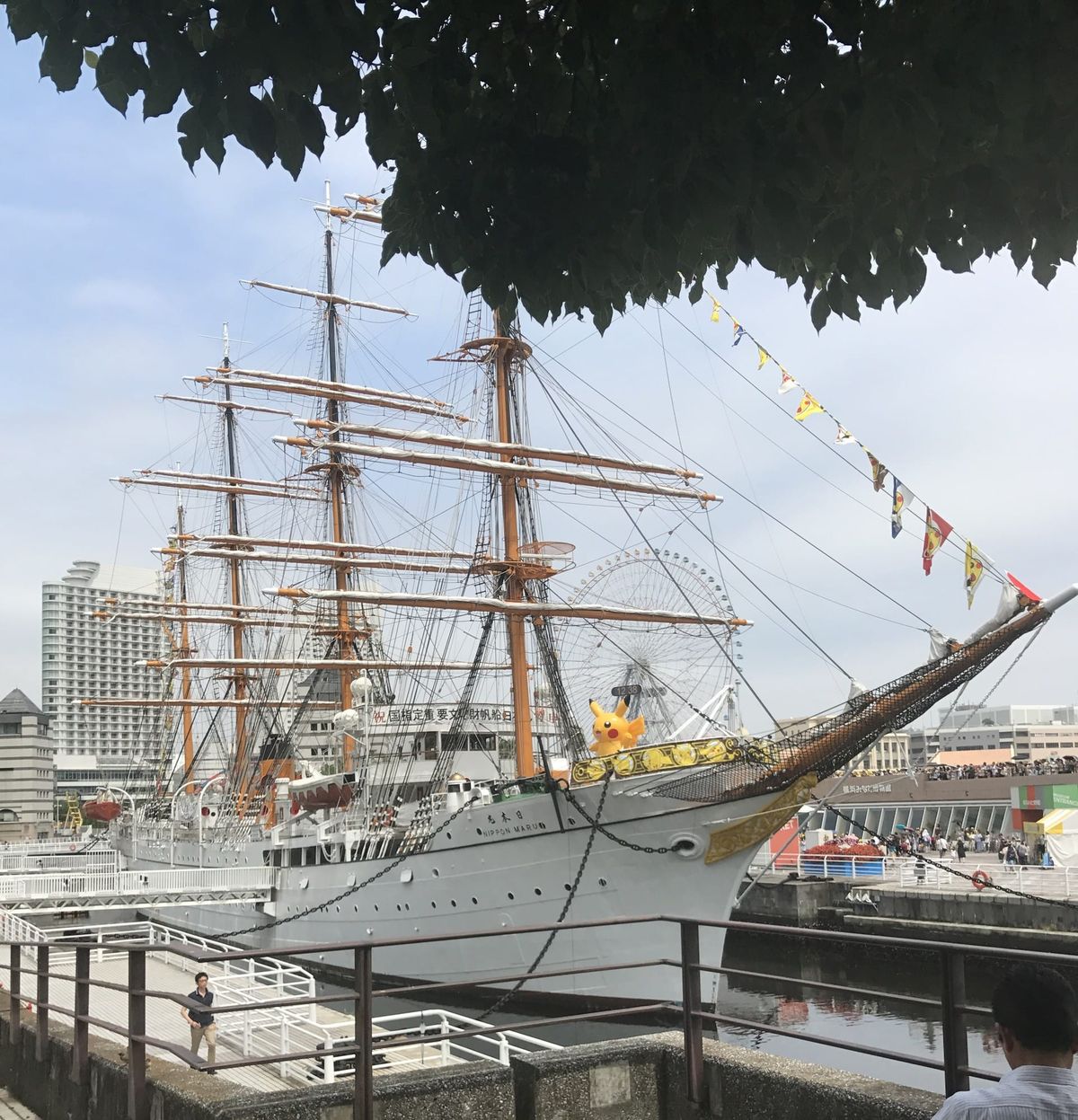
Is it worth staying in Yokohama overnight? Yes, for one or two nights, if the evening is the point — the harbour illumination peaks after 8 pm and is the part a day trip cannot give you. Stay in Minato Mirai at InterContinental Yokohama Grand by IHG (from ¥18,000 for two) for the night view, or JR East Hotel Mets Premier Yokohama Sakuragicho (from ¥8,500) for the same walkable base at half the rate. The condition that flips it: a Japan trip of five days or fewer based in Tokyo — then day-trip it, 28 min and ¥480 each way, and leave your bags where they are.
Some links in this guide are affiliate links. If you book through them, we may earn a commission at no extra cost to you.
Who Should Stay Overnight vs Day-Trip: The Short Answer
The table below covers the main traveler profiles. If you fit more than one category, weight the one that reflects how you spend your evenings — Yokohama's overnight case is strongest after dark.
| Traveler type | Stay or day-trip? | Suggested area if staying | Why |
|---|---|---|---|
| Couples / night-view seekers | Stay overnight | Minato Mirai | Cosmo Clock illumination and harbor reflections peak after 8 pm; impossible to experience properly on a day trip from Tokyo |
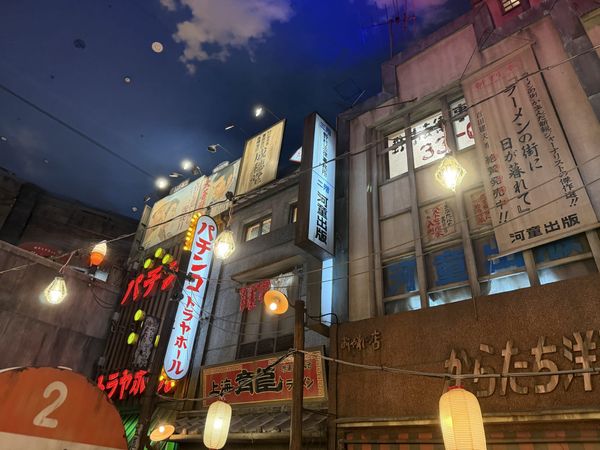
| Families with young children | Stay 1–2 nights | Minato Mirai | Cosmoworld and Cup Noodles Museum are full-day attractions; a second day removes the rush and keeps kids from melting down on the train home |
| Cruise passengers (pre- or post-voyage) | Stay — essential | Kannai / Chinatown area | Embarkation at Osanbashi or Hammerhead terminal opens at 10 am or earlier; same-day train from Tokyo is too risky with luggage |
| Tokyo-focused visitors (5 days or fewer) | Day trip | — | 28-min JR train from Tokyo keeps your base intact; main Yokohama sights fit in 6–7 hours without repacking |
| Long-trip visitor (10+ days in Japan) | Stay 2 nights | Any — see area guide | Yokohama rewards a slower pace; Sankeien Garden, Kannai old-town, and the full Chinatown food circuit each take a half-day |
| Budget traveler choosing a Tokyo-area base | Either — run the cost check below | Yokohama Station area | Yokohama rooms often cost ¥2,000–5,000 less per night than equivalent Tokyo rooms; commuting adds ¥960/day round-trip on JR |
What an Overnight Stay Actually Gets You
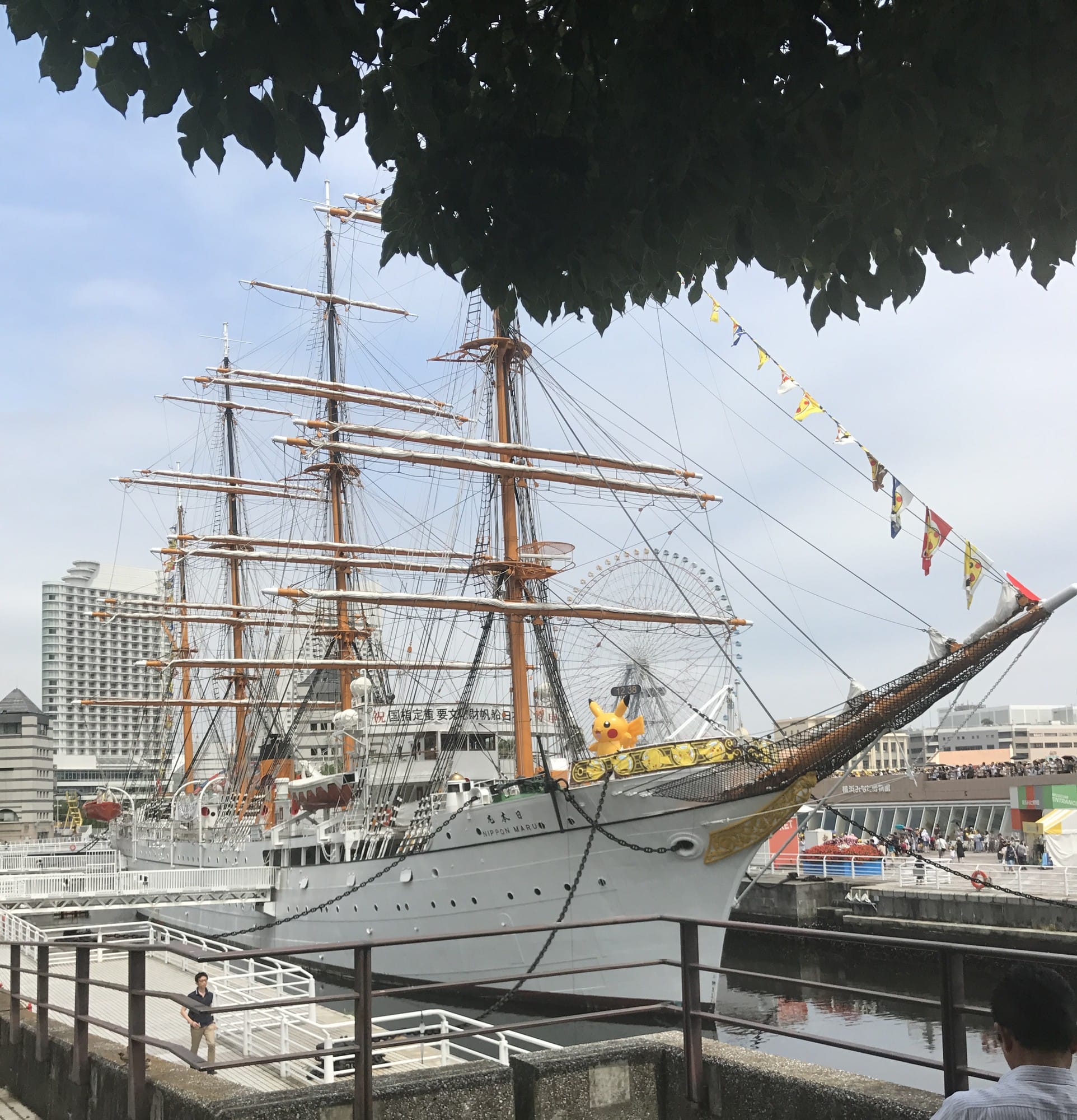
The single strongest argument for sleeping in Yokohama is the evening. Chinatown's neon-framed gates, the Cosmo Clock 21 Ferris wheel lit against the harbor, and the Minato Mirai skyline all hit their peak between 7 pm and 10 pm — long after day-trippers have caught the last comfortable train back to Tokyo.
Staying also changes your mornings. Breakfast at a dim sum spot in Chinatown before the tour-group crowds arrive, a walk along Yamashita Park waterfront before 9 am, or a slow coffee with a direct harbor view from your room — none of that is accessible on a day visit. You arrive rested, you set your own schedule, and you leave when you want.
There's also a practical room-size argument. Yokohama hotels consistently offer more floor space than equivalent Tokyo properties at the same price. If you've been sleeping in a 14 m² Tokyo business single for several nights, an upgrade to a 22 m² Yokohama room at the same nightly rate can feel like a different category of stay entirely.
Finally, Yokohama's dining scene — particularly the Chinatown circuit and the Noge bar district — works best across two meals and an evening stroll. You can't do that on a day trip without rushing, and rushing defeats the point.
When a Day Trip Makes More Sense
If your trip is five days or fewer and Tokyo itself is the priority, staying in Yokohama splits your base unnecessarily. Packing, commuting, and checking in again eats a half-day and adds logistical fatigue at a point in the trip when you're usually already tired.
A tightly planned Yokohama day trip from Tokyo covers the core loop — Chinatown lunch, Yamashita Park and Marine Tower, Minato Mirai waterfront, and Cosmoworld — in around 6–7 hours. Leave Tokyo Station by 9 am on the JR Tokaido Line (28-min, ¥480), and you'll be back for dinner in Shinjuku or Shibuya.
Day trips also work well if Yokohama is a stop on a larger south-of-Tokyo day. From Yokohama Station, Kamakura is 27–60 minutes depending on which line you take. Chaining Yokohama and Kamakura into a single long day without overnight bags is a common approach on a second week of a Japan trip.
The one situation where a day trip clearly doesn't work: if your main Yokohama goal is the night view. Minato Mirai at dusk is genuinely different from Minato Mirai at 2 pm. If the harbor lights are on your list, you need to stay.
Cost Reality: Fares, Room Rates, and the Kawasaki Middle Option
The commute numbers are simple. From Tokyo Station to Yokohama Station: ¥480 each way on the JR Tokaido Line, ¥960 per day if you're making a round trip. From Shibuya via the Tokyu Toyoko Line the fare runs roughly ¥290 each way. Neither option is expensive in isolation, but across a week those fares add up quickly against the savings on a cheaper Yokohama room.
Yokohama room rates span a wide range. Clean business singles near Yokohama Station start from around ¥8,000 per night. Mid-range harbor-area hotels run from ¥10,000–14,000. Luxury Minato Mirai towers with bay views start from ¥20,000 and climb higher on weekends and Golden Week. All rates vary by season — summer weekends and the late-April holiday window run materially higher than weekdays in January.
Comparable Tokyo rooms (Shinjuku, Shibuya districts) typically run ¥2,000–5,000 higher for the same standard. The cost break-even depends on your specific dates, but the gap is real enough that Yokohama as a budget base near Tokyo is a legitimate strategy for longer trips.
If you want an even cheaper base, Kawasaki sits between Tokyo and Yokohama on the JR Tokaido Line with some of the lowest hotel rates in the greater Tokyo area. Our Yokohama budget hotels guide includes a direct comparison and the Kawasaki option for travelers who want to minimize accommodation cost without sacrificing transit access.
Traveler Types: The Extended Breakdown
Couples seeking a night-view experience
The Minato Mirai harbor at night is the experience Yokohama is most known for internationally. A harbor-facing room in a Minato Mirai tower, dinner in Chinatown, and a late waterfront walk make a natural two-day itinerary that works well as a standalone Tokyo escape. For room orientation advice, see our harbor-view hotels guide.
Families with kids
With Cosmoworld, the Cup Noodles Museum, and Yokohama's Anpanman Museum all within walking range of Minato Mirai hotels, families need at least a full day for those attractions alone. A second day opens the Yokohama history district around Kannai and Bashamichi. One overnight removes the train-catching stress with tired children at the end of a long day.
Cruise passengers
For anyone embarking or disembarking at Osanbashi Pier or the Hammerhead terminal in Shinko, an overnight in Yokohama is close to essential. Embarkation typically opens at 10 am — too early to rely on a same-day train from Tokyo with checked luggage. Staying near Chinatown or Kannai puts you within a 15-min walk or short taxi ride of both terminals. For pier-specific picks, see the Osanbashi hotels guide.
Longer-stay visitors (10+ days)
If Japan is two weeks or more, Yokohama earns its place as a two-night standalone stop rather than a day-trip footnote. The Yokohama Museum of Art, Sankeien Garden (a 30-min bus from the station), the Kanteibyo temple complex in Chinatown, and the brick-warehouse Akarenga district each take a proper half-day to cover without rushing.
If You Stay: Which Area to Choose
Yokohama's main tourist zones are distinct enough that choosing the wrong one adds 20–30 minutes to every sightseeing move. The short version, with the relevant transit stops:
- Minato Mirai — bayfront towers, Cosmoworld, night views; Minatomirai Line to Minatomirai Station (Exit 3 for Queen's Square, Exit 5 for Cosmoworld side)
- Chinatown / Motomachi — food-focused, best in the evening; Minatomirai Line to Motomachi-Chukagai Station (Exit A1 faces the Chinatown gates directly)
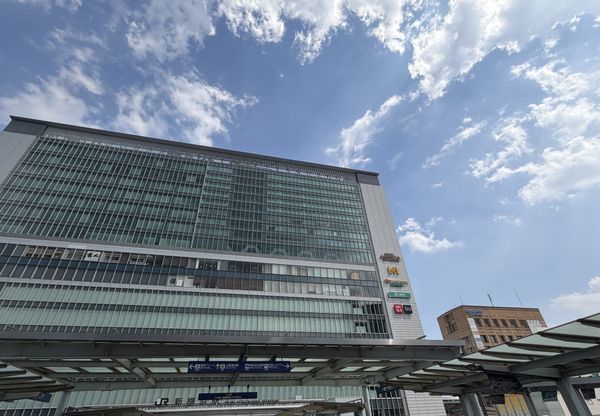
- Yokohama Station area — transport hub, shopping, best-value business hotels; JR, Keikyu, and Tokyu Toyoko Lines all stop here
- Kannai / Bashamichi — old-town character, cruise pier proximity; JR Keihin-Tohoku Line to Kannai Station
For a full area breakdown with hotel recommendations by district, the Yokohama area guide covers each neighborhood with transit details and representative picks.
Verdict: Four Yokohama Hotels Worth Booking
If the decision table above points you toward staying overnight, here are four properties confirmed operating as of our July 2026 check, across different budgets and areas. Rates are indicative from-prices — they vary by season and availability, with weekends and holiday periods running significantly higher.
| Hotel | Area / nearest station | From price/night | Best for |
|---|---|---|---|
| InterContinental Yokohama Grand by IHG — check rates | Minato Mirai / Minatomirai Station | from ¥18,000 for two (rates vary by season) | Couples, anniversary stays, harbor-view rooms |
| The Yokohama Bay Hotel Tokyu — check rates | Minato Mirai / Minatomirai Station (1-min walk) | from ¥14,000 for two (rates vary by season) | Families, bay views, direct Cosmoworld access |
| Rose Hotel Yokohama — check rates | Chinatown / Motomachi-Chukagai Station (5-min walk) | from ¥8,000 (rates vary by season) | Food-focused travelers, evening Chinatown access |
| JR East Hotel Mets Premier Yokohama Sakuragicho — check rates | Sakuragicho / Sakuragicho Station New South Exit (1-min walk) | from ¥8,500 (rates vary by season) | Value-first travelers, JR pass holders, Minato Mirai walkable |
For a wider selection, the Minato Mirai hotel guide covers the full bayfront lineup, including mid-range picks closer to Rinko Park and the Shinko waterfront.
FAQ: Is Yokohama Worth Staying?
Is it better to stay in Yokohama or Tokyo?
For a trip of five days or fewer focused on Tokyo, staying in Tokyo and day-tripping to Yokohama is the simpler plan — the JR Tokaido Line from Tokyo Station takes 28 minutes for ¥480. For longer trips, couples seeking the Minato Mirai harbor view at night, families with children visiting Cosmoworld and the Cup Noodles Museum, or cruise passengers embarking at Osanbashi pier, an overnight in Yokohama is worth it on its own merits.
How much cheaper are Yokohama hotels compared to Tokyo?
Budget business hotels near Yokohama Station start from around ¥8,000 per night. Comparable Tokyo business hotels in Shinjuku or Shibuya typically run ¥2,000–5,000 higher for the same standard. The gap widens on weekends. Factoring in the JR commute cost (¥960 round-trip per day between Tokyo Station and Yokohama), the break-even depends on your specific dates, but the savings are real on multi-night stays.
What is the best area of Yokohama to stay in?
Minato Mirai suits couples and families — the waterfront, Cosmoworld, and the Minatomirai Line connection to Shibuya are all within walking distance. Chinatown and Motomachi work well for food-focused travelers who want to be near the Kanteibyo temple and evening dining. The Yokohama Station area offers the widest hotel choice and cheapest rates, with easy access to all JR, Keikyu, and Tokyu lines.
Can I combine Yokohama with a Kamakura day trip?
Yes. From Yokohama Station, Kamakura is 27–60 minutes depending on the line. The JR Yokosuka Line from Yokohama reaches Kamakura in about 27 minutes. Combining Yokohama and Kamakura into a single long day is a common approach on longer Japan trips, particularly if you base in Yokohama for one or two nights and use it as the departure point.
Trip Essentials for Yokohama
Things worth booking before you land, all in English:
- eSIM — Airalo's Japan eSIM: install it at home and data works as soon as you switch off airplane mode at Haneda.
- Airport transfer — Welcome Pickups runs fixed-price door-to-door pickups from Haneda; Klook sells the airport bus and train tickets if you'd rather ride.
- Luggage storage — arriving before check-in? Radical Storage takes bags at shops near Yokohama Station for a flat daily rate.
- Tickets and day trips — Klook covers Yokohama attractions and Tokyo day-trip tickets; booking ahead skips the ticket-window line.
Information audit: Last fact-checked July 2026 · Prices checked July 2026 (all rates are “from” floors that vary by season) · How this guide was researched: hotel facilities, prices and access details are verified against official and primary sources; we have not personally stayed at every property listed. The author commuted to work in Yokohama for many years · How this site verifies information: About NipponStays.