Shin-Yokohama Ramen Museum: How Many Shops Can You Try? (2026)
Every shop at the Shin-Yokohama Ramen Museum serves a mini bowl at about 3/5 size, so two are comfortable and three cost ¥2,700 with admission.

The Shin-Yokohama Ramen Museum is the one place in Japan where you can eat Hokkaido ramen and Fukuoka ramen in the same hour. Every shop inside serves a mini bowl — officially about three-fifths of a regular portion — so trying two is comfortable and three is realistic if you skip lunch. Admission is ¥450 for adults, and mini bowls run ¥750 at most shops, so three shops plus entry comes to roughly ¥2,700. The one thing that changes the plan: you cannot order at two shops at once, so budget about 30 minutes per bowl including the queue.
What the museum actually is
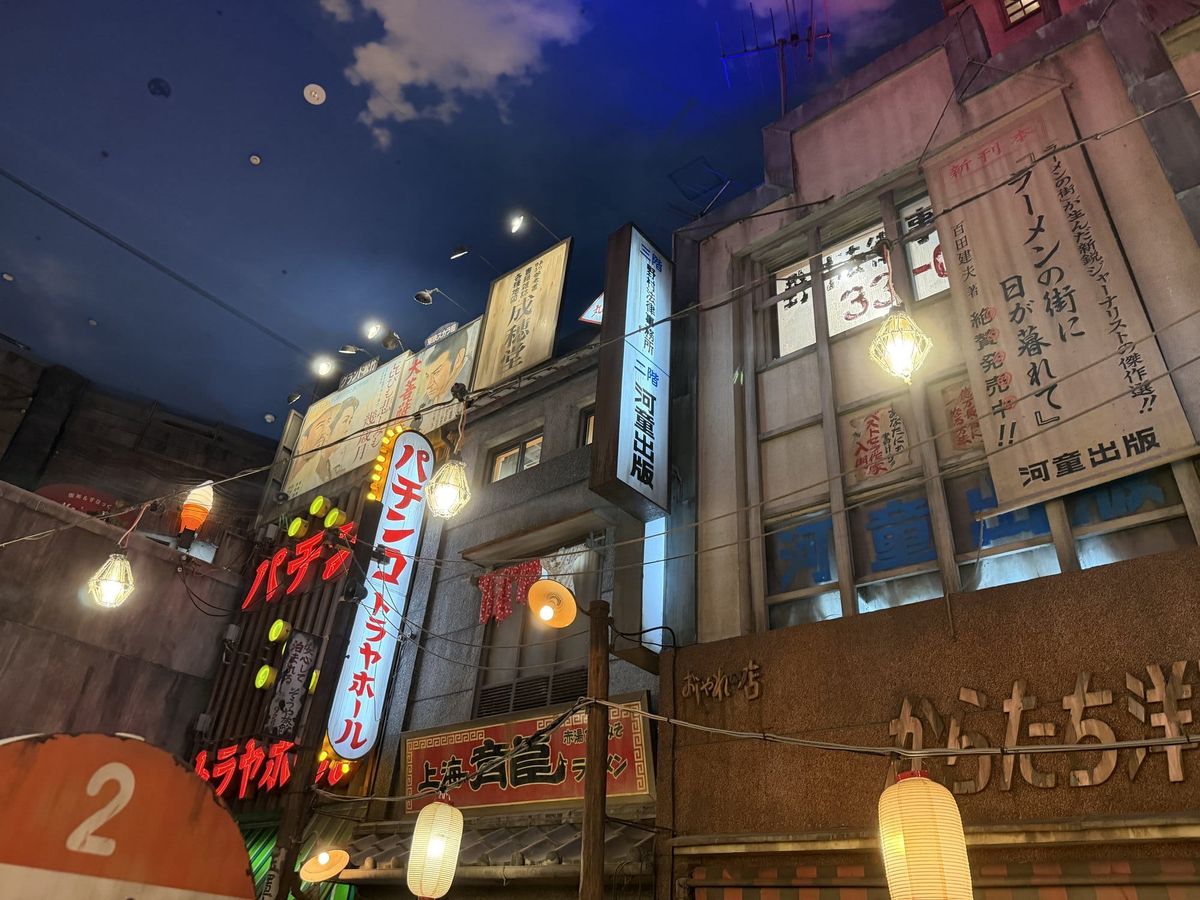
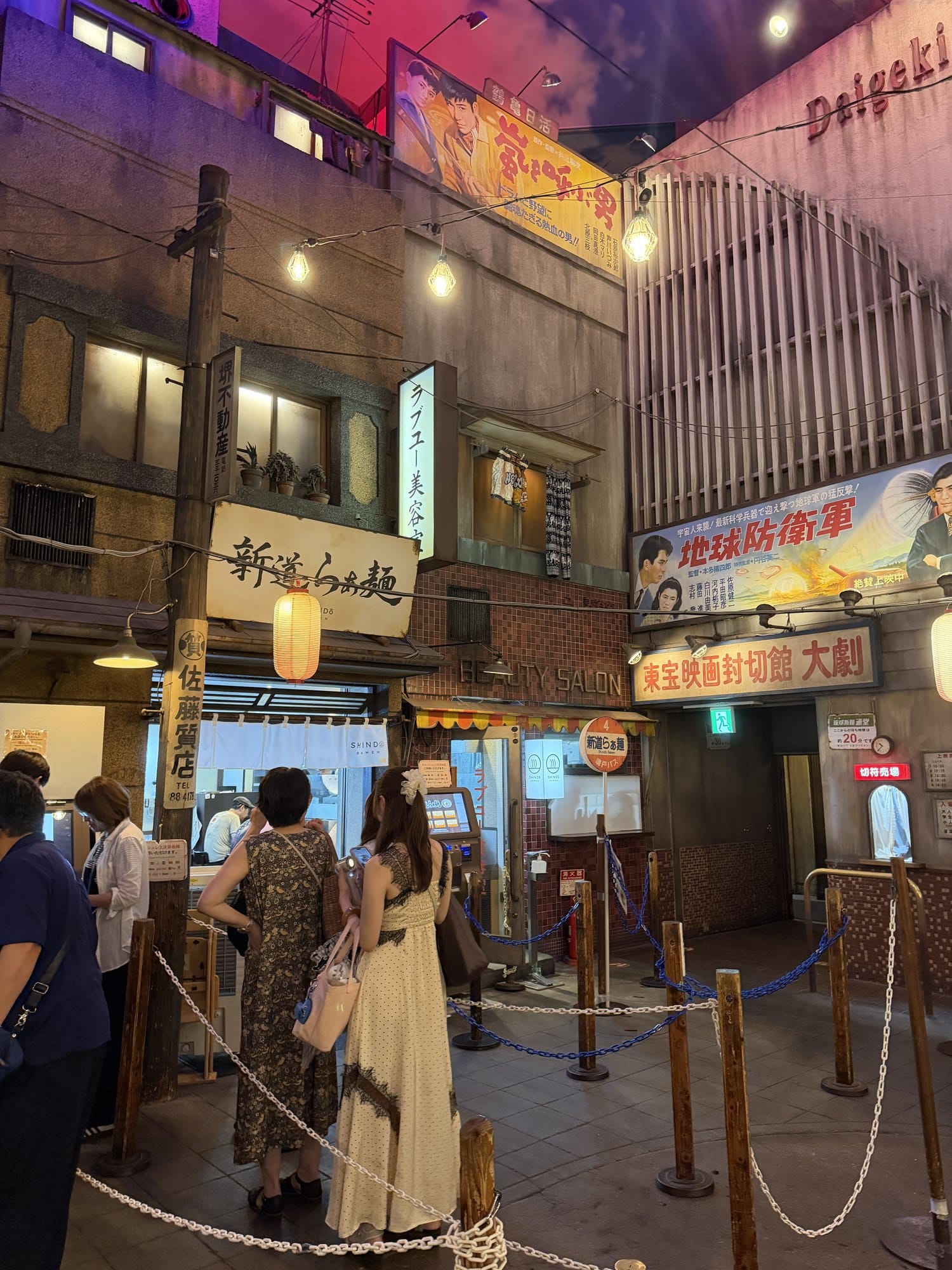
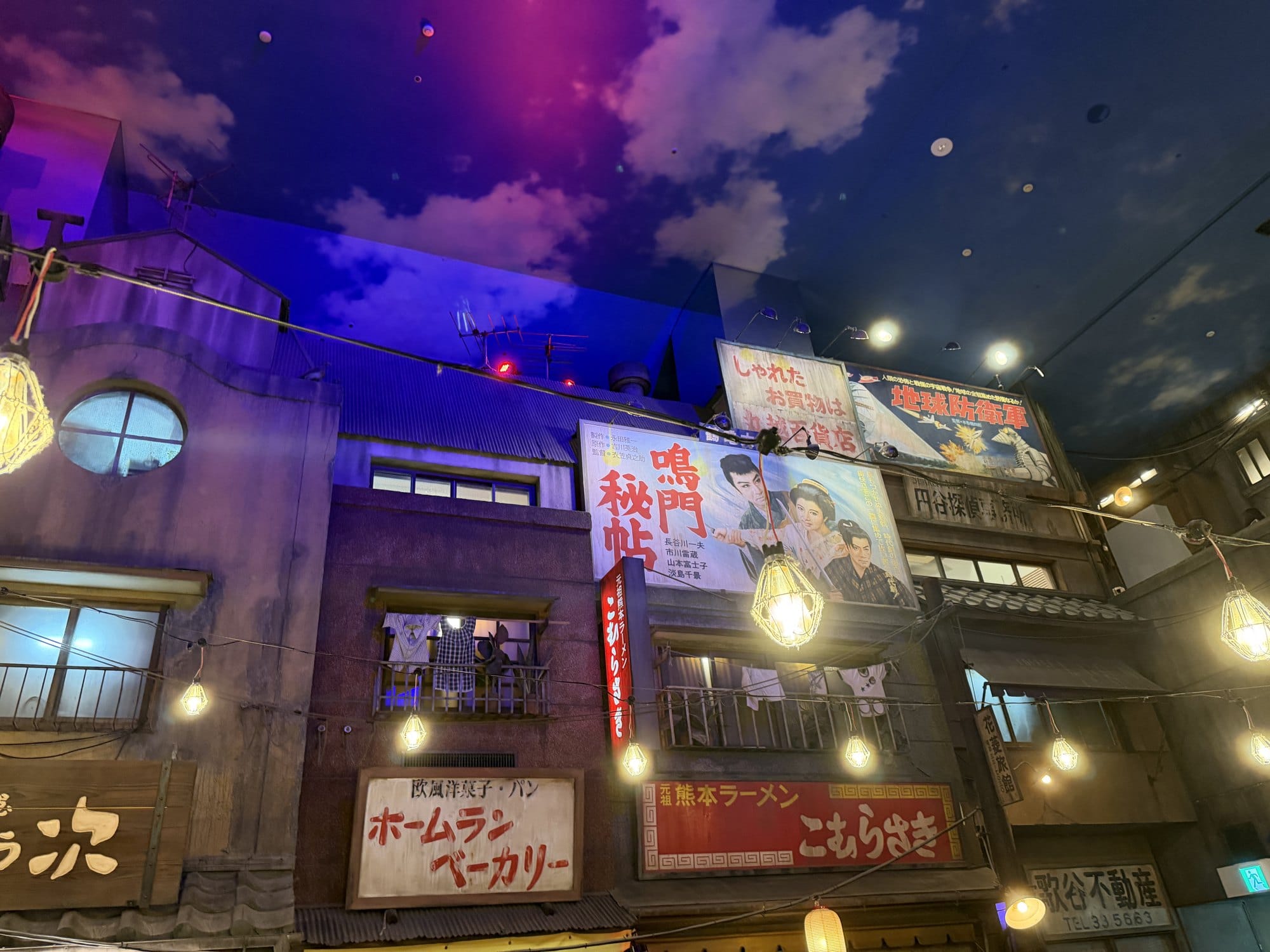
The Shin-Yokohama Ramen Museum is not a museum with ramen in the gift shop. Two basement floors are built as a replica of a 1958 Tokyo shitamachi street — painted movie hoardings, a pachinko parlour front, a publisher's signboard, laundry hanging from second-floor windows — and the shops along it are branches of regional ramen restaurants from around the country. The ground floor has the ticket desk and a small exhibition area.
Be clear about what that means: these are satellite branches, not the original shops. A bowl at the Rishiri branch here is not identical to the one served on Rishiri Island, 1,300 km north. What you get instead is the comparison — a Hokkaido shoyu and a Fukuoka tonkotsu, side by side, on the same afternoon. If you want the original in its home city, the trip is the point, and our Asahikawa food guide covers eating Hokkaido ramen where it comes from.
The mini bowl rule, and why it matters
Every shop in the museum offers a mini version of its main bowl. The museum's own guidance puts the mini at roughly three-fifths of a regular serving, though the exact size varies by shop. This is the entire reason a multi-shop visit works — a full bowl from two different shops is more ramen than most people want in one sitting.
What is less obvious is that the mini is not always the better value. Two shops we ate at in August 2026:
| Shop | Region | Regular | Mini | Mini value |
|---|---|---|---|---|
| Rishiri Ramen Ajiraku | Rishiri Island, Hokkaido | ¥1,200 | ¥750 | 63% of the price for ~60% of the bowl — good |
| Hakata Issou | Fukuoka | ¥950 | ¥750 | 79% of the price for ~60% of the bowl — poor |
The pattern is straightforward: the more expensive the regular bowl, the more sense the mini makes. At a ¥950 shop you are paying a premium for the smaller portion, which is fine if it buys you room for another shop, and bad value if you were only going to eat one bowl anyway. Prices are subject to change without notice, per the museum's own note.
You cannot order at two shops at once
This is the rule that shapes the whole visit. The museum asks that you not order from multiple shops simultaneously, and ramen from different shops cannot be eaten together at one table. In practice that means a strict sequence: queue, order, eat, leave, walk to the next shop, queue again. Each shop keeps its own line, and the popular ones build up from late morning.
Re-entry is allowed. Take your ticket to the information desk on the ground floor and have the back stamped, and you can leave and come back the same day — useful if you want a gap between bowls rather than eating back to back.
Ordering itself is easier than first-time visitors to Japan expect. Each shop has a ticket vending machine at its entrance, and the machines here are multilingual — the usual barrier of a Japanese-only touchscreen does not apply. You buy a ticket, join the line, hand it over when seated.
What two bowls actually taste like
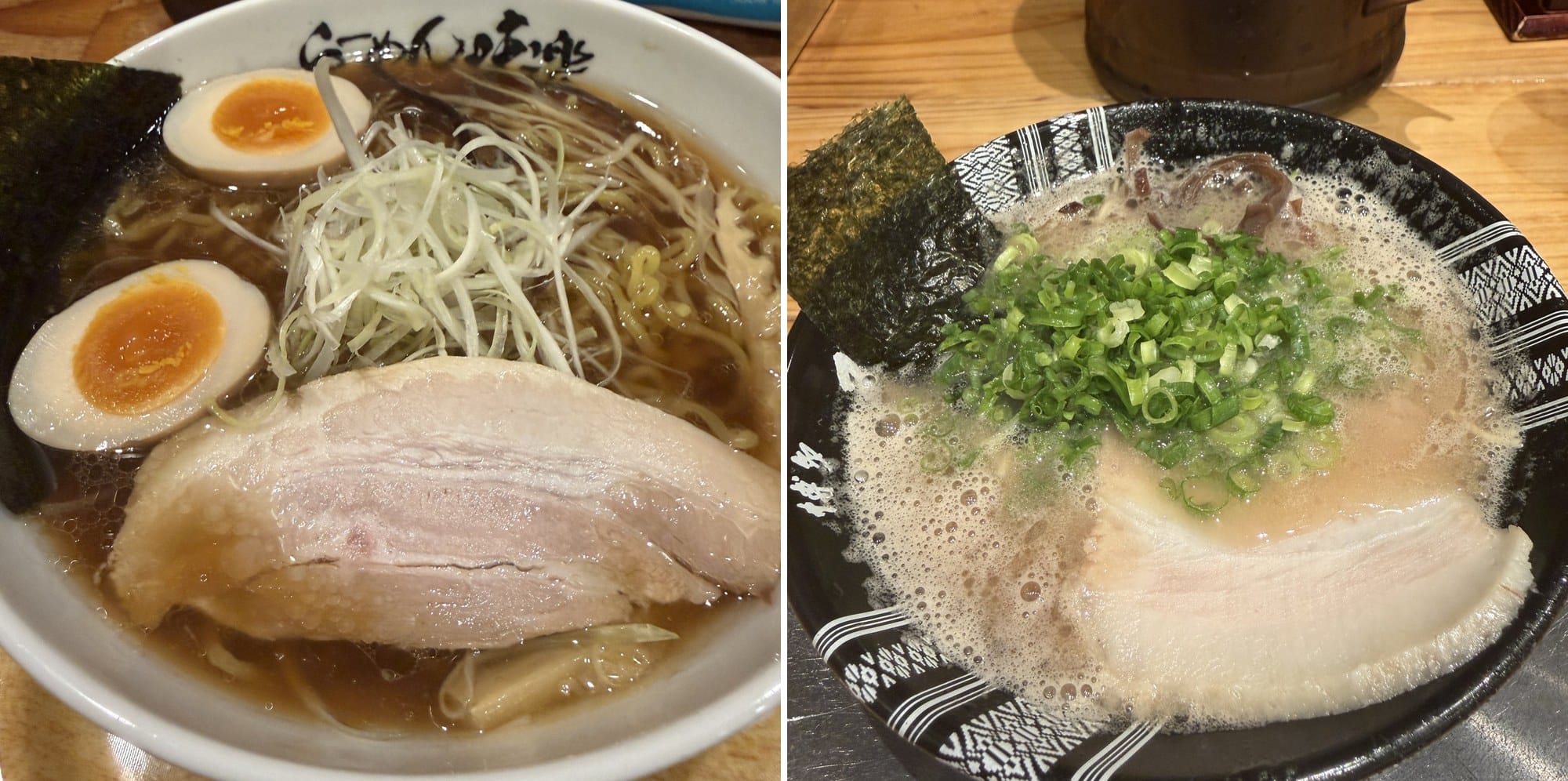
The value of the format is how different two bowls can be. Rishiri Ramen Ajiraku serves a yaki-shoyu — a seared soy base — in a clear brown broth, with two halves of a soft-yolk egg, white spring onion shredded fine, menma and a sheet of nori. It reads as northern: restrained, aromatic, closer to a good clear soup than to anything heavy.
Hakata Issou is the opposite. The tonkotsu broth arrives opaque and off-white with a layer of fine foam across the surface — the shop's Fukuoka original is known for it — topped with chopped green onion, a slice of chashu and kikurage mushroom. Put the two bowls side by side, as in the photo above, and the only thing they visibly share is the chashu: one broth you can see the noodles through, one you cannot.
Two bowls in one visit was comfortable. A third would have been possible but not enjoyable, and that seems to be the honest ceiling for most people. If you are set on three, arrive hungry and space them with a walk around the set.
Practical details
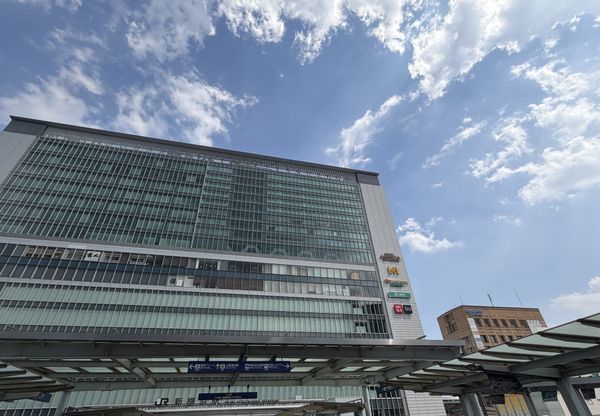
Which exit you use makes a real difference here. From the Shinkansen or the JR Yokohama Line, the museum is a 5-min walk. From the Sotetsu–Tokyu Shin-Yokohama Line or the municipal subway, take Exit 10 and it is a 1-min walk — turn left at the first traffic light, pass the FamilyMart, then right; the museum is the fourth building on the left. Shin-Yokohama is a Tokaido Shinkansen stop, which makes this an unusually easy detour: it works as a stopover between Tokyo and Kyoto without booking a hotel.
- Admission: ¥450 adults, ¥100 for elementary through high school students, free under school age
- Hours: 11:00–21:00 weekdays, 10:30–21:00 weekends and holidays
- Shops: twelve at the time of writing, including Ryu Shanghai (Yamagata, miso), Rishiri Ramen Ajiraku (Hokkaido, seared shoyu), Ryukyu Shinmen Tondou (Okinawa, shio), Komurasaki (Kumamoto, tonkotsu), Hakata Issou (Fukuoka, tonkotsu) and Asakusa Rairaiken (Tokyo, shoyu)
- Timing: allow about 30 minutes per bowl including the queue; two bowls plus a look at the set is a two-hour visit
If you are staying the night in Shin-Yokohama
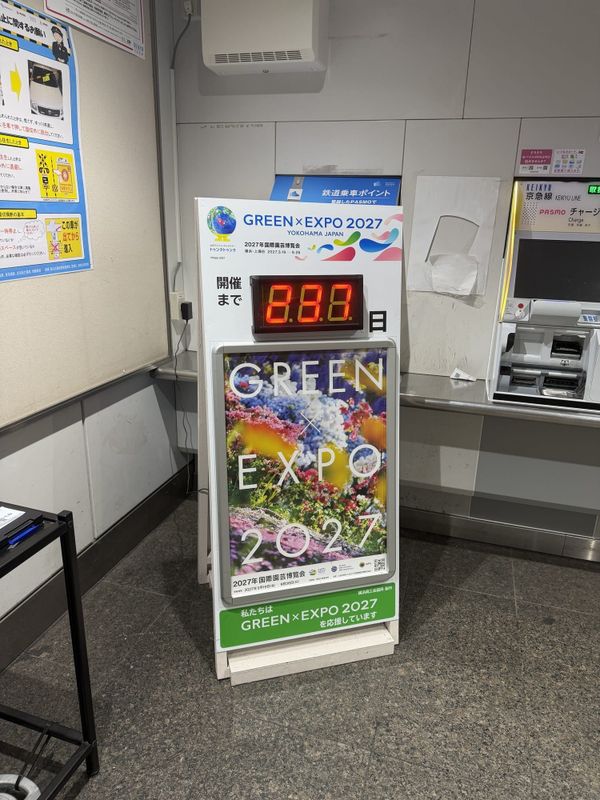
Most visitors come for two hours and move on. If you are staying — for a Shinkansen connection, or for GREEN×EXPO 2027, where venue-area dining is thin and people plan dinner back in Shin-Yokohama — the station area has a small, functional hotel cluster within walking distance of the museum.
| Hotel | Walk from station | Price range | Best for |
|---|---|---|---|
| Shin-Yokohama Prince Hotel | 2-min walk (East Exit) | from ¥16,000 (rates vary by season) | Families — Superior Twins officially sleep up to six |
| Shin-Yokohama Kokusai Hotel | 3-min walk | from ¥11,000 (rates vary by season) | Compact mid-range; 206 rooms |
| Washington R&B Hotel Shin-Yokohama Ekimae | 300 m from the station | from ¥9,000 (rates vary by season) | Budget, solo travelers |
For the fuller comparison, including the Marriott rebrand arriving in December 2026, see Shin-Yokohama hotels and Courtyard vs Prince. If you would rather base yourself by the water, hotels near Yokohama Chinatown covers the other end of the city.
FAQ: Shin-Yokohama Ramen Museum
How many shops can you realistically try in one visit?
Two mini bowls is comfortable for most people, and three is achievable if you arrive hungry and space them out. Mini bowls are about three-fifths of a regular serving, and the museum does not allow ordering from two shops at the same time, so each bowl takes roughly 30 minutes including the queue.
How much does it cost to eat at three shops?
Three mini bowls at ¥750 each plus ¥450 adult admission came to ¥2,700 as of August 2026. Regular bowls run ¥950 to ¥1,200 depending on the shop, so a single full-size bowl plus admission is around ¥1,400 to ¥1,650. Prices change without notice.
Are the ticket machines in English?
Yes — the vending machines at the shop entrances are multilingual, so the Japanese-only touchscreen problem that catches visitors elsewhere does not apply here. You buy a meal ticket at the machine before queueing and hand it to staff when you are seated.
Is it worth visiting if you have eaten ramen in Japan already?
The appeal is comparison rather than authenticity: these are branches of regional shops, not the originals, and a bowl here differs from the same shop's home kitchen. What you cannot do elsewhere is eat a Hokkaido seared-shoyu and a Fukuoka tonkotsu within an hour, which is the reason to come.