Hakuba or Nozawa Onsen for Families' First Honshu Ski Week
Hakuba's ten areas suit mixed-level families; Nozawa's ryokan sleep four in one room, no car needed. Which base fits your first Honshu ski week?
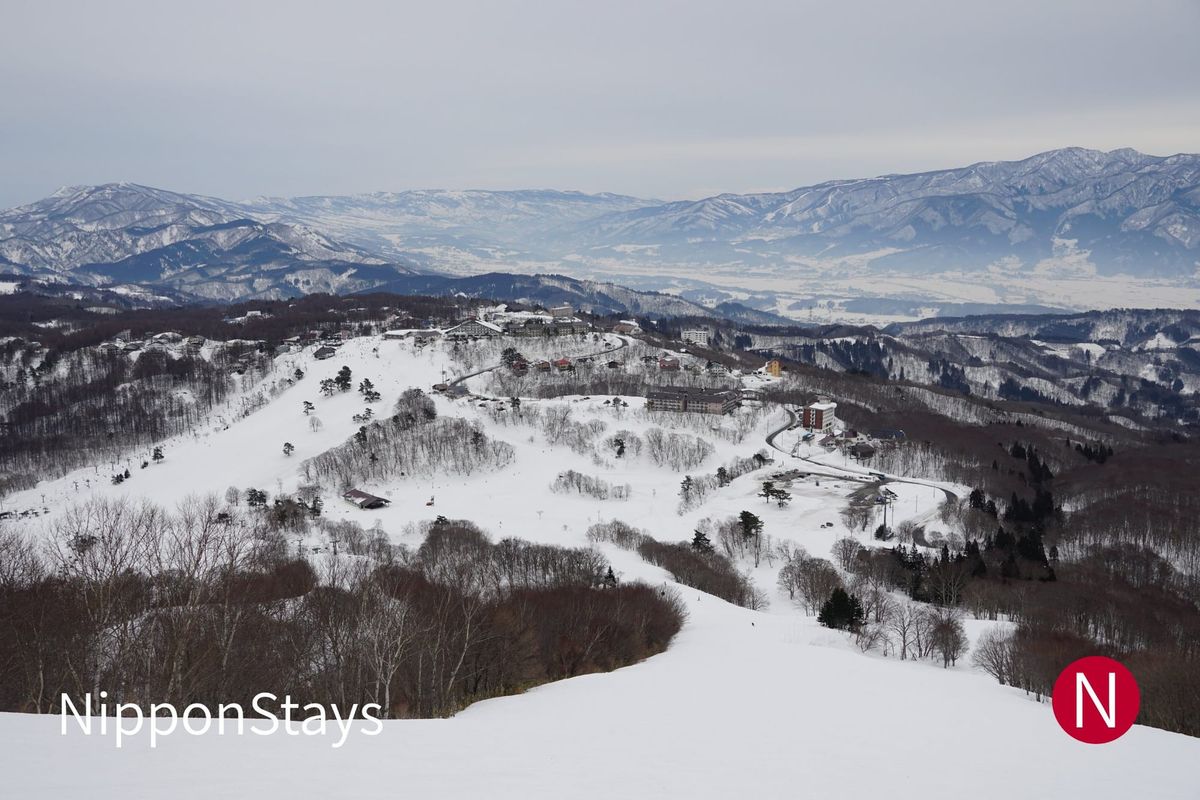
Quick Answer: Hakuba or Nozawa Onsen for families on a first Honshu ski week? If your kids ski at different levels and you're fine switching between areas by shuttle or car, pick Hakuba Valley - ten linked ski areas across one valley, with easier terrain at some bases and steeper pitches at others. If you'd rather ski, eat, and soak in one walkable village with no car at all, pick Nozawa Onsen, where a run from the mountain's summit ends inside the village itself. The room is the other deciding factor: Nozawa's ryokan, such as Kiriya Ryokan, are built around Japanese-style rooms that already sleep a family of four in one room; the Hakuba hotel we checked for this guide, Courtyard by Marriott Hakuba, isn't - plan on two connecting rooms there instead.
The one-line difference
Nozawa Onsen is one ski area wrapped around one village; Hakuba Valley is ten separate ski areas spread across one valley, connected by road rather than by lift. That single fact drives almost everything else in this comparison. In Nozawa, the gondola base, the ryokan, the free public baths, and the dinner options are all within the same few streets. In Hakuba, "Hakuba" isn't one place - it's a string of bases (Happo, Wadano, Echoland, Goryu, Iwatake, Hakuba47, Cortina and more) strung along a valley road, and which one you book changes your walk time to the lifts, your evening options, and sometimes your terrain entirely. If the choice were really Honshu versus Hokkaido rather than Hakuba versus Nozawa, our Hakuba vs Niseko comparison covers that instead; this guide stays inside Honshu.
Compare the basics first
Before the detail below, here is how the two bases stack up on the five things that actually change a family's first Honshu ski week.
| Compare | Hakuba Valley | Nozawa Onsen |
|---|---|---|
| Mixed-level terrain | Yes, across ten linked areas - easier and steeper terrain sit at different bases, so you may need a shuttle or car to move between them | Yes, on one mountain - a long green descent from the base up to steeper pitches near the Skyline course higher up, no area-switching needed (per the resort's official trail map) |
| Rooms that sleep four | Uncommon in a single room at the Western-style hotels we checked - plan on two connecting or twin rooms | Common in the ryokan we checked - Japanese-style rooms built for four to six guests in one room |
| Evening without a car | Depends on the base - some (Happo, Wadano) have walkable dining; others need a drive to reach it | Yes across the whole village - dining and 13 free public bathhouses sit within a short walk of most ryokan |
| Tokyo to base (time) | Roughly 3 to 3.5 hours by shinkansen-plus-bus, or a longer direct highway bus with no transfer | Roughly 3 to 4 hours: Hokuriku Shinkansen to Iiyama, then a 25-minute local bus |
| English kids lessons | Easier to book confidently - Evergreen runs a standalone English-language program and takes children from age 3 | Available through the mountain's affiliated school, but through a smaller, multilingual roster - book earlier |
Terrain when the kids ski at different levels
A family where one child is still on greens and another is ready for blues faces a different problem in each base. In Hakuba Valley, the easier terrain and the harder terrain aren't always at the same base - a beginner-friendly area and a steeper one can be a bus ride apart, so a mixed-ability family often ends up choosing a base as a compromise, then using the valley's inter-resort shuttle to let the stronger skier reach terrain the other one can't use yet. Nozawa Onsen keeps the whole spread on one mountain: the resort's own trail map lists a beginner-friendly connecting run linking the Paradise and Hikage areas at around 5 km, up through intermediate pitches, to the advanced Skyline course, roughly 4,500 m from the Mt. Kokenashi summit down into the village itself (en.nozawaski.com ski resort map, checked September 2026). That means a family can split up for a run and regroup at the same lift base rather than at a different ski area entirely.
Sleeping four: which base has the rooms
The room type, more than the resort, decides whether a family of four sleeps together or splits across two rooms. Of the Hakuba hotel checked directly for this guide, Courtyard by Marriott Hakuba, the official room list does not show a single standard room built for four guests (per the hotel's official Marriott page, checked September 2026); a second Hakuba hotel checked for comparison, Hakuba Tokyu Hotel, caps its standard twin rooms at two guests, with only a small number of themed family rooms as the exception (per Hakuba Tokyu Hotel's own room guide, checked September 2026). Nozawa Onsen runs the other way. Kiriya Ryokan lists a 16-tatami room for up to six guests and a separate wooden-annex Japanese-style room for two to five guests (per the ryokan's own room page, checked September 2026) - one room, one family, no second key card to keep track of. If a Western-style hotel with a genuine quad room in Hakuba matters more to you than the village layout, our roundup of Hakuba family hotels for four is the better starting point than this comparison.
Evenings and getting around without a car
Nozawa Onsen doesn't need a car for anything once you've arrived: the ski area, the ryokan, the restaurants, and the village's 13 free public bathhouses are all inside a compact, walkable core, with the village tourism association's own onsen guide confirming the bathhouses are maintained by the village itself and open to any visitor for a small donation (checked September 2026). After a full day on snow, that means no drive, no designated driver, and no worrying about icy roads at 8pm with tired kids in tow. Hakuba Valley is more base-dependent: some areas, like Happo and Wadano, have enough restaurants and konbini within walking distance that a car-free evening works fine, while a family staying in a quieter base may need a short drive or taxi to reach dinner. Our guide to choosing a base in Hakuba and guide to Nozawa Onsen's gondola side versus village core both go into this base-by-base.
Getting there from Tokyo
Both routes run through a shinkansen leg followed by a short bus, and both land in the 3-to-4-hour range door to door, so this alone rarely decides the choice. Hakuba is typically reached via the Nagano Shinkansen followed by an Alpico Bus from Nagano Station, or by a longer direct highway bus with no train change at all; Nozawa Onsen runs on the Hokuriku Shinkansen to Iiyama Station followed by a roughly 25-minute local bus. Both legs get more crowded, and both bus connections get tighter, in the weeks around New Year and around the Japanese school holidays in early-to-mid February. For the exact timetables, transfer points and luggage logistics, see our dedicated guides: How to Get to Hakuba from Tokyo and How to Get to Nozawa Onsen from Tokyo. If you're bringing ski or snowboard bags rather than ordinary luggage, our guide to taking skis on the shinkansen covers the oversized-baggage reservation either route needs.
One booking detail worth building into your planning either way: Kiriya Ryokan's own site flags that many nights from late December through mid-February already run full most years (kiriya.jp, checked September 2026), and the January 15 Dosojin Fire Festival - held every year on that date in Nozawa Onsen - fills the village further still. If your dates fall in or near that week, our guide to where to stay for the fire festival and our broader look at when Japan ski hotels sell out are worth reading before you book either base.
Pick this if...
| Pick this if... | Base | Named hotel |
|---|---|---|
| Your kids ski at different levels and you don't mind a shuttle between areas | Hakuba Valley | Courtyard by Marriott Hakuba |
| You want one walkable village, one room for four, and no car | Nozawa Onsen | Kiriya Ryokan |
Either pick still leaves the finer choice - which specific hotel or ryokan, and which part of the base - unanswered. For that level of detail, our guide to slope-side versus town-base stays in Japan and the base-specific guides linked above are the next step, and our guide to timing a first Japan ski trip covers whether February or March suits a family better once you've picked a base.
Trip Essentials for Hakuba
Things worth booking before you land, all in English:
- eSIM — Airalo's Japan eSIM: install it at home and data works as soon as you switch off airplane mode at Haneda or Narita.
- Tickets and day trips — Klook covers tours and activities around Hakuba; booking ahead skips the ticket-window line.
FAQ: Hakuba or Nozawa Onsen with Kids
Which is better for a family's very first ski trip to Japan?
Nozawa Onsen is the lower-friction choice for a genuine first trip: no car is needed for anything, the walk from most ryokan to the lifts is short, and a family of four commonly gets one Japanese-style room instead of two. Hakuba Valley rewards a family that already knows it wants a wider choice of terrain and is comfortable using a shuttle bus or rental car to reach it.
Can we get an English-speaking ski school for young kids at either base?
Yes at both, but Hakuba currently has the easier path for very young children: Evergreen runs a standalone English-language program in Hakuba and its Yeti Club accepts children from age 3. Nozawa Onsen's mountain-affiliated school offers English-speaking instructors too, but through a smaller, multilingual roster, so book earlier there if English instruction for a young child is a must. Our full guide to English ski schools across Japan's resorts covers ages, prices and booking windows for both bases in detail.
Do we need a car at either base?
Not in Nozawa Onsen - the village, the lifts, and the 13 free public bathhouses are all within walking distance of most ryokan. In Hakuba Valley, whether you need a car depends on your base: some areas are walkable to dining and the lifts, while others are better served by the valley's shuttle buses or a rental car, especially if you plan to ski more than one area.
How far ahead should we book if we're travelling in February?
Book as soon as your dates are fixed. Kiriya Ryokan's own site already flags many nights from late December through mid-February as fully booked in a typical season, and the week around the January 15 Dosojin Fire Festival fills Nozawa Onsen further still. Hakuba's Western-style hotels with genuine four-person rooms are a smaller pool than its twin-bed inventory, so those sell out early too.