Atami or Hakone in February: Plum Blossoms or the Ropeway
Atami or Hakone in February? A 4-point table for kids, cars, and flowers, plus the wind threshold that can shut down the Hakone Ropeway.

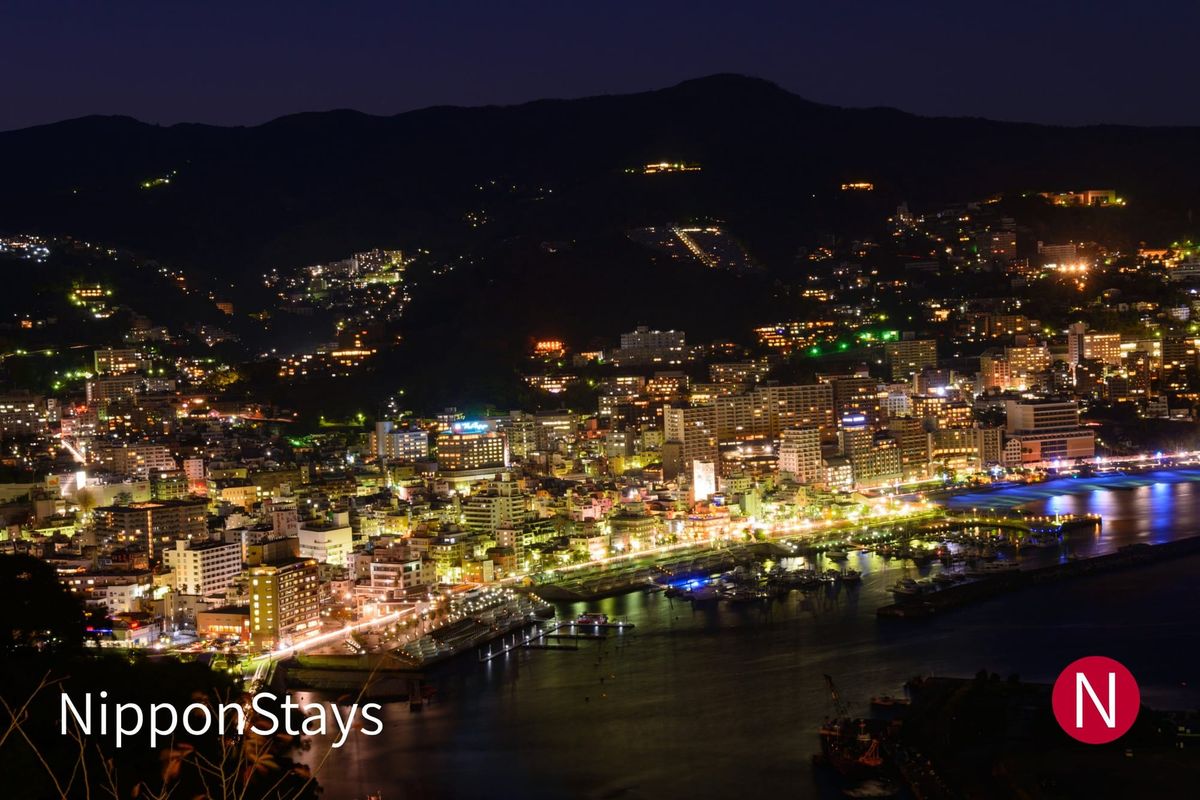
Quick Answer: Atami or Hakone in February comes down to what you actually want. If you want flowers, you're traveling with kids, or you'd rather not deal with a car, pick Atami — a direct 45-minute shinkansen ride to a plum garden that blooms weeks before almost anywhere else in Japan, with Atami New Fujiya Hotel a 15-minute walk from the station. If you want snow scenery, a clear view of Fuji, and you have a rental car, pick Hakone, staying at The Prince Hakone Lake Ashinoko on the lakeshore. The one thing that flips the answer: if the Hakone Ropeway is grounded for wind that day, its whole appeal — the volcanic valley view, the cable-car-to-ropeway sequence — disappears, and Atami becomes the safer plan regardless of your other preferences.
Which one fits your trip
Neither destination is "better" in February — they answer different questions, and the table below sorts by the condition that decides it for most travelers.
| Your situation | Pick | Why |
|---|---|---|
| One night only, no rental car | Atami | A single direct train (about 45 minutes from Tokyo); Hakone's lake area needs a train plus a 65–80 minute bus on top |
| Traveling with young kids | Atami | Flat paths through the plum garden vs. a ropeway that can be closed for wind, plus a longer transfer chain to reach the lake |
| You have a rental car | Hakone | You can reach viewpoints and onsen towns on your own schedule instead of depending on a bus, cable car, ropeway, and boat all connecting |
| Flowers are the point of the trip | Atami | Its coastal, sheltered plum garden opens weeks before Hakone's higher, colder elevation sees anything comparable |
February in Atami: the coast, the plum, the 45-minute train
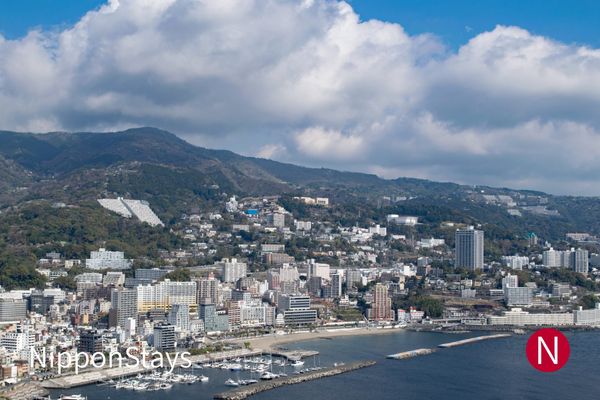
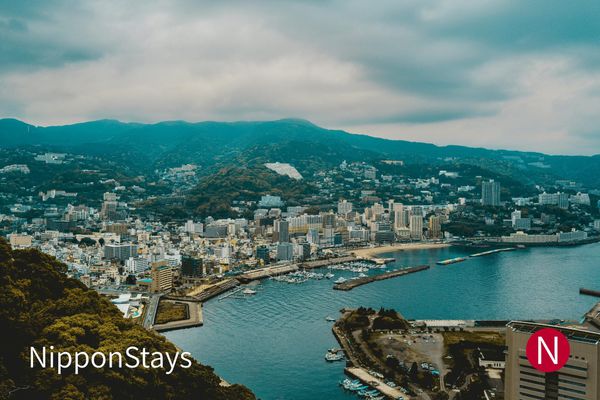
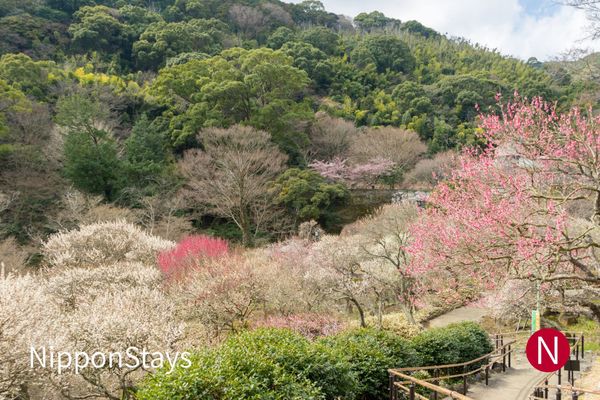
Atami's whole February pitch is timing: it's the earliest place in the country to see plum blossoms in bulk, and it's a single, unbroken train ride from Tokyo. The Atami Baien plum garden ran its 82nd annual festival from January 10 to March 8 in 2026, with an entrance fee of ¥300 that drops to free from February 25 onward (Atami City Tourism Association, checked September 2026). The 2027 dates hadn't been announced when we checked, so treat "mid-January to early March" as the usual window rather than a confirmed one until the city posts it. Alongside the plum, Atami's own early-blooming cherry variety — the Atami-zakura along the Itokawa river — typically peaks from late January into early February (Atami City official site, checked September 2026), giving the town two overlapping blooms rather than one.
Atami New Fujiya Hotel sits a 15-minute walk from JR Atami Station (or about 5 minutes by the local bus network) and has its own hot-spring baths, including one drawing on water historically associated with Tokugawa Ieyasu (official hotel access page, checked September 2026). It's a coastal town, so February here means sea air and daytime highs well above freezing rather than snow — the trade-off is that you won't see the kind of winter scenery Hakone offers.
February in Hakone: snow, clear Fuji, and a ropeway that can stop
Hakone's draw in February is the opposite of Atami's: cold, clear air that gives some of the year's best views of Mt. Fuji from the Hakone Ropeway and the Lake Ashinoko sightseeing boats, plus a real chance of snow at the higher elevations around Owakudani and Sounzan. February is actually a slightly better month for ropeway hours than the depths of winter — the Hakone Ropeway runs 9:00 to 17:00 in February, an hour later than its reduced December–January closing time of 16:15 (Hakone Ropeway official operating information, checked September 2026).
The catch is reliability. The ropeway's own operator has published a specific threshold: service stops when wind reaches 30 meters per second or higher, during lightning, or when a typhoon approaches, on top of routine maintenance closures (Owakudani Kurotamago-kan operator notice, checked September 2026). Strong wind days aren't rare on this ridge in winter. The Prince Hakone Lake Ashinoko sits on the Moto-Hakone shore of the lake — reachable by Izu Hakone Bus from Hakone-Yumoto Station (about 65 minutes) or Odawara Station (about 80 minutes), or by the Hakone Sightseeing Cruise boat if you're coming from the Togendai ropeway terminal — and its Annex Superior Twin room (40.4 m², sleeps up to four with a sofa bed) is the one room type confirmed on the hotel's own site to fit a family of four (official room page, checked September 2026).
Getting there and back in winter
The asymmetry between these two trips is really about how many independent links are in the chain. Atami is one leg: the Tokaido Shinkansen Kodama runs Tokyo–Atami directly in roughly 45 minutes, on the same mainline schedule year-round, with no seasonal reduction. Hakone's lake area is at least two legs and often three: either the Odakyu Romancecar from Shinjuku to Hakone-Yumoto Station (75 minutes at its fastest, checked September 2026) followed by an Izu Hakone Bus to the lake, or a shinkansen to Odawara followed by the same bus connection. Travelers who instead ride the classic Hakone Tozan Railway up from Hakone-Yumoto to Gora, then the cable car to Sounzan and the ropeway on to Togendai, add the ropeway's own wind risk on top of the mountain railway — whose operator's timetable page doesn't publish a specific rainfall or snowfall threshold, only that service can be suspended in bad weather, so check it same-day rather than assuming it runs (Hakone Navi transportation portal, checked September 2026).
Neither route requires a car, but if you're deciding between the two destinations for a New Year's visit rather than a February one, our guide to staying in Hakone for the Hakone Ekiden (run January 2–3) covers that separate, much busier weekend.
What the numbers say about the climate difference
Japan Meteorological Agency normals make the coastal-vs-mountain gap concrete. At the Ajiro station near Atami, the February normal (1991–2020 period) is an average of 7.4°C, a high of 11.3°C, a low of 4.0°C, and 82.0 mm of precipitation, with no recorded snow depth. The JMA's own Hakone station only publishes a precipitation normal for February — 151.3 mm, nearly double Ajiro's — with no temperature normal at all recorded for that site. The nearest full JMA station on the Hakone caldera rim, Gotemba, gives a usable proxy for how much colder the highlands run: a February average of 3.5°C, a low of -1.2°C, and 128.9 mm of precipitation (JMA past weather data search, all normals checked September 2026). Of the two hotels named in this guide, both were confirmed to have at least one room type that sleeps four (checked September 2026) — useful if the choice between them also has to work for your group size.
Where to base yourself, and what to read next
| Base | Pick | Why | Read next |
|---|---|---|---|
| Flowers, kids, or no car | Atami | Single 45-minute train, early plum season, flat sightseeing | Atami Plum Garden: day trip or overnight |
| Snow scenery, own schedule | Hakone | Fuji views and mountain onsen, but ropeway depends on the weather | our Hakone vs. Kawaguchiko Fuji comparison |
| Two large kids' resorts side by side | Atami | Both are family resorts inside the same town | Risonare Atami vs. Atami Korakuen Hotel |
| Every flower-viewing option in February | Either | Plum, early sakura, and where each one fits an itinerary | our February flowers hub for Japan |
For ropeway crowd patterns and kid-specific logistics outside of February, our autumn Hakone-with-kids guide covers the same ropeway and cable car system in more detail, and our onsen and ryokan hub compares both towns against rural options elsewhere in Japan.
Trip Essentials for Atami and Hakone
Things worth booking before you land, all in English:
- eSIM — Airalo's Japan eSIM: install it at home and data works as soon as you switch off airplane mode at Haneda or Narita.
- Tickets and day trips — Klook covers tours and activities in Atami and Hakone; booking ahead skips the ticket-window line.
FAQ: Atami or Hakone
How long does it take to get to Atami vs. Hakone from Tokyo?
Atami is about 45 minutes on a direct Tokaido Shinkansen Kodama from Tokyo Station. Hakone's Lake Ashinoko area takes longer and has no direct train: at least 75 minutes on the Odakyu Romancecar to Hakone-Yumoto Station, plus about a 65-minute bus onward to the lake, or a similar total time via shinkansen to Odawara and the same bus connection.
What's the average temperature in Atami and Hakone in February?
Atami's nearest JMA station, Ajiro, has a February normal average of 7.4°C (1991–2020). Hakone's own JMA station doesn't publish a temperature normal, but the nearest full station on the caldera rim, Gotemba, averages 3.5°C with lows down to -1.2°C — a meaningfully colder, mountain climate.
Does the Hakone Ropeway run normally in February?
Its hours are actually slightly longer in February — 9:00 to 17:00, versus the reduced 9:00–16:15 winter hours in December and January. It can still be suspended for wind of 30 meters per second or more, lightning, or an approaching typhoon, per the operator's own published notice, so check same-day status before planning your only day around it.
Can I see plum blossoms in Hakone instead of going to Atami?
Not on the same scale or schedule. Hakone's higher elevation runs weeks behind Atami's coastal, sheltered plum garden, which is the earliest large public plum display in the country (its 2026 festival ran January 10 to March 8). If flowers are the reason for the trip, Atami is the destination built around that timing; Hakone is built around winter mountain scenery instead.